Arbitrator or Court: Who Decides Who Decides?

New prime v olioviera - who decides who decides

Who decides who decides? That’s as fun to write as it is to think about.

On TV, sometimes the parties agree that Judge Judy can decide. (Here’s how that works.) But sometimes, the parties disagree over who decides. What happens then? Who decides who decides?

That’s an issue the Supreme Court is going to consider, as it relates to arbitration agreements for independent contractors in the transportation industry.

The dispute stems from an arbitration agreement between Dominic Oliviera, an independent contractor (although he’s not so sure of that), and New Prime, Inc., a trucking company. Their arbitration agreement says that all disputes go to arbitration, including those about the scope of what gets arbitrated. In other words, the arbitrator gets to decide whether something is subject to arbitration. (That’s not an unusual clause, by the way.)

Our protagonist Mr. O tried to bring a lawsuit, claiming wage and hour violations by New Prime. In response, New Prime pointed to the contract and said the issue had to be arbitrated. Not to be outwitted, however, Mr. O then pointed to an exception in the Federal Arbitration Act (FAA). The FAA is the federal law favoring arbitration of disputes, but the FAA contains an exception. The FAA doesn’t apply to employees in the transportation industry.

I hope I haven’t bored you because here’s where it gets interesting.

If the FAA exception applies, Mr. O doesn’t have to arbitrate and he can go to court with his wage and hour claims instead.

But the exception only applies (it seems) if he is an employee. If he’s an independent contractor, the FAA should still apply, which means that New Prime can still force him into arbitration.

Now here’s where it gets really weird.

The agreement says that the arbitrator gets to decide whether the matter is subject to arbitration. But Mr. O says he’s an employee and therefore he’s not bound by the arbitration agreement. If he’s not bound by the arbitration agreement, then New Prime can’t force him to go to the arbitrator to decide whether the dispute is subject to arbitration. So, who decides who decides?

Still with me? Here’s the bottom line. There are two important questions that the Supreme Court has agreed to consider in this case:

(1) Whether a dispute over applicability of the Federal Arbitration Act’s Section 1 exemption is an arbitrability issue that must be resolved in arbitration pursuant to a valid delegation clause; and
(2) whether the FAA’s Section 1 exemption, which applies on its face only to “contracts of employment,” is inapplicable to independent contractor agreements.

For businesses using mandatory arbitration agreements, these are important issues.

Last week, in this post, we addressed Issue #2. But Issue #1 is also pretty important for businesses with arbitration agreements in the transportation industry. If the validity of those agreements is contested, who decides whether they are valid?

If the arbitrator gets to decide what is subject to arbitration, the realist deep inside you (he’s roommates with the pessimist) expects that the arbitrator will keep the case. In other words, the most likely ruling by the arbitrator — who is paid by the parties by the hour to conduct the arbitration — is that the matter is going to be subject to arbitration. After all, that’s what the contract says, and if the contract didn’t apply, then the arbitrator never would have gotten involved in the first place.

This case won’t be decided until next year.

For more information on independent contractor issues and other labor and employment developments to watch in 2018, join me in Cincinnati on March 28 for the 2018 BakerHostetler Master Class on Labor Relations and Employment Law: A Time for Change. Attendance is complimentary, but advance registration is required. Please email me if you plan to attend, tlebowitz@bakerlaw.com, and list my name in your RSVP so I can be sure to look for you.

© 2018 Todd Lebowitz, posted on WhoIsMyEmployee.com, Exploring Issues of Independent Contractor Misclassification and Joint Employment. All rights reserved.

Can You Require Independent Contractor Drivers to Sign Arbitration Agreements?

Arbitration agreementstranspiortation industry drivers new prime v oliviera coin tossHow do you want your disputes decided? State court? Federal court? Arbitrator? Coin toss?

Ok, probably not coin toss, but that method is still used to break ties in local elections. (Spoiler alert: It was heads.)

Lots of businesses using independent contractors rely on arbitration agreements (with class action waivers) as a way to protect against a claim of independent contractor misclassification. Arbitration agreements with class action waivers prevent large groups of contractors from joining together in court to file class action lawsuits.

Instead, they have to bring any claims on their own. That means much less money is at stake in any individual case, and much of the incentive for hungry plaintiffs’ lawyers to file these claims is gone. (So sad.)

When bound by an arbitration clause, some plaintiffs have pointed out that there is an exception under federal arbitration law that applies to transportation workers. The Federal Arbitration Act, which is the federal law favoring arbitration, doesn’t apply to employees in the transportation industry.

Most courts have said this exception applies only to employees, not to independent contractors. In other words, employees in the transportation industry might not have to arbitrate their claims, but independent contractors do.

A recent court of appeals decision, though, may have changed that. The First Circuit Court of Appeals decided that the FAA transportation worker exception applies to employees and independent contractors. If true, the implications for the gig economy could be massive. Independent contractor drivers are all over the transportation industry. (Some might not be in interstate commerce, but that’s a technical argument for court, not for a blog.) Uber, Lyft, FedEx. They have all switched to using mandatory arbitration agreement with their independent contractor drivers.

The Supreme Court has agreed to decide this important issue in a case called New Prime Inc. v. Oliviera.

The Court just accepted the case last week, so we won’t have a ruling until next spring or summer, but this is an important case to watch for any business using independent contractors in the transportation industry. Will your arbitration agreements survive?

The issue accepted by the Supreme Court for review is:Whether the FAA’s Section 1 exemption, which applies on its face only to ‘contracts of employment,’ is inapplicable to independent contractor agreements.”

Note for Supreme Court Watchers: This is a separate issue from the Epic Systems case already heard by the Supreme Court, which should be decided by this June. In Epic Systems, the issue is whether the National Labor Relations Act prohibits businesses from requiring their employees to sign mandatory arbitration with class action waivers. The issues are somewhat related, but distinct. Epic Systems deals with employees’ arbitration agreements; New Prime deals with independent contractors and is limited to the transportation industry.

For more information on independent contractor issues and other labor and employment developments to watch in 2018, join me in Cincinnati on March 28 for the 2018 BakerHostetler Master Class on Labor Relations and Employment Law: A Time for Change. Attendance is complimentary, but advance registration is required. Please email me if you plan to attend, tlebowitz@bakerlaw.com, and list my name in your RSVP so I can be sure to look for you.

© 2018 Todd Lebowitz, posted on WhoIsMyEmployee.com, Exploring Issues of Independent Contractor Misclassification and Joint Employment. All rights reserved.

Despite New DOL, Independent Contractor Misclassification and Joint Employment Remain Risky

What effect of withdrawal of DOL memos

In June 2017, the DOL withdrew its Obama-era 2015 and 2016 informal guidance on joint employment and independent contractors. The memos covered federal wage and hour law (FLSA). Eight months later, what effect has that decision made?

Essentially none.

Remember, the 2015 and 2016 memos did not change the law on independent contractor misclassification or joint employment. Rather, the memos were an attempt by the Wage & Hour Administrator, David Weil, to summarize existing law – but with a pro-employee leaning. The memos selectively interpreted court decisions that supported Weil’s view of the world, i.e., that most workers are employees. When Weil left, the DOL said goodbye to his interpretations as well.

But … Continue reading

Lessons From Cambodian Dancing Arrests: Don’t Draw Extra Attention to Your Independent Contractors

Tips for avoiding independent contractor misclassification claims

Screenshot from telegraph.co.uk

Ten European tourists face up to a year in Cambodian prison after being arrested for “pornographic dancing,” according to The Telegraph. Apparently, they went to a villa barbeque party and took pictures of themselves, clothed, dancing in suggestive poses.

Readers take notice: When barbequeing in Cambodia, do not draw unneeded attention to yourself by simulating sex positions and posting the pictures on social media.

When dealing with independent contractors, it’s also a good idea not to Continue reading

NLRB Smells Something Rotten, Seeks Input on Major Misclassification Decision

CA5ED89A-9590-4B8C-B8C6-88EEEED7168A

Screenshot from metro.co.uk

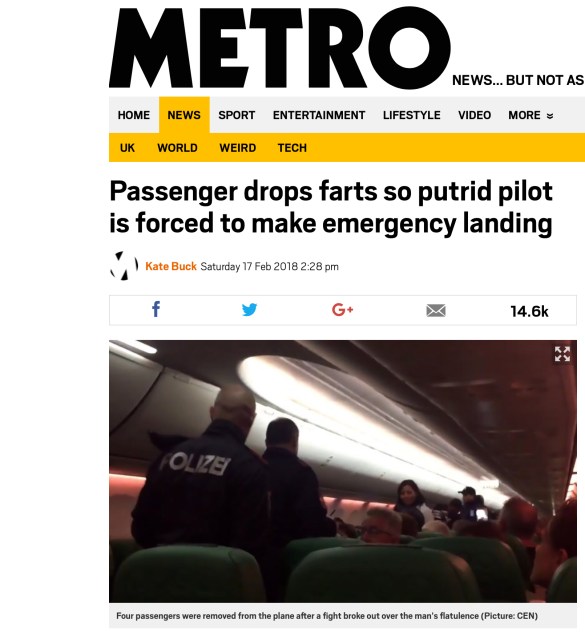
A flight from Dubai to Amsterdam made an emergency landing last week after a fight broke out over a passenger’s excessive flatulence. The two Dutchmen sitting next to the flatulator asked him to cut it out, but he wouldn’t (or couldn’t) stop spreading his perfumery around the cabin. A fist fight broke out and the pilot diverted the flying stinkship to Vienna, where several passengers were removed. Read more here.

Something smells rotten to the NLRB as well, four months after an Administrative Law Judge (ALJ) ruled that independent contractor misclassification, by itself, can be an unfair Continue reading

Python vs. Boa: Does the GrubHub Misclassification Ruling Really Matter? (Don’t Believe the Hype!)

Python vs boa - independentr contractor misclassification and grubhubPythons and boa constrictors usually do not fight each other. At least that’s what I learned in herpetology school. The reason they don’t fight each other is that there’s too much risk. The boa risks getting bitten by the python’s lethal fangs. The python risks being constricted to death because that’s how constrictors work.
For roughly the same reason, independent contractor vs. employee disputes rarely go to trial. There’s too much to lose. A company that relies on independent contractors for its business model cannot afford a ruling that all of its contractors are really employees. That’s why these cases almost always settle.

The GrubHub case, however, Continue reading

Is Your Independent Contractor Agreement Like an Emotional Support Peacock?

1541C580-B03F-47ED-92C7-30DF6E9DCB3C

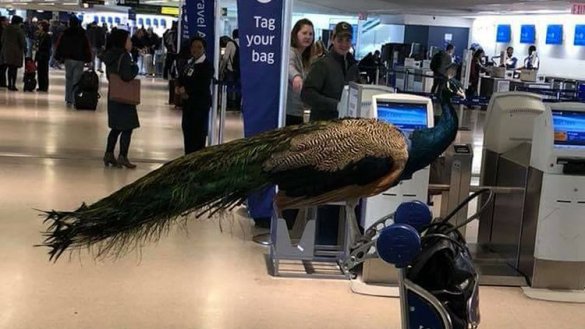
Image from The Jet Set

My favorite news story from last week was United Airlines’ decision not to allow a woman to fly with her emotional support peacock. Peacocks are pretty, strutting their feathery stuff to attract the smokin’ hot peafowl ladies, but they’re not cuddly, and they don’t belong in the tight quarters of commercial aircraft.

I did my research here, and I can confirm they’re not even good house pets. According to an Information Leaflet published by the Wrexham County (U.K.) Borough Council, peafowl have not taken well to modern methods of human transport. The Leaflet warns potential peafowl pet owners, “Peafowl for some reason are fond of cars and enjoy standing on them. They will also attack their reflection in cars and cause damage by scratching and pecking them.” They also have a “very loud high-pitched meow like call.”

None of this sounds like what I want in a seatmate on a commuter flight out of Newark.

Anyway, the point here is that looking pretty isn’t enough. Continue reading

Like a Drunken Possum, NEW GIG Act Fails Again.

NEW GIG act possum

Screenshot from DailyDot.com, 12/3/2017

I feel bad for this little guy. This possum apparently broke into a Florida liquor store, knocked over a bottle of bourbon, and got sauced. Wildlife rescue picked him up and checked him into rehab (no, not that kind). Full coverage here at DailyDot.com.

I applaud the critter’s effort, though.

He probably feels a little like Senator John Thune (R-SD), who has repeatedly introduced a bill called the NEW GIG Act — designed to simplify tax law for independent contractor misclassification scufflaws. Every time he gets close, though, someone knocks him over the head with a bottle. Or something like that.

The NEW GIG Act has been introduced in Congress several times. If passed, it would Continue reading

Bad News for Businesses: California May Rewrite Test for Independent Contractor vs. Employee

Shark california independent contractor misclassification

California businesses already have to cope with the threat of earthquakes, wildfires, Sharknados, and the craziest employment laws in all the land. The California Supreme Court may be about to make things even harder for businesses that use independent contractors.

For years, disputes over whether someone is an independent contractor or employee under California wage and hour law have been analyzed under the test used in S.G. Borello & Sons, which is a hybrid test combining elements of the Right to Control Test with elements of the Economic Realities Test. It is a multi-factor balancing test.

That may be about to change.

[Note 4/30/18: It did change. Read more here.]

Continue reading

Will Changes to the Tax Code Reduce Claims of Independent Contractor Misclassification?

Unicorn independent contractor misclassification

Ha ha. Wishful thinking.

By now, we’ve all heard that the new tax code provides a 20% tax deduction for many small businesses, including potentially independent contractors. (More info here.) As a result, some workers might prefer to be called contractors instead of employees to take advantage of the new deduction. Contractor status may be particularly appealing to workers who don’t need health insurance or other employee benefits. But, as we covered here, it doesn’t matter what a worker wants. The facts of the relationship determine a worker’s classification, no matter what the parties want it to be.

Don’t expect this change in the tax law to mean that independent contractor misclassification claims are going away. They’re not. Continue reading