
Can You Require Independent Contractor Drivers to Sign Arbitration Agreements?

Arbitration agreementstranspiortation industry drivers new prime v oliviera coin tossHow do you want your disputes decided? State court? Federal court? Arbitrator? Coin toss?

Ok, probably not coin toss, but that method is still used to break ties in local elections. (Spoiler alert: It was heads.)

Lots of businesses using independent contractors rely on arbitration agreements (with class action waivers) as a way to protect against a claim of independent contractor misclassification. Arbitration agreements with class action waivers prevent large groups of contractors from joining together in court to file class action lawsuits.

Instead, they have to bring any claims on their own. That means much less money is at stake in any individual case, and much of the incentive for hungry plaintiffs’ lawyers to file these claims is gone. (So sad.)

When bound by an arbitration clause, some plaintiffs have pointed out that there is an exception under federal arbitration law that applies to transportation workers. The Federal Arbitration Act, which is the federal law favoring arbitration, doesn’t apply to employees in the transportation industry.

Most courts have said this exception applies only to employees, not to independent contractors. In other words, employees in the transportation industry might not have to arbitrate their claims, but independent contractors do.

A recent court of appeals decision, though, may have changed that. The First Circuit Court of Appeals decided that the FAA transportation worker exception applies to employees and independent contractors. If true, the implications for the gig economy could be massive. Independent contractor drivers are all over the transportation industry. (Some might not be in interstate commerce, but that’s a technical argument for court, not for a blog.) Uber, Lyft, FedEx. They have all switched to using mandatory arbitration agreement with their independent contractor drivers.

The Supreme Court has agreed to decide this important issue in a case called New Prime Inc. v. Oliviera.

The Court just accepted the case last week, so we won’t have a ruling until next spring or summer, but this is an important case to watch for any business using independent contractors in the transportation industry. Will your arbitration agreements survive?

The issue accepted by the Supreme Court for review is:Whether the FAA’s Section 1 exemption, which applies on its face only to ‘contracts of employment,’ is inapplicable to independent contractor agreements.”

Note for Supreme Court Watchers: This is a separate issue from the Epic Systems case already heard by the Supreme Court, which should be decided by this June. In Epic Systems, the issue is whether the National Labor Relations Act prohibits businesses from requiring their employees to sign mandatory arbitration with class action waivers. The issues are somewhat related, but distinct. Epic Systems deals with employees’ arbitration agreements; New Prime deals with independent contractors and is limited to the transportation industry.

For more information on independent contractor issues and other labor and employment developments to watch in 2018, join me in Cincinnati on March 28 for the 2018 BakerHostetler Master Class on Labor Relations and Employment Law: A Time for Change. Attendance is complimentary, but advance registration is required. Please email me if you plan to attend, tlebowitz@bakerlaw.com, and list my name in your RSVP so I can be sure to look for you.

© 2018 Todd Lebowitz, posted on WhoIsMyEmployee.com, Exploring Issues of Independent Contractor Misclassification and Joint Employment. All rights reserved.

Go Carts or Bumper Cars? NLRB Asks Court to Fix Its Browning-Ferris Blunder

Browning-Ferris joint employment go cartThe two most fun activities at amusement parks (aside from skee-ball) are Go Carts and Bumper Cars. This is scientific fact. Go Carts are fun because you can go fast, weave around, and drive in circles — all without getting honked at. Bumper Cars are fun because, well, you get to bump people.

The NLRB seems stuck on the Go Cart track, going round and round, when it would rather be in the Bumper Cars.

Last week, we reported on the Board’s sudden decision to vacate its important Hy-Brand decision, issued in December 2017. Hy-Brand was important to businesses because the decision restored sanity and workability to the NLRA’s test for joint employment.

But by vacating the Hy-Brand decision, the dreadful Browning-Ferris standard went back into effect, Continue reading

Despite New DOL, Independent Contractor Misclassification and Joint Employment Remain Risky

What effect of withdrawal of DOL memos

In June 2017, the DOL withdrew its Obama-era 2015 and 2016 informal guidance on joint employment and independent contractors. The memos covered federal wage and hour law (FLSA). Eight months later, what effect has that decision made?

Essentially none.

Remember, the 2015 and 2016 memos did not change the law on independent contractor misclassification or joint employment. Rather, the memos were an attempt by the Wage & Hour Administrator, David Weil, to summarize existing law – but with a pro-employee leaning. The memos selectively interpreted court decisions that supported Weil’s view of the world, i.e., that most workers are employees. When Weil left, the DOL said goodbye to his interpretations as well.

But … Continue reading

Browning-Ferris Is Back! NLRB Flip-Flops Again, Reinstates 2015 Joint Employment Decision!

989BD1FE-B520-4198-87E3-1A61F3AD50E0Holy smokes, Batman! This morning I wrote that the NLRB’s new joint employment test, from its December 2017 decision in Hy-Brand, was safe.  I was completely wrong.

A few hours ago, the NLRB reversed itself, vacated its order in Hy-Brand, and reinstated Browning-Ferris.  Whaaaaaat?

The NLRB issued this press release today:

The National Labor Relations Board (3-0, Member Emanuel did not participate) today issued an Order vacating the Board’s decision in Hy-Brand Industrial Contractors, Ltd. and Brandt Construction Co., 365 NLRB No. 156 (2017), in light of the determination by the Board’s Designated Agency Ethics Official that Member Emanuel is, and should have been, disqualified from participating in this proceeding. Because the Board’s Decision and Order in Hy-Brand has been vacated, the overruling of the Board’s decision in Browning-Ferris Industries, 362 NLRB No. 186 (2015), set forth therein is of no force or effect.

The sudden self-reversal was prompted Continue reading

Is NLRB’s Joint Employment Decision In (“the”) Jeopardy?

CA6A60D6-D787-4806-90DF-E825FBEA4969

[Note to self & readers, 4:45pm 2/26/18: I spoke too soon. Hours after I published this post, the NLRB reversed itself and vacated the Hy-Brand decision, which means the 2015 Browning-Ferris joint employment standard is back. Read more here.]

Here’s the original post, but sadly my predictions below turned out to be wrong…

There are many inspectors whose names we know for their diligent (and entertaining) crime-fighting exploits. There’s Inspector Clouseau, from the Pink Panther series; Inspector Gadget, from the Inspector Gadget series; and now Inspector David Berry, from the “Office of Inspector General” [sic] at the NLRB. (I do not know what happened to the “the” in such Office’s name, but sources tell me it was stolen by Ohio State University. More on that below.)

On February 9, Inspector Berry released a memo arguing that Continue reading

Lessons From Cambodian Dancing Arrests: Don’t Draw Extra Attention to Your Independent Contractors

Tips for avoiding independent contractor misclassification claims

Screenshot from telegraph.co.uk

Ten European tourists face up to a year in Cambodian prison after being arrested for “pornographic dancing,” according to The Telegraph. Apparently, they went to a villa barbeque party and took pictures of themselves, clothed, dancing in suggestive poses.

Readers take notice: When barbequeing in Cambodia, do not draw unneeded attention to yourself by simulating sex positions and posting the pictures on social media.

When dealing with independent contractors, it’s also a good idea not to Continue reading

NLRB Smells Something Rotten, Seeks Input on Major Misclassification Decision

CA5ED89A-9590-4B8C-B8C6-88EEEED7168A

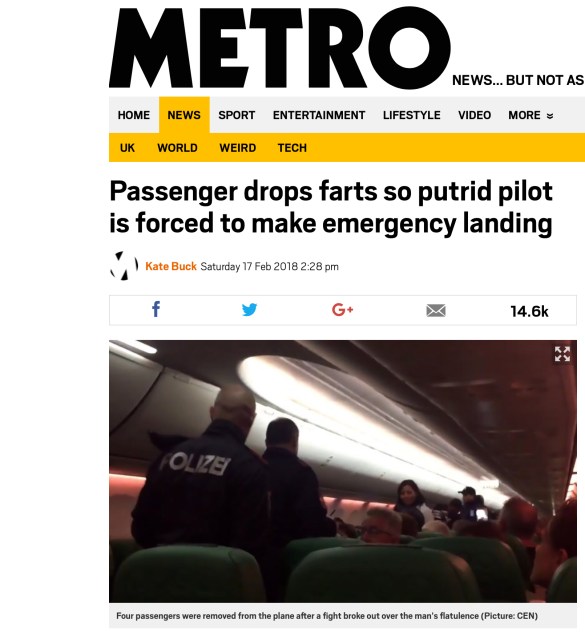
Screenshot from metro.co.uk

A flight from Dubai to Amsterdam made an emergency landing last week after a fight broke out over a passenger’s excessive flatulence. The two Dutchmen sitting next to the flatulator asked him to cut it out, but he wouldn’t (or couldn’t) stop spreading his perfumery around the cabin. A fist fight broke out and the pilot diverted the flying stinkship to Vienna, where several passengers were removed. Read more here.

Something smells rotten to the NLRB as well, four months after an Administrative Law Judge (ALJ) ruled that independent contractor misclassification, by itself, can be an unfair Continue reading

Gig Economy Workers Aren’t Saving for Retirement. That Might Cause You to Get Sued.

Gig economy savingsThe Drifters wanted listeners to save the last dance for them. Grand Funk Railroad wanted to save the land (album: E Pluribus Funk!!!). The Sex Pistols wanted to save the queen. Or they wanted God to do it for them. Lazy Sex Pistols.

But what about saving money? Not enough action there. A recent report from the Economic Policy Institute found that the median (50th percentile) working-age family had just $5,000 in retirement savings. (Warning: It’s boring Boring BORING, but click here if you dare.)

Workers classified as employees can Continue reading

Python vs. Boa: Does the GrubHub Misclassification Ruling Really Matter? (Don’t Believe the Hype!)

Python vs boa - independentr contractor misclassification and grubhubPythons and boa constrictors usually do not fight each other. At least that’s what I learned in herpetology school. The reason they don’t fight each other is that there’s too much risk. The boa risks getting bitten by the python’s lethal fangs. The python risks being constricted to death because that’s how constrictors work.

For roughly the same reason, independent contractor vs. employee disputes rarely go to trial. There’s too much to lose. A company that relies on independent contractors for its business model cannot afford a ruling that all of its contractors are really employees. That’s why these cases almost always settle.

The GrubHub case, however, Continue reading

After the NLRB Ruling, Is Joint Employment Still a Concern?

What is joint employment - imageLast month in the Hy-Brand decision, the NLRB raised the bar for determining whether a business is a joint employer. So now what? Is joint employment still a concern for businesses?

To paraphrase Tina Fey paraphrasing Sarah Palin paraphrasing Margie in Fargo, Ya! You betcha!

While the recent NLRB decision dropped the alert to Def-Con 4 in labor relations, the joint employment landscape under wage and hour laws is getting worse for employers, not better, thanks to the Fourth Circuit Court of Appeals. Businesses should Continue reading