Strip Clubs Nailed for $8.5 Million in Settlement of Independent Contractor Misclassification Claims

Independent contractor misclassification settlement $8.5 million spearmint rhinoI learned there’s a chain of strip clubs called the Spearmint Rhino. I didn’t know that was an option for rhinos. The rhinos I’ve seen at the zoo smell nothing like spearmint.

This club was paying its dancers as independent contractors. As we’ve seen in other “exotic dancer” cases, that can be an expensive decision.

This time it cost The Rhino $8.5 million. A class of 8,000 ladies reached a deal after claiming they should have been treated as employees under Caliufornia and federal wage and hour laws. The class members claimed they were denied overtime, denied a minimum wage, denied meal and rest breaks, and had their tips misappropriated.

In other words, they didn’t feel like they had much to dance about.

What happens now to The Rhino? Does it reclassify its dancers as employees? Who knows. Who cares.

I will, however, be asking the zoo if there’s anything they can do about the rhino smell. It seems there may be a minty version of the beast.


For more information on independent contractor issues and other labor and employment developments to watch in 2018, join me in Cincinnati on March 28 for the 2018 BakerHostetler Master Class on Labor Relations and Employment Law: A Time for Change. Attendance is complimentary, but advance registration is required. Please email me if you plan to attend, tlebowitz@bakerlaw.com, and list my name in your RSVP so I can be sure to look for you.

© 2018 Todd Lebowitz, posted on WhoIsMyEmployee.com, Exploring Issues of Independent Contractor Misclassification and Joint Employment. All rights reserved.

Arbitrator or Court: Who Decides Who Decides?

New prime v olioviera - who decides who decides

Who decides who decides? That’s as fun to write as it is to think about.

On TV, sometimes the parties agree that Judge Judy can decide. (Here’s how that works.) But sometimes, the parties disagree over who decides. What happens then? Who decides who decides?

That’s an issue the Supreme Court is going to consider, as it relates to arbitration agreements for independent contractors in the transportation industry.

The dispute stems from an arbitration agreement between Dominic Oliviera, an independent contractor (although he’s not so sure of that), and New Prime, Inc., a trucking company. Their arbitration agreement says that all disputes go to arbitration, including those about the scope of what gets arbitrated. In other words, the arbitrator gets to decide whether something is subject to arbitration. (That’s not an unusual clause, by the way.)

Our protagonist Mr. O tried to bring a lawsuit, claiming wage and hour violations by New Prime. In response, New Prime pointed to the contract and said the issue had to be arbitrated. Not to be outwitted, however, Mr. O then pointed to an exception in the Federal Arbitration Act (FAA). The FAA is the federal law favoring arbitration of disputes, but the FAA contains an exception. The FAA doesn’t apply to employees in the transportation industry.

I hope I haven’t bored you because here’s where it gets interesting.

If the FAA exception applies, Mr. O doesn’t have to arbitrate and he can go to court with his wage and hour claims instead.

But the exception only applies (it seems) if he is an employee. If he’s an independent contractor, the FAA should still apply, which means that New Prime can still force him into arbitration.

Now here’s where it gets really weird.

The agreement says that the arbitrator gets to decide whether the matter is subject to arbitration. But Mr. O says he’s an employee and therefore he’s not bound by the arbitration agreement. If he’s not bound by the arbitration agreement, then New Prime can’t force him to go to the arbitrator to decide whether the dispute is subject to arbitration. So, who decides who decides?

Still with me? Here’s the bottom line. There are two important questions that the Supreme Court has agreed to consider in this case:

(1) Whether a dispute over applicability of the Federal Arbitration Act’s Section 1 exemption is an arbitrability issue that must be resolved in arbitration pursuant to a valid delegation clause; and
(2) whether the FAA’s Section 1 exemption, which applies on its face only to “contracts of employment,” is inapplicable to independent contractor agreements.

For businesses using mandatory arbitration agreements, these are important issues.

Last week, in this post, we addressed Issue #2. But Issue #1 is also pretty important for businesses with arbitration agreements in the transportation industry. If the validity of those agreements is contested, who decides whether they are valid?

If the arbitrator gets to decide what is subject to arbitration, the realist deep inside you (he’s roommates with the pessimist) expects that the arbitrator will keep the case. In other words, the most likely ruling by the arbitrator — who is paid by the parties by the hour to conduct the arbitration — is that the matter is going to be subject to arbitration. After all, that’s what the contract says, and if the contract didn’t apply, then the arbitrator never would have gotten involved in the first place.

This case won’t be decided until next year.

For more information on independent contractor issues and other labor and employment developments to watch in 2018, join me in Cincinnati on March 28 for the 2018 BakerHostetler Master Class on Labor Relations and Employment Law: A Time for Change. Attendance is complimentary, but advance registration is required. Please email me if you plan to attend, tlebowitz@bakerlaw.com, and list my name in your RSVP so I can be sure to look for you.

© 2018 Todd Lebowitz, posted on WhoIsMyEmployee.com, Exploring Issues of Independent Contractor Misclassification and Joint Employment. All rights reserved.

Lessons From Cambodian Dancing Arrests: Don’t Draw Extra Attention to Your Independent Contractors

Tips for avoiding independent contractor misclassification claims

Screenshot from telegraph.co.uk

Ten European tourists face up to a year in Cambodian prison after being arrested for “pornographic dancing,” according to The Telegraph. Apparently, they went to a villa barbeque party and took pictures of themselves, clothed, dancing in suggestive poses.

Readers take notice: When barbequeing in Cambodia, do not draw unneeded attention to yourself by simulating sex positions and posting the pictures on social media.

When dealing with independent contractors, it’s also a good idea not to Continue reading

Python vs. Boa: Does the GrubHub Misclassification Ruling Really Matter? (Don’t Believe the Hype!)

Python vs boa - independentr contractor misclassification and grubhubPythons and boa constrictors usually do not fight each other. At least that’s what I learned in herpetology school. The reason they don’t fight each other is that there’s too much risk. The boa risks getting bitten by the python’s lethal fangs. The python risks being constricted to death because that’s how constrictors work.
For roughly the same reason, independent contractor vs. employee disputes rarely go to trial. There’s too much to lose. A company that relies on independent contractors for its business model cannot afford a ruling that all of its contractors are really employees. That’s why these cases almost always settle.

The GrubHub case, however, Continue reading

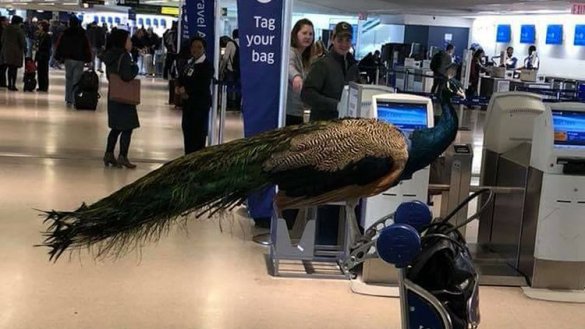
Is Your Independent Contractor Agreement Like an Emotional Support Peacock?

1541C580-B03F-47ED-92C7-30DF6E9DCB3C

Image from The Jet Set

My favorite news story from last week was United Airlines’ decision not to allow a woman to fly with her emotional support peacock. Peacocks are pretty, strutting their feathery stuff to attract the smokin’ hot peafowl ladies, but they’re not cuddly, and they don’t belong in the tight quarters of commercial aircraft.

I did my research here, and I can confirm they’re not even good house pets. According to an Information Leaflet published by the Wrexham County (U.K.) Borough Council, peafowl have not taken well to modern methods of human transport. The Leaflet warns potential peafowl pet owners, “Peafowl for some reason are fond of cars and enjoy standing on them. They will also attack their reflection in cars and cause damage by scratching and pecking them.” They also have a “very loud high-pitched meow like call.”

None of this sounds like what I want in a seatmate on a commuter flight out of Newark.

Anyway, the point here is that looking pretty isn’t enough. Continue reading

Like a Drunken Possum, NEW GIG Act Fails Again.

NEW GIG act possum

Screenshot from DailyDot.com, 12/3/2017

I feel bad for this little guy. This possum apparently broke into a Florida liquor store, knocked over a bottle of bourbon, and got sauced. Wildlife rescue picked him up and checked him into rehab (no, not that kind). Full coverage here at DailyDot.com.

I applaud the critter’s effort, though.

He probably feels a little like Senator John Thune (R-SD), who has repeatedly introduced a bill called the NEW GIG Act — designed to simplify tax law for independent contractor misclassification scufflaws. Every time he gets close, though, someone knocks him over the head with a bottle. Or something like that.

The NEW GIG Act has been introduced in Congress several times. If passed, it would Continue reading

Bad News for Businesses: California May Rewrite Test for Independent Contractor vs. Employee

Shark california independent contractor misclassification

California businesses already have to cope with the threat of earthquakes, wildfires, Sharknados, and the craziest employment laws in all the land. The California Supreme Court may be about to make things even harder for businesses that use independent contractors.

For years, disputes over whether someone is an independent contractor or employee under California wage and hour law have been analyzed under the test used in S.G. Borello & Sons, which is a hybrid test combining elements of the Right to Control Test with elements of the Economic Realities Test. It is a multi-factor balancing test.

That may be about to change.

[Note 4/30/18: It did change. Read more here.]

Continue reading

Should Businesses Reclassify Workers as Contractors for 2018? (Or, Why You Shouldn’t Paint Your Dog)

Independent contractortax plan - don’t paint your dog

The Republicans just threw a bone to independent contractors with their new tax law. What does that mean for businesses? Let’s examine.

Strategy question for businesses: Now that tax law provides more favorable tax treatment to independent contractors (see more here), should business reclassify workers as contractors for 2018?

If that’s your reason, then no.

Suppose a new law required ice cream shops to give free cones to dalmation owners. This would be a stupid law, but stay with me.

If I paint dots on a yellow lab, do I get free ice cream?

No, of course not. Even I call my yellow lab a dalmation, it’s still a lab.

Continue reading

Is Independent Contractor Misclassification, By Itself, an Unfair Labor Practice? (2018 update)

Clock independent contractor misclassificationAs Bob Dylan would say, The times they are a-changin’.  Upon being sworn in as new General Counsel of the NLRB, Peter Robb issued a Memorandum indicating his intent to reconsider a broad range of controversial positions taken by the Board and by his predecessor, Richard Griffin.

Among these positions is an issue we wrote about here, just a couple of months ago. The issue is whether the act of misclassifying a worker as an independent contractor could, by itself, be deemed an unfair labor practice. As explained in that blog post, an Administrative Law Judge had ruled that misclassification alone could be considered an unfair labor practice. The ALJ’s explanation went like this:

Continue reading

School’s Back in Session: How Much Training Can You Give to Independent Contractors?

“We don’t need no education / We don’t need no thought control,” are the opening lines to Pink Floyd’s Another Brick in the Wall (Part II). “Teachers, leave them kids alone!”

The same advice can be given when retaining independent contractors. Contractors are supposed to be in business for themselves. They are expected to be competent in performing the types of activities they are being retained to perform. In several of the Independent Contractor vs. Employee tests applied to federal and state laws, the amount and type of training is a factor that can tilt the scales toward a finding of misclassification.

But sometimes, some training is needed. The key questions to ask yourself are, What type? And How much?

Continue reading