What Is Joint Employment? New DOL Rules Take Effect in 60 Days

605194F9-9F87-4442-BEB3-F56ABC82A023

This week’s post is Family Feud Style. Name Three Things That Sound Like They Would Be “Joint Employment” But Are Not:

  1. Long-haired, easy-going product tester at the local wacky tobacky dispensary
  2. Note taker at an orthopedist’s office
  3. The guy on radio ads for non-approved supplements claiming to relieve joint pain who says, really really fast, “These statements not approved or validated by the FDA.”

Each of those jobs has something to do with joints, but that’s not what the Department of Labor (DOL) means when it addresses “joint employment.”

Under the Fair Labor Standards Act (FLSA), more than one person can be an employee’s employer, and when there’s joint employment, both employers are fully liable for any minimum wage or overtime owed to the employee. So, when is a person a joint employer?

On Sunday, the DOL issued new rules for determining when someone is a joint employer under the FLSA. The new rules take effect in 60 days. Here’s what you need to know.

Four-Part Balancing Test

When an employee’s work is for the benefit of both the W-2 employer (such as a staffing agency) and another business, the determination of whether the second business is a “joint employer” is made by evaluating whether the second business:

  1. Hires or fires the employee;
  2. Supervises and controls the employee’s work schedule or conditions of employment to a substantial degree;
  3. Determines the employee’s rate and method of payment; and
  4. Maintains the employee’s employment records.

It’s a balancing test, and no single factor is dispositive.

Actual Control Is Required; Reserved Control Is Not Enough

The new regulations focus on actual control, not merely the right to exert control. This is different from the common law test.

Under the new regulations, the potential joint employer must actually exercise control. Merely reserving control can be relevant, but only if the business actually exercises control in at least one of the four ways. Standard contract language reserving a right to act is not sufficient to demonstrate joint employment.

Different Test for Independent Contractor vs. Employee

The test for joint employment will now be different from the test for Independent Contractor vs. Employee. To determine whether someone is an employee or an independent contractor under the FLSA, the key question is whether the worker is economically dependent on the potential employer. But according to the new regulations, once the worker is someone’s employee, economic dependence is not relevant to determining whether there is a second “joint” employer.

Ordinary Sound Business Practices Are Not Evidence of Joint Employment

The regulations also provide assurance to businesses that wish to impose rules to preserve brand standards, ensure compliance with the law, or instill sound business practices. Those types of actions, according to the DOL, are not evidence of joint employment.

For example, the following actions by a potential joint employer do not make a finding of joint employment more likely:

  • Operating as a franchisor or entering into a brand and supply agreement, or using a similar business model;
  • Requiring the primary employer to comply with specific legal obligations or to meet certain standards to protect the health or safety of its employees or the public;
  • Monitoring and enforcing contractual agreements with the primary employer, such as mandating that primary employers comply with their obligations under the FLSA or other similar laws;
  • Instituting sexual harassment policies;
  • Requiring background checks;
  • Requiring primary employers to establish workplace safety practices and protocols or to provide workers training in matters such as health, safety, or legal compliance;
  • Requiring the inclusion of certain standards, policies, or procedures in an employee handbook;
  • Requiring quality control standards to ensure the consistent quality of the work product, brand, or business reputation, or the monitoring and enforcement of such requirements, including specifying the size or scope of the work project, requiring the employer to meet quantity and quality standards, and imposing deadlines;  
  • Imposing morality clauses;
  • Requiring the use of standardized products, services, or advertising to maintain brand standards;
  • Providing the employer a sample employee handbook or other forms; 
  • Allowing the employer to operate a business on its premises (including “store within a store” arrangements); 
  • Offering an association health plan or association retirement plan to the primary employer or participating in such a plan with the primary employer; or 
  • Jointly participating in an apprenticeship program with the primary employer.

FLSA Only

The new regulations apply to the FLSA only. Other agencies may impose different standards. The National Labor Relations Board (NLRB) is expected to issue its own regulations shortly to address when there is joint employment under federal labor law; and the Equal Employment Opportunity Agency (EEOC) is expected to consider issuing its own new standards for determining whether joint employment exists under federal anti-discrimination laws.

Standards issued by the NLRB or the EEOC maybe similar or may be materially different.

Reliance On The New Rules Provides a Defense

These new rules will apply to DOL investigations of FLSA compliance matters. It remains to be seen whether the federal courts will apply these rules too, but—importantly, the rules provide for Portal-to-Portal Act reliance.

That means employers are entitled to rely on these regulations as a defense to any joint employment claim. The regulations provide several examples of scenarios in which joint employment does and does not exist. Employers should review those scenarios and model their relationships accordingly.

More Information

Additional resources from the DOL can be found here:

2018_Web100Badge

© 2020 Todd Lebowitz, posted on WhoIsMyEmployee.com, Exploring Issues of Independent Contractor Misclassification and Joint Employment. All rights reserved.

Need training on avoiding independent contractor misclassification claims? Hey, I do that!  

Enter your email address to subscribe to this blog and receive notifications of new posts by email.


Can Study Time be Considered Employment? Yes, Says a Federal Court

Is study time compensable employmentSam Cooke admittedly didn’t know much about history, didn’t know much about biology, didn’t know much about a science book, and didn’t know much about the French he took.

That’s probably because he didn’t study.

Studying can have its rewards, but can those rewards include being paid to study? Yes, says a federal court in Arizona—at least under one set of facts.

Under the Fair Labor Standards Act (FLSA), time spent working must be compensated. In Julian v. Swift Transportation, the court had to decide whether study time was working time.

As part of the new hire trainee process, potential new drivers for a transportation company were provided a three-day period of orientation, then were sent for six weeks of paid training with a mentor. During the paid training period, the newbies were required to study in preparation for company-specific new driver tests. Some of the study time was spent on the clock during the 8-hour training day, but some of the required study time was performed while off-the-clock in “sleeper berth” time.

The court ruled that, because the company actively stressed the importance of studying, even during sleeper berth time, this time was compensable “employment.” In this case, the study time had to be paid.

This ruling is limited to the facts of this case and certainly does not mean that all study time for new hires is compensable. Sorry, Sam Cooke. But here, where workers were on the road with a mentor for a six-week training program and were expected to study frequently, the study time was determined to be working time.

Now, I don’t claim to be an A student, but I’m trying to be. For maybe by being an A student, baby, I can win your love for me. (And an extra paycheck?)

© 2019 Todd Lebowitz, posted on WhoIsMyEmployee.com, Exploring Issues of Independent Contractor Misclassification and Joint Employment. All rights reserved.

Enter your email address to subscribe to this blog and receive notifications of new posts by email.

2018_Web100Badge


Fun with Funerals? Cremation Company Settles Misclassification Case for $2.5 Million

Cannon cremation funeral Independent contractor misclassificationEveryone loves a fun funeral story, right? Apparently so. AARP.com posted this article about creative cremations. Available options for ashes include:

  • Being blasted out of a cannon to the tune of “Mr. Tambourine Man,” (Thank you, Hunter S. Thompson);
  • Being placed in an “environmentally safe, ball-shaped concrete memorial reef” and placed in the ocean to create a marine habitat, (giving a new and more literal meaning to “sleeps with the fishes”);
  • Being launched into space for an earth orbit; and
  • My personal favorite – being loaded into a five-foot biodegradable helium balloon and launched over the hills surrounding the deceased owner’s ranch so his buddies could shoot at the balloon until it burst, spreading the ashes over the surrounding foothills (so beautiful it almost makes me want to weep in my moonshine).

A cremation company had a less fun time last month, when a judge approved a $2.5 million settlement for independent contractor misclassification. The settlement included $1.65 million to a class of independent sales representatives and $825,000 in attorneys’ fees to the plaintiffs’ lawyers.

The company’s independent sales representatives had claimed that they were really employees, despite having signed an Independent Contractor Agreement in which they agreed they were contractors.

As we’ve noted many times before, though, it’s the facts of the relationship that matter, not what the parties call themselves. According to the plaintiffs, the cremation company told them when to work and where to work, paid them an hourly non-negotiable rate, required frequent reports, supervised their work, and provided them a handbook instructing them how to conduct themselves and how to perform their work. These are all facts that weigh in favor of employment status.

The sales reps’ lawsuit alleged that, when assessing the facts of the relationship, they were really employees and not independent contractors. They alleged violations of several laws that apply only to employees, including violations of California’s overtime, meal and rest break, waiting time, recordkeeping, and business expense reimbursement laws; and violations of the federal FLSA overtime rules.

The parties settled the dispute, and a federal judge approved the settlement.

There’s nothing suprising here, but the settlement should remind us that:

  • The facts of the relationship are what matter, even if the parties agree to call the workers “independent contractors” and they sign an Independent Contractor Agreement;
  • Different tests apply to different laws; here, there were claims that would have to be evaluated under:
  • Independent contractor misclassification remains a real and potentially costly risk.

The settlement did not say whether any of these sales representatives sold cannon, reef, space, or skeet shooting funerals along with cremation services. But I sure hope they did.

© 2019 Todd Lebowitz, posted on WhoIsMyEmployee.com, Exploring Issues of Independent Contractor Misclassification and Joint Employment. All rights reserved.

Enter your email address to subscribe to this blog and receive notifications of new posts by email.

2018_Web100Badge


Going Mobile? DOL Endorses Independent Contractor Model for Virtual Marketplace Apps

Opinion letter mobile app

Long before mobile apps were a thing, Pete Townsend and The Who were already going mobile. In the 1971 song, Townsend sings about the virtues of life on the open road, living in a mobile home. I’m an air-conditioned gypsy.

In an important opinion letter released this week, the DOL went mobile too, lending support to businesses in the “on-demand” or “sharing” economy. The letter is the first significant ruling that supports independent contractor status for service providers who obtain work through virtual marketplace apps.

A virtual marketplace app is a matchmaking service. It connects consumers who need a service (driving, housekeeping, handyman, anything) with service providers who do the work. Virtual marketplace companies (VMCs) are frequently the target of misclassification claims. In these types of claims, service providers — and the plaintiffs’ lawyers who love them — file lawsuits claiming that the service providers are really employees of the VMC. Frequent targets have been Uber, Lyft, Doordash, and Grubhub.

In Monday’s letter, the DOL opined that service providers are indeed independent contractors of the VMC, not its employees, at least under the facts of this particular case. The letter does not identify the specific VMC at issue, but the facts in the letter are going to be generally applicable to lots of VMCs.

Continue reading

“This is a Cabinet”: DOL Proposes New Definition of Joint Employer, Seeks to Clear Up a Confusing Label

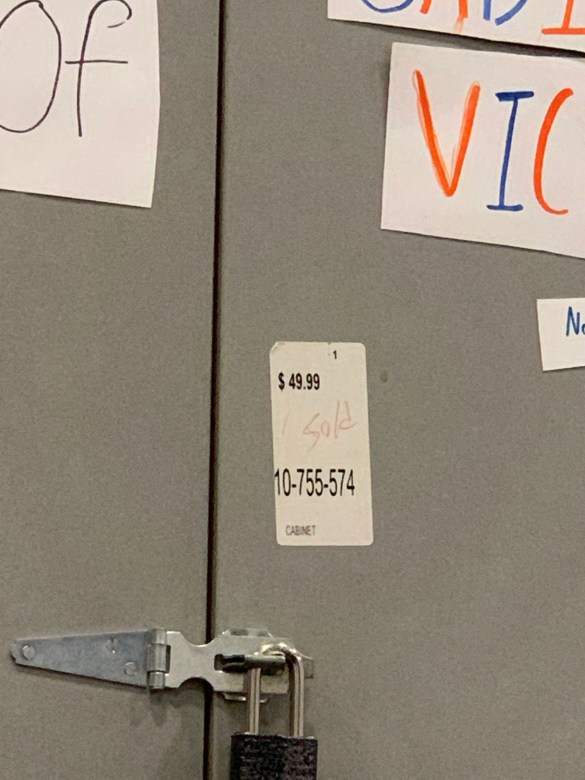
This post was originally published as a BakerHostetler Employment Alert on April 3, 2019. Cabinet joint employmentSometimes it’s obvious what something is, and you don’t need a label. Other times it’s not so obvious, and you do need a label. Then there’s the rare instance when it’s obvious what something is, but someone feels compelled to supply a label anyway. That third scenario is what I saw when I went to my daughter’s volleyball tournament last weekend and snapped this photo of a cabinet in the lobby. The label is small, but if you look closely, you’ll see that it helpfully declares the item to be a “cabinet.” It further announces, in red handwriting, that the item has been “sold,” thereby allaying my concerns that my daughter was spending her Saturday playing volleyball in a den of cabinet thieves.

The second scenario – label needed – is the focus of this Alert. And the territory is familiar ground ‒ joint employment.

It’s rarely obvious what that phrase means, and companies that use workers supplied by other companies have been seeking clarity for some time now. Ignoring Ronald Reagan’s famous quip about the nine most terrifying words in the English language, the Department of Labor (DOL) announced on Monday that it’s here to help.

Continue reading

“So Tired of Being Alone”? Blogger Managers at SB Nation Claim Independent Contractor Misclassification

Bloggers independent contractor misclassificationThe good reverend and crooner Al Green was “so tired of being alone,” but he sang it in a way that made me want to keep listening. Stay solo, Rev. Al. On a more somber note, The Motels’ song, Only the Lonely is depressing. Why can only the lonely play? Everyone should be able to play.

Blogging can be a lonely endeavor. Bloggers write and push out content, hoping people will read. Fortunately for me it’s just a side gig, but for many it’s a way of life.

A lawsuit involving bloggers at SB Nation serves as a reminder that bloggers’ status as independent contractors is subject to challenge. In this case, three blogger/site managers allege that, despite their independent contractor agreements (Blogger Agreements), they were really employees entitled to overtime pay. According to the plaintiffs, site managers are required to watch games and report on breaking news on their assigned teams.

In a recent decision, the federal district court granted conditional certification to the Continue reading

We’ve Got Baby Steps Toward a New Definition of Joint Employment Under the FLSA.

Baby steps joint employment FLSA new rule

I still don’t know what this is, but I got it from Wikipedia.

According to Wikipedia, which knows everything, or thinks it does, Baby Steps is the name of a Japanese manga series by Hikaru Katsuki. I have no idea what that means, but apparently it’s a story of some sort, which I infer from the following description: “The story is centered on Eiichirō Maruo, a first year honor student who one day decides that he is lacking exercise.”

This does not make me want to watch it.

I will, however, be watching the baby steps being taken by the Department of Labor’s Wage and Hour Division (WHD). On February 28, the WHD submitted a proposed new rule on joint employment to the White House Office of Information and Regulatory Affairs (OIRA). The new rule would modify the meaning of “joint employment” under the Fair Labor Standards Act (FLSA), which is the federal law governing minimum wage and overtime requirements.

Continue reading

Should the Economic Realities Test be Changed for the Gig Economy? One Court Thinks So (But How Would That Affect Jon and Ponch?)

CHiPS are off duty police officers contractors or employees?

Go Jon! Go Ponch! Screenshot from IMDb

According to IMDb, the highest rated episode of CHiPs was Christmas Watch. Thieves at the community church ran off with a 15th century bell, which meant — according to IMDb — “The Christmas season doesn’t mean any less work for Jon and Ponch!”

Well ho ho ho then. The Christmas season means lots of extra work for lots of other people, including real life police officers. A recent case in the Sixth Circuit Court of Appeals addressed whether police officers taking second jobs are independent contractors or employees.

The test for Independent Contractor vs. Employee under the Fair Labor Standards Act (FLSA) is well-established. It’s the Economic Realities Test, a multi-factor test that seeks to determine whether, as a matter of economic reality, the worker is reliant on the hiring party to earn a living.

But in Acosta v. Off Duty Police Services, the Court of Appeals questioned whether the usual formula should still apply in the modern gig economy, when lots of people take second jobs.

Continue reading

What is the Test for Independent Contractor vs. Employee? (Jan. 2019)

what is the test for independent contractor misclassificationSeems like a simple question, but it isn’t. My question to your question is, “Why do you ask?” That’s because the test for Independent Contractor vs. Employee is different under different laws.

And worse, the tests keep changing, as we saw in Monday’s post about the NLRB’s SuperShuttle decision.

As of today, January 31, 2019, here’s where we stand:

The current tests for determining Independent Contractor vs. Employee are:

National Labor Relations Act (NLRA)

Right to Control Test (SuperShuttle version, as of 1/25/19)

Title VII, Age Discrimination in Employment Act (ADEA), ERISA

Right to Control Test (Darden version, or some variant of it, as applied circuit by circuit)

Internal Revenue Service

Right to Control Test (IRS version)

Affordable Care Act

Right to Control Test (emphasis on particular factors, based on regulation)

Fair Labor Standards Act (FLSA)

Economic Realities Test (which different courts articulate differently)

California, Massachusetts wage & hour laws

ABC Tests (strict version of Part B)

New Jersey wage & hour

ABC Test (regular version of Part B)

California state laws other than wage & hour

S.G. Borello & Sons Test (customized hybrid version of Right to Control & Economic Realities Tests), we think, for now

State Unemployment and Workers Comp Laws

Pick a card, any card. Tests vary substantially state to state. Some are Right to Control Tests, some are ABC Tests, some are entirely made-up, customized tests that require consideration of — or proof of — specific factors

Other State Laws (wage & hour, discrimination, tax)

Tests vary significantly state by state, law by law

This chart may be a helpful start, but three significant challenges remain, when trying to determine Independent Contractor vs. Employee.

  1. Fifty Shades of Gray.  These tests, for the most part, are balancing tests. Courts and agencies must weigh multiple factors. In most instances, some factors will favor contractor status and some will favor employee status. Different courts may reach different conclusions, even with the same facts.
  2. Planes, Trains, and Automobiles. Multi-state employers face the added challenge of having to deal with different tests in different states. Then, just to keep everyone on their toes, states generally apply different tests for different state laws. Sometimes different tests apply in different industries too. Transportation workers, for example, may be subject to different tests than construction workers.
  3. Into the Wild. The tests keep changing. In January 2019, the NLRB changed its test in the SuperShuttle case. In 2018, California changed its test under state wage and hour law from the S.G. Borello balancing test to a strict ABC Test. In 2015, New Jersey switched to a different version of an ABC Test for its state wage and hour law. The times they are a-changin.

What to do about it? (Free tips!)

  1. Know the tests that apply where your business operates.
  2. Construct your independent contractor relationships in a way that tends to favor the factors supporting independent contractor status. Inevitably, business considerations will get in the way, and tough decisions will have to be made about how much control can be relinquished and how the relationships need to be structured. Adjust the facts of the relationship.
  3. Use a customized independent contractor agreement that emphasizes the factors that support independent contractor status. Avoid off-the-shelf agreements. Merely reciting that everyone agrees the relationship is an independent contractor relationship is only a teeny bit helpful. “Teeny bit helpful” is not the gold standard.
  4. Re-evaluate existing relationships, and make changes from time to time.
  5. Implement a gatekeeper system to prevent operations managers from entering into contractor relationships that may be invalid. Require any retention of a contractor to be approved by a point person, who can issue spot and seek help in evaluating whether a contractor relationship is likely to withstand a misclassification challenge.
  6. Seek legal help before you get audited or sued. Now is the time to review and modify relationships to reduce the likelihood of a misclassification claim. Once a claim is made, your business can only play defense. Create your playbook now, before the defense has to take the field.

For more information on joint employment, gig economy issues, and other labor and employment developments to watch in 2019, join me in Philadelphia on Feb. 26 or Chicago on Mar. 21 for the 2019 BakerHostetler Master Class on Labor Relations and Employment Law: Meeting Today’s Challenges. Advance registration is required. Please email me if you plan to attend, tlebowitz@bakerlaw.com. If you list my name in your RSVP, I will have your registration fee waived.

© 2019 Todd Lebowitz, posted on WhoIsMyEmployee.com, Exploring Issues of Independent Contractor Misclassification and Joint Employment. All rights reserved.

Enter your email address to subscribe to this blog and receive notifications of new posts by email.

2018_Web100Badge


What It Means to “Suffer” in California, Independent Contractor Version

suffer or permit to work California

This article describes how gestures that are common in the U.S. can have very different meanings abroad. For example, the “ok” finger gesture is a vulgar bodily reference in Brazil, Germany, and Russia. (Not ok!) The thumbs up gesture in Greece or the Middle East can mean “up yours!” The University of Texas’s “hook ‘em horns” gesture in Italy means you’ve been cuckolded — your wife is cheating on you.

Same thing, different meaning.

To employers, California often feels like a foreign country. It has some of the most employee-friendly laws in the nation, creating migraines for multi-state employers. When it comes to interpreting legal phrases, California lives up to its reputation, especially in the Employee vs. Independent Contractor context.

Today we look at California’s definition of “employ” as it relates to determining whether someone is an employee or an independent contractor.

California’s wage and hour laws are set forth in the state’s Industrial Wage Orders, a bulky set of directives that set the rules for minimum wage, overtime, meal and rest breaks, and various record keeping requirements for California employers. These rules apply only to employees, not independent contractors, but the test for determining Who Is My Employee? in California is different than under any federal law.

California’s Industrial Wage Orders use the same language to define “employ” as used in the federal Fair Labor Standards Act (FLSA). But fittingly, the Republic of California applies a different meaning to the same phrase.

California’s wage and hour laws provide three alternative definitions for “employ”: (1) to exercise control over the wages, hours, or working conditions, (2) to suffer or permit to work, or (3) to engage, thereby creating a common law employment relationship.

The FLSA also defines “employ” as “to suffer or permit to work.”

On Monday, we described how the FLSA’s “suffer or permit” standard is applied when determining whether someone is an employee or an independent contractor.

Today’s post describes California’s test for the same phrase. It’s different. Hook ‘em horns.

Historically, California courts have rejected the federal interpretation of “suffer or permit” as not being broad enough. California courts interpret the phrase more literally. If you permit someone to work, that person is likely your employee.

In April 2018, California’s Supreme Court set up a test that cemented that expansive interpretation into law.

In Dynamex Operations West v. Superior Court, the California Supreme Court ruled that, to determine whether someone is an employee or an independent contract, an ABC Test must be used.

An ABC Test sets a higher bar than a Right to Control Test or an Economic Realities Test. It also sets a higher bar than California’s S.G. Borello test, which is the hybrid Right to Control/Economic Realities Test that California had been using since 1989 to answer the Employee vs. Independent Contractor question.

California’s ABC Test starts with the presumption that, for claims covered under California wage orders, every worker is an employee. Then, to prove otherwise, the business retaining that worker must prove (all 3):

(A) the worker is free from the control and direction of the hiring entity in connection with the performance of the work, both under the contract for the performance of the work and in fact, and

(B) the worker performs work that is outside the usual course of the hiring entity’s business, and

(C) the worker is customarily engaged in an independently established trade, occupation, or business.

Fail just one part, and the worker is an employee under California wage and hour law. This new test is even stricter than most other states’ ABC Tests, which usually include two ways that Part B can be satisfied.

As of now, the Dynamex test applies only to claims brought under California wage orders, we think.  These claims generally include minimum wage, overtime, and meal and rest break claims. So far, this test does not appear to apply to claims such as failure to reimburse expenses or failure to provide employee benefits.

© 2018 Todd Lebowitz, posted on WhoIsMyEmployee.com, Exploring Issues of Independent Contractor Misclassification and Joint Employment. All rights reserved.

Enter your email address to subscribe to this blog and receive notifications of new posts by email.

2018_Web100Badge