
A Grub’s Life: Joint Employer Test or Single Employer Test. What’s the Difference?

This product kills and prevents grubs. That’s good if you have a garden, bad if you’re a grub. But in either case, there’s quite a difference between preventing grubs — that is, keeping them away but allowing them to live a happy grublike existence elsewhere, like in your neighbor’s garden — and killing the grubs.

Nuance, my friends. Small differences matter, especially to the grub.

Today’s post is about how the joint employer question is different than the single employer question.

Here’s the difference. Suppose Mary is employed by the We-Provide-Services Company. Company B retains the We-Provide-Services Company to do something or other. Mary sues both We-Provide-Services and Company B, claiming discrimination of some sort. If the We-Provide-Services Company and Company B are unrelated independent businesses, the issue is whether they are joint employers. There’s a test for that.

If the We-Provide-Services Company and Company B are related, such as through common ownership, intermingled managers, or a subsidiary or joint venture relationship, then the issue is whether they are a single employer for purposes of assessing who is liable for any bad acts toward poor Mary. There’s a test for that too, but it’s a different test.

The single employer test looks at four factors that try to assess how closely related or intermingled the companies are.

The joint employment test focuses instead on Company B’s relationship to Mary, not it’s relationship with Mary’s direct employer, the We-Provide-Services Company. (Courts in the Fourth Circuit look at this issue differently, as explained here, but this is the general rule.)

A recent case from North Dakota helps to illustrate the difference — and the confusion.

The issue related to whether a contractor’s employee was also an employee of the party that retained the contractor. The two businesses were unrelated, so this is a question of joint employment.

The lawyers on both sides, however, missed the nuanced difference. Both sides briefed the issue by presenting the judge with the single employer test and arguing about how the facts fit its four factors.

This kind of mistake is not uncommon, and judges do it too. There’s so much nuance in the laws related to Who Is My Employee?, and lots of lawyers and judges don’t understand the intricacies. Fortunately, this federal judge understood the difference. The judge’s opinion discusses the fact that the lawyers argued the wrong test, and he instead applied the facts to the proper test — a common law agency test. He called it a hybrid right to control/economic realities test, but as a practical matter, the factors were a recitation of the common law right to control test.

The point is: Be aware of the nuanced differences in circumstances that require the use of different legal tests to determine Who Is My Employee?

Which test you use can make a big difference. Even if you’re not a grub.

2018_Web100Badge

© 2019 Todd Lebowitz, posted on WhoIsMyEmployee.com, Exploring Issues of Independent Contractor Misclassification and Joint Employment. All rights reserved.

Need training on avoiding independent contractor misclassification claims? Hey, I do that!  

Enter your email address to subscribe to this blog and receive notifications of new posts by email.


Proposed Law Would Radically Change App Driver Protections and Legal Status; Might Also Stop Zombie Ant Apocalypse (Maybe).

california driver app law ant zombiesYou’re supposed to learn something new every day, right? Here’s something that’s definitely new, unless you are a fungus aficionado — and, lucky reader, because this is a read-only post, you do not have to identify yourself if you are indeed a fungus aficionado, and if you are, TMI, and keep it to yourself.

Anyway, there’s a fungus that attacks certain kinds of ants, takes over their ant-body cells, turns them into zombies, causes them to take a final mad bite into a certain type of leaf, then causes a plant spore to sprout from their heads. Yes, really. It’s right here in this New York Times article, complete with pictures.

The Ophiocordyceps fungus is not a dinosaur, despite its suspiciously dinosaur-sounding name, but it sounds pretty ferocious and looks like it’s threatening to kill off segments of the ant population.

Another thing that is ferocious and threatening to kill something off is California’s recent Assembly Bill 5, which would convert many independent contractors into employees under state labor laws.

The latest attempt to eradicate that ferocious law comes in the form of a ballot initiative being sponsored by some of the large ride hailing and delivery app companies.

The Protect App-Based Drivers and Services Act, if passed, would preserve the independent contractor status of app-based drivers in California if the app companies provide the drivers with a number of financial considerations and benefits, along with allowing the drivers to maintain control over when and where they work. The law imposes substantial driver protections that app companies are currently hesitant to provide, out of fear that providing these benefits and protections might cause the drivers to be deemed employees.

The law would strike a much-need balance that enhances driver rights while creating certainty on drivers’ classification status.

The app companies would have to provide an earnings guarantee of at least 120% of the local minimum wage for time engaged, a 30-cents per mile stipend to cover vehicle expenses, a healthcare subsidy contribution, occupational accident insurance, and liability insurance.

App companies would be prohibited from engaging in discrimination. Companies would also be required to implement a sexual harassment policy, conduct background checks, implement safety training, and implement a zero tolerance policy prohibiting driving while impaired. Rest periods would also be required.

In exchange, the app companies would receive assurance that the drivers are properly classified as independent contractors so long as four conditions are met:

(a) The network company does not unilaterally prescribe specific dates, times of day, or a minimum number of hours during which the app-based driver must be logged into the network company’s online-enabled application or platform.

(b) The network company does not require the app-based driver to accept any specific rideshare service or delivery service request as a condition of maintaining access to the network company’s online-enabled application or platform.

(c) The network company does not restrict the app-based driver from performing rideshare services or delivery services through other network companies except during engaged time.

(d) The network company does not restrict the app-based driver from working in any other lawful occupation or business.

The proposed law is supported by multiple prominent ride share and delivery app companies. Their hope is to gather enough signatures to place the issue on the November 2020 ballot in California.

This is worth watching. You can read more about it here. If passed, this can serve as model legislation to be applied elsewhere around the country.

In the meantime, if you see fungal spores starting to grow out of app drivers’ heads, you’ll know that Assembly Bill 5 got to them first.  We can only hope.

2018_Web100Badge

© 2019 Todd Lebowitz, posted on WhoIsMyEmployee.com, Exploring Issues of Independent Contractor Misclassification and Joint Employment. All rights reserved.

Need training on avoiding independent contractor misclassification claims? Hey, I do that!  

Enter your email address to subscribe to this blog and receive notifications of new posts by email.


California’s New Anti-Arbitration Law: A Hotbed of Problems

California continues to be a hotbed of activity, which got me wondering: what is a hotbed? So I looked it up.

Hotbed – noun – hot·bed |  \ ˈhät-ˌbed

/a bed of soil enclosed in glass, heated especially by fermenting manure, and used for forcing or for raising seedlings/

And now you can decide which is more useful- knowing what a hotbed is or keeping up with the latest legislation in California that makes things harder for businesses.

The latest is AB51, which bans mandatory employee arbitration agreements if they are made a condition of employment. Voluntary arbitration agreements are still permitted.

So let’s just include an opt-out provision, right? That way there’s a choice, so it’s not mandatory. That would seem to make sense. Not so fast. The law says that if you include an opt-out provision, it still counts as mandatory. Huh? That’s contrary to the meaning of opt-out.

Opt – verb \ ˈäpt

/to make a choice/

If the option to opt-in is voluntary, then the option to opt-out is voluntary. Grammarians needed in California please.

The law is also probably illegal, except maybe for jobs in the transportation industry. According to the Supreme Court, the Federal Arbitration Act (FAA) prohibits states from enacting laws that treat agreements to arbitrate differently than other agreements. If the parties agree to arbitrate, there’s an enforceable contract, and the states need to get out of the way. That’s a bit of an oversimplification, but not by much. The FAA doesn’t apply to portions of the interstate transportation industry though, so the California law might be enforceable only as to that small segment of jobs. The enforceability of this law will be tested in the courts.

The law also creates a chicken-and-egg problem for independent contractor misclassification disputes. You can still require in an independent contractor agreement that an independent contractor must arbitrate disputes. And in that arbitration agreement, you can grant the arbitrator the authority to rule on any questions about enforceability of the arbitration agreement.

But what if the dispute is over whether the independent contractor is an employee? If the California law stands, then the agreement to arbitrate the dispute is enforceable only if the arbitrator rules that the contractor is properly classified as a contractor, but the agreement to arbitrate is unenforceable if the arbitrator rules that the contractor is misclassified and should really be an employee. But if the arbitrator rules that contractor was really an employee, then under California law the agreement granting the arbitrator the right to make that decision is void. You’d have to decide the ultimate issue — independent contractor s employee — before determining who decides whether the worker is a contractor or an employee.

Is your head spinning? Good. Just in time for Halloween.

Thanks California. You give me lots to write about.

This new law applies to employee arbitration agreements entered into after January 1, 2020– unless it’s not enforceable at all. We’ll see.

2018_Web100Badge

© 2019 Todd Lebowitz, posted on WhoIsMyEmployee.com, Exploring Issues of Independent Contractor Misclassification and Joint Employment. All rights reserved.

Need training on avoiding independent contractor misclassification claims? Hey, I do that!  

Enter your email address to subscribe to this blog and receive notifications of new posts by email.

In Contract Labor Agreements, This Simple Clause Can Be Your Pillow

Joint employment contract clauseFor humans, some things are essential. Like a good pillow. For non-humans, the anti pillow sometimes works too. Not sure how. But the non-human in this picture generally sleeps like this.

For businesses contracting for labor, some things are essential too. One clause you are likely to have in contract with a supplier of labor is the right to remove a bad apple from the project.

The bad apple clause typically reads something like this: “We have the right to remove any individual supplied by contractor from the project for any reason at any time.”

That’s useful, but does it create an argument that your business is taking control over the individual’s employment in a way that could make your business an employer (or joint employer) of an individual you remove?

Here’s a simple fix to improve your contracts and limit the viability of that argument:

“We have the right to remove any individual supplied by contractor from the project for any reason at any time. We do not, however, have any right to control the individual’s employment status with contractor. Contractor retains the sole right to make all decisions regarding the hiring, termination, and other conditions of employment for all individuals assigned to the project or removed from the project.”

Consider the addition of that extra sentence or two to be a fluffy pillow.  It will help you sleep better if faced with a misclassification or joint employment claim.

2018_Web100Badge

© 2019 Todd Lebowitz, posted on WhoIsMyEmployee.com, Exploring Issues of Independent Contractor Misclassification and Joint Employment. All rights reserved.

Need training on avoiding independent contractor misclassification claims? Hey, I do that!  

Enter your email address to subscribe to this blog and receive notifications of new posts by email.


Need Direction After California’s New Independent Contractor Law? Download the Playbook!

Siri punked me. Independent contractor misclassification AB 5Sometime I forget where I park, so when I went to the airport recently, I told Siri where I left the car.


Siri then punked me with this. I think it was intentional. Stupid AI.

California businesses may be in need of some direction too. On September 18, Gov. Gavin Newsom signed Assembly Bill 5 into law.  The law redefines the Independent Contractor vs. Employee test in California, applying an ABC Test to a broad range of state laws.

When the law takes effect January 1, 2020, it will instantly turn thousands of independent contractors into employees. Some aspects of the law may even apply retroactively.

What are your options?

I can think of ten. Click here to download The Playbook: Now That California Has Passed AB 5, What Are the Options for Businesses Using Independent Contractors?


Page 1 from The-Playbook-California-AB-5_p03

2018_Web100Badge

© 2019 Todd Lebowitz, posted on WhoIsMyEmployee.com, Exploring Issues of Independent Contractor Misclassification and Joint Employment. All rights reserved.

Need training on avoiding independent contractor misclassification claims? Hey, I do that!  

Enter your email address to subscribe to this blog and receive notifications of new posts by email.


California Businesses May Need Emotional Support Clown When New Independent Contractor Law Takes Effect

Emotional support clown independent contractor misclassification

An Auckland, New Zealand man sensed he was about to fired from his job in the ad industry. His employer scheduled a meeting and said he could bring someone with him for emotional support.

He brought a clown.

As the employer provided the man with his separation papers, the clown made balloon animals — a poodle and a unicorn — to try to lighten the mood. The clown also mimed crying as the employer explained the termination.

Afterward, the man described the performance of his emotional support clown as “overall supportive” but “sort of noisy.”

California businesses may want to hire their own emotional support clowns as they try to decide how to respond to Assembly Bill 5 (AB 5), which has passed both houses and now awaits Governor Newsom’s signature to become law.

AB 5 makes it harder to classify workers in California as independent contractors.  Once it takes effect, it will instantly convert many thousands of independent contractors into employees.

Here’s how. AB 5 codifies the ABC Test invented by the California Supreme Court in the Dynamex case and then extends it.  In April 2018, the California Supreme Court ruled that a strict ABC Test would be used for determining whether someone is an independent contractor or an employee under California’s Industrial Wage Orders, which cover minimum wage, overtime, meal and rest breaks, and a few other wage-related subjects.

Under AB 5, the Dynamex ABC Test will also be used to determine whether someone is an employee under all portions of the California Labor Code and the Unemployment Insurance Code.  That means independent contractors in California will be presumed to be employees of the entity for which they perform services under these laws, unless the business can prove all three of the ABC Test factors below:

A) The person is free from the control and direction of the hiring entity in connection with the performance of the work, both under the contract for the performance of the work and in fact;

B) The person performs work that is outside the usual course of the hiring entity’s business; and

C) The person is customarily engaged in in independently established trade, occupation or business of the same nature as that involved in the work performed.

As discussed here, Part B of the test is the hardest to meet.

Unless all three factors of the test are satisfied, the workers will be considered employees under California law, and all of the following state law requirements will apply:

  • Minimum wage
  • Overtime, if not exempt, including daily overtime
  • Meal and rest breaks
  • Reimbursement of expenses
  • Paid sick leave
  • Paid family leave
  • Various notice, poster, and wage statement requirements
  • Timekeeping record requirements
  • Unemployment coverage
  • Workers compensation coverage
  • Paycheck timing requirements
  • On-call, call-back, and standby pay requirements
  • Travel time payment requirements
  • Final paycheck requirements
  • Commission rules

This is not intended to be a complete list of all California laws that apply to employees, but these are some of the most likely areas where businesses would find themselves to be in a state of noncompliance if their independent contractors are deemed to be employees under AB 5.

There are a number of exemptions to the bill, but they are narrowly crafted.  Barbers and estheticians, for example, are not affected.

If signed, the law will take effect January 1, 2020, although some provisions may be applied retroactively.

This bad news leads to the obvious question you astute readers will ask: So what are my options if I use independent contractors in California?

I am putting the finishing touches on The Playbook: Now That California Has Passed AB 5, What Are the Options for Businesses Using Independent Contractors?

The Playbook will be available at no cost and will be released as a BakerHostetler Client Alert. I will post a link here, once it is available.

In the meantime, let me know if you’d like more information about how AB 5 might affect your business. If you can’t reach me, I’m probably on the phone, trying to hire my own emotional support clown.

© 2019 Todd Lebowitz, posted on WhoIsMyEmployee.com, Exploring Issues of Independent Contractor Misclassification and Joint Employment. All rights reserved.

Need training on avoiding independent contractor misclassification claims? Hey, I do that!  

Enter your email address to subscribe to this blog and receive notifications of new posts by email.

2018_Web100Badge

Sperm Oil Legal Alert: Can You Sue under the Tax Code for Independent Contractor Misclassification?

Sue tax code independent contractor misclassification

When laws are well-written, they’re really specific so everybody knows what you can and cannot do. For example, Title 21, Section 173.275(c) makes it a federal crime to use more hydrogenated sperm oil in food than necessary to accomplish the intended lubricating effect of the sperm oil. (Thanks @CrimeADay!)

Some laws, on the other hand, leave room for interpretation. That’s when lawyers can get creative.

A drapery hanger in Maryland filed a lawsuit alleging that he was misclassified as an independent contractor and should have been paid overtime like an employee. He sued under the usual federal and state laws, but he added a bit of creativity.

The Internal Revenue Code includes a section allowing someone to sue if an evildoer “files a fraudulent information return with respect to payments purported to be made to any other person.” That’s 26 USC 7434, for those keeping score at home. And USC refers to the United States Code, not OJ Simpson’s alma mater.

The drapery hanger included this claim in his lawsuit, alleging that the sole proprietorship that allegedly owed him overtime pay also violated this law by filing 1099s instead of W-2s.

Points will be awarded here for creativity, but those points cannot be used in court. Federal courts don’t take points. (This was not addressed in law school.) All points awarded may be applied to future discounts at your local gas station. No purchase necessary. Void where prohibited.

The court said, nice try but no. This section of the Code refers to the filing of fraudulent amounts of pay, not filing the wrong form.

Had the decision gone the other way, a claim under this section of the Code could be tacked onto just about every independent contractor misclassification lawsuit. And we don’t need that hassle. There are already enough laws that cover misclassification. And sperm oil.

© 2019 Todd Lebowitz, posted on WhoIsMyEmployee.com, Exploring Issues of Independent Contractor Misclassification and Joint Employment. All rights reserved.

Enter your email address to subscribe to this blog and receive notifications of new posts by email.


Why Don’t Companies Offer Healthcare Benefits to Independent Contractors?


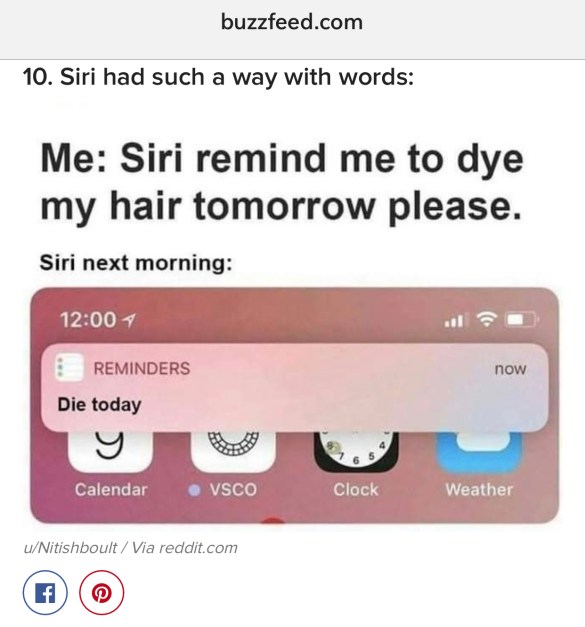
I found this on buzzfeed, while doing academic research for this blog post.

In the business world, it’s not quite as funny when good intentions are misunderstood. Which is why companies generally can’t offer healthcare benefits to independent contractors. Even if they would like to, they can’t.

Good intentions would be misunderstood, and the effect of offering healthcare coverage to independent contractors would likely be that they are turned into employees.

Why?

The law limits who can sell health insurance coverage. You need a license. It’s the same reason I can’t work as an Aquatic Antifouling Paint Operator in New York State. If you want to commercially apply antifouling paints, which are pesticides, on vessel hulls, boat bottoms, or other other marine surfaces to inhibit the growth of aquatic organisms, you need an Aquatic Antifouling Paint Operator license. (Apply here.)

Companies that aren’t licensed to sell healthcare insurance can’t go around selling healthcare insurance. But there’s a narrow exception, which allows companies to offer healthcare insurance to its employees. The exception doesn’t extend to vendors, suppliers, or independent contractors. Only employees.

Some of the large rideshare app companies have advocated for legal reform that would allow them to offer more benefits to independent contractor drivers. But there’s not much they can do right now. Companies without a license to sell healthcare insurance can only offer healthcare insurance to its employees, not to independent contractors.

Some companies have begun to get creative in an effort to offer more benefits to independent contractor drivers. According to benefitsnews.com, some app companies are beginning to offer limited benefits, such as access to accident insurance, free online college courses, and professional certifications.

Some states, such as New York, have considered legislation that would expand the availability of benefits to independent contractors, but the current state of the law severely restricts what companies can do.

The legal problem for companies who want to offer more benefits to contractors is not just that they can’t sell healthcare insurance to non-employees. It’s also that the more benefits they offer to contractors, the more those contractors may start to resemble employees. Since U.S. law currently sees the Employee vs. Independent Contractor issue as binary — you can only be one or the other — companies who offer increased employee-like benefits to contractors run the risk that the contractors will be deemed their employees, which creates a whole big mess of other legal problems.

A company might wish to provide healthcare coverage to independent contractors, but the company’s good intentions would be misunderstood. Which is also why if you want a haircut and dye, you should just type it into your phone’s calendar instead of just telling Siri.

© 2019 Todd Lebowitz, posted on WhoIsMyEmployee.com, Exploring Issues of Independent Contractor Misclassification and Joint Employment. All rights reserved.

Need training on avoiding independent contractor misclassification claims? Hey, I do that!  

Enter your email address to subscribe to this blog and receive notifications of new posts by email.

2018_Web100Badge


Can Your Business Be Liable for Sexual Harassment by an Independent Contractor?

Independent contractors sexual harassment

Damage can come from unexpected places.

Earlier this year, Brock Holt of the Boston Red Sox landed on baseball’s Injured List after his two-year old son poked him in the eye. Baseball players accept the risk of injury, but that’s not a way you’d expect to get hurt.

I think you see where I’m going here. Don’t let an independent contractor become Brock Holt’s son. Yes, a business can be liable for harassment by a contractor — if it fails to respond appropriately to a complaint. If one of your employees complains of harassment by a contractor, pay attention.

According to the Equal Employment Opportunity Commission (EEOC), businesses can be liable for harassment by non-employees if the business knows about the harassment and fails to take reasonable steps to prevent it. EEOC Guidance says:

The employer will be liable for harassment by non-supervisory employees or non-employees over whom it has control (e.g., independent contractors or customers on the premises), if it knew, or should have known about the harassment and failed to take prompt and appropriate corrective action.

That means you can’t just say, “It’s not our employee so we can’t do anything about it.” Investigate. Interview witnesses. Take statements. If there’s something there, act upon it.

If the bad actor is a contractor, options may include:

  1. Terminating the independent contractor relationship, 
  2. Limiting the contractor’s access to your facility,
  3. Poking out the contractor’s eye (or both eyes, if the harassment is particularly egregious), or 
  4. Any other steps to prevent bad behavior. 

My wife, who is in HR, says #3 is not an appropriate response, so I stand corrected. Don’t do #3. The other options are still good though.

As for #4, you should not discipline an independent contractor, but you can issue a stern warning to that contractor that the relationship will be terminated if there are any further complaints. Just don’t call it “discipline.” Disciplinary action is a sign of control, which can be used as evidence that the contractor might really be an employee. The last thing you need if one of your employees is being harassed by a contractor is to convert that contractor into your employee. 

Whatever you decide, do something.

While businesses might not expect that they could be held liable for bad acts by a contractor, the risk is real. Employers have a responsibility to provide their workers with a workplace that is free from harassment. If you allow a contractor to create a hostile work environment, your business can be liable for allowing that environment to persist. The employer’s responsibility is to take “prompt and appropriate corrective action.” 

For Brock Holt, terminating the relationship with the wayward eye-poker was not an option. (His wife reportedly vetoed that proposal. She is probably in HR.) But for businesses whose contractors are accused of harassing employees, terminating the relationship may be the best decision. 

So the answer is yes. Business have a responsibility to provide a workplace that is free from harassment, and the failure to do so may result in liability, even if the harassment is coming from a non-employee. Busiensses can be liable for harassment by contractors if the business knows or should know about the harassment and fails to take prompt and appropriate corrective action.

© 2019 Todd Lebowitz, posted on WhoIsMyEmployee.com, Exploring Issues of Independent Contractor Misclassification and Joint Employment. All rights reserved.

Need training on avoiding independent contractor misclassification claims? Hey, I do that!  

Enter your email address to subscribe to this blog and receive notifications of new posts by email.

2018_Web100Badge


How Do I Run a Background Check on an Independent Contractor?

How do i run a background check on an independent contractorAfter the events of this past weekend, I don’t have to say anything about the risks involved in allowing dangerous people onto your premises. Before retaining an independent contractor who will have access to your business’s facilities, people, or information, it makes sense to know who you are inviting into your house.

An employment-style background check is often appropriate, but there are a few important differences between background checks being run before hiring an employee and before engaging a non-employee contractor.  [We’re talking here about 1099 contractors, not staffing agency employees.]

If the background check is being run by a third party, then the federal Fair Credit Reporting Act (FCRA) is likely to apply. But the rules are different for pre-employment background checks and non-employment background checks.

For pre-employment background checks, certain disclosures must be made before the background check is obtained, and additional disclosures have to be made before you take an “adverse action” based on the result of the background check, such as revoking a conditional offer or not hiring someone. These additional requirements apply only for background checks being run “for employment purposes.”

Ok, Todd. These don’t sound too burdensome. Can’t I just follow the more burdensome pre-employment rules just to be safe?

Yes, sort of. But a few words of caution are in order.

First, your User Agreement with the background check company requires you to certify to the background check company the purposes for which you will be requesting background checks. Review your agreement to see whether you certified that you would only run background checks “for employment purposes.” 

Since this is not a background check being run “for employment purposes,” you need to have another permissible purpose under the FCRA. The law lists several alternatives. Two are likely to apply:  You may obtain a background check (1) “in accordance with the written instructions of the consumer” or (2) if you have “a legitimate business need for the information in connection with a business transaction that is initiated by the consumer.” Here, the “consumer” would be the individual contractor.

You may need to amend your agreement with the background check company before  you run any background checks on potential independent contractors. You never want independent contractors to be considered your employees.

Second, check the federal forms you give to the individual before you run the background check. You do not want to give an independent contractor a Disclosure form or an Authorization form that says your company will run a background check “for employment purposes.” Many generic forms include that phrase because it’s a term of art used in the FCRA. For background checks being run on independent contractors, you don’t want to have the contractor sign a document that can be used to argue you were creating an employment relationship, rather than an independent contractor relationship.

Finally, check the state law forms you are using. If your background check company supplied you with a suite of forms, those forms likely include various disclosures required under state laws. States with additional pre-employment background check requirements include California, Minnesota, New Jersey, New York, Oklahoma, and Washington State, among others. Almost all of the required state law disclosures, however, apply only to background checks being run “for employment purposes.” Be careful not to use forms with language that could be used to argue you were creating an employment relationship, rather than a contractor relationship.

Final thoughts:  Running a background check on an independent contractor can be a good idea and can bring you and your business some piece of mind. Be careful, though, that you don’t solve one problem by inadvertently creating another.

Background check pitfalls can be prevented if you use the correct forms and documents ahead of time. It’s not that hard to do this correctly, but it requires a some extra attention and care.

If you’d like more information, you can review two earlier blog posts I’ve written on this topic, here and here. Or feel free to contact me directly at tlebowitz@bakerlaw.com.

© 2019 Todd Lebowitz, posted on WhoIsMyEmployee.com, Exploring Issues of Independent Contractor Misclassification and Joint Employment. All rights reserved.

Need training on avoiding independent contractor misclassification claims? Hey, I do that!  

Enter your email address to subscribe to this blog and receive notifications of new posts by email.

2018_Web100Badge