I see the bad moon a-rising I see trouble on the way I see earthquakes and lightning I see bad times today
When John Fogerty wrote “Bad Moon Rising,” he was reportedly inspired by the 1941 film The Devil and Daniel Webster. There’s a scene in the film where a hurricane destroys the crops of several farms, but spares those of a man who had made a deal with the devil in exchange for wealth.
When classifying independent contractors, a deal with the devil generally doesn’t work. If you misclassify your workers as contractors, when the law says they should be employees, trouble will eventually be on the way.
A printed media delivery company found that out the hard way, after being investigated by the New Jersey Department of Labor and Workforce Development (DLWD).
There was no civil lawsuit here. A state agency went after the company. Be wary of state agency audits. This one cost the company $2.7 million in a recent settlement.
Overview: The New Jersey Attorney General and the DLWD reached a $2.7 million settlement with Publishers Circulation Fulfillment, Inc. (PCF) for misclassifying delivery workers as independent contractors.
Findings: The investigation revealed that PCF exerted significant control over its delivery workers, who were largely immigrants working overnight for low wages. PCF failed to classify these workers as employees, violating New Jersey labor laws.
Settlement Details: The settlement totals $2.7 million, covering approximately 2,400 workers.
History of the Investigation: The investigation began in 2021, focusing on PCF’s compliance with state employment laws from 2019 to 2022. It was found that PCF made unlawful deductions from workers’ pay and failed to provide essential protections. In a separate 2022 settlement, PCF was required to pay nearly $2.7 million for failing to contribute to the state’s Unemployment Compensation and Disability Benefits Funds between 2015 and 2018.
When considering independent contractor relationships, companies often make the mistake of assuming that if both parties are satisfied with the arrangement, it will be ok. Not so.
State agencies are becoming more and more aggressive in enforcing misclassification on their own. States lose money from misclassification because employers contribute funds to state unemployment and workers’ compensation funds for employees, but not for contractors.
So make sure your workers are properly classified, and heed this warning from John Fogerty and the band:
Hope you got your things together Hope you are quite prepared to die Looks like we’re in for nasty weather One eye is taken for an eye.
That’s because I just read the 65-page opinion in Johnson v. NCAA. The issue before the Third Circuit Court of Appeals was whether college athletes could plausibly be employees under the Fair Labor Standards Act (FLSA).
A massive class action had been brought, and the NCAA and other defendants filed a motion to dismiss. The district court denied it, allowing the case to move forward. The NCAA was allowed an immediate appeal, but the Third Circuit has affirmed and allowed the case to proceed.
Here’s why I am whelmed.
I am underwhelmed by the Third Circuit’s legal analysis, which has more faults than a novice tennis player learning to serve. I am overwhelmed by the massive unintended consequences that would flow from an eventual finding that college athletes are, in fact, employees.
Overwhelmed plus underwhelmed must equal whelmed, right?
The word overwhelmedcomes from the Middle English whelmen, which meant “to overturn.” For speakers of Modern English, that’s nothing more than a fun fact, though, because we’d have a really hard time understanding anyone speaking Middle English anyway. Maybe you had to read The Canterbury Tales in school? Cliffnotes, please.
I am underwhelmed by the legal analysis for many reasons.
1. The Third Circuit acknowledges but then disregards the Supreme Court’s instruction in Walling v Portland Terminal that “[a]n individual who ‘without promise or expectation of compensation, but solely for his personal purpose of pleasure, worked in activities carried on by other persons either for their pleasure or profit,’ is outside the sweep of the Act [FLSA].”
2. The Third Circuit acknowledges but the disregards the Department of Labor’s longstanding position and guidance in its Field Operations Handbook, sec. 10b03(e), which says that the activity of college students participating in interscholastic athletics primarily for their own benefit as part of the educational opportunities provided to the students by the school is not ‘work.’”
3. The Third Circuit ignores the long-recognized concept that play is not work. The dictionary definition relied upon by the Supreme Court in the Walling case differentiated “work” from “something undertaken primarily for pleasure, sport, or immediate gratification….”
4. The Third Circuit butchers the well-established Economic Realities Test, which is the standard for determining employee status under the FLSA. The Third Circuit instead advocates for applying the common law test of agency, which, according to the Supreme Court, is not the test.
5. The Third Circuit pays little attention to the fact that students who elect to play sports do so with no expectation of payment, making them volunteers. Volunteers are not subject to the FLSA (whether at U. Tenn. or otherwise).
6. The Third Circuit makes up a new four-part test (out of thin air) for determining when “college athletes may be employees”:
We therefore hold that college athletes may be employees under the FLSA when they (a) perform services for another party, (b) “necessarily and primarily for the [other party’s] benefit,” Tenn. Coal, 321 U.S. at 598, (c) under that party’s control or right of control, id., and (d) in return for “express” or “implied” compensation or “in-kind benefits,”
I am overwhelmed by the massive unintended consequences that would flow from a ruling that 500,000 collegiate athletes across 1,100 schools are employees of their schools.
If these schools had to pay minimum wage and overtime to all college athletes, that would bust their athletic budgets. Sports that do not pay for themselves (essentially all except major football and some basketball programs) would have to be cut.
Remember when Title IX caused schools to cut unprofitable men’s sports like diving and swimming so they could equalize their offerings of men’s and women’s sports? If only football and men’s basketball are profitable, then schools will need to maintain equivalent women’s sports to comply with the mandates of Title IX. That means some women’s sports will survive, at a loss to offset the opportunities given to men in football and basketball, and the other men’s sports will be cut. If we have to pay, then you can’t play.
International students on F-1 visas would have to be cut from their teams, since their visas generally do not allow them to engage in compensable employment. (That’s why international students can’t take NIL money.) Or federal immigration law will need to be changed.
Unless other laws are changed, schools might be required to provide these employees with healthcare benefits, family or medical leave (paid in some states), reimbursement of expenses in some states, unemployment insurance, workers compensation, and a range of other benefits.
If the courts mess this up, which seems very possible, Congress will need to step in and enact a comprehensive set of rules applicable to college athletes.
For now, the immediate impact of this decision is limited. The Third Circuit did not rule that college athletes are employees under the FLSA. They ruled only that it is plausible that circumstances may exist under which college athletes could be employees under the FLSA. Procedurally, all that happened here is that a motion to dismiss was denied.
Next, the parties will fight over class certification, which could cause the case to fall apart, given the massively divergent situations of, say, a D-1 football player at Alabama and a D-3 bowler at Whatsamatta U.
The issue of whether college athletes are employees under federal wage and hour laws, federal labor laws (NLRA), and a myriad of other laws (state and federal) is not going away soon.
My fear, though, is that courts are (1) likely to apply the wrong legal analysis (as the Third Circuit did here, appearing completely lost), (2) likely to misapply laws that were never intended for this situation, and (3) likely to cause a cascade of unintended consequences that will lead to the end of college sports — unless Congress steps in. (Insert joke here.)
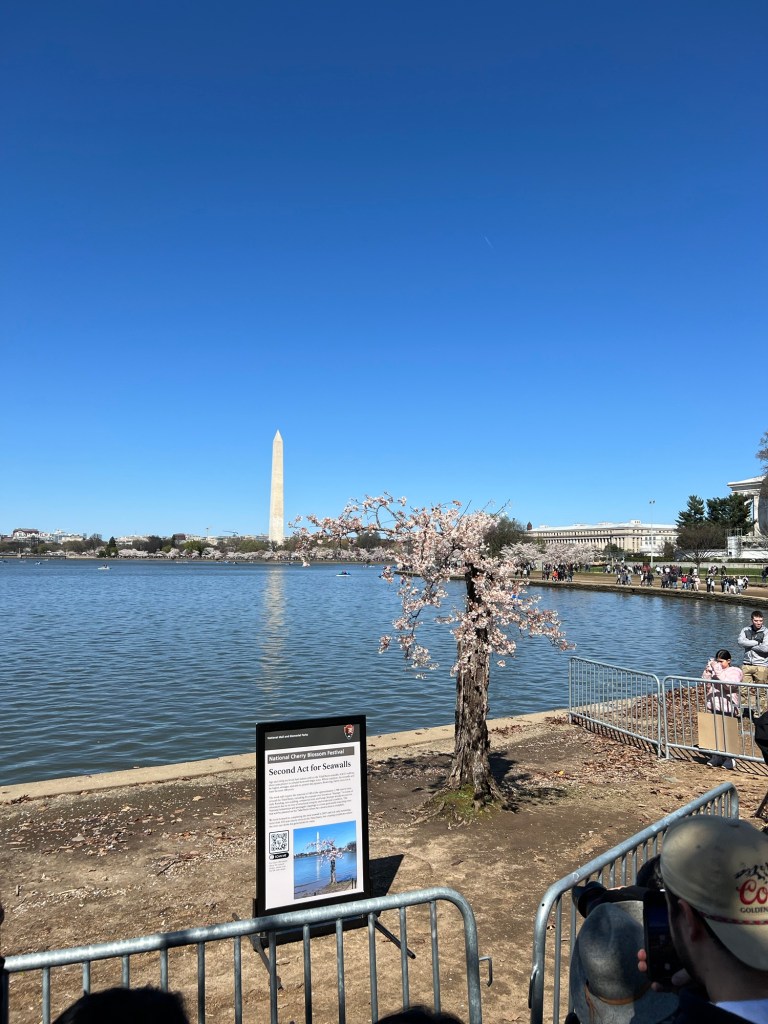
Last weekend, I didn’t post because I was in D.C., where I had my first tour of the cherry blossoms. One of the most beloved trees at the Tidal Basin is this poor shrub of a tree affectionately known as Stumpy.
Stumpy looks dead, but every March he (he?) sprouts a cheery hat of blooming cherry blossoms. But this bloom will be Stumpy’s last. Because of repeated flooding around the Tidal Basin, the sea wall is being raised, which will require the chopping down of 150 trees.
While Stumpy is in for a rude surprise after the bloom, companies using independent contractors can plan in advance to avoid their own demise.
I was asked recently what are the most common ways that claims of independent contractor arise. I thought, that’s a good blog post topic. So here goes.
Here are the most common way that a claim of independent contractor misclassification can arise:
Individual lawsuit
Class action lawsuit
Government audit, random – IRS, DOL, state DOLs, state tax agencies
Government audit, based on complaint – IRS, DOL, state DOLs, state tax agencies
Former IC files for unemployment. Employer denies IC was an employee, but the agency investigates and concludes the worker was misclassified. Typically, the agency will then assume all similarly situated ICs were also misclassified and the employer failed to pay into the unemployment system for the lookback period (probably 3-4 years) and will then issue a large bill for unpaid assessments, often six figures+.
Workers’ compensation claim, same scenario as for unemployment
There are also unexpected and odd situations that can arise, like here.
A similar list for Stumpy might look like this:
Most likely ways that Stumpy might meet his demise:
Chainsaw
Axe
Lightning strike
George Washington’s chopping method of choice if he could tell a lie
Typhoon
Ok, typhoon seems unlikely. I assume it’ll be a chainsaw.
This is a venomous Eastern Brown Snake, native to Australia. Stay away.
Tennis star Dominic Thiem knew what to watch for in his match this past weekend in Brisbane. It was on-court hazard he couldn’t ignore.
Play was interrupted when a “really poisonous snake” slithered onto the court near the ballkids. The intruder, an Eastern Brown Snake, “has the unfortunate distinction of causing more deaths by snake bite than any other species of snake in Australia.” The snake’s venom causes “progressive paralysis and uncontrollable bleeding,” which is not one of the on-court hazards typically of ballkidding.
(I don’t know if ballkidding is the real word for this, but it should be. Or ballkiddery maybe. I also learned from the snake bite article that the proper term for being bit by a venomous snake is “envenomation,” which is a word I hope to use elsewhere in a sentence sometime in 2024. So there’s a New Year’s resolution. [@Lisa, take note, I made one, even though you {correctly} say I am no fun because I won’t play the New Year’s Resolution game.])
The Eastern Brown Snake is not present in the U.S., so we don’t have to watch for any in 2024.
But here are several other things that could bite you in the behind in 2024 if you’re not paying attention:
1. New DOL test for independent contractor misclassification. The DOL issued its proposed new rule in October 2022 and targeted the fall of 2023 for release of a new final rule. The proposed rule would identify seven factors to consider when evaluating whether someone is an employee under the Fair Labor Standards Act (FLSA). The final rule will likely be very similar. We’re still waiting, and the final rule could be released at any time.
2. The new NLRB test for joint employment takes effect Feb. 26, 2024. Unless it doesn’t. The new rule is being challenged in both a federal district court in Texas and the U.S. Court of Appeals in D.C. Either court could quash the rule. The new rule will substantially expand who is a joint employer under the NLRA, even for worksites without unions.
3. Increased state and local enforcement activity. States and localities are filing their own lawsuits alleging worker misclassification. The New Jersey Attorney General recently filed a major lawsuit. The California Attorney General and California localities have been pursuing misclassification lawsuits too. Remember this: As much as I advocate for individual arbitration agreements with class waivers, they have no effect on enforcement actions brought by a state or local government. These lawsuits pose a substantial risk, and the governments love to issue one-sided accusatory press releases when they file the lawsuits.
4. The feds are doing this too. The DOL is bringing its own enforcement actions and publicizing them.
5. State and local laws that affect independent contractor classification and joint employment. We’re seeing legislative activity in three main areas:
(a) laws to change the tests; (b) laws that provide a safe harbor for independent contractor classification if certain protections are provided to the workers (Cal. Prop 22, this proposed Mass. state law); and (c) Freelancers laws that impose various requirements when retaining a solo independent contractor (currently: NY, IL, Los Angeles, Minneapolis, Seattle, NYC, Columbus).
6. State laws that criminalize worker misclassification. Take a look at recent legislation passed in NY State and Rhode Island.
7. State laws governing the use of temporary workers. Look for more states to enact laws like the Illinois Day and Temporary Worker Services Act (amended in Aug. 2023) and the New Jersey Temporary Workers’ Bill of Rights (enacted in Aug, 2023). These laws force companies that use staffing agencies to disclose the wages and benefits being paid to direct employees.
8. California’s AB 5 is still being challenged. This is the law that codified the ABC Test for most independent contractor relationships. But it also included a grab bag of miscellaneous and arbitrary exceptions. A full en banc Ninth Circuit has agreed to rehear Olson v. State of California, which challenges the constitutionality of AB 5.
Wishing you a happy, healthy, and litigation-free 2024.
Aeschylus (525-456 BC) was a Greek playwright and is often described as the father of tragedy. While only seven of his estimated 70+ plays have survived, the story of his death remains solidly entrenched atop the list of all-time oddest deaths (if it’s true).
Apparently, Aeschylus died after being struck in the head by a tortoise dropped by an eagle which had mistaken his head for a rock suitable for shattering the shell. That qualifies as a surprise ending to an otherwise successful career.
Today’s post is intended to help businesses in California avoid their own surprising deaths, sans tortoises.
Businesses using independent contractors in California are reminded that misclassification risks extend beyond the usual laws you’d think to be worried about. The California Labor Code has a special section devoted to making willful misclassification of workers illegal, period, end stop, and the law imposes substantial fines.
In other words, if you are working with independent contractors who should — under California law — be classified as employees instead, your business may be subject to substantial fines, even if you are not violating any of the laws addressing overtime, meal and rest breaks, reimbursement of expenses, etc.
Under Labor Code section 226.8, “willful misclassification” of independent contractors is, by itself, unlawful. Penalties start at “not less than” $5,000 and “not more than” $15,000 for each violation. If the Labor and Workforce Development Agency or a court determines that the violations are part of a pattern or practice, the fines jump to “not less than” $10,000 and “not more than” $25,000 for each violation.
Violators will also be required to post a notice on their website or in a location accessible to the public.
If your business is registered with the Contractors’ State Licensing Board, violations will also be reported to the Board for disciplinary proceedings.
The law defines “willful misclassification” as “avoiding employee status for an individual by voluntarily and knowingly misclassifying that individual as an independent contractor.” The law applies to “any person or employer,” raising questions as to whether individuals may be penalized too.
So if you’re doing business with independent contractors in California, be aware of the usual range of potential violations — overtime, meal and rest breaks, wage statements, expense reimbursements, etc. But also be aware that willful misclassification is, by itself, unlawful. Fines under Labor Code section 226.8 should be something you’re aware of. Enforcement is more frequent and more likely than being hit in the head by a falling tortoise.
Raise your hand if you remember songs by Laura Branigan? How about “Gloria”? Or this lyric? You take my self, you take my self control?
The song “Self Control” is about stepping into the nightlife, with a bit of seedier, seductive angle. The lyrics, though, remind us of another reason not to exert control over an independent contractor’s employees.
Suppose you retain a contractor to replace the roof on your building. The contractor has legitimate employees, and one falls through a weak spot on the roof. That’s a worker’s comp claim, and you’re not liable for some kind of premises liability claim, right?
The answer may depend on whether you’ve exerted control over the contractor’s employees.
Let’s look at California law, but the same principle can often be applied elsewhere. (Check your state’s law.) Under the Privette doctrine, a property owner who hires an independent contractor is liable to the contractor’s employee for injuries sustained on the job only if (1) the owner exercises control over any part of the contractor’s work in a manner that affirmatively contributes to the worker’s injuries, or (2) the employee is injured by a concealed hazard that is unknown and not reasonably ascertainable by the contractor.
The keys points in avoiding premises liability claims are, therefore:
Don’t exert control over how your contractors’ employees do their job, and
Make sure any hazards are marked or disclosed.
You could have other problems if the contractor misclassifies its workers and treats them as individual subcontractors. But avoiding control can also help you avoid joint employer liability in that situation.
The bottom line here when dealing with contractors’ employees is to avoid Laura Branigan’s idea of the nightlife: Don’t take their self, don’t take their self-control.
Because of gravitational pull, topography, and geology, people apparently weigh a bit more when in Southern Illinois than in Ohio or Indiana.
For an adult human, the difference is only about .02 pounds, so relocation is probably not a viable weight loss strategy. But still. Who knew?
Meanwhile, in Rhode Island a new wage theft law is going to weigh heavily on some buysinesses, no matter what the gravitational pull might be in Providence.
Amendments to the Rhode Island Payment of Wages Act, effective 1.1.2024, drastically increase the penalties for independent contractor misclassification.
Outside of the construction industry, penalties for misclassification will include fines between $1,500 and $5,000 per misclassified employee. Complaints will result in an investigation and, if a violation is found, a lengthy new administrative process ensues that may result in referral to the state attorney general for criminal prosecution.
In the construction industry, independent contractor misclassification will now be a felony, punishable by up to three years in prison, if the violation (a) is knowing and willful, (b) is a second violation of the Rhode Island law, and (c) is valued at $1,500 or more. First violations, if knowing and willful, are misdemeanors punishable by up to one year of imprisonment, for violations valued at $1,500 or less. Violations may also result in a fine of up to $1,000, instead of or in addition to imprisonment.
The amendment contains a possible drafting error (using “and” instead of “or), creating ambiguity as to whether a first violation in the construction industry may be punishable as a felony if the offense is knowing and willful and results in an underpayment of more than $1,500. The questionably drafted section is 28-14-19.1(i)(2)(i).
“Construction industry” is defined broadly and includes remodeling, repairing, improving, and maintaining any building.
“Employer” is also defined broadly and includes “any agent” of the employing entity.
The standard for determining misclassification will be the same standard that applies to the Fair Labor Standards Act (FLSA). That means an Economic Realities Test.
The amendments also impose criminal felony penalties for other selected wage and hour violations, if knowing and willful, including (a) failure to follow payday requirements, (b) failure to timely pay wages or accrued unused vacation upon termination, and (c) failure to timely pay an employee’s family wages due upon an employee’s death. Penalties for violations of these provisions include imprisonment for up to three years.
According to this article on SHRM.org, the Rhode Island Attorney General supported the amendments as providing enhanced tools and penalties for wage theft violations. The Attorney General seems particularly focused on going after independent contractor misclassification in the construction industry.
Businesses with employees and contractors in Rhode Island should review their current practices and double check for misclassification risks. The penalties for wage and hour violations in Rhode Island will be heavier than ever, starting in 2024.
When Johnny Cash recorded At Folsom Prison in 1968, he has performing for an audience of arsonists, kidnappers, and killers. But the inmate audience probably didn’t include any independent contractor misclassifiers.
Fast forward to 2023. There’s a new sheriff in town, and you wouldn’t believe what might now qualify a person for prison time.
Under a new law signed by Governor Hochul last week, wage theft in New York State is now larceny. The law amends section 155 of the penal code (larceny).
Section 155 defines larceny:
  2. Larceny includes a wrongful taking, obtaining or withholding of
another`s property, with the intent prescribed in subdivision one of
this section, committed in any of the following ways:
The definition then lists five subparts: (a) by embezzlement, (b) by taking lost property, (c) by issuing a bad check, (d) by false promise, or (e) by extortion.
Now there’s a subpart (f) “by wage theft.”
Wage theft is defined to include failing to pay overtime, if overtime is due, for work performed. That definition appears broad enough to include the failure to pay overtime because a worker was treated, incorrectly, as an independent contractor.
Larceny comes in different degrees, based on how much money is involved. The new law says that prosecutors can aggregate multiple instances of wage underpayment to one person into one count. It’s unclear to me whether underpayments to multiple people could be aggregated to create a higher degree of felony.
If the value of the property is up to $1,000, that’s petit larceny and a class A misdemeanor. But anything over $1,000 is grand larceny.
If the value of the property exceeds $1,000, that’s grand larceny in the 4th degree, which is a class E felony. More than $3,000 is 3rd degree grand larceny and a class D felony. More than $50,000 is 2nd degree grand larceny and a class C felony. More than $1,000,000 is 1st degree grand larceny and a class B felony.
These are serious crimes. Non-violent felonies can mean prison time. Conviction of a class E felony (for taking $1,001 to $3,000) can result in up to four years of prison time.
New York is not alone in seeking to classify wage theft as criminal conduct. Minnesota and Washington, D.C., are among other jurisdictions that have criminalized wage theft with laws that authorize jail time. California and Rhode Island are considering similar legislation. Rhode Island’s bill would criminalize the knowing misclassification of independent contractors as a felony.
Here’s a link to the new law in New York, created through two companion bills, A154A and S2832A.
Do I expect Riker’s Island to start filling up with accountants and corporate officers who misclassified independent contractors? Not exactly. But I do expect this new law to be used by the state as leverage.
Now that felony prosecutions are a new weapon in the enforcement arsenal, it would not surprise me to see the state threaten prosecution as leverage to force a company to settle disputes over whether independent contractors were misclassified. States can initiate proceedings through tax, unemployment, or workers compensation audits or as a result of worker complaints. Investigations can lead to findings of misclassification, along with hefty fines and back assessments, and companies naturally want to dispute these findings (sometimes causing my phone to ring).
Will the state use the threat of criminal prosecution to try to leverage settlements or capitulation? Yeah, probably.
This is a well-intentioned law because intentional wage theft from employees is obviously a bad thing. But the breadth of the law is a concern for companies that use independent contractors.
For those of you in New York City, there’s also the Freelance Isn’t Free Act, which imposes all sorts of contractual requirements when retaining solo independent contractors. Don’t forget about that.
There are lots of traps out there, and the dangers of misclassification keep growing.
I got stripes, stripes around my shoulders I got chains, chains around my feet I got stripes, stripes around my shoulders And them chains, them chains, They’re about to drag me down.
Driving back from Ann Arbor after dropping off my youngest daughter at college, I decided it would be a good time to catch up on some albums I hadn’t heard in a while. Soon I settled on Amy Winehouse’s Back to Black, which was her second and final album, released in 2006. The article liked here describes the conversation with her father that led to the song.
If Amy had gone to rehab, it’s fair to assume she would not have expected to be considered an employee of the rehab center where she was being treated. That was probably the expectation of a number of rehab patients at a Texas facility too, but a court ruling last month found otherwise.
It’s true, the situation in this case was a bit unusual, but it still involves rehab patients being deemed employees of their rehab enter. Here’s how it went down.
The patients, as part of their treatment, were required to undergo vocational, on-the-job training at third parties, where they worked regular shifts. The third parties would pay the rehab center, and the fees were used to offset operating costs. The patients signed agreements that they did not expect compensation for their work.
The rehab center, though, essentially functioned as a staffing agency. It charged the third parties for the patients’ time, even charging time-and-a-half when they worked overtime hours. The patients saw none of that cash, and some of them sued.
A district court in Texas applied the economic realities test and found the patients to be acting as employees of the rehab center / staffing agency when it performed the offsite work. After discovery, the court certified a collective action under the FLSA, and the case is ongoing.
An interlocutory appeal to the Fifth Circuit Court of Appeals failed, with the appeals court holding that the district court applied the right test for determining whether the patients could have been employees.
This case, while still underway, is a good reminder that employment relationships can be created in unexpected ways. This time it was the rehab center that tried to say, no no no.
Last week I was in Boston, spending time with many of my favorite people at our BakerHostetler Labor and Employment Group Retreat. I always enjoy spending time with the people in our other offices. They are wonderful, kind, smart, and a joy to be around.
As part of the programing, each practice team leader gave a six-minute TED-style talk. In my session about the Contingent Workforce Practice Team, I included a slide that I wanted share here.
We sometimes hear from companies that they don’t think they’re at risk for an independent contractor misclassification claim. They sometimes say, we’ve been doing it this way forever, and we haven’t been sued.
To that I would say, you mean you haven’t been sued yet.
Here’s what can happen when companies get sued for independent contractor misclassification.