Arbitration Agreements & Staffing Company Workers: Can They Take You Anywhere You Want to Go?

1956 chevy bel air Arbitration agreements staffing agency

1956 Chevy Bel Air. The Ides of March’s Vehicle was a ‘55.

I’m your vehicle baby. I can take you anywhere you want to go.

That may be true for Jim Peterik, vocalist and frontman for The Ides of March, who issued this bold proclamation in the band’s 1970 single, “Vehicle.” (It worked. See more below.)

It’s not true for arbitration agreements, though. They can’t take you anywhere you want to go unless you draft them very carefully. A recent decision by the First Circuit Court of Appeals reminds us of this lesson, although the opinion disappointingly fails to quote the Ides of March.

In Hogan v. SPAR Group Inc., we have an independent contractor named Paradise Hogan (which seems like would have been a cool name for a rock band); a staffing company called SBS; and a retail services provider called SPAR.  SPAR contracted with the staffing company to use the services of its independent contractors, including Hogan.

Continue reading

“So Tired of Being Alone”? Blogger Managers at SB Nation Claim Independent Contractor Misclassification

Bloggers independent contractor misclassificationThe good reverend and crooner Al Green was “so tired of being alone,” but he sang it in a way that made me want to keep listening. Stay solo, Rev. Al. On a more somber note, The Motels’ song, Only the Lonely is depressing. Why can only the lonely play? Everyone should be able to play.

Blogging can be a lonely endeavor. Bloggers write and push out content, hoping people will read. Fortunately for me it’s just a side gig, but for many it’s a way of life.

A lawsuit involving bloggers at SB Nation serves as a reminder that bloggers’ status as independent contractors is subject to challenge. In this case, three blogger/site managers allege that, despite their independent contractor agreements (Blogger Agreements), they were really employees entitled to overtime pay. According to the plaintiffs, site managers are required to watch games and report on breaking news on their assigned teams.

In a recent decision, the federal district court granted conditional certification to the Continue reading

We’ve Got Baby Steps Toward a New Definition of Joint Employment Under the FLSA.

Baby steps joint employment FLSA new rule

I still don’t know what this is, but I got it from Wikipedia.

According to Wikipedia, which knows everything, or thinks it does, Baby Steps is the name of a Japanese manga series by Hikaru Katsuki. I have no idea what that means, but apparently it’s a story of some sort, which I infer from the following description: “The story is centered on Eiichirō Maruo, a first year honor student who one day decides that he is lacking exercise.”

This does not make me want to watch it.

I will, however, be watching the baby steps being taken by the Department of Labor’s Wage and Hour Division (WHD). On February 28, the WHD submitted a proposed new rule on joint employment to the White House Office of Information and Regulatory Affairs (OIRA). The new rule would modify the meaning of “joint employment” under the Fair Labor Standards Act (FLSA), which is the federal law governing minimum wage and overtime requirements.

Continue reading

Which States Are Trying to Kill “Independent Contractors” to Death? (Hint: One Rhymes with Schmalifornia)

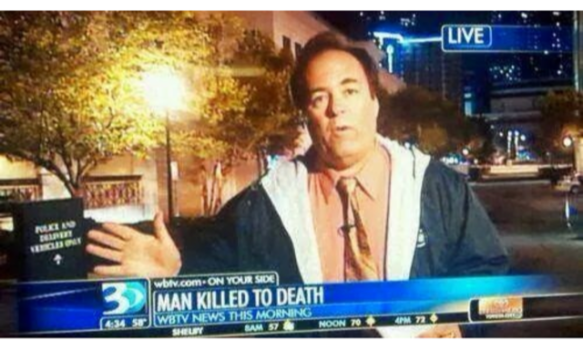
Man Killed to Death - independent contractor misclassification

Only 4:34 am and already it’s gonna be a long day in the newsroom.

The tests for Independent Contractor vs. Employee vary state-by-state, law-by-law.

In some states, it’s particularly hard to show that an independent contractor relationship is real. These states want to call everyone an employee, even if the parties have agreed to classify the relationship as an independent contractor relationship. When it comes to independent contractor classification, these are the states that are killing it to death.

Like the poor guy who was the subject of this local news story. Getting killed to death — that’s gotta be one of the worst ways to die.

The Top Three Hardest States to Be Independent Contractors, from my vantage point, are: Continue reading

Has Ontario Gone Loony? Court Rejects Independent Contractor Arbitration Agreement

Common loon Ontario

Our northern neighbor, the common loon. Photo from Cornell Lab of Ornithology.

According to OntarioTravel.net, Ontario’s official bird is the Common Loon. The loon is a water bird, regarded as an agile swimmer and a connosseur of the fine fish that populate Ontario’s lakes.

Loon has a second, seemingly unrelated definition too, though. According to dictionary.com, synonyms for “loony” include screwball, wacky, kooky, nutty, crazed, batty, lunatic, cuckoo, nuts, silly, psycho, berserk, ape, barmy, bonkers, cracked, daffy, daft, delirious, and demented.

For fans of arbitration agreements, a recent decision by the Ontario Court of Appeals might be regarded as a bit loony (using the non-water-bird definition). Ontario has generally been considered a province friendly to arbitration agreements. In Heller v. Uber Technologies, Inc., the court found Uber’s stock arbitration agreement to be invalid Continue reading

Joint Employment Update: Ohio Law Throws Franchisors a Bone, But It’s Not Entirely Delicious

This is Zippy enjoying a delicious treat.

When I throw my dog a bone, she is so happy. She goes and gets it, eats it, and wonders why she is unable to speak to express her gratitude. She doesn’t wonder, “Why is he throwing me a mere bone instead of an entire squirrel?” The bone is enough for complete contentment.

Ohio lawmakers have thrown franchisors a bone. They’ve limited the circumstances when franchisors can be held jointly liable if individual franchise owners commit certain Ohio employment law violations.

Under the new law, franchisors are not jointly liable for minimum wage, overtime, or pay frequency violations by franchise owners and are not jointly responsible for franchise owners’ responsibilities under unemployment insurance and workers’ compensation law — unless: Continue reading

“Flooding” Tactic Creates New Risk for Using Mandatory Arbitration Agreements with Independent Contractors

flood arbitration independent contractorsIn the Biblical story of Noah’s Ark, a world-engulfing flood destroys everyone except Noah, his family, and his mini zoo. A similar story appears in the Quran, and a much earlier world-engulfing flood was described in the Epic of Gilgamesh, a Babylonian poem dating back to the 19th Century BC, featuring Utnapishtim as our hero, a fellow who was awarded with immortality but whose name (unfortunately, IMHO) appears much less frequently on the Social Security Administration’s list of most popular baby names than our more recent pal, Noah.

A more recent trend in flooding comes from our friends in the plaintiffs’ bar. A popular tactic by companies wishing to avoid class action misclassification lawsuits has been to require independent contractors to sign arbitration agreements with class action waivers. These agreements force misclassification clams into arbitration on an individual basis, where each individual single claim has little value. By forcing claims into individual arbitration, there’s much less incentive for plaintiffs’ lawyers to take these cases since each case is worth very little. It’s only in the class action arena that these claims are worth big money.

But according to a recent article in Bloomberg Law, some of the larger, more organized plaintiffs’ firms are fighting back by flooding companies with mass arbitration filings. Continue reading

Should the Economic Realities Test be Changed for the Gig Economy? One Court Thinks So (But How Would That Affect Jon and Ponch?)

CHiPS are off duty police officers contractors or employees?

Go Jon! Go Ponch! Screenshot from IMDb

According to IMDb, the highest rated episode of CHiPs was Christmas Watch. Thieves at the community church ran off with a 15th century bell, which meant — according to IMDb — “The Christmas season doesn’t mean any less work for Jon and Ponch!”

Well ho ho ho then. The Christmas season means lots of extra work for lots of other people, including real life police officers. A recent case in the Sixth Circuit Court of Appeals addressed whether police officers taking second jobs are independent contractors or employees.

The test for Independent Contractor vs. Employee under the Fair Labor Standards Act (FLSA) is well-established. It’s the Economic Realities Test, a multi-factor test that seeks to determine whether, as a matter of economic reality, the worker is reliant on the hiring party to earn a living.

But in Acosta v. Off Duty Police Services, the Court of Appeals questioned whether the usual formula should still apply in the modern gig economy, when lots of people take second jobs.

Continue reading

Are Independent Contractor Drivers Entitled to a Minimum Wage? NYC Changes the Rules.

New york city rise share drivers minimum wage

Normally, independent contractors are not subject to minimum wage requirements, since those laws (such as the Fair Labor Standards Act) apply only to employees. Lots of litigation focuses on whether contractor drivers should, in fact, be classified as employees and therefore subject to minimum wage and overtime rules, but if the drivers are properly classified as independent contractors, minimum wage requirements typically do not apply.

But under a new rule in New York City, ride share drivers are now entitled to a minimum wage in excess of $15 per hour, despite being independent contractors.

Continue reading

Can You Be at Fault if Your Subcontractor Performs Shoddy Installation Work? Ask a North Dakotan.

Interstate 94 in North Dakota near Gladstone

Interstate 94 in North Dakota, near Gladstone, demonstrating why ND is the least visited of the 50 states. Photo from Wikipedia.

According to the official tourism website for North Dakota, the Peace Garden State “leads the nation in production of spring wheat, durum wheat, dry edible peas, dry edible beans, honey, flaxseed and canola.” North Dakota is also the #1 producer of honey in the U.S., a fact you can learn more about by clicking on this official North Dakota State Bee Map, on which you can locate the most active apriaries, which is a place where bees are kept and which is a word that I did not know was a word, so you see, we have all learned something today.

In addition to giving us more dry edible beans than any one of us could safely consume, North Dakota also gives us a recent case that reminds us of an important principle: If your company contracts to perform a service and subcontracts the service, your company is probably still liable under contract law to ensure that the service is properly performed.

In Bakke v. Magi-Touch Carpet, the Supreme Court of North Dakota examined a case where Magi-Touch subcontracted the installation of a shower door, which later “imploded,” according to the narrative in the opinion. I envision something less dramatic than the implosion of the Georgia Dome (cool video), but nonetheless if it were my shower door, I’d be unhappy with that sort of installation job.

The subcontractor apparently stunk it up (too many dry edible beans?), and the homeowner sued Magi-Touch for negligence, fraud, breach of contract, and bunch of other stuff that its creative attorney could come up with. The Court ruled that this was a basic breach of contract case, not a tort case and not a negligence case. Magi-Touch had an obligation to ensure the proper installation of the door, since that what it had contracted to do. Retaining a subcontractor did not relieve Magi-Touch of its contractual obligation to install the door, and Magi-Touch could be held liable under a breach of contract theory for failing to complete the installation in a workmanlike manner.

On the bright side for Magi-Touch, it could not be held liable for negligence or other tort claims. Any damages were limited to the type of damages available for a breach of contract — namely, what it could take to repair and properly install the door.

While this may seem like an obscure shower door case from a state you’ll never visit, the principles of law discussed in the case apply fairly universally. The N.D. Supreme Court decided this case based on common law principles, which generally apply no matter where in the U.S. you are located.

The important thing to remember is that subcontracting a service that your company has contractually agreed to perform does not relieve your company of the contractual obligation to perform the service. Subcontract at your own risk, and take steps to ensure the work is properly performed before paying the subcontractor.

Be sure your contracts are clear as to whose obligations are whose — both in your contracts with customers and in your contracts with subcontractors.

And if you ever find yourself planning a trip to North Dakota, aim for September in Grand Forks and prepare to witness greatness. According to the N.D. Tourism site, “The world’s largest french fry feed is held every year in Grand Forks, during Potato Bowl USA. A new record was set on September 10, 2015, when 5,220 pounds of french fries were served.” Sounds healthy but delicious.

For more information on joint employment, gig economy issues, and other labor and employment developments to watch in 2019, join me in Philadelphia on Feb. 26 or Chicago on Mar. 21 for the 2019 BakerHostetler Master Class on Labor Relations and Employment Law: Meeting Today’s Challenges. Advance registration is required. Please email me if you plan to attend, tlebowitz@bakerlaw.com. If you list my name in your RSVP, I will have your registration fee waived.

© 2019 Todd Lebowitz, posted on WhoIsMyEmployee.com, Exploring Issues of Independent Contractor Misclassification and Joint Employment. All rights reserved.

Enter your email address to subscribe to this blog and receive notifications of new posts by email.

2018_Web100Badge