

Yes, This Applies to You: Why Non-Union Employers Should Be Concerned with the NLRB’s View On Worker Misclassification

Good news for old passengers traveling to New York!

The caption above may be too small to read, but it’s from a recent New York Times article about updates to the airport. The caption says, “An old passenger walkway in the process of being demolished at La Guardia Airport.”

You might not think this applies to you, but I say it’s about time! The idea of a walkway for old passengers doesn’t seem right, and old passengers should be allowed to use the same walkway as everyone else.

Another area where I sometimes hear “this doesn’t apply to me” is when we talk about the National Labor Relations Board’s views on independent contractor misclassification. But even if your business is union-free (meaning no union, not that the union is complimentary), the NLRB’s position on independent contractor misclassification matters. (Also, how is it that we intuitively know caffeine free means there’s no caffeine, rather than there’s lots of it and there’s no extra charge?)

The NLRB wants to make it harder to maintain independent contractor status under the National Labor Relations Act (NLRA).

Here are four reasons your non-union business should care about the NLRB’s views on independent contractor misclassification:

  1. The NLRB’s General Counsel has issued a policy memo indicated that she intends to have independent contractor misclassification declared to be an automatic unfair labor practice (ULP). This spring, the Board issued a complaint in a case that may help it achieve this policy goal. If misclassification becomes an automatic ULP, that would overturn the Board’s 2019 decision in Velox Express, when the Board said it was reasonable for a company to express its opinion that a worker was a contractor, not an employee, even if the company turned out to be wrong.
  2. If the NLRB rules that your contractors are employees, you can hang up a welcome shingle for your favorite union. (Aside: I don’t think anyone would welcome shingles, but you can buy welcome shingles on amazon.) Such a ruling would empower the unions to try to organize your newly-declared employees. If some independent contractors were already feeling mistreated enough to seek employee status, they’ll likely welcome union representation to help them fight back against The Man.
  3. The protections granted to employees under the NLRA apply to non-union employees too. But the NLRA doesn’t apply to independent contractors. Non-union employees have the right to engage in protected, concerted activity without fear of retaliation or reprisal. Contractors don’t. Protected, concerted activity can include more than you might think. Any time two employees get together to object to a business practice, that’s potentially protected, concerted activity. If two contractors jointly complain, the NLRA doesn’t apply.
  4. The NLRB has an information sharing agreement with the Department of Labor (DOL). If the NLRB thinks your contractors are misclassified, they’re probably gonna tell on you. The DOL may then starts its own investigation, viewing your company as an easy target for misclassification, even though the tests for employee status are different under the NLRA and the federal wage and hour laws administered by the DOL.

Like La Guardia, the NLRB is trying to do a little remodeling, but the NLRB’s remodeling is not for the benefit of old passengers. Instead, the Board is trying to make it harder to classify a worker as an independent contractor. The Board also wants to declare worker misclassification to be an automatic ULP.

Whether your workforce is union or non-union, businesses should pay attention. This is a rebuild that’s worth watching.

Enter your email address to subscribe to this blog and receive notifications of new posts by email.

© 2022 Todd Lebowitz, posted on WhoIsMyEmployee.com, Exploring Issues of Independent Contractor Misclassification and Joint Employment. All rights reserved.

2018_Web100Badge
 

Strap Yourself In: NLRB’s Joint Employer Rule is About to Change Again

Strap yourself in. It’s going to be a bumpy ride.

I drove behind this band of safety-conscious paddle boarders near Chicago recently. The guy in back is secured in by bungy cord. At least he looks comfortable.

The NLRB is about to make things a lot more uncomfortable for businesses concerned about joint employment.

As discussed here, the NLRB made clear earlier this year that it wants to revamp the independent contractor vs. employee test under the National Labor Relations Act.

Expect a new rule on joint employment to drop any day. The NLRB indicated several months ago that the joint employment rule was a target in its rulemaking agenda, and the expected release date is July 00, 2022.

Like most of you, I switched from the Julian calendar to the Gregorian calendar in 1752. While the changeover caused 11 days in September 1752 to be lost, I missed the memo about inserting a 0th day in July, starting 270 years later. Since I could find no way to mark the expected release date in my iPhone, I’ll give the NRLB the benefit of doubt and assume the date is a placeholder for “sometime in July.”

On Friday, it will be “sometime in July.” So get your bungy cord ready. You may need to take steps to better protect your business against joint employment risks.

The new rule will displace the current Trump-era regulation, which currently requires direct and substantial control over essential terms and conditions of employment before joint employment can be found.

Expect the new rule to track the Browning-Ferris standard imposed by the Board in 2015. Under Browning-Ferris, when one company has the right to control aspects of the work, joint employment exists — regardless of whether control is actually exerted, and regardless of whether the control is over wages, hours, scheduling or anything else that fits within the meaning of essential terms and conditions.

Joint employment under the NLRA can have several effects:

1. It can force you to the bargaining table for matters involving workers you did not consider to be your employees.

2. It can open the door to bargaining units that include workers you didn’t think were your employees.

3. It can open another door to bring union organizing activity into your business – through non-employee workers.

4. It can convert illegal secondary picketing into lawful primary picketing. If another company’s employees picket your site but the workers turn out to be your joint employees, they have the right to be there.

5. Each business that is a joint employer may be found jointly and severally liable for the other’s unfair labor practices.

When the new rule is posted, we’ll discuss what employers should do in response. Until then, enjoy the summer and try paddle boarding. But try to use a car with enough seats.

Enter your email address to subscribe to this blog and receive notifications of new posts by email.

© 2022 Todd Lebowitz, posted on WhoIsMyEmployee.com, Exploring Issues of Independent Contractor Misclassification and Joint Employment. All rights reserved.

2018_Web100Badge
 

It’s a Mistake? Too Bad. NLRB Might Soon Make Misclassification an Automatic Unfair Labor Practice

Cover art from the single, released on Epic Records

In the early 80s, I had two cassettes by the Australian band Men at Work — Business as Usual, released in 1981, and Cargo two years later.

Cargo includes the single, “It’s a Mistake,” a satirically upbeat Cold War-inspired song in which a soldier tries to figure out whether the Cold War is about to turn hot. The video features too-short shorts, bad lip syncing, and old ladies hitting the band members with umbrellas on the battlefield, all of which leads to an accidental nuclear launch, triggered when an officer tries to stub out his cigar in an ashtray but hits the wrong button.

All in all — a good song, a mediocre video, and a strong commentary on the politics of the day.

A recent move by the NLRB’s General Counsel revives the “It’s a Mistake” narrative, this time in the context of independent contractor misclassification. There are no accidental nukes involved, but the move is definitely politically motivated.

If the General Counsel has her way, the Board will rule that independent contractor misclassification is an automatic unfair labor practice (ULP), even if it’s a mistake.

To reach that conclusion, the Board would have to overturn its 2019 decision in Velox Express, in which the Republican-controlled Board ruled that misclassifying a worker, by itself, is not automatically a ULP.

The GC’s actions are no surprise. In mid-2021, she issued a strategy memo announcing that one of her strategic (political) priorities was to get Velox Express overturned during her tenure. With the NLRB now featuring a 3-2 Democratic majority, she’s likely to prevail.

What does this mean for companies that use independent contractors?

It means the stakes are higher. If Velox Express is overturned, misclassification of independent contractors would likely become an automatic ULP, even if the classification was well-intentioned. Essentially, there would be strict liability for misclassification.

Traditional remedies for ULPs include back pay and reinstatement, which could mean forced reclassification as employees. The GC has been pushing to further expand the scope of available remedies because, hey, why not.

If your business is hit with a ULP and forced to reclassify workers under the NLRA, good luck trying to maintain independent contractor status under wage and hour laws or other laws.

A reversal of Velox Express, therefore, may have sweeping ramifications, making it much harder to maintain independent contractor status across a broad range of federal and state laws.

The consequences of this expected reversal will be serious — not quite on the scale of nuclear devastation, but worse than old ladies hitting you on the head with an umbrella.

Enter your email address to subscribe to this blog and receive notifications of new posts by email.

© 2022 Todd Lebowitz, posted on WhoIsMyEmployee.com, Exploring Issues of Independent Contractor Misclassification and Joint Employment. All rights reserved.

2018_Web100Badge
 

Twilight Zone? AFL-CIO Says “Not Now,” as NLRB Considers Redo of Independent Contractor Test

Raise your hand if you remember the 1982 song “Twilight Zone”? Seeing several hands raised, I will continue. The tune is catchy, but the lyrics are hard to understand. I heard the song this weekend and decided to finally check the lyrics. “There’s a storm on the loose, zarmines in my head” couldn’t be right, could it?

Raise your hand if you knew the chorus was this:

Help I’m steppin’ into the twilight zone
The place is a madhouse,
Feels like being cloned
My beacon’s been moved under moon and star
Where am I to go, now that I’ve gone too far?

Seeing no hands raised, I will continue.

It’s all very confusing to me, but it made sense once I read through it more carefully.

I had the same reaction after seeing an amicus brief that the AFL-CIO recently filed with the NLRB. The brief was filed in a case that may — yet again — change the test for independent contractor status.

In Atlanta Opera, the Regional Director for Region 10 ruled that a proposed unit of makeup artists and hairstylists were employees, not independent contractors, and that an election could proceed.

The NLRB then issued a notice asking the parties and the public for briefs addressing whether the Board should reconsider the test for determining whether workers are independent contractors or employees. It seems inevitable that the Board will rewrite the test to make it harder for a worker to be deemed a contractor. But is Atlanta Opera the right case to use for rewriting the test?

The AFL-CIO, somewhat surprisingly, said no. Like the lyrics to “Twilight Zone,” that was confusing to me at first, but it makes sense when I read through it more carefully.

Undoubtedly the unions want a rewrite of the test to make it as hard as possible for someone to maintain contractor status. But the AFL-CIO urged the NLRB to wait, arguing this isn’t the right set of facts to make a sweeping change.

The AFL-CIO’s brief argued that, even under the existing test, it was pretty clear the makeup artists and stylists were employees. It would be more impactful to wait for a closer case to rewrite the test. Ah, so that’s their angle — wait til later then really shake things up.

Eventually, the NLRB is going to change the test. The current test, explained in SuperShuttle DFW (discussed here), examines ten Right to Control factors.

At a minimum, it seems clear that the Board would like to go back to the FedEx Home Delivery test. The FedEx test asked whether the worker was “in fact, rendering services as part of an independent business” and essentially adopted an Economic Realities Test, rather than the Right to Control Test that had always been applied.

When the Board revises the test, it could go back to FedEx or it could try to adopt a new, more stringent test, like an ABC Test. (The courts probably would not allow the Board to adopt an ABC Test without Congressional action, but that’s for another day.)

And the Board will revise the test. It’s just a question of when and to what. The Board will make it harder to be an independent contractor under federal labor law. That means it will become easier for unions to file election petitions and try to organize groups of workers that might now be operating as independent contractors.

Yeah there’s a storm on the loose, sirens in my head.

Oh. That makes more sense.

Enter your email address to subscribe to this blog and receive notifications of new posts by email.

© 2022 Todd Lebowitz, posted on WhoIsMyEmployee.com, Exploring Issues of Independent Contractor Misclassification and Joint Employment. All rights reserved.

2018_Web100Badge
 

Low-Hanging Fruit? DOL and NLRB Join Forces to Fight Misclassification

Much has been written about the phrase low-hanging fruit. The metaphor’s origins are fairly obvious, referring to obtaining quick wins through minimal effort.

But how good is the metaphor? For harvesters, starting with the lowest hanging fruit is not the best strategy. Fruit near the top of a tree is generally riper and ready to eat, due to better sun exposure. Fruit can also be heavy, and harvesters who start at the top of the tree can work their way down as their bags grow heavier. Then there’s this insightful warning from one author’s mother, who cautioned that the blackberries near the bottom of the bush are the ones most likely to have been peed on by an animal.

Pee notwithstanding, the Department of Labor and the NLRB have seized on the low-hanging fruit strategy as a way to go after companies that misclassify independent contractors.

Last month the two agencies signed a Memorandum of Understanding, agreeing to share information and better coordinate investigations when they suspect there have been violations of the law.

While the DOL and NLRB apply different tests to determine Who Is My Employee?, it’s likely that a relationship failing one test also fails the other. Violators of one law are the low-hanging fruit.

What does that mean for businesses? It means that if the NLRB believes your company misclassified its independent contractors, they’ll share that information with the DOL, which would be pleased to piggyback on the NLRB’s finding and tag you with wage and hour violations as well. And vice versa.

The information sharing arrangement raises the stakes for alleged violators. Companies found to be in violation of one law are more likely to be found in violation of multiple laws. And that means more fines, more assessments, and more disruption to your business.

For the DOL and NLRB, the information-sharing arrangement means they’ll go after each other’s targets and seek to double up on penalties. For companies whose independent contractors may resemble employees, it means you’re the blackberry that’s about to get peed on.

Enter your email address to subscribe to this blog and receive notifications of new posts by email.

© 2022 Todd Lebowitz, posted on WhoIsMyEmployee.com, Exploring Issues of Independent Contractor Misclassification and Joint Employment. All rights reserved.

2018_Web100Badge
 

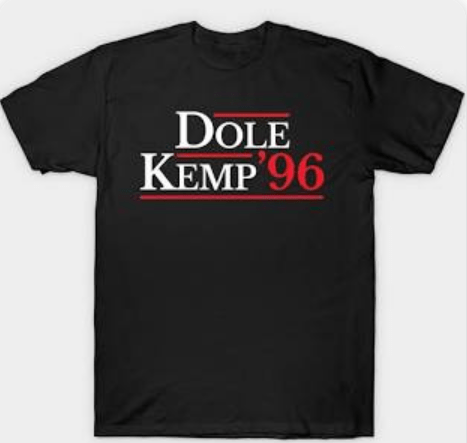
Dole-Kemp ‘96? NLRB Announces Plan to Go Back to Old Rules on Joint Employment (But Not That Old)

The internet may be a playground and an encyclopedia, but it’s also a living graveyard. For those of you politically inspired, it’s not too late to join up with Dole-Kemp ‘96. Fans of the X-Files, who still await the next episode, can stay caught up at Inside the X. And anyone still looking to join the Heaven’s Gate cult can check out the group’s webpage here. The site is supposedly maintained by two of the only members who did not commit suicide in 1997, so leadership opportunities may be available.

The NLRB is hopping on the retro train too. Earlier this month, the Board announced its intent to adopt a new rule on joint employment. The new rule would displace the Trump-era regulation, which currently requires direct and substantial control over essential terms and conditions of employment before joint employment can be found.

The NLRB’s Notice of Proposed Rulemaking follows the trail blazed by the Wage and Hour Division (WHD) of the DOL, which in July rescinded the joint employment regulations passed during the Trump Administration. The WHD didn’t make a new rule; it just left a giant crater in the landscape, and now for Fair Labor Standards Act claims, there is no regulation at all.

The NLRB seems intent on adopting its own rule, not just rescinding the current regulation. There’s little doubt as to what the new rule will look like. Expect it to track the Browning-Ferris standard imposed by the Board in 2015. Under Browning-Ferris, when one company has the right to control aspects of the work, joint employment exists — regardless of whether control is actually exerted, and regardless of whether the control is over wages, hours, scheduling or anything else that fits within the meaning of essential terms and conditions.

Expect a substantial expansion in the scope of who a joint employer under the NLRA after the new rule is released. The impacts of joint employment under the NLRA can include being forced into bargaining with workers directly employed by a different company (a subcontractor, for example), being accused of a broader range of unfair labor practices, and being subjected to picketing that would be illegal secondary picketing if there were no joint employment relationship.

Back when Bob Dole was seeking the White House, actual control was required to be a joint employer under the NLRA. Since 2015, the standard has ping-ponged back and forth as the political winds have shifted. We’re about to see another major change sometime in mid-2022. If after the change you find yourself missing the good ol’ days, at least you can still cozy up with your Apple 2E and check out the Dole-Kemp campaign website.

Enter your email address to subscribe to this blog and receive notifications of new posts by email.

© 2021 Todd Lebowitz, posted on WhoIsMyEmployee.com, Exploring Issues of Independent Contractor Misclassification and Joint Employment. All rights reserved.
2018_Web100Badge
 

Nontoxic Bullets? NLRB General Counsel Wants to Ruin College Football by Calling Athletes “Employees”

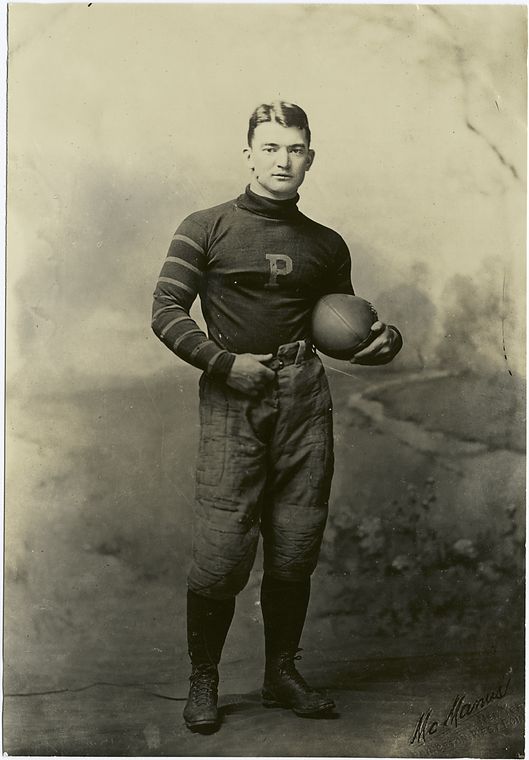
Johnnie Poe, Princeton footballer. NYPL Public Collection.

One of my favorite twitter accounts is @ACrimeADay, which reminds us of arcane things that are against the law. A few recent gems:

  • 18 USC §1865 & 36 CFR §2.16(f) make it a federal crime to make an unreasonable noise while a horse is passing by in a national park.
  • 42 USC §271(a) & 21 CFR §1250.44(b) make it a federal crime for an airline to provide a brush for the common use of passengers on a flight.
  • 16 USC §707 & 50 CFR §21.55(c)(2) make it a federal crime to kill a barn owl in Hawaii by shooting it, unless you use nontoxic bullets.

There are lots of ridiculous laws. If it’s up to the NLRB’s new General Counsel, we’re about to see another one — and it may ruin college football as we know it.

In a memo issued last week, the NLRB’s General Counsel and chief prosecutor, Jennifer Abruzzo, announced that her office now take the position that college student athletes are employees of their universities, with full rights to bargain collectively, strike, and file unfair labor practice charges.

Her analysis is based on a Right to Control Test. She thinks that universities control the working conditions of student-athletes in a way that makes them employees under the test. She explains this in the memo, if you care to read the details.

The memo also takes the position that universities’ use of the phrase “student-athlete” instead of “employee” is itself an unfair labor practice because it intentionally misleads these students employees into thinking that they do not have Section 7 rights. Her position is directly contrary to current Board law, established in Velox Express (discussed here).

And it gets worse. Because the NLRB has jurisdiction over private employers but not public ones, her position applies only to private universities, not public ones. That means — if her memo becomes law — that Northwestern’s football players are employees, but Ohio State’s are not.

And she sets up the NCAA as a joint employer, alleging that it too controls the working conditions of these students.

Abruzzo is a former union lawyer, so it’s not surprising that she subscribes to the worldview that everyone’s an employee, but for this to be the official prosecutorial position of the Board is inane. With Democratic Board appointees now holding a 3-2 majority on the Board, it feels like only a matter of time before the right case comes along and the NLRB rubber stamps her position as Board law.

Let’s imagine how this plays out in real life:

  • It’s the end of a long practice, and two players tell Coach they’re not going to run that last required wind sprint because they think it’s just too much. Coach says to run anyway because I’m the coach. Coach disciplines the players by not playing them or demoting them on the depth chart or whatever. Based on the memo, that might be an unfair labor practice because the employer is taking adverse action against employees for engaging in protected concerted activity.
  • Coach tells his team not to criticize the program publicly because we’re a team and we need to speak with one voice. Based on the memo, that could be an unfair labor practice because employers cannot prohibit employees from speaking out collectively about working conditions.
  • When the fifth- and sixth-string senior running backs refuse to show up for practice as a way of protesting Coach’s decision not to play them in last week’s blowout win, Coach tells them they’re off the team. Under the Abruzzo memo, that might be an unfair labor practice.
  • At a press conference, the athletic director is asked about team discipline and responds that these are “student-athletes” and not “employees” and they’ll do what Coach says and they’ll do it quietly, without objection, if they want to play. Under the Abruzzo worldview, that sounds like an unfair labor practice too.

Let’s play this out a little further. If the reason student-athletes are employees is because of the Right to Control Test analysis, then wouldn’t the same analysis apply to other laws that use the Right to Control Test? The Affordable Care Act and ERISA use Right to Control Tests. Could it become the law that student-athletes must be made an offer of coverage under ACA? Would the school have to allow the players to participate in employee retirement programs?

And what about the Economic Realities Test used for determining whether someone is an employee under the Fair Labor Standards Act (FLSA), which requires minimum wage and overtime? The Economic Realities Test is generally viewed as more expansive and inclusive than the Right to Control Test. If Abruzzo’s position is embraced by the NLRB and later affirmed by the U.S. Courts of Appeal, would that open the door for requiring private universities to pay student-athletes a minimum wage and overtime?

This is sounding like Absurdistan (which, by the way, it the title of a pretty entertaining book by Gary Shtenygart).

I’m making unreasonable noises just thinking about all of this. Good think I’m not in a national park with a horse nearby or I’d really be in trouble.

Enter your email address to subscribe to this blog and receive notifications of new posts by email.

© 2021 Todd Lebowitz, posted on WhoIsMyEmployee.com, Exploring Issues of Independent Contractor Misclassification and Joint Employment. All rights reserved.
2018_Web100Badge
 

The Abruzzo Agenda: Like a Good Hyena Story, the NLRB Giveth Then Taketh Away

Not a dog.

I had a great intro all ready for this week. I really did. WXYZ.com reported last week that Monica, a Detroit woman, took home a free puppy, only to learn days later that it was not a puppy at all, but a hyena.

I was about to share this great piece of investigative journalism with you when I was hit with this surprise: The woman’s story is now in doubt, and WXYZ has retracted the story. Thanks to the Wayback Machine, you can read the original story here and (to my great disappointment, because I so badly wanted this to be true) the retraction here.

Sometimes we are given something that seems wonderful — say, a puppy, or even a fun story about a woman who mistook a hyena for a puppy — but then it gets taken away. For all of you who were pleased with any NLRB pro-business decisions over the past four years, get ready to see those taken away too.

Last week new NLRB General Counsel Jennifer Abruzzo issued a Memo listing roughly 40 decisions and principles that she’d like to undo. She has a more diplomatic way of saying it — let’s just say we’ll “carefully examine” these. But expect many of these principles to be toast, now that the Board features a 3-2 Democratic majority.

You can see the full list here, but I’ll focus on three:

(1) “Cases involving the applicability of SuperShuttle DFW,” a case that made it easier to be classified as an independent contractor. You can read my post about SuperShuttle here.

(2) “Cases involving the applicability of Velox Express,” a case in which the NLRB ruled that independent contractor misclassification, by itself, is not an automatic unfair labor practice. You can read my post about Velox Express here.

(3) “Cases involving the applicability of UPMC,” which relates to the standard for the Board to accept settlements voluntarily entered into by the parties. What she’s really talking about here is the McDonald’s franchise joint employer case, in which her predecessor as NLRB General Counsel settled a case against McDonald’s that she (and an Administrative Law Judge) didn’t think should have been settled. The NLRB eventually approved the settlement. Here is an amicus brief I wrote for the Restaurant Law Center in that case, arguing that the settlement should be approved.

The General Counsel for the NLRB is the equivalent of its chief prosecutor. These are Abruzzo’s priorities. With a sympathetic 3-2 majority on the Board, you can be sure that many of these desired changes will take place.

Like a good hyena story, the pro-business Board decisions from the last four years aren’t likely to last.

Enter your email address to subscribe to this blog and receive notifications of new posts by email.

© 2021 Todd Lebowitz, posted on WhoIsMyEmployee.com, Exploring Issues of Independent Contractor Misclassification and Joint Employment. All rights reserved.

2018_Web100Badge
 

SLoB Act? Really? Businesses Should Support This Joint Employment Bill Despite Dumb Name

Image by Prawny from Pixabay

It’s all about branding, fellas. Republicans have introduced bills with clever acronyms before. Examples include:

  • JAWS Act (Justice Attributed to Wounded Sharks)
  • BEER Act (Brewers Excise and Economic Relief Act); and
  • EL CHAPO Act (Ensuring Lawful Collection of Hidden Assets to Provide Order), to require El Chapo to forfeit assets from the drug trade.

But I’m puzzled by the more recent lack of effort.

Seeking to counter the Democrats’ boldly named PRO Act (Protecting the Right to Organize), Republicans have introduced the SLoB Act (Save Local Business).

Seriously? That’s the best that your marketing team could do?

The SLoB Act would narrow the definition of joint employment. To find “joint employer” status, proof would be required of direct, actual, immediate, and significant control over essential terms and conditions of employment, such as hiring, firing, pay, benefits, supervision, scheduling, and discipline.

That would be terrific for franchising and for all businesses that use outsourced labor, such as through staffing agencies. The SLoB Act would amend both the National Labor Relations Act (NLRA) and the Fair Labor Standards Act (FLSA). For those of you who recall the Browning-Ferris escapades, this bill would repeal the loosey-goosey joint employment standard the NLRB tried to adopt in 2015, later repealed, unrepealed, and appealed. The bill would codify a tougher test, making it much harder to prove joint employment.

The SLoB Act will not pass, at least not in this Congress. It is unlikely to have any Democratic support. But it has a letter of support signed by 65 leading industry groups, including the U.S. Chamber of Commerce, the American Trucking Association, the National Franchise Association, and the Society for Human Resource Management.

I like the bill, but I’d have gone with a better acronym. Such as…

  • JERKY Act (Joint Employment is Really Kinda Yucky)
  • EJECT Act (Editing the Joint Employment Control Test)
  • JESUS Act (Joint Employment Should be Used Sparingly).

I think the last one would garner the most support, no matter what the bill was about. No one wants to go on record opposing Jesus.

But nobody asked me.

Enter your email address to subscribe to this blog and receive notifications of new posts by email.

© 2021 Todd Lebowitz, posted on WhoIsMyEmployee.com, Exploring Issues of Independent Contractor Misclassification and Joint Employment. All rights reserved.

2018_Web100Badge
 

Watch This Rooster! PRO Act Would Change Definition of Employee Under Labor Law.

Who says the news is always negative? Not so in Alabama, where we were treated this headline on AL.com:

Teen reunited with pet rooster lost at Alabama Cracker Barrel after Civil War reenactment

It seems an 18-year old Civil Ward reenactor brought his Buff Orpington rooster, Peep, to a civil war reenactment in nearby Tennessee, then stopped for lunch afterward. Our hero dutifully put on Peep’s leash and secured him to the bed of his truck while dining at a nearby Cracker Barrel after the event. But when he returned, the rooster was gone.

Police and animal control were summoned to the scene. The parties were later reunited when Peep wandered back to the Cracker Barrel, and this story had a happy ending. This had been Peep’s third Civil War reenactment, although his role in the battle plan was unclear. Fortunately for Peep, further battles lie ahead.

Further battles lie ahead in Congress too, not for roosters but for businesses everywhere. Rep. Bobby Scott and 200 Democratic co-sponsors have re-introduced a massive labor bill that fulfills every wish of the unions.

The PRO Act – Protecting the Right to Organize – would bring a massive overhaul to the National Labor Relations Act. Two portions of the bill would affect independent contractor misclassification and joint employment.

First, the PRO Act would re-adopt the Browning-Ferris test for determining whether someone is a joint employee of two employers. This test had been adopted by the Obama Board but reversed by the Trump Board. The test would consider two entities to be joint employers if they “share or codetermine” control over workers’ terms of employment. The notion of control would be broad. It would include not just actual direct control, but reserved control or indirect control. Under the original Browning-Ferris test, control over the speed of an assembly line was considered sufficient control to make a business a joint employer.

Second, the PRO Act would adopt a nationwide strict ABC Test for determining whether someone is an employee or independent contractor. The new rule would require that all workers performing services be considered employees under the NLRA unless (all three):

(A) the individual is free from the employer’s control in connection with the performance of the service, both under the contract for the performance of service and in fact;
(B) the service is performed outside the usual course of the business of the employer; and
(C) the individual is customarily engaged in an independently established trade, occupation, profession, or business of the same nature as that involved in the service performed.

This is the same test adopted by California (recall Dynamex and AB 5) but without the exceptions. California lawmakers recognized this test wouldn’t work in all industries and adopted a long list of exceptions to this test.

The PRO Act would not have any exceptions.

It’s no surprise that the bill was reintroduced. A similar bill was passed by the House last year but never considered by the Senate.

While 60 votes in the Senate isn’t going to happen, this bill deserves a close and watchful eye. (Follow its progress here.)

That means really watching it, not just tying it to the bed of your truck and hoping it’s still there after you finish your Cracker Barrel omelet.

© 2021 Todd Lebowitz, posted on WhoIsMyEmployee.com, Exploring Issues of Independent Contractor Misclassification and Joint Employment. All rights reserved.

Sign up now for the BakerHostetler 2021 Master Class on The State of Labor Relations and Employment Law. Twelve sessions, one hour every Tuesday, 2 pm ET, all virtual, no cost. Click here for more information. List me as your BakerHostetler contact so I know you’ve registered. 

Enter your email address to subscribe to this blog and receive notifications of new posts by email.

 
2018_Web100Badge