

Beware of Bright Shiny Objects: Home Health Care Company Gets Whacked in Misclassification Claim

Alabama jewelry store owner Slater Jones owns a two-carat diamond. That might not seem surprising, but stay with me here. Jones keeps the diamond in his eye. Literally, in his eye.

You see, Jones lost his right eye to illness. Rather than living with a boring old prosthetic eye that looks like, well, an eye, Jones engaged eye prosthetic expert John Lin to create a custom artificial eye from a diamond.

Having a diamond for an eye may seem a bit gaudy, but I guess if you’re in the jewelry business, you may as well just go for it.

Those in the home health care business, on the other hand, should not just go for it — especially if “it” is classifying in-home health aides as independent contractors.

In a settlement finalized earlier this month, California Attorney General Rob Bonta secured a $9.5 million settlement against the individual owners of a home health care company for misclassifying its workers in violation of California law. In this case, the owners appears to have operated the home health agency as a d/b/a without having incorporated. Oopsie. The settlement included another $1.5 million against a different incorporated home health care entity and its family of owners.

The settlement also prohibited all of the defendants from classifying their aides as independent contractors in the future.

We have seen a lot of recent cases brought against home health care companies that classify their workers as independent contractors. This settlement is a stern warning that home health care companies choosing that model need to be extremely cautious.

Because this case was brought by the State, some of the protections we often recommend, like individual arbitration agreements with class action waivers, provide no protection. This case and the settlement also serve as a reminder that individuals can be held liable for intentional misclassification.

The claims brought against the agencies focused largely on California’s Unfair Competition Law (UCL). Misclassification allegations under the UCL typically claim that the wrongdoer gained an improper advantage in the marketplace by unlawfully classifying employees as independent contractors.

Treating in-home aides as contractors may seem like a bright shiny object worth pursuing. But that sparkle you see is no diamond. It’s just the gleam in the eye of the State Attorney General, preparing to count the cash from another misclassification settlement.

Classify wisely, my friends.

Enter your email address to subscribe to this blog and receive notifications of new posts by email.

© 2025 Todd Lebowitz, posted on WhoIsMyEmployee.com, Exploring Issues of Independent Contractor Misclassification and Joint Employment. All rights reserved.

2018_Web100Badge
 

Snakes! And Other Things to Watch for in 2024

This is a venomous Eastern Brown Snake, native to Australia. Stay away.

Tennis star Dominic Thiem knew what to watch for in his match this past weekend in Brisbane. It was on-court hazard he couldn’t ignore.

Play was interrupted when a “really poisonous snake” slithered onto the court near the ballkids. The intruder, an Eastern Brown Snake, “has the unfortunate distinction of causing more deaths by snake bite than any other species of snake in Australia.” The snake’s venom causes “progressive paralysis and uncontrollable bleeding,” which is not one of the on-court hazards typically of ballkidding.

(I don’t know if ballkidding is the real word for this, but it should be. Or ballkiddery maybe. I also learned from the snake bite article that the proper term for being bit by a venomous snake is “envenomation,” which is a word I hope to use elsewhere in a sentence sometime in 2024. So there’s a New Year’s resolution. [@Lisa, take note, I made one, even though you {correctly} say I am no fun because I won’t play the New Year’s Resolution game.])

The Eastern Brown Snake is not present in the U.S., so we don’t have to watch for any in 2024.

But here are several other things that could bite you in the behind in 2024 if you’re not paying attention:

1. New DOL test for independent contractor misclassification. The DOL issued its proposed new rule in October 2022 and targeted the fall of 2023 for release of a new final rule. The proposed rule would identify seven factors to consider when evaluating whether someone is an employee under the Fair Labor Standards Act (FLSA). The final rule will likely be very similar. We’re still waiting, and the final rule could be released at any time.

2. The new NLRB test for joint employment takes effect Feb. 26, 2024. Unless it doesn’t. The new rule is being challenged in both a federal district court in Texas and the U.S. Court of Appeals in D.C. Either court could quash the rule. The new rule will substantially expand who is a joint employer under the NLRA, even for worksites without unions.

3. Increased state and local enforcement activity. States and localities are filing their own lawsuits alleging worker misclassification. The New Jersey Attorney General recently filed a major lawsuit. The California Attorney General and California localities have been pursuing misclassification lawsuits too. Remember this: As much as I advocate for individual arbitration agreements with class waivers, they have no effect on enforcement actions brought by a state or local government. These lawsuits pose a substantial risk, and the governments love to issue one-sided accusatory press releases when they file the lawsuits.

4. The feds are doing this too. The DOL is bringing its own enforcement actions and publicizing them.

5. State and local laws that affect independent contractor classification and joint employment. We’re seeing legislative activity in three main areas:

(a) laws to change the tests;
(b) laws that provide a safe harbor for independent contractor classification if certain protections are provided to the workers (Cal. Prop 22, this proposed Mass. state law); and
(c) Freelancers laws that impose various requirements when retaining a solo independent contractor (currently: NY, IL, Los Angeles, Minneapolis, Seattle, NYC, Columbus).

6. State laws that criminalize worker misclassification. Take a look at recent legislation passed in NY State and Rhode Island.

7. State laws governing the use of temporary workers. Look for more states to enact laws like the Illinois Day and Temporary Worker Services Act (amended in Aug. 2023) and the New Jersey Temporary Workers’ Bill of Rights (enacted in Aug, 2023). These laws force companies that use staffing agencies to disclose the wages and benefits being paid to direct employees.

8. California’s AB 5 is still being challenged. This is the law that codified the ABC Test for most independent contractor relationships. But it also included a grab bag of miscellaneous and arbitrary exceptions. A full en banc Ninth Circuit has agreed to rehear Olson v. State of California, which challenges the constitutionality of AB 5.

Wishing you a happy, healthy, and litigation-free 2024.

Best wishes,
Todd

Enter your email address to subscribe to this blog and receive notifications of new posts by email.

© 2024 Todd Lebowitz, posted on WhoIsMyEmployee.com, Exploring Issues of Independent Contractor Misclassification and Joint Employment. All rights reserved.

2018_Web100Badge
 

Going to Rehab? Patients Can Still Be Employees, Says Court

Driving back from Ann Arbor after dropping off my youngest daughter at college, I decided it would be a good time to catch up on some albums I hadn’t heard in a while. Soon I settled on Amy Winehouse’s Back to Black, which was her second and final album, released in 2006. The article liked here describes the conversation with her father that led to the song.

If Amy had gone to rehab, it’s fair to assume she would not have expected to be considered an employee of the rehab center where she was being treated. That was probably the expectation of a number of rehab patients at a Texas facility too, but a court ruling last month found otherwise.

It’s true, the situation in this case was a bit unusual, but it still involves rehab patients being deemed employees of their rehab enter. Here’s how it went down.

The patients, as part of their treatment, were required to undergo vocational, on-the-job training at third parties, where they worked regular shifts. The third parties would pay the rehab center, and the fees were used to offset operating costs. The patients signed agreements that they did not expect compensation for their work.

The rehab center, though, essentially functioned as a staffing agency. It charged the third parties for the patients’ time, even charging time-and-a-half when they worked overtime hours. The patients saw none of that cash, and some of them sued.

A district court in Texas applied the economic realities test and found the patients to be acting as employees of the rehab center / staffing agency when it performed the offsite work. After discovery, the court certified a collective action under the FLSA, and the case is ongoing.

An interlocutory appeal to the Fifth Circuit Court of Appeals failed, with the appeals court holding that the district court applied the right test for determining whether the patients could have been employees.

This case, while still underway, is a good reminder that employment relationships can be created in unexpected ways. This time it was the rehab center that tried to say, no no no.

Enter your email address to subscribe to this blog and receive notifications of new posts by email.

© 2023 Todd Lebowitz, posted on WhoIsMyEmployee.com, Exploring Issues of Independent Contractor Misclassification and Joint Employment. All rights reserved.

2018_Web100Badge
 

Here’s a Visual Showing the Impact of Misclassification Claims

(Not this visual. Keep reading!)

Last week I was in Boston, spending time with many of my favorite people at our BakerHostetler Labor and Employment Group Retreat. I always enjoy spending time with the people in our other offices. They are wonderful, kind, smart, and a joy to be around.

As part of the programing, each practice team leader gave a six-minute TED-style talk. In my session about the Contingent Workforce Practice Team, I included a slide that I wanted share here.

We sometimes hear from companies that they don’t think they’re at risk for an independent contractor misclassification claim. They sometimes say, we’ve been doing it this way forever, and we haven’t been sued.

To that I would say, you mean you haven’t been sued yet.

Here’s what can happen when companies get sued for independent contractor misclassification.

Enter your email address to subscribe to this blog and receive notifications of new posts by email.

© 2023 Todd Lebowitz, posted on WhoIsMyEmployee.com, Exploring Issues of Independent Contractor Misclassification and Joint Employment. All rights reserved.
2018_Web100Badge
 

Like a Lead Balloon: Cities Aim to Take Down Worker Misclassification

This headline does not refer to the Chinese spy ballon.

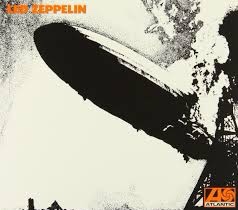
Instead, I’m thinking about 1968. Jimmy Page and John Paul Jones had joined up to form a new band after the breakup of the Yardbirds. Drummer Keith Moon of The Who supposedly said the project would go down like a lead balloon.

One of the largest balloons, of course, is the zeppelin. The zeppelin was a passenger airship used until the Hindenberg disaster in 1937. So the band named itself Led Zeppelin, dropping the ‘a’ in Lead so people wouldn’t mispronounce the name of the band.

In 1971, the band released Led Zeppelin IV, which included the song “Going to California” and this lyric:

Spent my days with a woman unkind
Smoked my stuff and drank all my wine
Made up my mind to make a new start
Going to California with an aching in my heart

For today’s post, I’m going to California with an aching in my heart.

Cities in California have upped their game when going after companies that use independent contractors. They’re taking the lead (not led) in bringing their own lawsuits.

In January 2023, the City of San Francisco secured a $5.25 million settlement to cover 5,000 independent contractor delivery drivers. The lawsuit alleged a failure to comply with the city’s health care security and paid sick leave ordinances, which apply to employees.

In October 2022, San Diego’s city attorney settled its own independent contractor misclassification lawsuit for $46.5 million. That deal covered 300,000 independent contractor delivery drivers.

In 2021, San Francisco reached agreement on another delivery driver misclassification lawsuit, settling for $5.3 million to cover 4,500 local drivers.

The mountains and the canyons start to tremble and shake
The children of the sun begin to awake (watch out)

States are following a similar playbook, as we recently saw when New Jersey obtained a $100 million settlement, alleging that a rideshare app company failed to pay into the state unemployment insurance fund for independent contractor drivers.

It seems that the wrath of the gods got a punch on the nose
And it's startin' to flow, I think I might be sinkin'

Government-initiated lawsuits can be particularly dangerous because arbitration agreements and class action waivers are ineffective. The governments are fighting for funds they think are rightfully theirs.

They also have political motives driving their prosecutions. Officials facing re-election want to be able to show their constituents they’re making a difference and fighting for workers’ rights (and ignoring, as usual, the fact that most IC drivers want to remain ICs).


Throw me a line, if I reach it in time
I'll meet you up there where the path runs straight and high

The trend of government-backed compliance efforts is going to continue and will likely increase. Companies making widespread use of independent contractors should be proactive in evaluating these relationships, the contracts, and the local laws to build a comprehensive defense strategy — before getting sued.

Enter your email address to subscribe to this blog and receive notifications of new posts by email.

© 2023 Todd Lebowitz, posted on WhoIsMyEmployee.com, Exploring Issues of Independent Contractor Misclassification and Joint Employment. All rights reserved.

2018_Web100Badge
 

DOL Gets Aggressive with $5.6 Million Consent Judgment on Independent Contractor Misclassification

There’s an island in Quebec that’s larger in area than the lake in which it sits. René-Levasseur Island was supposedly formed by the impact of a meteorite 214 million years ago, although eyewitness accounts differ. The land mass became an island in 1970, when the Manicougan reservoir was flooded, merging two crescent shaped lakes that surrounded the area.

I like fun geography facts, and an island larger than the lake in which it sits is a fun fact. But feels a bit aggressive for the Canadians to merge two crescent shaped lakes to turn this land mass into an island. I’m sure they had their reasons. If nothing else, it looks good on a map.

The Department of Labor is also being aggressive, but they’re not flooding any reservoirs. Instead, they’re channeling their aggression toward independent contractor misclassification.

In a news release this month, the DOL announced that it had obtained a consent judgment for $5.6 million against a national auto parts distributor and an Arizona logistics firm for allegedly misclassifying 1,398 drivers as independent contractors. The award included back wages and liquidated damages.

The DOL had alleged that, by misclassifying the drivers, the companies failed to meet minimum wage requirements, failed to pay overtime rates, and failed to keep required timekeeping records. These failures each were violations of the Fair Labor Standards Act (FLSA).

The award covered an eight-year period between April 2012 and March 2020.

I see three takeaways here:

First, the DOL is being aggressive in filing lawsuits when it thinks independent contractors have been misclassified. This consent judgment shows how expensive these claims can be for companies that improperly classify workers. Companies using independent contractors needs to be proactive in evaluating their risks and taking steps to minimize those risks. There are lots of ways to reduce risk if you plan ahead, before you’ve been sued or investigated.

Second, this case is a reminder that companies who classify delivery drivers as independent contractors are at heightened risk. Federal and state agencies and the plaintiffs’ bar seem to be filing a disproportionate number of claims involving delivery drivers. If your business uses delivery drivers who are classified as independent contractors, you may be at an increased risk of an audit or lawsuit.

Third, remember the DOL’s proposed new rule for independent contractor classification under the FLSA? (Read more here, here, and here.) The DOL wants to change the current test for who is an employee under the FLSA, replacing a regulation adopted by the Trump Administration in 2020. But cases like this one show that the current regulation is not impairing the DOL’s ability to enforce what it perceives as misclassification. The DOL’s many recent successes — as posted in DOL news releases — show that the DOL is doing just fine under the current rule when it comes to misclassification enforcement. The new rule is a solution without a problem.

Large judgments like this one seem shocking, but they are a reminder of the substantial dangers of misclassification.

Learn more by joining me at the 10th Annual 2023 BakerHostetler Labor Relations and Employment Law Master Class, all virtual, one hour every Tuesday starting February 7, 2023. My program on Contingent Workforce issues will be on March 7, 2023. Registration is free.

Enter your email address to subscribe to this blog and receive notifications of new posts by email.

© 2023 Todd Lebowitz, posted on WhoIsMyEmployee.com, Exploring Issues of Independent Contractor Misclassification and Joint Employment. All rights reserved.

2018_Web100Badge
 

Watch Your Back, AB 5! Ninth Circuit Case Could Wipe Out California’s ABC Test

Yes, that’s a goat on my back.

This weekend we tried goat yoga. Highly recommended. It was a mix of basic yoga (my kind of yoga) to help get me stretched out, but held in a pen with goats who know no boundaries.

We then toured the farm, which featured llamas, long-haired pigs, guinea hens, a few obligatory dogs, and several varieties of goats, including the kind of fainting goats featured in that George Clooney movie.

Having to watch my back during yoga was something I signed up for and was part of the fun. Not so for California’s AB 5, which should be watching its back after what we saw at the Ninth Circuit last week.

The Ninth Circuit held oral argument in a case brought by Uber called Olson v State of California. Uber is arguing that AB 5 is unconstitutional.

While it’s hard to predict cases based on oral argument, the three judges on the panel seemed pretty sympathetic to Uber’s argument, which is that the statute arbitrarily picks winners and losers, i.e., the exemptions make no sense from an equal protection/due process standpoint.

Unlike the strict ABC Test in Massachusetts, the California ABC Test codified in AB 5 (and later AB 2257) contains loads of exceptions. The statute says to use the ABC Test to determine employee vs independent contractor status for all workers — except for dozens of categories of workers and other situations.

Let’s not pretend. We all know this bill was written to target ride share and delivery app companies. The unfairness of making this law apply to everyone soon became apparent and led to the insertion of dozens of exceptions. If an exception applies, the Borello balancing test applies instead of the ABC Test.

The exceptions just about swallow the rule, and a law targeting a handful of companies presents constitutional problems. Or so the argument goes.

We can expect a decision in the next few months, and this is one to watch. Unlike me at goat yoga, imagining a decision that strikes down or severely limits AB 5 is not a big stretch.

AB 5, watch your back.

Enter your email address to subscribe to this blog and receive notifications of new posts by email.

© 2022 Todd Lebowitz, posted on WhoIsMyEmployee.com, Exploring Issues of Independent Contractor Misclassification and Joint Employment. All rights reserved.

2018_Web100Badge
 

Watch Your Back, AB 5! Ninth Circuit Case Could Wipe Out California’s ABC Test

Yes, that’s a goat on my back.

This weekend we tried goat yoga. Highly recommended. It was a mix of basic yoga (my kind of yoga) to help get me stretched out, but held in a pen with goats who know no boundaries.

We then toured the farm, which featured llamas, long-haired pigs, guinea hens, a few obligatory dogs, and several varieties of goats, including the kind of fainting goats featured in that George Clooney movie.

Having to watch my back during yoga was something I signed up for and was part of the fun. Not so for California’s AB 5, which should be watching its back after what we saw at the Ninth Circuit last week.

The Ninth Circuit held oral argument in a case brought by Uber called Olson v State of California. Uber is arguing that AB 5 is unconstitutional.

While it’s hard to predict cases based on oral argument, the three judges on the panel seemed pretty sympathetic to Uber’s argument, which is that the statute arbitrarily picks winners and losers, i.e., the exemptions make no sense from an equal protection/due process standpoint.

Unlike the strict ABC Test in Massachusetts, the California ABC Test codified in AB 5 (and later AB 2257) contains loads of exceptions. The statute says to use the ABC Test to determine employee vs independent contractor status for all workers — except for dozens of categories of workers and various other situations.

Let’s not pretend. We all know this bill was written to target ride share and delivery app companies. The unfairness of making this law apply to everyone soon became apparent and led to the insertion of dozens of exceptions. If an exception applies, the Borello balancing test applies instead of the ABC Test.

The exceptions just about swallow the rule, and a law targeting a handful of companies presents constitutional problems. Or so the argument goes.

We can expect a decision in the next few months, and this is one to watch. Unlike me at goat yoga, imagining a decision that strikes down or severely limits AB 5 is not a big stretch.

Enter your email address to subscribe to this blog and receive notifications of new posts by email.

© 2022 Todd Lebowitz, posted on WhoIsMyEmployee.com, Exploring Issues of Independent Contractor Misclassification and Joint Employment. All rights reserved.

2018_Web100Badge
 

Hold Your Horses! A Court of Appeals May Have Granted Independent Contractors the Right to Strike and Organize

On June 4, 1923, jockey Frank Hayes rode 20-1 long shot Sweet Kiss to victory at Belmont Park. While that seems impressive, what made the win even more memorable is that at some point during the race, poor Frank died. He somehow stayed on the horse and ended up in the winner’s circle. Or six feet under it. It was his first (and last) win as a jockey.

Jockeys are in the news again, and we’ve got another surprise finish. But this one has implications far beyond the racetrack.

Click here for the rest of the story, originally posted yesterday on the BakerHostetler blog, Employment Law Spotlight.

Enter your email address to subscribe to this blog and receive notifications of new posts by email.

© 2022 Todd Lebowitz, posted on WhoIsMyEmployee.com, Exploring Issues of Independent Contractor Misclassification and Joint Employment. All rights reserved.

2018_Web100Badge
 

Long Songs: After 12 Years, Court Certifies Class in Independent Contractor Misclassification Dispute

I like long songs. For the last several weeks, I have been starting my workday with the Pink Floyd album Atom Heart Mother on my headphones. The opening track is 23 minutes, and the album ends with “Alan’s Psychedelic Breakfast,” a 13-minute journey that includes lines like “um, flakes” and “marmalade, I like marmalade.”

Long litigation, on the other hand – I’m not a fan. When I was an associate, I worked on a healthcare fraud case that lasted about 8 years. Not fun.

The legal team at Sleepy’s LLC probably doesn’t like long litigation either. Hargrove v. Sleepy’s LLC is an independent contractor misclassification case that was filed in 2010. The case has been to the Third Circuit twice already and went to the New Jersey Supreme Court on the certified question of what test should be used to determine employee status under New Jersey wage and hour law. I wrote about that 2015 ruling here in a post that also takes an admiring look at one menu option at an ice cream parlor in Dania Beach, Florida. (Partial spoiler: ABC Test. But you’ll have to read the post to see about the menu option.)

This case is back in the news after a new set of rulings.

After 12 years, the court issued a decision last week to grant class certification and to deny the defendant’s motions to dismiss. These are issues that are typically resolved in the first several months of a case.

The point here is to show you how long and complicated an independent contractor misclassification case can become. This is not straightforward litigation, and there are so many legal issues that can dominate the underlying dispute — questions, for example, about class certification, class size, jurisdiction, standing, and which legal test to use for deciding whether misclassification exists.

This case is a good reminder of the importance of getting your independent contractor arrangements reviewed and your contracts revised. Preventive steps taken now can help avoid lengthy litigation later. Lengthy litigation is no fun for anyone.

But I do like long songs, and if you pay close attention, you can appreciate the careful and elaborate construction of a track. Put on your headphones if you want to catch every subtle sound.

And marmalade. I like marmalade.

Enter your email address to subscribe to this blog and receive notifications of new posts by email.

© 2022 Todd Lebowitz, posted on WhoIsMyEmployee.com, Exploring Issues of Independent Contractor Misclassification and Joint Employment. All rights reserved.

2018_Web100Badge