Back before seatbelts were a thing, Sears sold this handy Auto Strap for Front-Seat Tots. Tie your toddler to some part of the car, and drive carefree! What could go wrong?
Ok, things have changed a bit when it comes to driving. Seatbelts and airbags seem to have carried the day. Things have also changed quite a bit in the modern workforce, with the gig economy pushing aside traditional employer-employee work relationships.
Something important just happened to help California gig economy companies, and it’s gone under the radar. Biden named California Attorney General Xavier Becerra as his pick for Health & Human Services. Why should gig economy companies care who Biden’s HHS pick is? Because naming Becerra to HHS means Becerra will no longer be California’s Attorney General. And that’s good new because a key part of Becerra’s agenda as State AG had been to knock around gig economy companies as much as possible.
Becerra tried to sabotage Prop 22 by giving it a misleading description on the ballot, but voters saw through it and passed the measure anyway.
Becerra has been the driving force behind California’s lawsuits against ride share companies, trying to force them to reclassify drivers as employees.
But now, assuming he gets confirmed, someone else will take over as California AG. Hopefully it will be someone with less of an anti-gig economy agenda than Becerra. We’ll see. But for now, this pick seems to be good news. I don’t know what he’ll do as HHS Secretary, but I know what he won’t do as HHS Secretary, and that’s to pick fights with companies who help to keep the gig economy strong.
So strap in and let’s see what this new ride will bring. Just be sure to use a seatbelt, not a $1.88 standing harness.
When a New Zealand man was caught snooping around with a torch at a building where he didn’t belong, someone called the authorities. When the local police arrived, the man was still there but still as a stone. He was pretending to be a statue.
The ruse failed, and the man was taken into custody.
The moral of the story, I suppose, is that elaborate ruses don’t make good excuses.
The same can be said for a group of movers who claimed that a moving company had misclassified them as independent contractors and denied them a minimum wage and overtime. The federal court hearing the case, however, threw it out because the movers filed too late. Under the Fair Labor Standards Act (FLSA), the statute of limitations on federal minimum wage and overtime claims is two years — or three years, if willful. These plaintiffs filed well after the deadline had passed.
The plaintiffs didn’t go away quietly, however. Knowing they had missed the deadline, they first tried some creative arguments as to why the court should toll — or extend — their deadline to file.
First, they argued that they the moving company had tricked them into thinking they weren’t employees and had no FLSA rights, since the moving company told them they were independent contractors. Sorry, the court ruled. If that were an excuse, there would be no statute of limitations in misclassification cases. The deadline to file would get tolled every time, and that’s not gonna happen.
Second, they argued that the moving company failed to provide the required posters that notify employees of their rights. Again, no dice. Independent contractors aren’t entitled to employee notices, so if the company thought the workers were contractors, there obviously wouldn’t be notices. This too would apply in every misclassification case and cannot be grounds for tolling the filing deadline.
Finally, they argued that they were immigrants and shouldn’t be held responsible for not knowing the rights under US law. The judge wasn’t buying that one either. Ignorance of the law is not an excuse, especially when the plaintiffs were basing their lawsuit on the very law they claimed to be ignorant of.
This case dealt with statutes not statues, and despite spellcheck’s frequent failure to see the difference, there is a difference. Anyway, the excuses by the statue guy and the movers were similarly unimpressive. The movers’ case was dismissed for failure to file within the statute of limitations, and the court never even considered whether the workers were actually misclassified.
Companies facing misclassification claims need to remember to review statutes of limitation. A claim filed too late is destined to fail, so long as the company raises that defense.
And I still can’t believe the New Zealand guy thought he could go unnoticed by holding really really still. I’d love to see the body cam footage from when the officers moved in and caught him. Swatting away the pigeons on his head probably gave him away.
In this story from the Illustrated Police News, 1877, we see the courageous exploits of a young lady from Runcorn, England, skillfully discomfiting a bear with her parasol. Now, I question whether this really happened as captioned. The caption says she punched the bear in the eye with her parasol, but this artist’s rendering depicts more of a body blow, so I’m not sure which to believe. But either way, as you can see, the bear was discomfited and this atypical encounter ended well.
In this instance, a parasol was more than a mere umbrella. It served as a defensive weapon.
The lesson here is that objects we take for granted can be used as a defensive weapon with some proper planning. That includes your independent contractor agreements.
Independent contractor agreements should not be generic, off-the-shelf documents. Every agreement is an opportunity to build your defense against a claim of independent contractor misclassification.
Think about all of the factors that go into determining whether someone is an employee or an independent contractor. For a refresher, you can review some earlier posts on Right to Control Tests and Economic Realities Tests. Also here.
On factors where are you do not exert control and do not need to exert control, put that in the contract. Put in the contract that the contractor controls these factors and you have no right to control them.
For example, do you care what time of day the contractor works? Do you care if the contractor retains helpers? Do you care whose tools the contractor uses?
If not, put that in the contract: The contractor decides when to work, whether to hire helpers, and what tools to use. There are dozens more factors like these to consider. The point is to customize your agreement so that it is defensive weapon to help fend off a claim.
Then go a step further and put in the contract that you have no right to control these decisions. Remember, the Right to Control tests generally focus on whether you have the right to control something, even if you don’t actually exercise that right.
If you use your agreement to memorialize the good facts—those that support independent contractor status—then you can turn that agreement into a defensive weapon.
The agreement might not help if confronted with a bear in Victorian England (“here, read this contract while I run!”), but it may help to discomfit an independent contractor misclassification lawsuit.
Remember the 1983 song, Say Say Say, by Paul McCartney and Michael Jackson? “Say, say, say what you want. But don’t play games with my affection.”
The songs asks for some straight talk. Be direct. Say what you mean. Or as Michael says, “What can I do girl, to get through to you. Cause I love you, baby (baby).”
1983 was a memorable year for me for music. I had a cassette called CHART ACTION 1983 that was one of my favorites. It included songs from Dexy’s Midnight Runners, Adam Ant, the Stray Cats, Bonnie Tyler, and Golden Earring.
But it didn’t have Say, Say, Say, and that was fine by me because I don’t really like the song. If it was on CHART ACTION 1983, I’d have skipped it, but the old fashioned way: forward, forward more, a little more, oops too far, rewind, rewind, forward, got it. Hungry Like the Wolf.
“Say say say what you want” would have been good advice for a Pennsylvania agency that offered interpreter and transcription services. The agency tried to run its business with an independent contractor model, but failed to say say say the right things in its agreements.
A Pennsylvania court ruled that the agency had misclassified its interpreters as independent contractors. Under PA unemployment law, the interpreters were actually employees. (“You know I’m crying oo oo oo oo oo.”)
Let’s look at where the agency went wrong.
Bad facts, tending to support employee status: The interpreters had a set of policies and procedures they had to follow, including wearing name badges. The agency did the scheduling.
Good facts, tending to support contractor status: The interpreters are not supervised, reimbursed for their expenses, or provided benefits, training, equipment, or name badges. An interpreter could refuse work at any time.
Totally unnecessary bad fact: The interpreters had to sign a non-compete agreement. That’s evidence of employment because it restricts the interpreter’s ability to work for others as an entrepreneur would do. But it turns out that, in reality, the agency didn’t care if the interpreters worked for others, and many of the interpreters did work for others.
Even worse, the non-compete included language referencing an “existing contract of employment.” Oops. Poor choice of words when you’re trying to prove there was no employment relationship. I would bet that the agency just pulled this non-compete language off the internet, without having considered the legal implications. The court focused a lot of attention on the non-compete when ruling that the interpreters were really employees.
The non-compete was a self-inflicted wound. That misstep is a good example of why you can’t just pick template agreements off the internet and expect that they’ll be sufficient.
More bad facts were on the website: Another problem for the agency was its website, which described the extensive training provided to interpreters, referred to them as “new hires,” and indicated they were all required to undergo a final performance evaluation. These facts all suggest an employment relationship.
Pennsylvania unemployment law applies a two-part test for determining whether someone is an employee or an independent contractor. To be an independent contractor, the service had to prove that it did not exercise control (a Right to Control Test) and that the interpreters were “customarily engaged in an independently established trade, occupation, profession or business.”
This could have been done correctly. Because of the independent nature of an interpreter’s work, the agency probably could have set up legitimate independent contractor relationships. This case is a classic example of how a proactive legal review could have saved the day.
If the agency had asked a lawyer for help in setting up the business the right way, this case could have gone the other way. The agency could have eliminated the non-compete agreement (which it didn’t enforce anyway), modified the website to eliminate “new hire” language and to de-emphasize training, cut back on the specific training provided, and changed the name tag requirement to a more generic requirement to provide identification.
So to the song I say say say: You may have hit #1 in the U.S. that October, but I’m not the one who really loves you.
Some elections are more consequential than others. It can be tough to lose, but in Rabbit Hash, Kentucky, the candidates for mayor are probably indifferent to the outcome. Even the winner probably doesn’t do a lot of mayoring.
That’s because the mayor of Rabbit Hash is a dog. Since 1988, the mayor has always been a dog. This year’s winner is a six-month old French bulldog named Wilbur Beast. Wilbur succeeds incumbent Brynneth Pawltro, a pit bull who has served since 2016.
In other election news (in case you were wondering whether there was anything else happening in the category of elections), voters in California passed Proposition 22. Prop 22 will allow ride share and delivery drivers in California to maintain independent contractor status, so long as the app companies provide a suite of predetermined benefits. Read more here.
That means the ABC Test in AB 5 will no longer apply to ride share or delivery drivers in California. The new exemption does not apply to other industries.
Look for intense lobbying from other industries to obtain similar treatment. Hopefully Prop 22 serves as model legislation and will adopted elsewhere throughout the country.
There was intense lobbying in the Rabbit Hash race too. Wilbur Beast’s owner, Amy Noland, told CNN that the dog had done a lot of campaigning and had hosted a lot of events.
According to the Rabbit Hash Historical Society, “The people of Rabbit Hash generally elect mayors based on the candidates’ willingness to have their belly scratched.” Based on my informal survey of other recent political races, this appears to be a anomaly.
The day after turning our clocks ahead, we find it’s easier to get up early to not commute to work, to not drop the kids off at school, and to not be late for any meeting you’d ordinarily attend in person since there are none. Welcome to pandemic-style Standard Time.
A bit of Daylight Savings Time trivia for you: In January 1974, the whole country went on DST for what was supposed to be 16 straight months in response to the energy crisis. But the people resisted, complaining about school kids waiting for buses in the dark, and Congress repealed the Emergency Daylight Saving Time Act in October 1974.
Today, Arizona and Hawaii are the only states that do not observe Daylight Savings Time, although in a sense they do observe it but just choose not to participate, sort of like how most of us observed school dances in junior high from inside the gym but far from the dance floor.
Today’s post takes a look back in time, but only a very brief look back because I’m going to recap events from last week. It was a busy week in the courts for independent contractor misclassification issues.
The Texas Supreme Court heard arguments in a case invoking an independent contractor trash collector whose leg was amputated after a garbage truck ran it over. The garbageperson (sanitation worker?) had been retained through a staffing agency as a 1099 IC, and the issue was whether worker’s compensation coverage was available.
A pair of drivers in California lost their motion seeking a temporary restraining order against Uber, seeking to prevent the company from texting drivers to ask them to support Prop 22. (Read more on Prop 22 in last week’s post).
A group of cable installers in Illinois won approval to proceed as a class in a case alleging they were misclassified as independent contractors. The plaintiffs claim they were really employees under the Fair Labor Standards Act and are owed overtime pay.
A Missouri appeals court ruled that a company’s pet sitters were employees under Missouri unemployment law, not independent contractors. The court applied a Right to Control Test.
In 1908, the town of Thunder Bay, Ontario (then known as Port Arthur) was the first place to adopt Daylight Savings Time. Regina, Saskatchewan followed in 1914; and Winnipeg and Brandon, Manitoba adopted DST in 1916. Germany and Austria jumped on the DST bandwagon in 1916, turning the clocks ahead to minimize the use of artificial lighting. The UK and France followed shortly afterward, although I am sure if you asked, they would say they got the idea from Canada, not the Germans.
I find it confusing that we shorten Daylight Savings Time to DST, but we use EST, CST, MST, and PST to refer to Standard Time—in other words, the times when we’re not using DST.
So confusion reigns with the clocks, just as it does with independent contractor misclassification issues. I hope you enjoyed your extra hour of sleep on Sunday.
When governments try to help people, they don’t always get it right. The British Conservative party just wants to help. Or does it? This would be a rather sinister way to get rid of the homeless problem, don’t you think?
Same problem with the battle over whether ride share drivers are employees or independent contactors. Good intentions have unintended consequences. The California Attorney General claims to be helping drivers with his lawsuit against the ride share companies. But the state’s effort fails to recognize the massive unintended consequences.
In August, a California court issued a preliminary injunction requiring the major ride share companies to reclassify all California drivers as employees. The ruling was based on the California law (AB 5) and its ABC Test, which presumes that anyone performing services is an employee, unless three strict factors are met.
The August ruling was temporarily placed on hold while an appeals court reviewed it.
But on Thursday, the appeals court reviewed it and agreed that the ruling was proper. The stakes have been raised, and the future of ride share in California may now hinge on what happens with Prop 22, which is on the ballot right now in California.
Despite what the judges and the California Attorney General may think, ride share companies can’t just flip a switch and make all drivers employees. The logistics and expenses associated with making that change call into question whether the effort would even be worth it. When the initial court decision requiring reclassification came out in August, there were rumblings that ride share in California might shut down entirely, at least temporarily, while the companies re-evaluate and decide whether to re-tool.
The one saving grace would be Proposition 22.
As explained here, a Yes vote on Prop 22 would allow ride share companies to continue to classify drivers as independent contractors so long as they provide a suite of benefits and guarantees described in the proposed law. These would include:
Earnings Minimum. The measure would require app-based companies to pay at least 120 percent of the minimum wage for each hour a driver spends driving—but not time spent waiting for requests.
Health Insurance Stipend. The measure would require rideshare and delivery companies to provide a health insurance stipend of about $400 per month to drivers who regularly work more than 25 hours per week (not including waiting time). Drivers who average 15 driving hours per week but less than 25 driving hours would receive half as much.
Medical Expenses and Disability Insurance. The measure would require that companies buy insurance to cover driver medical expenses and provide disability pay when a driver is injured while driving.
Rest Policy. The measure would prohibit drivers from working more than 12 hours in a 24 hour period for a single rideshare or delivery company.
Other. The measure would require that rideshare and delivery companies have sexual harassment prevention policies and conduct criminal background checks and safety training for all drivers. It also would prohibit discrimination in hiring and firing.
The measure would also prevent cities and counties from passing further restrictions on driver classification.
The core problem with the Independent Contractor vs. Employee question is that, under U.S. law, the choice is binary. You’re one or the other. And even if ride share companies wanted to provide more benefits for drivers (and they have said they do), they are constrained by the current laws. The more companies do for the drivers, the more likely it is that the law will view those well-intentioned efforts as evidence that the drivers are really employees. This dilemma fits squarely within the box of “no good deed goes unpunished.”
Prop 22 offers a middle ground. Drivers would get more protection and benefits, and ride share companies would be protected from claims that providing those protections and benefits converts the drivers to employees. This type of law should serve as a model for how to deal with the Independent Contractor vs. Employee question–not just in California but nationwide. The choice should not be binary.
Thursday’s decision by the appeals court raises the stakes, and voters in California will decide the outcome in less than two weeks.
The homeless population in Britain thankfully has more time.
Soda or pop? Pill bug or roly poly? What you call things depends on where you live. In 2014, the New York Times published this 25-question dialect quiz that will tell you, with startling accuracy, where you or your parents are from.
The test is fun, and you can see how words and dialects vary from region to region.
But some things should not vary from region to region — federal laws.
The Fair Labor Standards Act (FLSA) has one definition of “employ,” but when it comes to deciding who is an employee and who is an independent contractor, different courts in different states apply different standards. The DOL is trying to fix that.
Under a proposed new rule, released on September 22, the same test would be used in all parts of the country, regardless of whether you call your lunch sandwich a hoagie, sub, or grinder.
Click here for the rest of the post, originally posted on BakerHostetler’s Employment Law Spotlight blog.
It’s important to follow directions. Not convinced? Ask the 52-foot humpback whale that took a wrong turn on its way to Antarctica earlier this month and ended up in Australia’s East Alligator River.
Ironically (and I do not use that term lightly)* the East Alligator River has no alligators in it. It is infested with an estimated 10,000 crocodiles, so that’s still bad for the whale and, from the whale’s perspective, probably just a technicality.
*More on irony below.
As for following directions, that brings us to the IRS. Starting with the 2020 tax year, directions have changed when it comes to reporting payments made to independent contractors. Rather than Form 1099-MISC, payments will now be reported on Form 1099-NEC. That’s an acronym for Non Employee Compensation.
IRS instructions say that payments must be reported on Form 1099-NEC if they meet the following four conditions:
You made the payment to someone who is not your employee.
You made the payment for services in the course of your trade or business (including government agencies and nonprofit organizations).
You made the payment to an individual, partnership, estate, or, in some cases, a corporation (but usually not payments to a corporation).
You made payments to the payee of at least $600 during the year.
Payments to corporations generally do not have to be reported on Form 1099-NEC, but payments for attorneys’ fees and a few other odds and ends do.
To determine whether your payments meet the $600 threshold, here’s what the IRS says you should count:
Enter nonemployee compensation (NEC) of $600 or more. Include fees, commissions, prizes and awards for services performed as a nonemployee, other forms of compensation for services performed for your trade or business by an individual who is not your employee, and fish purchases for cash. Include oil and gas payments for a working interest, whether or not services are performed. Also include expenses incurred for the use of an entertainment facility that you treat as compensation to a nonemployee. Federal executive agencies that make payments to vendors for services, including payments to corporations, must report the payments in this box. See Rev. Rul. 2003-66.
You can fund more detailed instructions here. In case you skimmed that too quickly, yes, the IRS instructions really do say “fish purchases for cash.” I didn’t sneak that in there to make sure you were paying attention.
Whales, alligators, and crocodiles are not fish, so you can purchase them freely for cash without reporting the expenditures on a Form 1099-NEC.
I don’t know whether the wayward baleen escaped the river, but I do want to know how that turned out.
*So … back to irony. There’s a term so often misused. It is irony that the East Alligator River has no alligators. It is not irony if there’s rain on your wedding day (sorry, Alanis Morissette, but no doubt you know this by now.) But it is irony that Morissette’s song is called Isn’t It Ironic when all of the supposed examples of irony in the song are examples of bad luck or coincidence, not irony. So yes, it is ironic, but only in that unintended meta kind of way.
On a personal note, I experience personal hygiene irony about once a week when getting ready for bed, when I occasionally get floss stuck in my teeth. And now you know that about me.
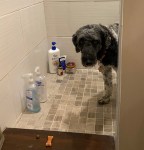
When Zeus sends his thunderbolts into Cleveland, Zippy gets scared. The snow, wind, and rain don’t bother her, but the thunder and lightning cause her to shake. Usually she hides in the shower.
Seeking shelter from the storm (apologies to Robert Zimmerman) is what California businesses are doing too. Assembly Bill 5 (AB 5), codifying the ABC Test for determining who is an employee, has been in effect since January 1, 2020.
On Friday, a new law repealed and replaced it. This new law, AB 2257, passed both chambers in the California legislature unanimously and was signed into law September 4 by Gov. Newsom. It contains an urgency clause, which means it takes immediate effect. So AB 5 is gone.
Great news for businesses, right? Not exactly.
AB 2257 moves the ABC test to a different part of the California Labor Code– new Sections 2775 through 2787–and cleans up some of the confusing and poorly considered language in AB 5. It does not, however, provide relief from the ABC Test for most large businesses.
The revisions make it easier for entertainers, freelance writers and photographers, and digital content aggregators to maintain independent contractor status. It scraps the arbitrary 35-article limit for freelance writers to maintain independent contractor status. It allows entertainers to perform single event gigs without becoming employees. It cleans up some other language too, but it does not make substantial changes that would excuse large businesses from the ABC test.
For example, subsection 2750.3(f) of AB 5 addressed whether an exception applies for work requiring a license from the Contractors State License Board (CSLB). The exception, with its multi-part test, is unchanged. It just moves to a new section of the Labor Code, new Section 2781.
One small glimmer of hope comes from some clarifying language for the business-to-business exception. That exception still does not apply for work that requires a CSLB license. To fall within that exception (meaning that the ABC Test would not apply), one of the requirements is that the work must be performed for the benefit of the contracting business, not its customers. Under the revised law, that requirement goes away if “the business service provider’s employees are solely performing the services under the contract under the name of the business service provider and the business service provider regularly contracts with other businesses.” For grammarians who despise double negatives, this is an exception to the exception. You’re welcome. What it means is if your subcontractor has its own employees, operates as its own business, and performs work not requiring a CSLB license, it may be easier to meet the business-to-business exception, thereby avoiding the ABC test.
So where does that leave us? On one hand, the fact that the bill passed both chambers unanimously shows a recognition that AB 5 had some serious flaws. But on the other hand, the fixes that both chambers thought were appropriate are of minimal help to large businesses. It’s like unleashing a horrible lab-created supermonster, then deciding that its eyelashes should be less curly. The largely-superficial changes in AB 2257 are mainly designed to help maintain independent contractor status for individuals who truly run their own businesses, particularly in the entertainment, journalism, and digital content fields.
This new law obliterates AB 5 in name, but not in function.
Like the blanket I gave Zippy, this move by the California legislature is not likely to provide any shelter from the storm. The ABC Test in California remains alive and well. Whether you grab a blanket or hide in the shower, the ABC Test is here to stay.





 Who Is My Employee?