In school we all learned that the longest river is the Nile. But some say the Amazon is longer. In the atlas “Maps of Useful Knowledge” (1846), the Amazon was listed as 3200 miles and the Nile 2750 miles. The current U.S. Geological Survey shows the Nile at 4132 miles and the Amazon at 4000 miles. Brazilian researchers claim the Amazon is 4331 miles long and the Nile a mere 4258 miles.
So which is it, and how can it be changing? Apparently the controversy involves disputes over where the rivers start, where they end, and how to track changes in the rivers’ course.
Whatever you learned about the test for who is an independent contractor under the Fair Labor Standards Act is subject to change too.
Remember October 2022? Elon Musk completed a $44B deal to take over twitter. Germany took steps to legalize marijuana. And the DOL released a proposed new regulation to modify the independent contractor test.
The proposed rule received more than 50,000 comments. We’ve been speculating about when the DOL might issue a final rule.
We’ve now learned that the DOL is targeting this fall for release of the new rule. The latest version of the regulatory agenda lists August as the target release date. August may be a bit ambitious, but the fall seems likely. On June 9, a federal court of appeals granted a motion by the DOL for a 120-day stay in a pending lawsuit. The DOL asked for the stay to allow it time to release the new rule.
So it seems that whatever we know now about the length of the Nile River, the length of the Amazon River, and the independent comntractor test under the FLSA is subject to change. Hopefully we’ll know more about all three by sometime this fall.
We can be pretty sure the final rule will closely resemble the multi-factor balancing test released in October 2022. Businesses can plan accordingly by being proactive in assessing their relationships with independent contractors and taking steps to reduce risk now.
As I wrote a few days ago in the BakerHostetler blog, The Bargaining Table…
The sky is not falling.
When the National Labor Relations Board (NLRB or Board) issued its Atlanta Opera decision on June 14, I read the decision. Then I read some of the commentary issued quickly by news outlets right after the decision dropped. I’m not sure whether all of those commentators read the actual decision. To those who think this decision will have any significant impact on independent contractor classification under the National Labor Relations Act (NLRA or Act), I disagree.
In Atlanta Opera, the Board purported to revise the test for determining employee status under the Act. The Board said it was overruling the 2019 SuperShuttle DFW case and readopting the FedEx II standard from 2014. But is there really any practical difference? I think not.
Last week I was in Boston, spending time with many of my favorite people at our BakerHostetler Labor and Employment Group Retreat. I always enjoy spending time with the people in our other offices. They are wonderful, kind, smart, and a joy to be around.
As part of the programing, each practice team leader gave a six-minute TED-style talk. In my session about the Contingent Workforce Practice Team, I included a slide that I wanted share here.
We sometimes hear from companies that they don’t think they’re at risk for an independent contractor misclassification claim. They sometimes say, we’ve been doing it this way forever, and we haven’t been sued.
To that I would say, you mean you haven’t been sued yet.
Here’s what can happen when companies get sued for independent contractor misclassification.
There are quite a few songs about gals named Sue. There’s “Peggy Sue,” “Wake Up Little Susie,” “Susie Q,” and “Runaround Sue.” There’s a even a song about a “Boy Named Sue.” (The results of a recent survey consisting of me revealed that “Boy Named Sue” is by far the best of the Sue-themed songs.)
As far as I know, no one has yet written a song about Labor Secretary nominee Julie Su, but I would not be surprised if one of the unions in California wrote a ballad to applaud her work heading the state’s Division of Labor Standards Enforcement (DLSE) and Labor and Workforce Development Agency. Maybe something like Fatboy Slim’s “Praise You.”
Su is Biden’s pick for Secretary of Labor, following the resignation of Marty Walsh, who left to lead the NHL player’s union. Her nomination is controversial, and businesses fear they’ll be singing the blues if she’s confirmed.
But in a recent Senate committee hearing, she provided at least two answers that businesses will like.
First, she said she would not advocate for an independent contractor test modeled after California’s AB 5. She testified that it’s her view (mine too, probably the courts’ too) that only Congress could adopt an ABC Test to determine worker classification under the Fair Labor Standards Act (FLSA). That’s reassuring.
Second, she said that the DOL’s next regulatory agenda would not include a new joint employer test. The 2020 joint employer regulation adopted by the Trump DOL has been rescinded, and there has been no replacement regulation, which leaves a regulatory crater in the Code of Federal Regulations, where the joint employer rule used to be. Read more here.
On April 26, a Senate committee voted to advance Su’s nomination to the full Senate. All Democrats on the committee voted yes, and she received no Republican support. In a 51-49 Senate, the success of her nomination will likely depend on whether she can secure the support of Senators Manchin, Sinema, and Tester and whether Sen. Feinstein is healthy enough to vote.
And on that note, we turn back to Johnny Cash:
He said, “Now you just fought one heck of a fight And I know you hate me, and you got the right to kill me now And I wouldn’t blame you if you do But you ought to thank me, before I die For the gravel in ya gut and the spit in ya eye ‘Cause I’m the son of a bitch that named you Sue”
In Japan’s Aomori Prefecture, bald men compete annually in a Suction Cup Tug of War. In each round, two contestants attach suction cups to their heads and pull in opposite directions. The person whose cup detaches first is the loser.
The event is sponsored by the Tsuruta Hagemasu Association, which aims to shed positive light on male baldness. The Association’s website, which I cannot read because it is Japanese, includes several hilarious/serious photos, including one of six elderly gents with flags suction cupped to their heads. Only the guy on the far right seems to be in on the joke. The others seem deadly serious about what their heads can do.
Using your head to win is not unique to the Suction Cup Tug of War. Well, maybe it is unique to the Suction Cup Tug of War if we take that in the most literal way, but now I’m straying into the figurative so that I can transition from something absurd to something topical.
Using your head to win independent contractor misclassification disputes often involves relying on individual arbitration agreements, which can help to prevent class action lawsuits. But the DOL is using its head too, and it’s pulling in an opposite direction. When the DOL pulls against your individual arbitration agreements, the DOL is going to win. The arbitration agreement will lose its stickiness.
Recent DOL news releases have highlighted the Department’s success in prosecuting misclassification cases, even when the target company had its independent contractors sign arbitration agreements. The DOL, in other words, doesn’t care about your arbitration agreements. The DOL is not a party to those agreements, and the DOL isn’t bound by them.
While an individual contractor can waive the right to file a lawsuit, the DOL is not waiving that right. The DOL can — and will — bring misclassification claims against companies that use arbitration agreements. I’m not suggesting that having arbitration agreements makes businesses a target for enforcement; I have seen no evidence of that. My point is just that arbitration agreements have their weak points, and the major weak point is that they do nothing to prevent a government agency, state or federal, from conducting an audit or bringing an enforcement action.
The US DOL, state labor departments, state unemployment agencies, and state and federal tax services have all made misclassification an enforcement priority.
Businesses should keep using arbitration agreements with their independent contractors, but be aware that these agreements do not protect against all mass enforcement activity. The stickiness of these agreements is useful, but when the DOL pulls in the opposite direction, the suction cup is probably coming off your head.
For those of you wishing you could have been there, here’s a video of the 2023 Suction Cup Tug of War. After some bizarre preliminaries, including tournament officials and a young girl throwing wet paper rectangles at the competitors’ heads, the thrilling tug of war action begins at about 1:20 into the clip.
The Rolling Stones’ song, “You Can’t Always Get What You Want” features the London Bach Choir and addresses the predominant themes of the 1960s — love, protest, and drugs. There’s some controversy as to whether Mr. Jimmy refers to vagrant Minnesotan Jimmy Hutmaker, who supposedly uttered the famous lyric-to-be during a chance 1964 encounter with Jagger at Bacon’s Drugstore, or Jimmy Miller, a record producer who also played drums on this track instead of Charlie Watts.
“You Can’t Always Get What You Want” is also a suitable theme for the main problem that dominates every aspect of independent contractor misclassification. The problems is that the laws are binary. A worker is either an employee who receives all of the protections of employment laws, or an independent contractor, who receives none. The exceptions creating a middle ground have been sparse.
But if you try sometimes.
California voters tried and succeeded in creating a middle ground in 2022, when they passed Prop 22. Prop 22 guarantees independent contractor status for rideshare and delivery drivers if a series of conditions are met, and then the app companies are required to provide a range of protections for drivers, including minimum rates of pay, a health insurance stipend, accident insurance, sexual harassment prevention, safety training, and rest requirements.
Prop 22 was and is a model for the middle ground that has been missing.
But Prop 22 has also been under attack. In a case called Castellenos, the SIEU and other worker advocates have argued that Prop 22 violates the California constitution and had to be invalidated. Without Prop 22, rideshare and delivery drivers could be subjected to California’s ABC Test for determining drivers’ status.
As you may have read, a California Court of Appeals ruled earlier this month that Prop 22 did not violate the California Constitution and could take effect, except for one small part of the law governing future amendments. The dispute will likely be heard by the California Supreme Court, so the fight isn’t over.
The point I want to make, though, is that Prop 22 carves out a middle ground that should be a model for other states to follow. It guarantees workers certain protections while allowing them to operate their own businesses as independent contractors.
The unions and worker advocates calling for the protection of worker rights routinely ignore the surveys showing that a vast majority of drivers prefer independent contractor status. Much of the noise on this issue is coming from a vocal minority.
The Prop 22 model is a middle ground that provides workers with protections they otherwise lack, while allowing workers to retain their preferred independent contractor status and flexibility.
We’ll continue to watch whether the California Supreme Court decides to hear this dispute but, either way, Prop 22 should be held up as a model for other states to follow, carving out a middle ground that balances the concerns of all sides. Worker status does not have to be binary. Binary laws that mandate employee or independent contractor status, with no middle ground, do not reflect the realities of the modern gig economy.
It’s time for reform.
You can’t always get what you want. But if you try sometimes, well, you just might find, you get what you need.
The Rolling Stones’ song, “You Can’t Always Get What You Want” features the London Bach Choir and addresses the predominant themes of the 1960s — love, protest, and drugs. There’s some controversy as to whether Mr. Jimmy refers to vagrant Minnesotan Jimmy Hutmaker, who supposedly uttered the famous lyric-to-be during a chance 1964 encounter with Jagger at Bacon’s Drugstore, or Jimmy Miller, a record producer who also played drums on this track instead of Charlie Watts.
“You Can’t Always Get What You Want” is also a suitable theme for the main problem that dominates every aspect of independent contractor misclassification. The problems is that the laws are binary. A worker is either an employee who receives all of the protections of employment laws, or an independent contractor, who receives none. The exceptions creating a middle ground have been sparse.
But if you try sometimes.
California voters tried and succeeded in creating a middle ground in 2022, when they passed Prop 22. Prop 22 guarantees independent contractor status for rideshare and delivery drivers if a series of conditions are met, and then the app companies are required to provide a range of protections for drivers, including minimum rates of pay, a health insurance stipend, accident insurance, sexual harassment prevention, safety training, and rest requirements.
Prop 22 was and is a model for the middle ground that has been missing.
But Prop 22 has also been under attack. In a case called Castellenos, the SIEU and other worker advocates have argued that Prop 22 violates the California constitution and had to be invalidated. Without Prop 22, rideshare and delivery drivers could be subjected to California’s ABC Test for determining drivers’ status.
As you may have read, a California Court of Appeals ruled earlier this month that Prop 22 did not violate the California Constitution and could take effect, except for one small part of the law governing future amendments. The dispute will likely be heard by the California Supreme Court, so the fight isn’t over.
The point I want to make, though, is that Prop 22 carves out a middle ground that should be a model for other states to follow. It guarantees workers certain protections while allowing them to operate their own businesses as independent contractors.
The unions and worker advocates calling for the protection of worker rights routinely ignore the surveys showing that a vast majority of drivers prefer independent contractor status. Much of the noise on this issue is coming from a vocal minority.
The Prop 22 model is a middle ground that provides workers with protections they otherwise lack, while allowing workers to retain their preferred independent contractor status and flexibility.
We’ll continue to watch whether the California Supreme Court decides to hear this dispute but, either way, Prop 22 should be held up as a model for other states to follow, carving out a middle ground that balances the concerns of all sides. Worker status does not have to be binary. Binary laws that mandate employee or independent contractor status, with no middle ground, do not reflect the realities of the modern gig economy.
It’s time for reform.
You can’t always get what you want. But if you try sometimes, well, you just might find, you get what you need.
When I hear the name Lorena, my mind automatically goes back to 1993, which is probably true for many men about my age. That’s the year when Lorena Bobbitt brought a kitchen knife into the bedroom and cut off her husband John’s member while he was sleeping. She then tossed it in a field near the house, alerted police where to find it, and became an overnight celebrity for having taken revenge after years of alleged domestic abuse.
John later tried to cash in on the detachment, forming a band called The Severed Parts and appearing in two pornos called John Wayne Bobbitt Uncut and Frankenpenis.
It was a different Lorena who grabbed headlines last week, when the Ninth Circuit Court of Appeals considered whether it’s unconstitutional to pass a law because of personal animus.
The law is California’s AB 5, and the Lorena is former California assemblywoman Lorena Gonzalez. As a quick refresher, AB 5 is the California law that imposed a hard-to-satisfy ABC Test for determining independent contractor status. Lorena Gonzalez, a driving force behind the bill, was vocal in her animus toward rideshare and delivery app companies.
In Olson v. California, the rideshare and delivery app companies sued to invalidate AB 5, arguing that the law contained dozens of exceptions targeted toward a grab bag of industries, and their exclusion from the list of exemptions was due to animus toward them, rather than reason.
This might have been a hard argument to make, but for Lorena. Congresswoman Gonzalez made frequent public statements against rideshare and delivery companies, claiming they mistreated workers by not classifying them as employees. Gonzalez said she was open to including exceptions in the bill, but not for these companies. The legislature then passed an exemption for other referral-based app businesses, but not rideshare or delivery, even though the business models are basically the same. A few other vocal lawmakers joined Gonzalez with similar public statements targeting the rideshare and delivery app companies. It’s the old familiar “[insert name] said the quiet part aloud” story.
Last week the Ninth Circuit ruled that personal animus is not a legit reason to pass a law. The Court wrote, “We are persuaded that these allegations plausibly state a claim that the ‘singling out’ of Plaintiffs effectuated by A.B. 5, as amended, fails to meet the relatively easy standard of rational basis review.” The Court was referring to the standard used for evaluating equal protection claims under the Constitution. It does not advance a governmental interest to pass a law out of a desire to harm a politically unpopular group of citizens.
The Court’s ruling did not overturn AB 5. The ruling sent the case back to the district court, which will have to reopen the case against AB 5.
For now the law remains in effect, and there is no immediate impact to businesses in California. But the fight to overturn AB 5 has fresh legs and some momentum.
In other words, businesses in California are still subject to the ABC Test — unless you’re a licensed insurance business or individual, physician, surgeon, dentist, podiatrist, psychologist, veterinarian, lawyer, architect, engineer, private investigator, accountant, registered securities broker-dealer or investment adviser, direct sales salesperson, commercial fisherman working on American vessels for a limited period, marketer, human resources administrator, travel agent, graphic designer, grant writer, fine artist, payment processing agent, still photographer or photo journalist, freelance writer, editor, or cartoonist, licensed esthetician, electrogist, manicurist, barber, cosmetologist, real estate licensee, repossession agent, recording artist, songwriter, lyricist, composer, proofer, manager of recording artists, record producer or director, musical engineer or mixer, vocalist, musician engaged in the creation of sound recording, photographer working on recording photo shoots or album covers, independent radio promoter, newspaper distributor working under contract with a newspaper publisher, newspaper carrier working under contract either with a newspaper publisher or newspaper distributor, contracting party in certain types of business-to-business relationships, or referral agency other than for rideshare or delivery — all of which are subject to possible exemptions.
And so you can see the point. The exemptions are a mishmosh created by special interests and lobbying efforts, with no coherent overall theme — except to make sure rideshare and delivery apps are subject to the ABC Test.
We’ll continue to follow this case. Meanwhile, if you’d like to read more about the original Lorena and the incident, there’s a Lifetime movie, an Amazon docuseries, and a whole bunch ofarticles.
This headline does not refer to the Chinese spy ballon.
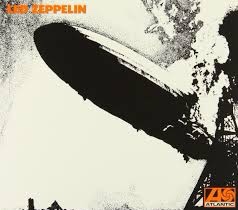
Instead, I’m thinking about 1968. Jimmy Page and John Paul Jones had joined up to form a new band after the breakup of the Yardbirds. Drummer Keith Moon of The Who supposedly said the project would go down like a lead balloon.
One of the largest balloons, of course, is the zeppelin. The zeppelin was a passenger airship used until the Hindenberg disaster in 1937. So the band named itself Led Zeppelin, dropping the ‘a’ in Lead so people wouldn’t mispronounce the name of the band.
In 1971, the band released Led Zeppelin IV, which included the song “Going to California” and this lyric:
Spent my days with a woman unkind
Smoked my stuff and drank all my wine
Made up my mind to make a new start
Going to California with an aching in my heart
For today’s post, I’m going to California with an aching in my heart.
Cities in California have upped their game when going after companies that use independent contractors. They’re taking the lead (not led) in bringing their own lawsuits.
In January 2023, the City of San Francisco secured a $5.25 million settlement to cover 5,000 independent contractor delivery drivers. The lawsuit alleged a failure to comply with the city’s health care security and paid sick leave ordinances, which apply to employees.
In October 2022, San Diego’s city attorney settled its own independent contractor misclassification lawsuit for $46.5 million. That deal covered 300,000 independent contractor delivery drivers.
In 2021, San Francisco reached agreement on another delivery driver misclassification lawsuit, settling for $5.3 million to cover 4,500 local drivers.
The mountains and the canyons start to tremble and shake
The children of the sun begin to awake (watch out)
States are following a similar playbook, as we recently saw when New Jersey obtained a $100 million settlement, alleging that a rideshare app company failed to pay into the state unemployment insurance fund for independent contractor drivers.
It seems that the wrath of the gods got a punch on the nose
And it's startin' to flow, I think I might be sinkin'
Government-initiated lawsuits can be particularly dangerous because arbitration agreements and class action waivers are ineffective. The governments are fighting for funds they think are rightfully theirs.
They also have political motives driving their prosecutions. Officials facing re-election want to be able to show their constituents they’re making a difference and fighting for workers’ rights (and ignoring, as usual, the fact that most IC drivers want to remain ICs).
Throw me a line, if I reach it in time
I'll meet you up there where the path runs straight and high
The trend of government-backed compliance efforts is going to continue and will likely increase. Companies making widespread use of independent contractors should be proactive in evaluating these relationships, the contracts, and the local laws to build a comprehensive defense strategy — before getting sued.
There’s an island in Quebec that’s larger in area than the lake in which it sits. René-Levasseur Island was supposedly formed by the impact of a meteorite 214 million years ago, although eyewitness accounts differ. The land mass became an island in 1970, when the Manicougan reservoir was flooded, merging two crescent shaped lakes that surrounded the area.
I like fun geography facts, and an island larger than the lake in which it sits is a fun fact. But feels a bit aggressive for the Canadians to merge two crescent shaped lakes to turn this land mass into an island. I’m sure they had their reasons. If nothing else, it looks good on a map.
The Department of Labor is also being aggressive, but they’re not flooding any reservoirs. Instead, they’re channeling their aggression toward independent contractor misclassification.
In a news release this month, the DOL announced that it had obtained a consent judgment for $5.6 million against a national auto parts distributor and an Arizona logistics firm for allegedly misclassifying 1,398 drivers as independent contractors. The award included back wages and liquidated damages.
The DOL had alleged that, by misclassifying the drivers, the companies failed to meet minimum wage requirements, failed to pay overtime rates, and failed to keep required timekeeping records. These failures each were violations of the Fair Labor Standards Act (FLSA).
The award covered an eight-year period between April 2012 and March 2020.
I see three takeaways here:
First, the DOL is being aggressive in filing lawsuits when it thinks independent contractors have been misclassified. This consent judgment shows how expensive these claims can be for companies that improperly classify workers. Companies using independent contractors needs to be proactive in evaluating their risks and taking steps to minimize those risks. There are lots of ways to reduce risk if you plan ahead, before you’ve been sued or investigated.
Second, this case is a reminder that companies who classify delivery drivers as independent contractors are at heightened risk. Federal and state agencies and the plaintiffs’ bar seem to be filing a disproportionate number of claims involving delivery drivers. If your business uses delivery drivers who are classified as independent contractors, you may be at an increased risk of an audit or lawsuit.
Third, remember the DOL’s proposed new rule for independent contractor classification under the FLSA? (Read more here, here, and here.) The DOL wants to change the current test for who is an employee under the FLSA, replacing a regulation adopted by the Trump Administration in 2020. But cases like this one show that the current regulation is not impairing the DOL’s ability to enforce what it perceives as misclassification. The DOL’s many recent successes — as posted in DOL news releases — show that the DOL is doing just fine under the current rule when it comes to misclassification enforcement. The new rule is a solution without a problem.
Large judgments like this one seem shocking, but they are a reminder of the substantial dangers of misclassification.
Learn more by joining me at the 10th Annual 2023 BakerHostetler Labor Relations and Employment Law Master Class, all virtual, one hour every Tuesday starting February 7, 2023. My program on Contingent Workforce issues will be on March 7, 2023. Registration is free.






 Who Is My Employee?