
Did Joni See It Coming? Two Companies Forced to Reclassify All Gig Workers as Employees

They paved paradise and put up a parking lot.

When Joni Mitchell wrote “Big Yellow Taxi,” she had just arrived in Honolulu. She was inspired by the view outside her hotel window, with beautiful green mountains in the distance and, closer to the hotel, a “parking lot as far as the eye could see.” Ugly.

For business owners, the beautiful green mountains are successful business operations, with the business having been built the way you wanted and cultivated over a number of years. Paving over that paradise with a parking lot is the government coming in and forcing you to change how you do business. Ugly.

That’s what is happening to companies that rely on independent contractors but aren’t deliberate enough in how they set up their IC relationships. Looking back at 2024, here’s what I mean, with two specific examples.

Two companies with nationwide operations were forced to convert all independent contractors to employees, at least those working in California.

WorkWhile and Qwick provide gig workers to fill empty shifts. Qwick operates in the hospitality industry, and WorkWhile operates across multiple fields, including manufacturing, hospitality, and general labor.

The companies treat the gig workers as independent contractors. The City of San Francisco sued each company on behalf of the State. The lawsuits alleged that the gig workers were misclassified and should have been treated as employees under California law.

In 2024, both companies settled. Each agreed to pay a seven-figure settlement and to reclassify all gig workers as employees. (Press releases are here and here.)

Before the lawsuits, both companies had operated their businesses this way for years. They didn’t get sued and didn’t have to reclassify the contractors — until they did.

This case is a good reminder of two important rules.

1. Just because you have been doing it this way for years doesn’t mean it’s lawful.

2.The fact that you haven’t been sued means only that you haven’t been sued yet.

Before the lawsuits were filed, the companies had options.

They could have been proactive about changing the facts of the relationships and the contracts. They could have molded the facts the way they wanted without government oversight, in a way that would better insulate them from misclassification claims. This would have been difficult in California, with its strict ABC Test, but not impossible. But it would have taken hard work and a willingness to make changes proactively.

Or they could have converted their contractors to employees, but done it on their own terms, without the government telling them how they have to operate their business.

Now, as part of their settlements, these companies are forced to allow the government to monitor and dictate how they interact with these workers.

Don’t it always seem to go / that you don’t know what you’ve got ‘til it’s gone?

Once the government is monitoring how you do business, you’ve lost the flexibility to adapt and build on your terms. It’s too late. The time to act is before you get audited, investigated, or sued. See Rule #2.

Enter your email address to subscribe to this blog and receive notifications of new posts by email.

© 2024 Todd Lebowitz, posted on WhoIsMyEmployee.com, Exploring Issues of Independent Contractor Misclassification and Joint Employment. All rights reserved.


2018_Web100Badge
 

A Car Crash? Trump’s Labor Secretary Pick Supports ABC Test for Worker Classification

Sometimes things don’t make sense when you read them. Like this: Here’s an adorable video of a dog getting hit by a car.

You need to dig deeper to make sense of it. If you watch the video, you’ll understand. The sentence is true, and the video is adorable.

Another thing that didn’t make sense to me when I first read it is that Trump’s pick for Secretary of Labor, Lori Chavez-DeRemer, was a co-sponsor of the PRO Act.

I had to dig deeper. Is that really true? It is.

Remember the PRO Act? It’s an acronym for Protecting the Right to Organize. It’s a Democrat-sponsored bill that threatens to blow up the gig economy and convert most independent contractors to employees.

The PRO Act would change the definition of “employee” under the NLRA so that all workers are presumed to be employees, not independent contractors, unless the strictest version of the ABC Test is met. That’s the same test as in California, but without all the exceptions.

In the 2023 version of the PRO Act, a worker is an employee under the NLRA unless (all 3):

(A) the individual is free from control and direction in connection with the performance of the service, both under the contract for the performance of service and in fact;

(B) the service is performed outside the usual course of the business of the employer; and

(C) the individual is customarily engaged in an independently established trade, occupation, profession, or business of the same nature as that involved in the service performed.

Yes, that’s the same dreaded Part B that makes California such a difficult place to maintain independent contractor relationships.

The PRO Act would also broaden the definition of joint employment under the NLRA.

Chavez-DeRemer was one of three Republicans to co-sponsor the bill.

The PRO Act will not get the 60 votes needed in the Senate, so it’s not going to pass anytime soon (so long as the filibuster rule remains intact). But this bill is so pro-union that her support should be of concern to any business that engage contractors.

Chavez DeRomer served only one term in Congress, so she did not build an extensive record. But her support of the PRO Act is a part of that limited record.

I expect we’ll learn more about her views during the confirmation process. Her support of the PRO Act is something to keep an eye on. Getting hit with the PRO Act (or some DOL-authorized version of it) would be far worse that the damage done by the car hitting the dog in the video, which you really should watch if you skipped over the link above.

Enter your email address to subscribe to this blog and receive notifications of new posts by email.

© 2024 Todd Lebowitz, posted on WhoIsMyEmployee.com, Exploring Issues of Independent Contractor Misclassification and Joint Employment. All rights reserved.

2018_Web100Badge
 

For Upcoming Changes to Independent Contractor Rules, Look to Band Names

The band America (“A Horse with No Name,” “Ventura Highway”) was formed in England. Yes, really. But by three Americans whose fathers were in the U.S. Air Force and stationed overseas.

That got me thinking about other bands with place names. When I was growing up in Miami in the 1980s, if someone mentioned Boston, I thought of just another band out of Boston, on the road to make ends meet. If someone mentioned Kansas, I thought of dust in the wind, even though I never particularly liked that song. Chicago made me think of the Cubs, but only in 1984. Otherwise, does anybody really know what time it is?

Not that I am older and have a life, place names mean something different to me. They now make me think of federal, state, and local laws affecting independent contractor status.

(Ok, I take back the comment about having a life. I realize this is a sad and pathetic way to think of place names.)

After the election, place names are going to take on greater importance as businesses aim to protect their independent contractor relationships. Federal enforcement activity isn’t going away, but I expect to see a growing emphasis on legislation and enforcement at the state and local level.

In the realm of non-employee workers (independent contractors, staffing agency temps), I expect to more state and local legislation in these areas:

1) Freelancer Laws. We now have freelancer laws in CA, NY, IL, Los Angeles, NYC, Minneapolis, Seattle, and Columbus. These laws impose requirements when retaining individuals who are independent contractors. The laws generally require written contracts that contain several mandatory components.

2) Temporary Worker Laws. We have these in NJ and IL. They generally require that staffing agencies pay their workers an equivalent wage rate (and sometimes the value of benefits) being paid to workers they work alongside at the company where they are providing services.

3) Misclassification Laws – the Bad Kind. In states with Democrat trifectas (house, senate, governor), expect new laws that make it harder to be an independent contractor. Expect more ABC Tests, like in CA and MA. Other states have ABC Tests for determining who is an employee under workers’ comp and unemployment law.

4) Misclassification Laws – the Good Kind. In states with Republican trifectas, expect more safe harbor laws. If you satisfy a set of basic requirements in your dealings with a non-employee worker, then the worker is an independent contractor under that state’s laws. Pesky balancing tests (and long-haired freaky people) need not apply. We have these state laws in WV and LA (not L.A.)

We will likely see changes at the federal level too, but these may take years to develop. The federal agency rulemaking process is slow and cumbersome, and agency rules will take on less importance as federal agency power continues to diminish after the Supreme Court’s Loper Bright decision.

I haven’t touched on Europe or Asia, but those are bands for another day and another post. When? At some point, in the heat of the moment, but only time will tell.

Enter your email address to subscribe to this blog and receive notifications of new posts by email.

© 2024 Todd Lebowitz, posted on WhoIsMyEmployee.com, Exploring Issues of Independent Contractor Misclassification and Joint Employment. All rights reserved.

2018_Web100Badge
 

What Does It Mean? Supreme Court Weighs in on California’s Independent Contractor Law (Sort of)

I am entertained by poorly translated things. I have no idea what this shirt means or what the designer thought it would mean. I saw this one in Italy.

I can’t help but wonder what the reaction would be if I wore this shirt in the U.S. Would people say anything to me? I was tempted to ask the wearer about it or to try to buy it from her, but I chickened out.

Last week, the U.S. Supreme Court kind of chickened out too.

A petition had been filed with the Court, asking it to invalidate California’s AB5, its stringent independent contractor law. The petition argued that the law singles out certain businesses and therefore violates the Equal Protection Clause of the U.S. Constitution.

As you may recall, AB5 is the California law that makes it much harder to maintain independent contractor status. The law presumes that most workers are employees and requires a hiring party to satisfy a three-part ABC Test to classify someone as a contractor.

The law, however, does not apply the same standards to everyone. The law exempts loads of industries and types of workers from the ABC Test, and — if we’re being honest here — the law was really targeted toward rideshare and delivery companies.

And that’s exactly what the rideshare and delivery companies argued.

In June 2024, the Ninth Circuit voted to preserve the law, and the case (called Olson v. State of California) was appealed to the U.S. Supreme Court. The Supreme Court, however, can decide which cases to hear and does not have to give a reason for declining to hear a case.

Last week, the Supreme Court declined the petition, opting not to hear the case. The Court provided no reason.

A year earlier, in July 2023, the U.S. Supreme Court denied a different petition asking it to review AB5. The earlier petition, in Mobilize the Message LLC v Bonta, argued that the law’s restrictions on freelance work violated the first Amendment.

For some companies, the Supreme Court’s decision last week not to hear the Olson case will have limited effect. The passage of Prop 22 in late 2020 exempted certain rideshare and delivery app companies from having to comply with AB5. (Prop 22 was also challenged in court and survived.) But AB5 and its ABC Test, later recodified in AB2257, remain in effect for many industries and businesses.

This most recent petition to the Supreme Court alleged that AB5 violated the Equal Protection Clause by unfairly singling out certain industries. I think the evidence is plain that this is what motivated the law, but whether that motivation rises to the level of an Equal Protection violation is another matter.

But no matter. The Supreme Court can decline to hear the appeal, and that’s exactly what it did.

AB5 remains on the books, and I can now start thinking about how I could turn all of this into a poorly translated t-shirt.

Enter your email address to subscribe to this blog and receive notifications of new posts by email.

© 2024 Todd Lebowitz, posted on WhoIsMyEmployee.com, Exploring Issues of Independent Contractor Misclassification and Joint Employment. All rights reserved.

2018_Web100Badge
 

Blending In: California Passes Freelancer Protection Law, Joining Other Locales

Don’t tell anyone, but there is a motorcycle toward the front of this photo. I know, it blends right in and is hard to see because it’s camouflaged. But look carefully and you’ll see it.

I saw it recently while in Bellagio on our vacation to Italy. Yes, I have better photos, but this one helps me make a point about blending in.

The California legislature has decided to blend in too, adopting a freelancer protection bill that is similar to laws already in place in New York State, Illinois, and several cities.

California’s Freelance Worker Protection Act takes effect 1/1/2025.

The law has no bearing on the determination of whether someone is an employee or independent contractor. But if the worker is a contractor and other criteria are met, then the requirements of the law must be followed by the party retaining the independent contractor.

If you’ll be retaining a freelancer in California, here’s what you need to know. As a reward for reading to the end, I’ve included some tips and a better photo.

Applies if:

  • Retention of individual IC or single member entity,
  • Retained to provide “professional services” (as defined in Labor Code sec 2778), and
  • $250 in services to be provided within 120 days

But not applicable if:

  • The hiring party is an individual and the work is for the hiring party’s personal benefit or benefit of the family (e.g., n/a to babysitter, dog walker)

Requirements:

  • Written contact that includes:
    • Name and address of each party
    • Itemized list of services and value
    • Rate and method of compensation
    • Date when payment is due or mechanism for determining when payment is due
    • Date when IC must submit invoice to allow for timely payment
  • Payment to IC is due on the date specified in contract or, if no date is specified, then 30 days after work is completed
  • Once work is completed, hiring party cannot require freelancer (a) to accept less in payment, (b) to provide more goods or services, or (c) to grant more IP rights than agreed to in the contract

Other provisions:

  • The law does not limit existing contract law or prevent an IC from enforcing a verbal contract or recovering under promissory estoppel
  • Waivers are void
  • Retaliation prohibited
  • Civil action permitted; recovery to include attorneys fees and costs
  • Damages:
    • If IC requested and was denied a written contract, then additional $1000
    • If hiring party failed to timely pay, then 2x unpaid portion
    • Damages equal to value of contract for other violations
  • Hiring party must provide IC with a copy of the contract
  • Hiring party must retain contract for 4 years

Tips:

  • Clarify intellectual property rights in contract; don’t leave that until later or assume there is a handshake understanding of who will own the IP
  • Specify a due date for payment or a process for determining when payment is due
  • Define when the work is completed, and define it in a way that requires specifications to be met. This is to protect against poor workmanship and to try to preserve the right to pay less for a shoddy output.

And here’s a more representative photo from the Italy vacation. This is at Alpe di Suise in the Dolomites.

Enter your email address to subscribe to this blog and receive notifications of new posts by email.

© 2024 Todd Lebowitz, posted on WhoIsMyEmployee.com, Exploring Issues of Independent Contractor Misclassification and Joint Employment. All rights reserved.

2018_Web100Badge
 

Snakes! And Other Things to Watch for in 2024

This is a venomous Eastern Brown Snake, native to Australia. Stay away.

Tennis star Dominic Thiem knew what to watch for in his match this past weekend in Brisbane. It was on-court hazard he couldn’t ignore.

Play was interrupted when a “really poisonous snake” slithered onto the court near the ballkids. The intruder, an Eastern Brown Snake, “has the unfortunate distinction of causing more deaths by snake bite than any other species of snake in Australia.” The snake’s venom causes “progressive paralysis and uncontrollable bleeding,” which is not one of the on-court hazards typically of ballkidding.

(I don’t know if ballkidding is the real word for this, but it should be. Or ballkiddery maybe. I also learned from the snake bite article that the proper term for being bit by a venomous snake is “envenomation,” which is a word I hope to use elsewhere in a sentence sometime in 2024. So there’s a New Year’s resolution. [@Lisa, take note, I made one, even though you {correctly} say I am no fun because I won’t play the New Year’s Resolution game.])

The Eastern Brown Snake is not present in the U.S., so we don’t have to watch for any in 2024.

But here are several other things that could bite you in the behind in 2024 if you’re not paying attention:

1. New DOL test for independent contractor misclassification. The DOL issued its proposed new rule in October 2022 and targeted the fall of 2023 for release of a new final rule. The proposed rule would identify seven factors to consider when evaluating whether someone is an employee under the Fair Labor Standards Act (FLSA). The final rule will likely be very similar. We’re still waiting, and the final rule could be released at any time.

2. The new NLRB test for joint employment takes effect Feb. 26, 2024. Unless it doesn’t. The new rule is being challenged in both a federal district court in Texas and the U.S. Court of Appeals in D.C. Either court could quash the rule. The new rule will substantially expand who is a joint employer under the NLRA, even for worksites without unions.

3. Increased state and local enforcement activity. States and localities are filing their own lawsuits alleging worker misclassification. The New Jersey Attorney General recently filed a major lawsuit. The California Attorney General and California localities have been pursuing misclassification lawsuits too. Remember this: As much as I advocate for individual arbitration agreements with class waivers, they have no effect on enforcement actions brought by a state or local government. These lawsuits pose a substantial risk, and the governments love to issue one-sided accusatory press releases when they file the lawsuits.

4. The feds are doing this too. The DOL is bringing its own enforcement actions and publicizing them.

5. State and local laws that affect independent contractor classification and joint employment. We’re seeing legislative activity in three main areas:

(a) laws to change the tests;
(b) laws that provide a safe harbor for independent contractor classification if certain protections are provided to the workers (Cal. Prop 22, this proposed Mass. state law); and
(c) Freelancers laws that impose various requirements when retaining a solo independent contractor (currently: NY, IL, Los Angeles, Minneapolis, Seattle, NYC, Columbus).

6. State laws that criminalize worker misclassification. Take a look at recent legislation passed in NY State and Rhode Island.

7. State laws governing the use of temporary workers. Look for more states to enact laws like the Illinois Day and Temporary Worker Services Act (amended in Aug. 2023) and the New Jersey Temporary Workers’ Bill of Rights (enacted in Aug, 2023). These laws force companies that use staffing agencies to disclose the wages and benefits being paid to direct employees.

8. California’s AB 5 is still being challenged. This is the law that codified the ABC Test for most independent contractor relationships. But it also included a grab bag of miscellaneous and arbitrary exceptions. A full en banc Ninth Circuit has agreed to rehear Olson v. State of California, which challenges the constitutionality of AB 5.

Wishing you a happy, healthy, and litigation-free 2024.

Best wishes,
Todd

Enter your email address to subscribe to this blog and receive notifications of new posts by email.

© 2024 Todd Lebowitz, posted on WhoIsMyEmployee.com, Exploring Issues of Independent Contractor Misclassification and Joint Employment. All rights reserved.

2018_Web100Badge
 

New York State Jumps on the Band Wagon with New Freelancer Law

In the 1800s, P.T. Barnum used to promote the arrival of the circus with parades and clowns and band wagons through the town. By the late 1800s, politicians were noticing the excitement generated by the band wagons, and they would ride their own band wagons through town to generate support and excitement for the campaigns. Supporters would climb aboard, and the phrase “jump on the band wagon” was born.

So it seems fair to say, even back then, politicians were imitating clowns.

Over time, the phrase has come to mean rallying around any popular cause, clowns or no clowns.

And with the new statewide Freelance Isn’t Free Act, signed by Gov. Hochul on Nov. 22, the State of New York has done just that. New York’s statewide adoption of this freelancer law follows similar laws enacted in Illinois, New York City, Los Angeles, Minneapolis, Seattle, and Columbus. You can compare the four cities’ laws here and read more about Illinois’ law here.

Here’s what the NY State version will require, any time there is a contract with an individual independent contractor for services valued at $800 or more, either for one project or an aggregation of projects over 120 days:

  • Written contract required, which must include:
    • Name and address of hiring party and contractor
    • Itemization of services
    • Value of services
    • Rate and method of compensation
    • Date payment is due, or how due date will be determined
    • Any deadline by which the contractor must submit a list of services provided so that the hiring party can timely process payment.
  • The hiring party must provide a copy of the contract to the contractor.
  • The hiring party must retain the contract for six years!
  • Payment to the contractor must be made by the deadline specified in the contract or, if no deadline is specified, then within 30 days after the services have been completed.
  • The hiring party cannot require the contractor to accept less than the contracted amount. (The law does not seem to provide any exception for unsatisfactory services.)
  • Retaliation is prohibited against any contractor who seeks to exercise rights under the Act.

If there is a dispute over whether timely payment was made, the burden of proof is on the hiring party.

The law creates a private right of action.

The penalty for failing to provide a written contract is $250, if the contractor requested the written contract. Such a claim must be brought within two years.

The penalty for failing to make payment as required by the law or under the contract is the value of the contract, plus double damages, plus attorneys’ fees, and possibly injunctive relief. The statute of limitations for this type of claim is six years.

Waivers of any right under this Act are void as against public policy.

The law takes effect on May 20, 2024, and it will apply to contracts entered into after that date. In December 2022, Gov. Hochul vetoed an earlier version of this law, finding that it imposed too great a burden on the NYSDOL. Those concerns have been resolved in the new version of the Act.

The law does not apply to contracts with independent sales representatives, lawyers, medical professionals, or construction contractors.

The law applies not only to businesses, but to anyone in New York State who retains an independent contractor. As we discussed here when the New York City version of the law was enacted in 2017, the Act applies even to babysitters and dog walkers, if the minimum compensation amount is met.

Businesses and individuals who retain individual independent contractors in New York State, Illinois, Los Angeles, Minneapolis, Seattle, and Columbus need to know their obligations under these laws and act accordingly.

The Freelance Isn’t Free laws do not weigh in on whether the contractor is properly classified as an independent contractor.

There is a clear trend toward passing these types of laws, and we can expect more cities and states to jump on the band wagon.

Enter your email address to subscribe to this blog and receive notifications of new posts by email.

© 2023 Todd Lebowitz, posted on WhoIsMyEmployee.com, Exploring Issues of Independent Contractor Misclassification and Joint Employment. All rights reserved.

2018_Web100Badge
 

Feeling At Risk? You Might Be, Now That NLRB Issued New Joint Employer Rule

I took this picture on Friday of a window washer at the Hilton across the street.

Late last week, the NLRB issued its new joint employer rule. I’ve listed three takeways below. Don’t be left hanging. Click here for the full Alert.

1) The National Labor Relations Board has issued a Final Rule that changes the test for determining who is a joint employer.

2) The Final Rule rescinds the Rule enacted in 2020 and adopts a test that will vastly expand the circumstances under which a company is a joint employer of the employees of another company.

3) The new rule may cause absurd results, including creating joint employment from the application of worksite safety rules to everyone onsite, including a vendor’s employees. The new rule requires joint employers to participate in the collective bargaining process.

The full Alert explains in more detail. If you are not subscribed to BakerHostetler employment law alerts, let me know and I’ll add you to the distribution list.

Enter your email address to subscribe to this blog and receive notifications of new posts by email.

© 2023 Todd Lebowitz, posted on WhoIsMyEmployee.com, Exploring Issues of Independent Contractor Misclassification and Joint Employment. All rights reserved.

2018_Web100Badge
 

Guard Your ‘Stache: Massachusetts May Consider Its Own Version of Prop 22

This is the Moustache Guard.

Invented by Virgil A. Gates of West Virginia, the Guard is intended for “holding the moustache out of the way of food or liquid while eating or drinking.” As you may have already guessed, Virgil filed for a patent in 1876. Why would you have guessed that? Because 1876 was the last time anyone was named Virgil.

Moustaches, while certainly worth guarding (especially those of the handlebar variety), aren’t the only thing in need of protection. Solo independent business owners in the delivery and rideshare industries have been under attack, as class action lawsuits and government agency activity increasingly seek to take away their independence by declaring them employees.

In 2020, California enacted Prop 22, which preserved independent contractor status for these drivers so long as the app companies provided a list of preset benefits and guaranteed pay. In a statewide vote, Prop 22 passed overwhelmingly with 59% of the vote.

Massachusetts may soon follow suit. A similar ballot measure is likely to be considered by voters in the Bay State about a year from now.

The ballot measure, if successful, would create a system like Prop 22 in Massachusetts. Delivery and rideshare drivers would be granted independent contractor status, so long as the app company they were using provided them with a litany of worker benefits. The required benefits would include:

  • Guaranteed pay at 120% of state minimum wage for time spent completing delivery or rideshare requests;
  • Additional per mile pay for each mile driven in a personal vehicle;
  • A healthcare stipend for drivers who average 25 or more hours per week;
  • One hour of paid sick time per 30 hours worked;
  • Accident insurance; and
  • Prohibitions on discrimination based on race, sex, sexual orientation, and other protected characteristics.

Click here for the official summary of the proposed law.

If the ballot initiative receives enough signatures, it may appear on the ballot for a statewide vote in November 2024. Alternatively, the legislature may choose to consider the issue on its own, before the 2024 general election.

Initiatives like this one and California’s successful Prop 22 provide a reasonable, common sense third alternative to what is usually a binary choice between classification as an independent contractor (with no employee rights) and an employee. Rideshare and delivery drivers generally value their independence and the ability to operate their own business. Laws like this one allow them to do so as contractors while receiving certain benefits and guarantees.

And that’s worth protecting.

Enter your email address to subscribe to this blog and receive notifications of new posts by email.

© 2023 Todd Lebowitz, posted on WhoIsMyEmployee.com, Exploring Issues of Independent Contractor Misclassification and Joint Employment. All rights reserved.
2018_Web100Badge
 

Odd Jobs and Not-So-Odd: Illinois to Enact New Freelancer Law

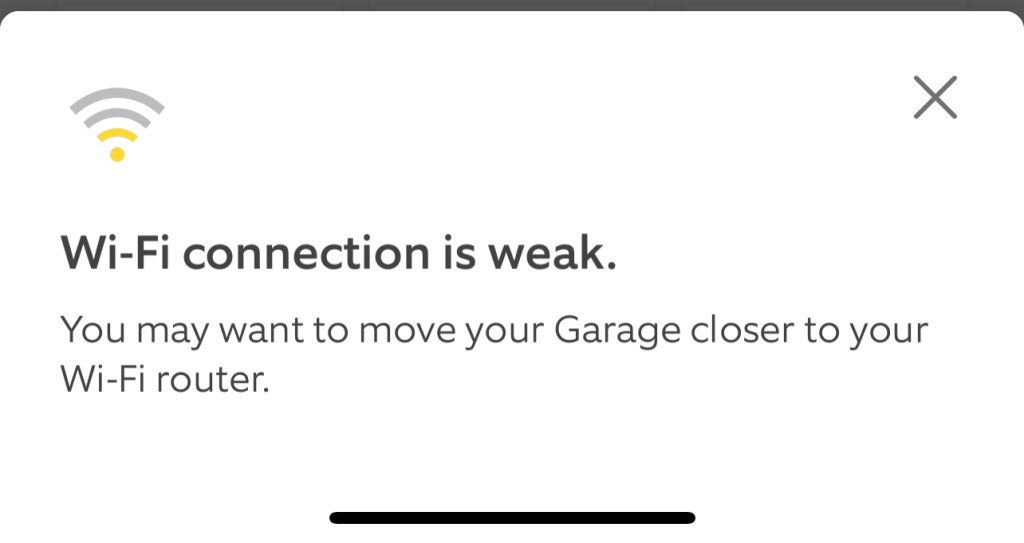
My Smart Home is book smart, not street smart.

It’s going to be hard to move my garage. I figure I’ll need at least four or five strong guys to help. My garage is heavy and seems pretty securely attached to the ground, so the work will be hard and I’m sure that I’d have to pay them at least $500 apiece.

But at least I don’t live in Illinois. Starting July 1, 2023, freelance labor will be governed by the Freelance Worker Protection Act (FWPA), another freelancer law similar to the ones in Los Angeles, Minneapolis, New York City, Seattle, and Columbus Ohio.

Here’s what you need to know before retaining a solo independent contractor in Illinois:

When the Law Applies

  • Independent contractor who is a natural person (i.e., a human, not an entity)
  • Providing services in Illinois
  • Providing services for a person or entity in Illinois
  • Total value is $500+, including all work aggregated over 120 days

Exclusions

  • N/a to construction or subcontractors, as defined in the Illinois Employee Classification Act (construction industry)
  • N/a to employees, as defined by the Illinois Wage Payment and Collection Act

Requirements

There must be a written contract that includes:

  • The name and contact information of both parties (including the hiring party’s mailing address);
  • An itemization of all products and services to be provided by the freelance worker;
  • The value of the products and services to be provided;
  • The rate and method of compensation;
  • The date when payment is due, which must be “no later than 30 days after the products or services are provided”; and
  • If the hiring party requires a list of products and services rendered in order to meet any payment processing deadlines (such as an invoice), the date by which the freelance worker must submit the list.
    (IDOL will provide model contracts)

Prohibitions

  • Once the IC “has commenced preparation of the product or performance of the services under the contract,” the hiring party cannot require, as a condition of timely payment, that the IC accept less compensation
  • Hiring party cannot threaten to withhold payment unless IC takes a lesser amount (no exception for unsatisfactory performance?)
  • Hiring party cannot do anything that would discourage the IC from exercising rights under the Act
  • No retaliation
  • Waivers are void against public policy (does that mean you can’t settle a dispute?)
  • If the contract failed to specify a due date for payment, the hiring party violates the Act if payment is made more than 30 days days “after the completion of the freelance worker’s services under the contract”

Record Keeping

  • Hiring party must retain a copy of the contract for two years

Enforcement

  • IC can file a civil lawsuit, or
  • IC can file an administrative complaint, which can lead to a broader investigation as to overall compliance

Penalties

  • For failure to timely pay: 2x amount owed, plus attorneys fees and costs
  • For failure to contract or to provide the contract: value of the contract or $500, whichever is greater
  • For discrimination or retaliation: value of contract, plus attorneys fees and costs

In addition, the IDOL may impose civil penalties up to $5000 for each violation, or $10,000 for each repeat violation within a five-year period, plus monetary damages to the state, restitution, and equitable relief, including injunctions.

Other Stuff

  • The law does not weigh in on whether the worker is misclassified
  • The Illinois DOL will issue regulations

Problems I See with the Law, as Written:

I see a few problems, and hopefully the IDOL will address these issues in its rulemaking.

First, suppose the IC’s work is unsatisfactory. Suppose the IC is slow or sloppy or rude or has terrible body odor. Suppose the IC does the work you requested but stomps all over your prized rose garden when walking in an out of the building. Suppose the IC comes into your home or business and breaks stuff or takes a cell phone picture of confidential information.

The law does not take into consideration all of the things that could warrant reduced or nonpayment, even if the products or services are ultimately provided. It seems that you’d still have to pay the value of the contract.

Second, the law seems to prohibit settlements. It says that any waiver of rights under this law is void as against public policy. It does say “except as otherwise provided by law,” so maybe a settlement would fall into that category.

Tips for Retaining ICs in Illinois after July 1, 2024

  • Consider including specifications or other requirements in the contract, to preserve an argument that the work is not yet completed or that the work was not performed as contractually agreed. (But don’t impose control over how the work is done, because that could lead to misclassification.)
  • Evaluate current use of individual ICs in Illinois, and consider whether this law will apply to those relationships.
  • Implement a Gatekeeper System like this, prohibiting managers from retaining ICs without going thorough an internal chokepoint for vetting. Managers who don’t know about the FWPA might retain ICs to get something done, creating liability for the company under the FWPA.
  • Look for the IDOL to release regulations that will hopefully provide clarity on the poor performance and settlement concerns.
  • Be careful about any IDOL investigation. If your business uses freelancers and the IDOL receives a complaint of a potential FWPA violation, the IDOL is likely conduct a thorough investigation that extends beyond the one complaining worker. With fines of $5,000 per occurrence, the penalties for noncompliance can get big in a hurry.

The scope of this law is broad. It applies to all “natural persons” (hey, no jokes about the weird guy down in the cubicle down the hall) who perform services for $500 or more. That would include your regular babysitter, your house cleaner, the guy you pay to wash the windows, solo consultants, or the guy you pay to assemble all the new modular furniture.

That would also include the guys I’m gonna need to pick up and move my garage.

Enter your email address to subscribe to this blog and receive notifications of new posts by email.

© 2023 Todd Lebowitz, posted on WhoIsMyEmployee.com, Exploring Issues of Independent Contractor Misclassification and Joint Employment. All rights reserved.

2018_Web100Badge