

Beware of Bright Shiny Objects: Home Health Care Company Gets Whacked in Misclassification Claim

Alabama jewelry store owner Slater Jones owns a two-carat diamond. That might not seem surprising, but stay with me here. Jones keeps the diamond in his eye. Literally, in his eye.

You see, Jones lost his right eye to illness. Rather than living with a boring old prosthetic eye that looks like, well, an eye, Jones engaged eye prosthetic expert John Lin to create a custom artificial eye from a diamond.

Having a diamond for an eye may seem a bit gaudy, but I guess if you’re in the jewelry business, you may as well just go for it.

Those in the home health care business, on the other hand, should not just go for it — especially if “it” is classifying in-home health aides as independent contractors.

In a settlement finalized earlier this month, California Attorney General Rob Bonta secured a $9.5 million settlement against the individual owners of a home health care company for misclassifying its workers in violation of California law. In this case, the owners appears to have operated the home health agency as a d/b/a without having incorporated. Oopsie. The settlement included another $1.5 million against a different incorporated home health care entity and its family of owners.

The settlement also prohibited all of the defendants from classifying their aides as independent contractors in the future.

We have seen a lot of recent cases brought against home health care companies that classify their workers as independent contractors. This settlement is a stern warning that home health care companies choosing that model need to be extremely cautious.

Because this case was brought by the State, some of the protections we often recommend, like individual arbitration agreements with class action waivers, provide no protection. This case and the settlement also serve as a reminder that individuals can be held liable for intentional misclassification.

The claims brought against the agencies focused largely on California’s Unfair Competition Law (UCL). Misclassification allegations under the UCL typically claim that the wrongdoer gained an improper advantage in the marketplace by unlawfully classifying employees as independent contractors.

Treating in-home aides as contractors may seem like a bright shiny object worth pursuing. But that sparkle you see is no diamond. It’s just the gleam in the eye of the State Attorney General, preparing to count the cash from another misclassification settlement.

Classify wisely, my friends.

Enter your email address to subscribe to this blog and receive notifications of new posts by email.

© 2025 Todd Lebowitz, posted on WhoIsMyEmployee.com, Exploring Issues of Independent Contractor Misclassification and Joint Employment. All rights reserved.


2018_Web100Badge
 

Just Like the Dress: Why Balancing Tests for Worker Classification Can Be So Unpredictable

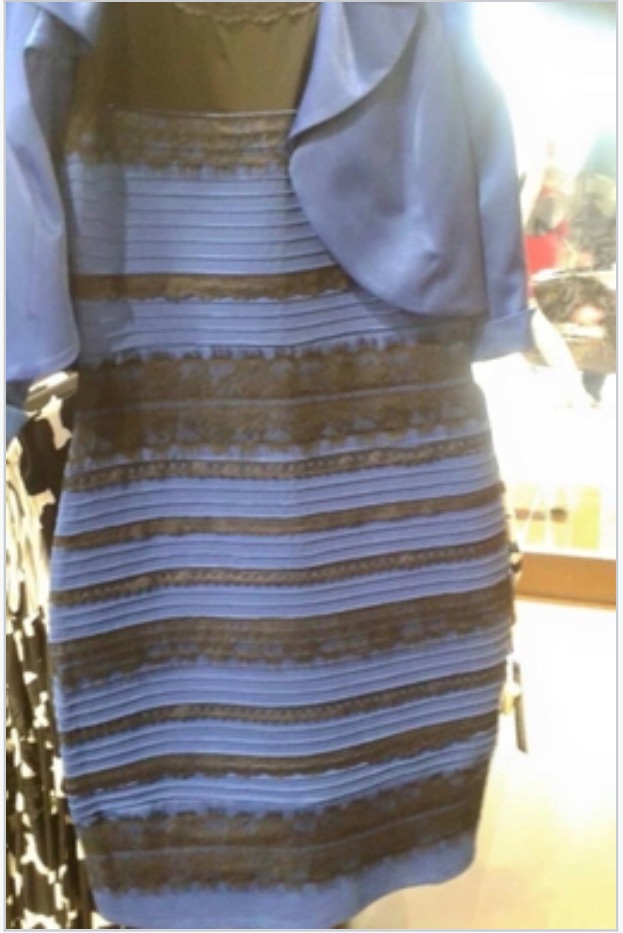
Remember the dress that broke the internet?

In 2015, this image was widely circulated on Facebook, with some people seeing the dress as white and gold, others seeing it as blue and black. Whichever camp you are in, you probably cannot understand how anyone could possibly think the dress is the other set of colors.

You can read more here if you want a refresher. But essentially it all comes down to neuroscience and differences in how people perceive color.

The core takeaway, though, was that two people could view the same object and reach opposite conclusions.

And so it goes with independent contractor misclassification disputes. A recent Fourth Circuit decision highlights the problem with the tools we use to assess whether a worker is properly classified. When a balancing test is used, different fact-finders can view the same evidence and reach opposite conclusions. And that’s exactly what happened here.

The case, Chavez-DeRemer vs. Medical Staffing of America d/b/a Steadfast, involved a staffing firm that provided independent contractor nurses to hospitals and medical clinics, as needed. The DOL launched an investigation in 2018, alleging that 1,100 nurses should have been classified by Steadfast as its employees under the Fair Labor Standards Act (FLSA). The DOL filed a lawsuit in federal court in Norfolk. After a bench trial, the judge ruled that under the FLSA’s six-factor Economic Realities Test, the nurses were employees. The judge awarded more than $9 million in damages.

Steadfast appealed. Last week, in a 2-1 decision, the Fourth Circuit affirmed. Two judges agreed with the trial court, finding that the evidence supported employee status under the Economic Realities Test.

The dissenting judge disagreed vehemently. As in, how-can-you-possibly-think-the-dress-is-blue-and-black vehemently. The dissenting judge excoriated the majority for cherry-picking facts and ignoring the realities of the relationship.

All three judges, of course, were evaluating the same facts and the same record. All three judges were applying the same six-factor Economic Realities Test. Yet, they reached very different conclusions.

If this is depressing, it should be. It shows how unpredictable balancing tests can be.

The outcome is an important reminder of how important it is, when building independent contractor relationships, to consider every relevant factor and to nudge as many factors as possible to the independent contractor side of the scale.

There is no way to predict which facts a judge will find most persuasive and no way to predict how a judge will weigh the factors, especially since it is pretty much inevitable that there will be at least some factions on each side of the scale.

I see the dress as white and gold. I can’t understand how anyone would think it’s black and blue. Those people are insane.

Actually they’re not insane. (Well maybe they’re insane.)

In the Medical Staffing case, the dissenting judge couldn’t see how the other two judges could have possibly reached the conclusion that the nurses were misclassified. Businesses using independent contractor models need to be prepared that no matter how supportable they think their classification decision is, a judge or agency might reach the opposite conclusion, even from the same facts.

Enter your email address to subscribe to this blog and receive notifications of new posts by email.

© 2025 Todd Lebowitz, posted on WhoIsMyEmployee.com, Exploring Issues of Independent Contractor Misclassification and Joint Employment. All rights reserved.
2018_Web100Badge
 

Bee Aware: New Law Increases Fines for Worker Misclassification in Colorado

When police in Spain pulled over a 70-year-old van driver for not wearing a seatbelt and driving erratically, they thought it would be a routine stop. The man had other ideas. After being asked to take and retake a breathalyzer test, the man threatened to kill the police officers, which is generally a thing you should not do when pulled over.

The man, who I should now mention was a beekeeper, went to the back of the van and released swarms of bees, which proceeded to attack the policemen, stinging them several times. The policemen fled to a nearby restaurant, and the beekeeper casually drove away. He was later arrested, bee that as it may.

The policemen that day didn’t know what they were getting into when they pulled over the van driver. But businesses in Colorado who misclassify workers as independent contractors should now bee on notice that they may get stung — financially — for their misdeeds.

Colorado has amended its wage and hour laws to add a mandatory fine for willful or repeated misclassification of employees as non-employees. Under the new law, an employer found to have misclassified an employee as a nonemployee must pay a fine in the following amounts, in addition to any other relief that may be awarded:

  • For a willful violation, $5,000;
  • For a violation not remedied within 60 days after the division’s finding, $10,000;
  • For a second or subsequent willful violation within 5 years, $25,000; or
  • For a second or subsequent willful violation not remedied within 60 days after the division’s finding, $50,000.

Colo. Rev. Stat. 8-4-113(1)(a)(I.5).

Misclassifying workers as independent contractors has always carried the risk that you’re not complying with employment laws. As states continue to crack down on the misclassification, we can expect to see more laws with mandatory fines, on top of the usual risk of backpay awards.

Businesses using independent contractors in Colorado and other states with fines should pay extra attention. The fines do not vary by size of the engagement, and they are per-violation fines.

Bee careful out there.

Enter your email address to subscribe to this blog and receive notifications of new posts by email.

© 2025 Todd Lebowitz, posted on WhoIsMyEmployee.com, Exploring Issues of Independent Contractor Misclassification and Joint Employment. All rights reserved.

2018_Web100Badge
 

Bad Moon Rising: Another State Cracks Down on Misclassification with $2.7M Due

I see the bad moon a-rising
I see trouble on the way
I see earthquakes and lightning
I see bad times today

When John Fogerty wrote “Bad Moon Rising,” he was reportedly inspired by the 1941 film The Devil and Daniel Webster. There’s a scene in the film where a hurricane destroys the crops of several farms, but spares those of a man who had made a deal with the devil in exchange for wealth. 

When classifying independent contractors, a deal with the devil generally doesn’t work. If you misclassify your workers as contractors, when the law says they should be employees, trouble will eventually be on the way.

A printed media delivery company found that out the hard way, after being investigated by the New Jersey Department of Labor and Workforce Development (DLWD).

There was no civil lawsuit here. A state agency went after the company. Be wary of state agency audits. This one cost the company $2.7 million in a recent settlement.

  • Overview: The New Jersey Attorney General and the DLWD reached a $2.7 million settlement with Publishers Circulation Fulfillment, Inc. (PCF) for misclassifying delivery workers as independent contractors.
  • Findings: The investigation revealed that PCF exerted significant control over its delivery workers, who were largely immigrants working overnight for low wages. PCF failed to classify these workers as employees, violating New Jersey labor laws.
  • Settlement Details: The settlement totals $2.7 million, covering approximately 2,400 workers.
  • History of the Investigation: The investigation began in 2021, focusing on PCF’s compliance with state employment laws from 2019 to 2022. It was found that PCF made unlawful deductions from workers’ pay and failed to provide essential protections. In a separate 2022 settlement, PCF was required to pay nearly $2.7 million for failing to contribute to the state’s Unemployment Compensation and Disability Benefits Funds between 2015 and 2018.

When considering independent contractor relationships, companies often make the mistake of assuming that if both parties are satisfied with the arrangement, it will be ok. Not so.

State agencies are becoming more and more aggressive in enforcing misclassification on their own. States lose money from misclassification because employers contribute funds to state unemployment and workers’ compensation funds for employees, but not for contractors.

So make sure your workers are properly classified, and heed this warning from John Fogerty and the band:

Hope you got your things together
Hope you are quite prepared to die
Looks like we’re in for nasty weather
One eye is taken for an eye.

Enter your email address to subscribe to this blog and receive notifications of new posts by email.

© 2024 Todd Lebowitz, posted on WhoIsMyEmployee.com, Exploring Issues of Independent Contractor Misclassification and Joint Employment. All rights reserved.

2018_Web100Badge
 

Here’s a Visual Showing the Impact of Misclassification Claims

(Not this visual. Keep reading!)

Last week I was in Boston, spending time with many of my favorite people at our BakerHostetler Labor and Employment Group Retreat. I always enjoy spending time with the people in our other offices. They are wonderful, kind, smart, and a joy to be around.

As part of the programing, each practice team leader gave a six-minute TED-style talk. In my session about the Contingent Workforce Practice Team, I included a slide that I wanted share here.

We sometimes hear from companies that they don’t think they’re at risk for an independent contractor misclassification claim. They sometimes say, we’ve been doing it this way forever, and we haven’t been sued.

To that I would say, you mean you haven’t been sued yet.

Here’s what can happen when companies get sued for independent contractor misclassification.

Enter your email address to subscribe to this blog and receive notifications of new posts by email.

© 2023 Todd Lebowitz, posted on WhoIsMyEmployee.com, Exploring Issues of Independent Contractor Misclassification and Joint Employment. All rights reserved.
2018_Web100Badge
 

Like a Lead Balloon: Cities Aim to Take Down Worker Misclassification

This headline does not refer to the Chinese spy ballon.

Instead, I’m thinking about 1968. Jimmy Page and John Paul Jones had joined up to form a new band after the breakup of the Yardbirds. Drummer Keith Moon of The Who supposedly said the project would go down like a lead balloon.

One of the largest balloons, of course, is the zeppelin. The zeppelin was a passenger airship used until the Hindenberg disaster in 1937. So the band named itself Led Zeppelin, dropping the ‘a’ in Lead so people wouldn’t mispronounce the name of the band.

In 1971, the band released Led Zeppelin IV, which included the song “Going to California” and this lyric:

Spent my days with a woman unkind
Smoked my stuff and drank all my wine
Made up my mind to make a new start
Going to California with an aching in my heart

For today’s post, I’m going to California with an aching in my heart.

Cities in California have upped their game when going after companies that use independent contractors. They’re taking the lead (not led) in bringing their own lawsuits.

In January 2023, the City of San Francisco secured a $5.25 million settlement to cover 5,000 independent contractor delivery drivers. The lawsuit alleged a failure to comply with the city’s health care security and paid sick leave ordinances, which apply to employees.

In October 2022, San Diego’s city attorney settled its own independent contractor misclassification lawsuit for $46.5 million. That deal covered 300,000 independent contractor delivery drivers.

In 2021, San Francisco reached agreement on another delivery driver misclassification lawsuit, settling for $5.3 million to cover 4,500 local drivers.

The mountains and the canyons start to tremble and shake
The children of the sun begin to awake (watch out)

States are following a similar playbook, as we recently saw when New Jersey obtained a $100 million settlement, alleging that a rideshare app company failed to pay into the state unemployment insurance fund for independent contractor drivers.

It seems that the wrath of the gods got a punch on the nose
And it's startin' to flow, I think I might be sinkin'

Government-initiated lawsuits can be particularly dangerous because arbitration agreements and class action waivers are ineffective. The governments are fighting for funds they think are rightfully theirs.

They also have political motives driving their prosecutions. Officials facing re-election want to be able to show their constituents they’re making a difference and fighting for workers’ rights (and ignoring, as usual, the fact that most IC drivers want to remain ICs).


Throw me a line, if I reach it in time
I'll meet you up there where the path runs straight and high

The trend of government-backed compliance efforts is going to continue and will likely increase. Companies making widespread use of independent contractors should be proactive in evaluating these relationships, the contracts, and the local laws to build a comprehensive defense strategy — before getting sued.

Enter your email address to subscribe to this blog and receive notifications of new posts by email.

© 2023 Todd Lebowitz, posted on WhoIsMyEmployee.com, Exploring Issues of Independent Contractor Misclassification and Joint Employment. All rights reserved.

2018_Web100Badge
 

DOL Gets Aggressive with $5.6 Million Consent Judgment on Independent Contractor Misclassification

There’s an island in Quebec that’s larger in area than the lake in which it sits. René-Levasseur Island was supposedly formed by the impact of a meteorite 214 million years ago, although eyewitness accounts differ. The land mass became an island in 1970, when the Manicougan reservoir was flooded, merging two crescent shaped lakes that surrounded the area.

I like fun geography facts, and an island larger than the lake in which it sits is a fun fact. But feels a bit aggressive for the Canadians to merge two crescent shaped lakes to turn this land mass into an island. I’m sure they had their reasons. If nothing else, it looks good on a map.

The Department of Labor is also being aggressive, but they’re not flooding any reservoirs. Instead, they’re channeling their aggression toward independent contractor misclassification.

In a news release this month, the DOL announced that it had obtained a consent judgment for $5.6 million against a national auto parts distributor and an Arizona logistics firm for allegedly misclassifying 1,398 drivers as independent contractors. The award included back wages and liquidated damages.

The DOL had alleged that, by misclassifying the drivers, the companies failed to meet minimum wage requirements, failed to pay overtime rates, and failed to keep required timekeeping records. These failures each were violations of the Fair Labor Standards Act (FLSA).

The award covered an eight-year period between April 2012 and March 2020.

I see three takeaways here:

First, the DOL is being aggressive in filing lawsuits when it thinks independent contractors have been misclassified. This consent judgment shows how expensive these claims can be for companies that improperly classify workers. Companies using independent contractors needs to be proactive in evaluating their risks and taking steps to minimize those risks. There are lots of ways to reduce risk if you plan ahead, before you’ve been sued or investigated.

Second, this case is a reminder that companies who classify delivery drivers as independent contractors are at heightened risk. Federal and state agencies and the plaintiffs’ bar seem to be filing a disproportionate number of claims involving delivery drivers. If your business uses delivery drivers who are classified as independent contractors, you may be at an increased risk of an audit or lawsuit.

Third, remember the DOL’s proposed new rule for independent contractor classification under the FLSA? (Read more here, here, and here.) The DOL wants to change the current test for who is an employee under the FLSA, replacing a regulation adopted by the Trump Administration in 2020. But cases like this one show that the current regulation is not impairing the DOL’s ability to enforce what it perceives as misclassification. The DOL’s many recent successes — as posted in DOL news releases — show that the DOL is doing just fine under the current rule when it comes to misclassification enforcement. The new rule is a solution without a problem.

Large judgments like this one seem shocking, but they are a reminder of the substantial dangers of misclassification.

Learn more by joining me at the 10th Annual 2023 BakerHostetler Labor Relations and Employment Law Master Class, all virtual, one hour every Tuesday starting February 7, 2023. My program on Contingent Workforce issues will be on March 7, 2023. Registration is free.

Enter your email address to subscribe to this blog and receive notifications of new posts by email.

© 2023 Todd Lebowitz, posted on WhoIsMyEmployee.com, Exploring Issues of Independent Contractor Misclassification and Joint Employment. All rights reserved.

2018_Web100Badge
 

Hairy Situation: Misclassification Settlement Disputes Settle for $6.5 Million; Multiple Tests Would Have Applied

If you have a beard at least 8 inches long, here’s an opportunity you might not have considered. At a bar in Casper, Wyoming, a group of bewhiskered patrons tied their beards together to take the world’s record for Longest Beard Chain.

How long? 150 feet, shattering the previous record of 62 feet, set by a shaggy German crew in 2007.

But that wasn’t even the hairiest highlight of the weekend. Down the street was the National Beard and Moustache Championships, a visual delight featuring moustache categories such as best handlebar, Dali, freestyle, and uber-stache, and partial beard categories including best friendly sideburns, goatee freestyle, musketeer, and Fu Manchu.

Meanwhile, 1,000 miles to the west, a different sort of hairy situation was nearing conclusion for several operators of gentleman’s clubs or nightclubs or strip joints, depending on your preferred terminology.

Last week, a federal district court in San Francisco approved a settlement that combined multiple class action claims of independent contractor misclassification brought by exotic dancers. The settlement covered more than 8,000 dancers and included a total payout of $6.5 million.

The cases were complicated by a number of legal issues, including the fact that — because of the timing of the lawsuit — the question of whether the dancers were contractors or employees was to be determined using different tests for different claims. The dancers’ classification for their California wage order claims would be determined using an ABC Test, but their classification under other Labor Code claims would be determined using the Borello balancing test, which is a California hybrid of Right to Control and Economic Realities Tests.

The class period covered 2010 through 2018, so the Dynamex decision applied to the wage claims, but AB5 had not yet been enacted, which left the Borello test to govern the Labor Code claims. This post explains the complicated situation that existed at the time. Had the class covered the period from January 2020 forward, the ABC Test likely would have been used to determine classification under all of the California claims.

But there were also Fair Labor Standards Act (FLSA) claims. The FLSA uses an Economic Realities Test to determine a worker’s classification, but that test is fluid too. The Economic Realities Test used by most courts is different from the test that was written into the current FLSA regulations in 2020, which is different from the test the DOL recently proposed to enact in a new set of regulations currently under consideration.

So for these class members, there were at least three different tests that would determine whether they were employees or independent contractors under different laws. That’s kind of like trying to determine who had the best musketeer or Fu Manchu but with everyone’s facial hair tied together in a 150-foot beard chain.

There are a few takeaways here for the rest of us.

First, misclassification claims by exotic dancers remain common. The business model needs some internal review. But that’s probably not your concern.

Second, the settlement is a good reminder of how complicated it can be to determine a worker’s classification when multiple laws apply. Different tests apply to different laws, even within the same state. The dancers, had they gone to trial, might have been employees under some laws and contractors under other laws.

Third, there are significant costs in reclassifying contractors to employees. The settlement required the clubs to reclassify their dancers to employees, which means the dancers would become eligible for unemployment, workers’ comp coverage, and protection under the anti-discrimination and leave laws that apply to employees.

Regardless of your business, it’s always a good idea to proactively review independent contractor relationships to see how well they would withstand a classification challenge in court. Misclassification cases are high stakes and can take many twists and turns. Sort of like the facial hair in the Full Beard Freestyle category. (Photos here.)

Enter your email address to subscribe to this blog and receive notifications of new posts by email.

© 2022 Todd Lebowitz, posted on WhoIsMyEmployee.com, Exploring Issues of Independent Contractor Misclassification and Joint Employment. All rights reserved.

2018_Web100Badge
 

Don’t Get Armboxed: Strict ABC Test Results in $100 Million Misclassification Liability

In Russia, a new variant on boxing involves chaining the two combatants to opposite sides of a podium, with one arm of each boxer immobilized. They then pound each other with the remaining good arm and, because they’re tied to the podium, they have nowhere to go.

The contests, called armboxing, last for three one minute rounds. If the fighters last two rounds, their arms are both freed up for round three, but the boxers remain chained to the podium.

Getting pummeled with nowhere to go is also a fair way to describe Uber’s most recent run-in with the New Jersey Department of Labor over unpaid unemployment contributions. The NJDOL claims that under the Strict ABC Test governing New Jersey unemployment law, rideshare drivers are employees, not independent contractors.

The NJDOL pursued Uber and a subsidiary for failing to pay into the state’s unemployment fund over a five-year period, 2014-2018.

Last week, the NJDOL announced a settlement with Uber to cover the unpaid assessments – for a cool $100 million. The amount was based on $78 million in unpaid contributions plus $22 million in interest. Uber has made the payment but did not concede there was any misclassification.

New Jersey uses a strict ABC Test to determine employee status for unemployment coverage, but uses a different version of the ABC Test for wage and hour law. The strict ABC Test used for unemployment law follows the same formula as the tests in Massachusetts and California. The danger in these tests, of course, lies in prong B, which requires that to be an independent contractor, the work being performed must be “outside the usual course” of the hiring party’s business.

State departments of labor are notoriously aggressive in pursuing misclassification, and courts often defer to their judgment, even if the facts could support independent contractor status. The NJDOL is among the most aggressive enforcers, as you might expect when its Labor Commissioner says this: “Let’s be clear: there is no reason temporary, or on-demand workers who work flexible hours, or even minutes at a time can’t be treated like other employees in New Jersey or any other state.”

For businesses using independent contractors, tools such as arbitration agreements with class action waivers can be effective in preventing class action litigation. But arbitration agreements can’t stop a state agency from conducting an audit and imposing its own penalties for noncompliance.

And that’s how Uber found itself tied to a podium with one arm immobilized as it got hit.

Businesses in states using strict ABC Tests need to be particularly careful when setting up their business plans, their contracts, and their external messaging. State audits can be random, or they can be initiated after a worker complaint.

Unemployment filings by independent contractors can be especially dangerous. State departments of labor will typically investigate those claims, assess whether the worker is misclassified and — most troubling of all — will find that if the one worker was misclassified, then all similarly situated workers were also misclassified. The state DOL may then issue back assessments based on its assumptions about how many workers are similarly situated and how many were therefore misclassified.

When an independent contractor files an unemployment claim, pay attention and be prepared to defend your classification decision. Merely denying that the worker was an employee may not be enough, and a full-fledged audit could follow. In a full-fledged audit, the stakes can be high, and it might not feel like a fair fight.

Be proactive, plan ahead, and don’t chain your business to a podium.

Enter your email address to subscribe to this blog and receive notifications of new posts by email.

© 2022 Todd Lebowitz, posted on WhoIsMyEmployee.com, Exploring Issues of Independent Contractor Misclassification and Joint Employment. All rights reserved.

2018_Web100Badge
 

Famed Miami Nightspot Gets Hit with $15 Misclassification Verdict

I grew up in Miami, but not this Miami. My weekends were Miami Jai-alai and Coconut Grove, certainly not the hip hop adult club scene.

But if I had grown up in that other world, I might have heard of the King of Diamonds, which I am now aware was the place to be seen if you are looking to spot celebrities at a famous adult entertainment venue. According to Miami newspaper archives, the original club went bankrupt in 2018 after failing to pay its mortgage and its rent. This came on the heels (high heels?) of being cited for serious safety code violations, including malfunctioning fire sprinklers.

Making matters worse, at about the same time, 27 of the club’s dancers sued, alleging wage and hour violations and that they had been illegally misclassified as independent contractors.

The case was delayed because of COVID-19, but it finally went to trial last fall, and the jury agreed that the dancers had been misclassified. Two weeks ago, the judge entered a final judgment, awarding the dancers more than $15 million. Some of the dancers’ individual awards exceeded $800,000.

The takeaway here is that independent contractor misclassification claims are big dollar claims. The defendants in this case drew more attention than usual because of the high profile of their club, but the legal risks apply to any business making widespread use of contractors.

Remember, it’s the law that decides whether a worker is an independent contractor or an employee. It doesn’t matter what the parties call the relationship or what the written contract says.

The club (or, a club with essentially the same name) reopened in 2020 with new ownership. I don’t know whether they’ve changed the classification and pay structure of their performers, but that would seem like a good idea. They’ll want to keep the place up and running in case Floyd Mayweather comes back with his infamous Money Truck to drop $100,000 on an evening’s entertainment.

For some other wild tales at the old joint, you can read more here.

I was oblivious to that whole scene growing up, but I sure had some great times at Miami Jai Alai (video highlights from 1980s), rooting for Michelena, Benny, and Harretche, and hoping to hit on my trifecta. Good times.

Enter your email address to subscribe to this blog and receive notifications of new posts by email.

© 2021 Todd Lebowitz, posted on WhoIsMyEmployee.com, Exploring Issues of Independent Contractor Misclassification and Joint Employment. All rights reserved.

2018_Web100Badge