
Don’t Get Stuck Naked: Tips for Enforceable Arbitration Agreements When Using Staffing Agency Workers

He was in here. Really. Source: Syracuse Fire Dept Facebook

A Syracuse man was rescued from inside the walls of a historic theater last month after spending two days trapped, naked. The man apparently had entered the building’s crawlspace (why?) and fell from the ceiling into a gap between walls in the men’s restroom. No word on why he was au naturale.

But I’m sure he was glad to be freed from this unexpected situation. He should have planned better — like by not hiding in a crawlspace or, if he had a really, really good reason to hide there, by at least wearing clothes.

You can protect your business from unexpected situations (different ones), such as by making sure your staffing agency agreements include valid arbitration clauses with the staffing agency’s workers. The goal here is to avoid being left naked and stuck, if faced with a joint employment claim.

In a recent Oklahoma case, two staffing agency workers sued the staffing agency and the company where they provided services, alleging a failure to pay overtime.

The company where they worked filed a motion to compel arbitration, arguing that the arbitration agreement the workers signed with the staffing agency should cover all claims against both defendants. The district court initially ruled that the arbitration agreement was only between the worker and the staffing agency, and so it could not be relied upon by the other company. Motion denied.

But the Tenth Circuit disagreed, finding that the non-signatory company could enforce the agreement because the plaintiffs’ claims “allege substantially interdependent and concerted misconduct” against the two defendants. The plaintiffs were therefore “estopped from avoiding their duty to arbitrate their claims arising out of their employment relationship.”

That was good news in this case, but I wouldn’t count on that result every time. This case turned on Oklahoma estoppel law. But with proper planning, you can achieve the same result.

Here’s how:

First, in your agreement with staffing agencies, require the agencies to have all individuals assigned to perform services at your company sign an individual arbitration agreement.

Second, make sure it’s not just any old arbitration agreement, but one that includes customized terms. For example:

  • Require the worker to acknowledge that signing is a condition to being placed at your company.
  • Make sure the scope of covered claims is broad enough to include claims that are not just against the staffing agency.
  • List your company as a third party beneficiary with authority to enforce the agreement.
  • Make the obligation to arbitrate bilateral and binding on your company, even though your company will not sign the agreement. In other words, if you agree to perform services at the company, the company will agree to arbitrate any claims against you.

There are a few more tricks of the trade, but these are some of the key items. Keep the agreement short, and use simple language.

With some careful advance planning, you can avoid being left naked and stuck if faced with a joint employment lawsuit filed by staffing agency workers.

Enter your email address to subscribe to this blog and receive notifications of new posts by email.

© 2021 Todd Lebowitz, posted on WhoIsMyEmployee.com, Exploring Issues of Independent Contractor Misclassification and Joint Employment. All rights reserved.

2018_Web100Badge
 

A Frog’s Eye View: What is Horizontal Joint Employment?

Suppose Kermit works 30 hours a week at The Muppet Show. He holds a non-exempt position as a research assistant, trying to determine why are there so many songs about rainbows.

Frog food is expensive these days, so he holds a second job too. Kermit works nights at Sesame Street, where he spends 20 hours a week investigating multi-colored arc-shaped atmospheric phenomena and what’s on the other side.

With 30 hours at one job and 20 hours at another, neither role pays Kermit overtime.

But is he being cheated out of time-and-a-half? Let’s hop in and take a deeper look.

Horizontal joint employment is when a person holds two jobs, but the businesses are under common control. They may have the same owners or officers, they may coordinate schedules among workers, or they may share a common pool of employees. When horizontal joint employment exists, the hours from both jobs are aggregated, and 30 hours at one job plus 20 hours at the other equals 50 total hours, 10 of which require overtime pay.

So what about our short-bodied, tailless amphibian friend? Does Kermie get overtime?

Kermit may seem like a free spirit, but whether he’s on The Muppet Show (30 hours) or Sesame Street (20 hours), his every move is controlled by Jim Henson. Literally.

Common control signals horizontal joint employment, which means Kermit’s been shortchanged 10 hours of overtime. It’s not easy being green.

You’ve probably read about recent changes to the joint employment tests, but those changes are for vertical joint employment, not horizontal joint employment. Vertical joint employment is when the employees of a primary employer perform services for the benefit of a secondary employer, like in a staffing agency relationship. When staffing agency employees work side-by-side with a company’s regular employees, the staffing agency and the other business may be joint employers.

The rules on horizontal joint employment are unchanged. So if sharing employees with a business under common control, be aware of the rules and look before you leap.

Enter your email address to subscribe to this blog and receive notifications of new posts by email.

© 2021 Todd Lebowitz, posted on WhoIsMyEmployee.com, Exploring Issues of Independent Contractor Misclassification and Joint Employment. All rights reserved.

2018_Web100Badge
 

You Don’t Have to Be An Official Wizard to Write a Solid Independent Contractor Agreement

Farewell, my bearded friend.
Photo by Shellie, Flickr CC BY-NC-ND 2.0

The Christchurch City Council has voted to discontinue paying its official wizard $16,000 a year to “provide acts of wizardry” for this New Zealand city. Ian Brackenbury Channell, known as The Wizard of New Zealand, lamented the decision, calling city council “a bunch of bureaucrats who have no imagination.”

As you can see from this sad state of affairs, acts of wizardry do not always get the appreciation they deserve. But fortunately it doesn’t take acts of wizardry to draft a solid independent contractor agreement.

A recent Illinois case shows the value of a solid agreement. In a decision earlier this month, a federal court ruled that a freight broker was not vicariously liable for catastrophic injuries caused in an accident involving a driver under contract to haul loads.

The driver had collided with a motorcycle, killing the motorcyclist. His widow sued the freight broker, alleging it was an employer and was therefore liable for the negligent driving of its employee. But the court reviewed the facts of the relationship and the terms of the contract, and it found that the driver was not an employee of the broker.

The broker did not provide equipment, select routes, or exhibit other elements of control. A Right to Control Test governed the analysis in this case. The broker did not retain the right to control the manner or means by which the work was performed. This lack of control was evident in both the facts of the relationship and the text of the contract.

When there’s a tragic loss, like here, it seems natural to point fingers at everybody, including the deepest pockets. But that doesn’t mean the deepest pockets are necessarily responsible for what went wrong. By drafting a careful and through independent contractor agreement, companies can avoid being held responsible for losses that are not their fault.

Although The Wizard of New Zealand undoubtedly has great powers of wizardry and although he is probably almost as much of a tourist attraction as the nearby penguins, he probably wouldn’t have the first clue how to draft a comprehensive independent contractor agreement.

Fortunately, it doesn’t take a wizard to draft a thorough agreement. But do make sure you do it right. Having a thorough agreement in place can make all the difference, especially in a catastrophic loss case when lots of parties — including those not really responsible — are going to be blamed.

You can read more about The Wizard here.

Enter your email address to subscribe to this blog and receive notifications of new posts by email.

© 2021 Todd Lebowitz, posted on WhoIsMyEmployee.com, Exploring Issues of Independent Contractor Misclassification and Joint Employment. All rights reserved.

2018_Web100Badge
 

He-Gassen! This Telecom Company Should Have Smelled a Misclassification Claim Coming

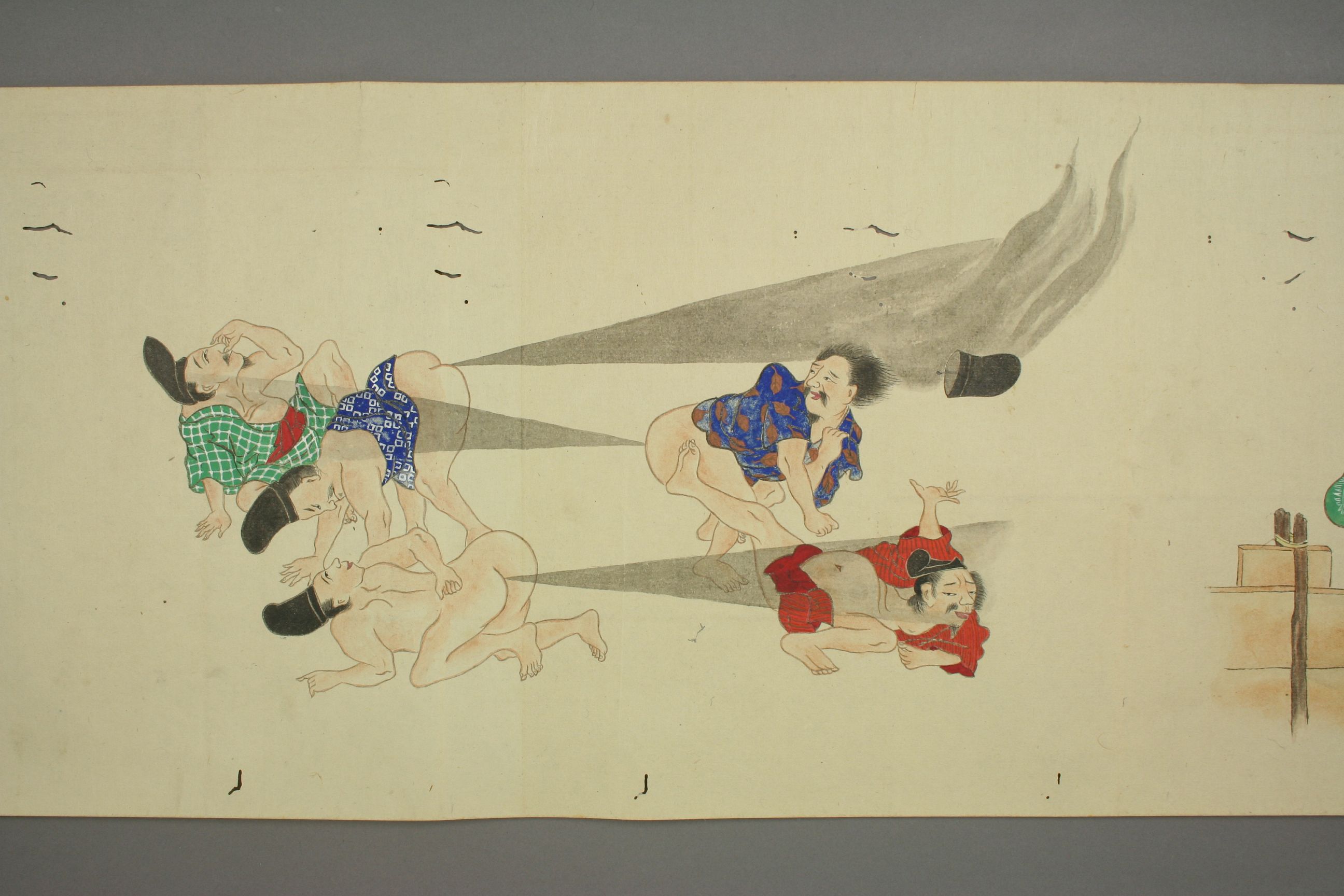
Fire away! Source: Waseda U. Library

The Waseda University Library in Tokyo maintains an online archive of drawings dedicated to epic Japanese fart battles of the 17th and 18th centuries. The depictions, called he-gassen (really!), show farts so powerful they penetrate walls and blow cats out of trees.

This mode of attack must have been intimidating, but approaching enemies should have smelled what was coming and taken evasive action.

The same can be said for a Nevada telecommunications company, which had engaged 1,400 call center workers but treated them all as independent contractors. In the immortal words of Daryl Hall, no can do.

Under federal wage and hour law, the Economic Realities Test is used to determine whether a worker is an employees, regardless of what the parties call the relationship. In this case, the telecom company failed virtually every part of the test. The workers were economically reliant on the telecom company, which controlled their work in just about every relevant way, making the workers employees.

The facts were so bad that the Department of Labor took the laboring oar on this one, filing its own lawsuit in federal court. The DOL won a $1.4 million award, and the Ninth Circuit Court of Appeals upheld the decision.

Remember, a worker’s status as an employee or independent contractor is determined using the legal test and the facts of the relationship, regardless of what the parties call themselves.

The moral of the story is that if it smells like an employment relationship, it probably is. Choose your battles wisely. He-gassen!

Enter your email address to subscribe to this blog and receive notifications of new posts by email.

© 2021 Todd Lebowitz, posted on WhoIsMyEmployee.com, Exploring Issues of Independent Contractor Misclassification and Joint Employment. All rights reserved.
2018_Web100Badge

Joint Employment: Sometimes You Can Win, Even in California

Sometimes it seems as if you just can’t win. Take the case of this man in southern Brazil, who late last month was attacked by a group of bees while fishing with two friends. The man successfully escaped the bees by jumping into the lake — only to be eaten alive by piranhas.

Employers in California, you know what I mean, right? It seems like any way you turn, the laws of California will get you.

Well today I write with good news. There is still hope.

In a joint employment case brought under California law, the Ninth Circuit Court of Appeals handed Costco a win, ruling that Costco is not a joint employer of the supplier sales reps who ask you to taste that new brand of salsa, even under the strict rules of California Labor Code section 2810.3.

California has two flavors of joint employment: Spicy and Extra Spicy.

Extra spicy is Labor Code section 2810.3. It makes joint employment automatic when a “labor contractor” supplies workers to provides services within the client’s “usual course of business.” The workers at issue here were paid by a staffing agency and sent to Costco locations to offer samples of suppliers’ products on a consignment basis. The Court of Appeals ruled that was not part of the “usual course” of Costco’s business, so section 2810.3 did not apply.

Regular spicy is the Martinez v. Combs test. It says that an entity is a joint employer under California law if it (1) exercises control over wages, hours, or working conditions, or (2) “suffers or permits” the individual to work, or (3) “engages” the individual, meaning creates a common law employment relationship, not that you should have put a ring on it.

The Court gave Costco a pass here too, ruling that it didn’t do any of these three things either.

This case is a good reminder that it’s still possible for a companies to win joint employment claims in California. The key is to structure those relationships correctly and ensure you have robust contracts with suppliers of labor. For contracting tips, remember the Monster with Three Eyes.

All is not lost, even in California. Turns out that even the guy in Brazil might have had a chance. His two fishing buddies made it out of the lake alive.

Enter your email address to subscribe to this blog and receive notifications of new posts by email.

© 2021 Todd Lebowitz, posted on WhoIsMyEmployee.com, Exploring Issues of Independent Contractor Misclassification and Joint Employment. All rights reserved.

2018_Web100Badge

California Adopts New Exemptions to the ABC Test (and an Odd Way to Seek Comfort in a Storm)

Looking for Florence? Take the stairs on your left. One flight down.

Florence Ford was terrified of storms and, seeing as how she was born in 1861, none of the weather apps on her phone were working yet. Her mother Ellen provided comfort when the rains came. So naturally, when Florence died at age 10, Ellen felt she still needed to comfort her daughter when it rained.

In Natchez, Mississippi, you can visit one of the oddest graves in the world. Ellen fitted her daughter’s coffin with a small window and built stairs down to the casket. When it poured in Natchez, Ellen would head down to the casket and provide much-needed comfort to Florence’s bones.

Ellen couldn’t quite accept the reality of Florence’s death and tried to create an exception. In her version of death, reading or singing to the corpse still brought comfort to her daughter — or maybe just to herself.

A less creepy version of dueling realities continues to play out in California, as the legislature keeps reviving exceptions from the harshness of the ABC Test it adopted in AB 5.

The state continues to make tweaks. Two recent bills (AB 1506 and AB 1561) adopt these changes:

  • Extends the temporary exemption for newspaper publishers and distributors who meet certain criteria;
  • Imposes reporting requirements on publishers and distributors to ensure they are complying with the Borello Test, if they’re exempt from the ABC Test;
  • Extends the manicurists exemption for three more years (Kudos to the manicurists’ lobby! They nailed it!);
  • Extends the construction industry subcontractor exemption for another three years;
  • Amends the data aggregator exemption; and
  • Modifies the insurance exemption.

This grab bag of edits comes soon after the adoption of AB 2257, last fall, which rewrote AB 5 to change the long list of exemptions.

What’s going on here? The problem is that the ABC Test doesn’t make a lot of sense when you try to apply it across all types of working relationships. That’s why California’s ABC Test statute keeps getting a makeover. After the state legislature codified the ABC Test in September 2019 by passing AB 5, the state has adopted dozens and dozens of exceptions, and as you can see here, the list keeps growing.

Here’s what businesses in California need to remember:

  1. The ABC Tests is still the default test for determining whether an independent contractor is misclassified and should really be an employee.
  2. There are loads of exemptions, many of which are difficult to follow and require compliance with a long list of criteria before they will apply. Check the list of exemptions to see if they apply.
  3. If an exemption applies, it does not mean that independent contractor status is proper. It just means you make the independent contractor vs. employee determination using the Borello balancing test instead of the ABC Test.
  4. The rules keep changing.

If this monsoon of details makes you uncomfortable, it should. Fortunately, today you learned one more way that a person can find comfort in a storm. Thank you Ellen of Natchez.

Enter your email address to subscribe to this blog and receive notifications of new posts by email.

© 2021 Todd Lebowitz, posted on WhoIsMyEmployee.com, Exploring Issues of Independent Contractor Misclassification and Joint Employment. All rights reserved.

2018_Web100Badge
 

Zombie Copyrights: Tips for Preserving IC Status With Writers While Avoiding the Risk of Losing Copyright After 35 Years

In Return of the Living Dead, a warehouse owner accidentally reanimates some cadavers, who then become unkillable zombies. While not based on a true story, the 1985 film does have some parallels in real life (if you squint real hard and just go with it).

As discussed last week, copyright claims can also return from the dead when the author is an independent contractor. This week we discuss what can be done to avoid this zombie copyright scenario.

In the case of Horror Inc. v. Miller, the Second Circuit ruled that screenwriter Victor Miller could reclaim the copyright to Friday the 13th after 35 years, since he wrote the script as an independent contractor.

The case highlights a serious risk when retaining a writer as an independent contractor instead of as an employee. If a work is not a “work made for hire” under the U.S. Copyright Act, the author can reclaim a copyright 35 years after having transferred the rights away.

Horror, Inc. argued that Miller was an employee when he wrote the script, which made it a “work made for hire.” The court disagreed, but the rights holder should have had another argument in its back pocket – one that would have been much cleaner and could have changed the result of the case.

Employment is just one path for designating something a “work made for hire.” Another path toward the same designation is to have a “specially commissioned work.”

If Miller’s contract to write the movie had indicated that the movie was a specially commissioned work for use as part of a motion picture, it would not have mattered whether he was an employee or an independent contractor. The “specially commissioned work” designation would have made the work a “work made for hire” without getting into the messiness of employment, which would mean that Miller could not reclaim any rights after 35 years. This circular from the copyright office explains the “specially commissioned work” rule.

There are important lessons from this case for anyone seeking to engage a writer, whether it’s a freelancer or a script writer.

First, think through the implications of employee vs. independent contractor, not only in the context of employment law but also copyright law.

Second, consider a belt-and-suspenders approach. Even if the writer is your employee under labor law, the writer might not be your employee under U.S. Copyright Act — at least according to the Horror, Inc. case. Consider Plan B. You maybe able to designate the work a “specially commissioned work” or use one of the other definitions of a “work made for hire,” assuming that the facts fit within the definition.

But there are pitfalls to the second approach too. The California Labor Code says that if a work is a “work made for hire,” then the relationship between the writer and the acquirer is automatically employment, at least under certain provisions in the Labor Code. See Cal. Unemp. Ins. Code Section 686 and Cal. Lab. Code Section 3351.5(c).

If the California Economic Development Department (EDD) performs a misclassification audit, it will likely ask for all independent contractor agreements, and if a deliverable has been designated as a “work made for hire,” that may serve as conclusive proof of misclassification, with back assessments owed for failure to pay unemployment taxes.

You can get around the whole “work made for hire” issue by assigning the work, but that leaves the door open for the writer to reclaim the copyright after 35 years. And we’re right back where we started.

The independent contractor vs. employee decision has important implications in copyright law that are often overlooked. The Horror, Inc. case is a good reminder of some of the surprises that may arise many years later.

Enter your email address to subscribe to this blog and receive notifications of new posts by email.

© 2021 Todd Lebowitz, posted on WhoIsMyEmployee.com, Exploring Issues of Independent Contractor Misclassification and Joint Employment. All rights reserved.

2018_Web100Badge
 

Major Scare for the Movie Industry: Independent Contractor Can Reclaim Copyright to Friday the 13th

With Halloween around the corner, it’s scary movie season. Every year, various publications post what they claim is the definitive list of All-Time Scariest Movies. Go ahead, google it.

But in 2021, the Science of Scare Project took a more scientific approach. The Project measured heart rate elevation in 250 volunteers while watching 40 scary movies, and the scariest – measured by increased beats per minute – was a low budget 56-minute thriller you might not expect. The full rankings, with beats per minute spike chart, can be found here.

The movie industry got a different scare last month. Usually, we’re looking for ways to preserve independent contractor status. But in this case, a script writer’s independent contractor status may allow him to take back the copyright to the script, since 35 years have passed since its publication.

In a case called Horror Inc. v. Miller (yes, really), the Second Circuit Court of Appeals ruled that Victor Miller, who wrote the script for Friday the 13th, could legally reclaim copyright on the original screen play. After 40 years, he can take it back!

This surprising outcome is no surprise to those who know the intricacies of the U.S. Copyright Act. The Act says that authors who executed a license or granted a copyright transfer after January 1, 1978, can terminate the license or grant 35 years after the original transaction. The author has five years to provide notice of termination, and Miller provided that notice in 2016, 36 years after the 1980 film was released.

Horror, Inc., which owns the rights to Friday the 13th, argued that the script was a “work made for hire” and that Miller was acting as an employee under federal labor law when he wrote the script. Miller was a member of the Writer’s Guild of America, and the film’s rights holder had registered the screenplay as a work made for hire.

But the Second Circuit Court of Appeals ruled that the test for “employee” under federal labor law is different than the test under U.S. Copyright law. Federal labor law tries define employment broadly, in a way to protect workers and their right to organize. In contrast, U.S. Copyright law applies a narrower interpretation, designed to protect authors. Even if Miller was an employee under labor law, that didn’t make him an employee under copyright law.

The Court looked at five factors for determining whether the screenplay was a “work made for hire,” and the Court ruled that the test was not met. Miller was not an employee under the U.S. Copyright Act, even if he was an employee under federal labor law.

It is here that I strongly disagree with the Court’s analysis. The test for employment status under federal labor law is fundamentally the same as the test under the Copyright Act. Both tests seek to apply the common law of agency, and both are Right to Control Tests. The Court’s attempt to distinguish between the tests falls flat, in my mind, and it appears to me as if the Court made up its mind first and then tried to fit the desired result into a legal framework that would justify the outcome. If Miller was an employee using the common law agency (Right to Control) test that applies to federal labor law, he should have been an employee under the common law agency test that applies to copyright law. (Fun fact: Miller signed a document called “Employment Agreement,” but the Court was not swayed.)

Since Miller wrote the screenplay as an independent contractor under the Copyright Act, the Act grants him the right to cancel the transfer after 35 years, and he properly served notice of his intent to do so. Horror, Inc. is going to lose the copyright to the film.

Copyright termination cases are starting to pop up more frequently, posing a real threat to rights holders in the film and comic book industries.

When engaging a writer, businesses need to weigh the benefits of retaining an independent contractor with the risks. For commercials or social media posts with short-term value, retention as an independent contractor is likely the best path.

But with movies or other assets that are likely to have value for 35 years or more, retention as an independent contractor leaves open the risk that the writer can reclaim the copyright after 35 years. Buyer beware.

The scariest horror movies have plot twists and unexpected scares. For many rights holders, the idea that a script writer could reclaim copyright after 35 years is the kind of scare they could do without. Heart rates among movie rights holders are increasing with this decision.

Content creators need to know what they’re getting into and need to understand the long-term risks.

Enter your email address to subscribe to this blog and receive notifications of new posts by email.

© 2021 Todd Lebowitz, posted on WhoIsMyEmployee.com, Exploring Issues of Independent Contractor Misclassification and Joint Employment. All rights reserved.

2018_Web100Badge
 

Hold Your Fyre: Five Tips For Avoiding Misclassification When Using Social Media Influencers

In 2017, the Fyre Festival failed spectacularly after all sorts of social media influencers touted it as the must-attend party of the year. Documentaries on Hulu and Netflix tell the story in all its gory detail, and you can see the videos that hyped the event that wasn’t.

Despite that epic fail, the use of social medial influencers continues to be a powerful form of marketing. But when contracting with a social media influencer, beware. There are legal traps for the unwary.

For those of you who missed the social media influencer webcast on September 28, here are five tips to help prevent your social media influencer from being misclassified as your employee.

1. Whenever possible, contract with the influencers’ loan out company instead of the influencer as an individual. This is especially important if the influencer is a member of SAG-AFTRA and union pension and health contributions may be in play.

2. Limit control over things you don’t need to control. Yes, you can put parameters around the influencer’s messaging to protect the brand, and it’s ok to require the influencer to follow the FTC Guides, to avoid use of nudity or profanity, to avoid discriminatory or harassing language, and similar reasonable guardrails. But don’t get sloppy and start requiring the influencer to use your equipment or work from your facility. Be careful about open-ended contracts that are terminable at will. Don’t overreach in exerting control over when and where the. work is performed. Consider all of the Right to Control Test factors.

3. Remember that the law decides whether it’s employment, regardless of what the parties agree. And the Right to Control Test is not the only game in town. The Economic Realities Test will apply for determining worker status under federal wage and hour law and some state laws. More troubling, ABC Tests in California, Massachusetts, and other locations raise the bar significantly and make it much harder to maintain an independent contractor relationship. If the law says that it’s employment, then it’s employment. The labels you put in your contract don’t matter.

4. Avoid terminology that sounds like employment. “Retain” the influencer, not “hire.” “Terminate the contract,” instead of “fire.” Pay a “fee,” not a “wage.”

5. Pay by the project, not by the hour, whenever possible. Method of pay is a factor in many of the classification tests, and payment by the hour is one factor that’s suggestive of an employment relationship.

For more tips about how to properly engage a social media influencer, including how to make sure you follow advertising laws and avoid misclassification risks, tune in to the webcast.

You can watch it here on YouTube.

Enter your email address to subscribe to this blog and receive notifications of new posts by email.

© 2021 Todd Lebowitz, posted on WhoIsMyEmployee.com, Exploring Issues of Independent Contractor Misclassification and Joint Employment. All rights reserved.
2018_Web100Badge
 

Nontoxic Bullets? NLRB General Counsel Wants to Ruin College Football by Calling Athletes “Employees”

Johnnie Poe, Princeton footballer. NYPL Public Collection.

One of my favorite twitter accounts is @ACrimeADay, which reminds us of arcane things that are against the law. A few recent gems:

  • 18 USC §1865 & 36 CFR §2.16(f) make it a federal crime to make an unreasonable noise while a horse is passing by in a national park.
  • 42 USC §271(a) & 21 CFR §1250.44(b) make it a federal crime for an airline to provide a brush for the common use of passengers on a flight.
  • 16 USC §707 & 50 CFR §21.55(c)(2) make it a federal crime to kill a barn owl in Hawaii by shooting it, unless you use nontoxic bullets.

There are lots of ridiculous laws. If it’s up to the NLRB’s new General Counsel, we’re about to see another one — and it may ruin college football as we know it.

In a memo issued last week, the NLRB’s General Counsel and chief prosecutor, Jennifer Abruzzo, announced that her office now take the position that college student athletes are employees of their universities, with full rights to bargain collectively, strike, and file unfair labor practice charges.

Her analysis is based on a Right to Control Test. She thinks that universities control the working conditions of student-athletes in a way that makes them employees under the test. She explains this in the memo, if you care to read the details.

The memo also takes the position that universities’ use of the phrase “student-athlete” instead of “employee” is itself an unfair labor practice because it intentionally misleads these students employees into thinking that they do not have Section 7 rights. Her position is directly contrary to current Board law, established in Velox Express (discussed here).

And it gets worse. Because the NLRB has jurisdiction over private employers but not public ones, her position applies only to private universities, not public ones. That means — if her memo becomes law — that Northwestern’s football players are employees, but Ohio State’s are not.

And she sets up the NCAA as a joint employer, alleging that it too controls the working conditions of these students.

Abruzzo is a former union lawyer, so it’s not surprising that she subscribes to the worldview that everyone’s an employee, but for this to be the official prosecutorial position of the Board is inane. With Democratic Board appointees now holding a 3-2 majority on the Board, it feels like only a matter of time before the right case comes along and the NLRB rubber stamps her position as Board law.

Let’s imagine how this plays out in real life:

  • It’s the end of a long practice, and two players tell Coach they’re not going to run that last required wind sprint because they think it’s just too much. Coach says to run anyway because I’m the coach. Coach disciplines the players by not playing them or demoting them on the depth chart or whatever. Based on the memo, that might be an unfair labor practice because the employer is taking adverse action against employees for engaging in protected concerted activity.
  • Coach tells his team not to criticize the program publicly because we’re a team and we need to speak with one voice. Based on the memo, that could be an unfair labor practice because employers cannot prohibit employees from speaking out collectively about working conditions.
  • When the fifth- and sixth-string senior running backs refuse to show up for practice as a way of protesting Coach’s decision not to play them in last week’s blowout win, Coach tells them they’re off the team. Under the Abruzzo memo, that might be an unfair labor practice.
  • At a press conference, the athletic director is asked about team discipline and responds that these are “student-athletes” and not “employees” and they’ll do what Coach says and they’ll do it quietly, without objection, if they want to play. Under the Abruzzo worldview, that sounds like an unfair labor practice too.

Let’s play this out a little further. If the reason student-athletes are employees is because of the Right to Control Test analysis, then wouldn’t the same analysis apply to other laws that use the Right to Control Test? The Affordable Care Act and ERISA use Right to Control Tests. Could it become the law that student-athletes must be made an offer of coverage under ACA? Would the school have to allow the players to participate in employee retirement programs?

And what about the Economic Realities Test used for determining whether someone is an employee under the Fair Labor Standards Act (FLSA), which requires minimum wage and overtime? The Economic Realities Test is generally viewed as more expansive and inclusive than the Right to Control Test. If Abruzzo’s position is embraced by the NLRB and later affirmed by the U.S. Courts of Appeal, would that open the door for requiring private universities to pay student-athletes a minimum wage and overtime?

This is sounding like Absurdistan (which, by the way, it the title of a pretty entertaining book by Gary Shtenygart).

I’m making unreasonable noises just thinking about all of this. Good think I’m not in a national park with a horse nearby or I’d really be in trouble.

Enter your email address to subscribe to this blog and receive notifications of new posts by email.

© 2021 Todd Lebowitz, posted on WhoIsMyEmployee.com, Exploring Issues of Independent Contractor Misclassification and Joint Employment. All rights reserved.

2018_Web100Badge