
Keep Litigation Far Away: Tips for Nonprofits so Volunteers Won’t Be Considered Employees

Jonathan photographed in April 2021. (Photo: Xben911 via Wikimedia Commons, CC BY-SA 4.0)

Jonathan turns 190 this year, but you won’t see his mug on the cover of People. That’s because Jonathan lives a solitary life in St. Helena, a remote volcanic island in the South Atlantic. Once a week, he is hand-fed cabbages, cucumbers, carrots, and apples to boost his nutritional intake. Jonathan is a giant tortoise, and he is believed to be the oldest living land animal.

You could volunteer to help feed Jonathan, but St. Helena is hard to get to. The island is 1,200 miles west of Africa, and commercial air service is limited. Sea transport is available on the RMS St. Helena, but it takes five days to get there from Cape Town.

If you want to volunteer closer to home, however, opportunities abound. Nonprofits thrive on the services of volunteers. But every once in a while, we hear of a volunteer who later claims to be an employee and who wants to be paid.

A recent case against the American Film Institute serves as a good reminder that expectations should be clearly established when working with volunteers.

When engaging volunteers, consider asking all volunteers to sign a short acknowledgement. Consider including these types of representations in the acknowledgement, customized to fit the specific project and organization:

  • That this is volunteer work and is purely optional;
  • That the decision to work is made freely, without pressure or coercion;
  • That the volunteer does not expect to be paid; and
  • That the work is being performed to support a nonprofit organization, and is being performed for [insert] objective [e.g., public service / religious / charitable / humanitarian / civic / some other similar non-commercial].

If the work could result in physical injury or damage to the individuals’s clothing or other property, consider adding that the individual acknowledges the risks (e.g., bodily injury, damage to personal property), knowingly assumes these risks, and will not hold the nonprofit responsible if those things occur.

Please don’t use the exact language above. This is not legal advice or a template. I’m just giving you ideas here — for the greater good. Work with counsel to draft an appropriate agreement.

Be sure the volunteer work is really voluntary. The voluntariness of the work was at issue in “the Lord’s Buffet” case a few years back, which has quite the backstory.

Volunteer service is important, and nonprofits unfortunately need to protect themselves against the occasional ungrateful troublemaker.

A simple acknowledgement can go a long way toward keeping litigation far away — like St. Helena and Jonathan, 1,200 miles from the nearest land mass.

Enter your email address to subscribe to this blog and receive notifications of new posts by email.

© 2022 Todd Lebowitz, posted on WhoIsMyEmployee.com, Exploring Issues of Independent Contractor Misclassification and Joint Employment. All rights reserved.

2018_Web100Badge
 

More Than One Iota: Supreme Court Agrees to Decide Scope of Arbitration Law; Outcome Will Affect Independent Contractor Agreements

Last week I read that Sirhan Sirhan had been denied parole again. No surprise there. But what captured my attention was his attorney’s comment that there was not “one iota” of evidence he would be a threat to society if released.

Not even one iota? Why are there never any iotas? And what is the plural of iota anyway? And how do you even respond to that? Well, actually, we had a few iotas. Let me check my notes here. Yes, three iotas.

“Iota” means an infinitesimal amount. Synonyms include bupkus and diddly-squat. But if you search for “iota” online, no one ever has any iotas. The word is always used in the negative.

Well here are a few iotas for you. The Supreme Court has agreed to hear two cases that will affect when arbitration agreements with independent contractors can be enforced. The Supreme Court generally gets involved when there are at least a few iotas of good arguments on both sides.

Both cases address the scope of the Federal Arbitration Act (FAA), which creates a presumption that arbitration agreements should be enforced, but includes a few iotas of carveouts.

In the first case, Viking River Cruises v. Moriana, the Supreme Court will determine whether cases brought under California’s Private Attorneys General Act (PAGA) are subject to arbitration. California courts have said they are not.

In the second case, Southwest Airlines Co. v. Saxon, the Court will address the scope of the Section 1 exemption, which makes the FAA inapplicable to certain types of transportation workers in interstate commerce. The Saxon decision is likely to clear up the mass confusion (and circuit split) over whether last mile delivery drivers and local rideshare fall within the exemption.

In the political arena, arbitration agreements have come under fire, and there is a movement among Democrats to abolish mandatory pre-dispute arbitration agreements. The Supreme Court, on the other hand, appears more likely to enforce the contracts as written, deferring to the contractual intent of the parties and interpreting any exemptions to the FAA narrowly.

There is more than one iota of evidence to support both sides of these disputes. But expect some 6-3s.

If I am pulling out my crystal ball, I expect the Supreme Court will uphold the arbitration agreements, at least in Saxon. Moriana is tougher to predict since PAGA is a state law creation in which the individual bringing the claim acts as a private attorney general, bringing the claim on behalf of the state. On one hand, the state never agreed to arbitrate. But on the other hand, the individual bringing the PAGA claim did agree to arbitrate any disputes, not to bring them in court under the guise of PAGA.

Whenever the Court rules, we’ll see arbitration agreements back in the news. More visibility on this issue will mean louder and more urgent calls from politicians to abolish pre-dispute arbitration agreements.

We can expect many iotas of news on arbitration agreements later in 2022.

Enter your email address to subscribe to this blog and receive notifications of new posts by email.

© 2022 Todd Lebowitz, posted on WhoIsMyEmployee.com, Exploring Issues of Independent Contractor Misclassification and Joint Employment. All rights reserved.

2018_Web100Badge
 

Low-Hanging Fruit? DOL and NLRB Join Forces to Fight Misclassification

Much has been written about the phrase low-hanging fruit. The metaphor’s origins are fairly obvious, referring to obtaining quick wins through minimal effort.

But how good is the metaphor? For harvesters, starting with the lowest hanging fruit is not the best strategy. Fruit near the top of a tree is generally riper and ready to eat, due to better sun exposure. Fruit can also be heavy, and harvesters who start at the top of the tree can work their way down as their bags grow heavier. Then there’s this insightful warning from one author’s mother, who cautioned that the blackberries near the bottom of the bush are the ones most likely to have been peed on by an animal.

Pee notwithstanding, the Department of Labor and the NLRB have seized on the low-hanging fruit strategy as a way to go after companies that misclassify independent contractors.

Last month the two agencies signed a Memorandum of Understanding, agreeing to share information and better coordinate investigations when they suspect there have been violations of the law.

While the DOL and NLRB apply different tests to determine Who Is My Employee?, it’s likely that a relationship failing one test also fails the other. Violators of one law are the low-hanging fruit.

What does that mean for businesses? It means that if the NLRB believes your company misclassified its independent contractors, they’ll share that information with the DOL, which would be pleased to piggyback on the NLRB’s finding and tag you with wage and hour violations as well. And vice versa.

The information sharing arrangement raises the stakes for alleged violators. Companies found to be in violation of one law are more likely to be found in violation of multiple laws. And that means more fines, more assessments, and more disruption to your business.

For the DOL and NLRB, the information-sharing arrangement means they’ll go after each other’s targets and seek to double up on penalties. For companies whose independent contractors may resemble employees, it means you’re the blackberry that’s about to get peed on.

Enter your email address to subscribe to this blog and receive notifications of new posts by email.

© 2022 Todd Lebowitz, posted on WhoIsMyEmployee.com, Exploring Issues of Independent Contractor Misclassification and Joint Employment. All rights reserved.

2018_Web100Badge
 

New Year’s Resolutions: 5 Tips for Avoiding Trouble in 2022

Last spring in Poland, a menacing brown object appeared in a tree. Locals grew concerned about the mysterious beast and closed their windows. After a few days it was still there, and a call was placed to the local animal welfare society.

The authorities responded to the call and arrived on the scene to investigate. The citizens were relieved to learn it was not a bird of prey, a dangerous rabies-infested rodent, or a trapped pet. It was a croissant.

Somebody probably threw it into the tree while trying to feed birds.

The locals were likely embarrassed, but better safe than sorry. When in doubt, take steps to avoid problems. Be proactive.

Here are five tips to start off the new year the right way, with or without arboreal baked goods:

1. Review and revise your agreements with staffing agencies. Make sure you include The Monster with Three Eyes and these other clauses. Consider requiring all individual workers to sign arbitration agreements, and don’t forget the impact a choice of law clause may have.

3. Self-audit your use of independent contractors to determine whether these relationships are defensible. Here’s a tip for quickly identifying the riskiest relationships.

2. Review and revise your agreements with independent contractors. Add safe harbor clauses if you do business in WV or LA. Remember these rules, akin to discomfitting a bear.

4. Create a gatekeeper system so that managers and procurement team members cannot retain non-employee labor without first going through a designated individual. You can’t guard against the risks you don’t even know about.

5. Check your website for references to independent contractor relationships. Don’t refer to your contractors as “our whatevers” or “our team of whatevers.”

Remember, to those who say they haven’t been sued for misclassification, I say you haven’t been sued yet.

Wishing you all a happy and healthy 2022!

Enter your email address to subscribe to this blog and receive notifications of new posts by email.

© 2022 Todd Lebowitz, posted on WhoIsMyEmployee.com, Exploring Issues of Independent Contractor Misclassification and Joint Employment. All rights reserved.

2018_Web100Badge
 

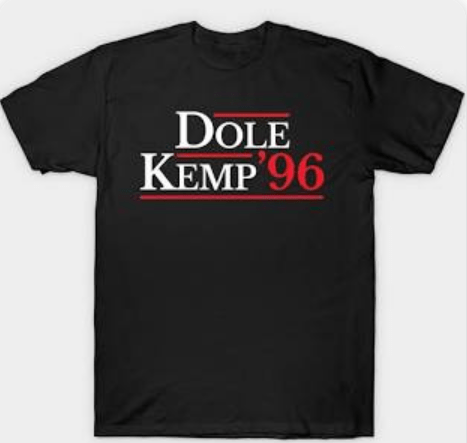
Dole-Kemp ‘96? NLRB Announces Plan to Go Back to Old Rules on Joint Employment (But Not That Old)

The internet may be a playground and an encyclopedia, but it’s also a living graveyard. For those of you politically inspired, it’s not too late to join up with Dole-Kemp ‘96. Fans of the X-Files, who still await the next episode, can stay caught up at Inside the X. And anyone still looking to join the Heaven’s Gate cult can check out the group’s webpage here. The site is supposedly maintained by two of the only members who did not commit suicide in 1997, so leadership opportunities may be available.

The NLRB is hopping on the retro train too. Earlier this month, the Board announced its intent to adopt a new rule on joint employment. The new rule would displace the Trump-era regulation, which currently requires direct and substantial control over essential terms and conditions of employment before joint employment can be found.

The NLRB’s Notice of Proposed Rulemaking follows the trail blazed by the Wage and Hour Division (WHD) of the DOL, which in July rescinded the joint employment regulations passed during the Trump Administration. The WHD didn’t make a new rule; it just left a giant crater in the landscape, and now for Fair Labor Standards Act claims, there is no regulation at all.

The NLRB seems intent on adopting its own rule, not just rescinding the current regulation. There’s little doubt as to what the new rule will look like. Expect it to track the Browning-Ferris standard imposed by the Board in 2015. Under Browning-Ferris, when one company has the right to control aspects of the work, joint employment exists — regardless of whether control is actually exerted, and regardless of whether the control is over wages, hours, scheduling or anything else that fits within the meaning of essential terms and conditions.

Expect a substantial expansion in the scope of who a joint employer under the NLRA after the new rule is released. The impacts of joint employment under the NLRA can include being forced into bargaining with workers directly employed by a different company (a subcontractor, for example), being accused of a broader range of unfair labor practices, and being subjected to picketing that would be illegal secondary picketing if there were no joint employment relationship.

Back when Bob Dole was seeking the White House, actual control was required to be a joint employer under the NLRA. Since 2015, the standard has ping-ponged back and forth as the political winds have shifted. We’re about to see another major change sometime in mid-2022. If after the change you find yourself missing the good ol’ days, at least you can still cozy up with your Apple 2E and check out the Dole-Kemp campaign website.

Enter your email address to subscribe to this blog and receive notifications of new posts by email.

© 2021 Todd Lebowitz, posted on WhoIsMyEmployee.com, Exploring Issues of Independent Contractor Misclassification and Joint Employment. All rights reserved.

2018_Web100Badge
 

Famed Miami Nightspot Gets Hit with $15 Misclassification Verdict

I grew up in Miami, but not this Miami. My weekends were Miami Jai-alai and Coconut Grove, certainly not the hip hop adult club scene.

But if I had grown up in that other world, I might have heard of the King of Diamonds, which I am now aware was the place to be seen if you are looking to spot celebrities at a famous adult entertainment venue. According to Miami newspaper archives, the original club went bankrupt in 2018 after failing to pay its mortgage and its rent. This came on the heels (high heels?) of being cited for serious safety code violations, including malfunctioning fire sprinklers.

Making matters worse, at about the same time, 27 of the club’s dancers sued, alleging wage and hour violations and that they had been illegally misclassified as independent contractors.

The case was delayed because of COVID-19, but it finally went to trial last fall, and the jury agreed that the dancers had been misclassified. Two weeks ago, the judge entered a final judgment, awarding the dancers more than $15 million. Some of the dancers’ individual awards exceeded $800,000.

The takeaway here is that independent contractor misclassification claims are big dollar claims. The defendants in this case drew more attention than usual because of the high profile of their club, but the legal risks apply to any business making widespread use of contractors.

Remember, it’s the law that decides whether a worker is an independent contractor or an employee. It doesn’t matter what the parties call the relationship or what the written contract says.

The club (or, a club with essentially the same name) reopened in 2020 with new ownership. I don’t know whether they’ve changed the classification and pay structure of their performers, but that would seem like a good idea. They’ll want to keep the place up and running in case Floyd Mayweather comes back with his infamous Money Truck to drop $100,000 on an evening’s entertainment.

For some other wild tales at the old joint, you can read more here.

I was oblivious to that whole scene growing up, but I sure had some great times at Miami Jai Alai (video highlights from 1980s), rooting for Michelena, Benny, and Harretche, and hoping to hit on my trifecta. Good times.

Enter your email address to subscribe to this blog and receive notifications of new posts by email.

© 2021 Todd Lebowitz, posted on WhoIsMyEmployee.com, Exploring Issues of Independent Contractor Misclassification and Joint Employment. All rights reserved.
2018_Web100Badge
 

Don’t Get Stuck Naked: Tips for Enforceable Arbitration Agreements When Using Staffing Agency Workers

He was in here. Really. Source: Syracuse Fire Dept Facebook

A Syracuse man was rescued from inside the walls of a historic theater last month after spending two days trapped, naked. The man apparently had entered the building’s crawlspace (why?) and fell from the ceiling into a gap between walls in the men’s restroom. No word on why he was au naturale.

But I’m sure he was glad to be freed from this unexpected situation. He should have planned better — like by not hiding in a crawlspace or, if he had a really, really good reason to hide there, by at least wearing clothes.

You can protect your business from unexpected situations (different ones), such as by making sure your staffing agency agreements include valid arbitration clauses with the staffing agency’s workers. The goal here is to avoid being left naked and stuck, if faced with a joint employment claim.

In a recent Oklahoma case, two staffing agency workers sued the staffing agency and the company where they provided services, alleging a failure to pay overtime.

The company where they worked filed a motion to compel arbitration, arguing that the arbitration agreement the workers signed with the staffing agency should cover all claims against both defendants. The district court initially ruled that the arbitration agreement was only between the worker and the staffing agency, and so it could not be relied upon by the other company. Motion denied.

But the Tenth Circuit disagreed, finding that the non-signatory company could enforce the agreement because the plaintiffs’ claims “allege substantially interdependent and concerted misconduct” against the two defendants. The plaintiffs were therefore “estopped from avoiding their duty to arbitrate their claims arising out of their employment relationship.”

That was good news in this case, but I wouldn’t count on that result every time. This case turned on Oklahoma estoppel law. But with proper planning, you can achieve the same result.

Here’s how:

First, in your agreement with staffing agencies, require the agencies to have all individuals assigned to perform services at your company sign an individual arbitration agreement.

Second, make sure it’s not just any old arbitration agreement, but one that includes customized terms. For example:

  • Require the worker to acknowledge that signing is a condition to being placed at your company.
  • Make sure the scope of covered claims is broad enough to include claims that are not just against the staffing agency.
  • List your company as a third party beneficiary with authority to enforce the agreement.
  • Make the obligation to arbitrate bilateral and binding on your company, even though your company will not sign the agreement. In other words, if you agree to perform services at the company, the company will agree to arbitrate any claims against you.

There are a few more tricks of the trade, but these are some of the key items. Keep the agreement short, and use simple language.

With some careful advance planning, you can avoid being left naked and stuck if faced with a joint employment lawsuit filed by staffing agency workers.

Enter your email address to subscribe to this blog and receive notifications of new posts by email.

© 2021 Todd Lebowitz, posted on WhoIsMyEmployee.com, Exploring Issues of Independent Contractor Misclassification and Joint Employment. All rights reserved.

2018_Web100Badge
 

A Frog’s Eye View: What is Horizontal Joint Employment?

Suppose Kermit works 30 hours a week at The Muppet Show. He holds a non-exempt position as a research assistant, trying to determine why are there so many songs about rainbows.

Frog food is expensive these days, so he holds a second job too. Kermit works nights at Sesame Street, where he spends 20 hours a week investigating multi-colored arc-shaped atmospheric phenomena and what’s on the other side.

With 30 hours at one job and 20 hours at another, neither role pays Kermit overtime.

But is he being cheated out of time-and-a-half? Let’s hop in and take a deeper look.

Horizontal joint employment is when a person holds two jobs, but the businesses are under common control. They may have the same owners or officers, they may coordinate schedules among workers, or they may share a common pool of employees. When horizontal joint employment exists, the hours from both jobs are aggregated, and 30 hours at one job plus 20 hours at the other equals 50 total hours, 10 of which require overtime pay.

So what about our short-bodied, tailless amphibian friend? Does Kermie get overtime?

Kermit may seem like a free spirit, but whether he’s on The Muppet Show (30 hours) or Sesame Street (20 hours), his every move is controlled by Jim Henson. Literally.

Common control signals horizontal joint employment, which means Kermit’s been shortchanged 10 hours of overtime. It’s not easy being green.

You’ve probably read about recent changes to the joint employment tests, but those changes are for vertical joint employment, not horizontal joint employment. Vertical joint employment is when the employees of a primary employer perform services for the benefit of a secondary employer, like in a staffing agency relationship. When staffing agency employees work side-by-side with a company’s regular employees, the staffing agency and the other business may be joint employers.

The rules on horizontal joint employment are unchanged. So if sharing employees with a business under common control, be aware of the rules and look before you leap.

Enter your email address to subscribe to this blog and receive notifications of new posts by email.

© 2021 Todd Lebowitz, posted on WhoIsMyEmployee.com, Exploring Issues of Independent Contractor Misclassification and Joint Employment. All rights reserved.

2018_Web100Badge
 

You Don’t Have to Be An Official Wizard to Write a Solid Independent Contractor Agreement

Farewell, my bearded friend.
Photo by Shellie, Flickr CC BY-NC-ND 2.0

The Christchurch City Council has voted to discontinue paying its official wizard $16,000 a year to “provide acts of wizardry” for this New Zealand city. Ian Brackenbury Channell, known as The Wizard of New Zealand, lamented the decision, calling city council “a bunch of bureaucrats who have no imagination.”

As you can see from this sad state of affairs, acts of wizardry do not always get the appreciation they deserve. But fortunately it doesn’t take acts of wizardry to draft a solid independent contractor agreement.

A recent Illinois case shows the value of a solid agreement. In a decision earlier this month, a federal court ruled that a freight broker was not vicariously liable for catastrophic injuries caused in an accident involving a driver under contract to haul loads.

The driver had collided with a motorcycle, killing the motorcyclist. His widow sued the freight broker, alleging it was an employer and was therefore liable for the negligent driving of its employee. But the court reviewed the facts of the relationship and the terms of the contract, and it found that the driver was not an employee of the broker.

The broker did not provide equipment, select routes, or exhibit other elements of control. A Right to Control Test governed the analysis in this case. The broker did not retain the right to control the manner or means by which the work was performed. This lack of control was evident in both the facts of the relationship and the text of the contract.

When there’s a tragic loss, like here, it seems natural to point fingers at everybody, including the deepest pockets. But that doesn’t mean the deepest pockets are necessarily responsible for what went wrong. By drafting a careful and through independent contractor agreement, companies can avoid being held responsible for losses that are not their fault.

Although The Wizard of New Zealand undoubtedly has great powers of wizardry and although he is probably almost as much of a tourist attraction as the nearby penguins, he probably wouldn’t have the first clue how to draft a comprehensive independent contractor agreement.

Fortunately, it doesn’t take a wizard to draft a thorough agreement. But do make sure you do it right. Having a thorough agreement in place can make all the difference, especially in a catastrophic loss case when lots of parties — including those not really responsible — are going to be blamed.

You can read more about The Wizard here.

Enter your email address to subscribe to this blog and receive notifications of new posts by email.

© 2021 Todd Lebowitz, posted on WhoIsMyEmployee.com, Exploring Issues of Independent Contractor Misclassification and Joint Employment. All rights reserved.

2018_Web100Badge
 

He-Gassen! This Telecom Company Should Have Smelled a Misclassification Claim Coming

Fire away! Source: Waseda U. Library

The Waseda University Library in Tokyo maintains an online archive of drawings dedicated to epic Japanese fart battles of the 17th and 18th centuries. The depictions, called he-gassen (really!), show farts so powerful they penetrate walls and blow cats out of trees.

This mode of attack must have been intimidating, but approaching enemies should have smelled what was coming and taken evasive action.

The same can be said for a Nevada telecommunications company, which had engaged 1,400 call center workers but treated them all as independent contractors. In the immortal words of Daryl Hall, no can do.

Under federal wage and hour law, the Economic Realities Test is used to determine whether a worker is an employees, regardless of what the parties call the relationship. In this case, the telecom company failed virtually every part of the test. The workers were economically reliant on the telecom company, which controlled their work in just about every relevant way, making the workers employees.

The facts were so bad that the Department of Labor took the laboring oar on this one, filing its own lawsuit in federal court. The DOL won a $1.4 million award, and the Ninth Circuit Court of Appeals upheld the decision.

Remember, a worker’s status as an employee or independent contractor is determined using the legal test and the facts of the relationship, regardless of what the parties call themselves.

The moral of the story is that if it smells like an employment relationship, it probably is. Choose your battles wisely. He-gassen!

Enter your email address to subscribe to this blog and receive notifications of new posts by email.

© 2021 Todd Lebowitz, posted on WhoIsMyEmployee.com, Exploring Issues of Independent Contractor Misclassification and Joint Employment. All rights reserved.

2018_Web100Badge