Will NY Lawmakers Create a New Class of “Dependent Contractors”? If So, It Could Be a Work of Art.

Horse no shadow - independent contractor misclassification - dependent contractor - Todd Lebowitz

This piece of art hung in the bedroom at the apartment I rented on my recent vacation in Paris. See the shadow of the dog? Yep. See the shadow of the horse? Yep. See the shadow of the rider?

Oops. I expected it to be there. Chalk up another win for bad art.

Art requires creativity and, sometimes, a different perspective. Things are not always the way we expect them to be. That can be due to oversight (such as with bad art) or due to creativity. New York lawmakers are looking at new ways to approach the Independent Contractor vs. Employee question, and under one recent proposal, lawmakers could get creative.

A proposed bill would create the status of dependent worker, allowing gig workers to form quasi-unions to negotiate fees and directing the state to hold public hearings exploring ways to provide other rights to gig workers, such as minimum wage and anti-discrimination protections.

The bill was withdrawn just before summer recess, but the question will be revisited in the next legislative session. 

Some worker groups say the bill does not go far enough. Many worker advocates would like to see a new law that presumes all gig workers to be employees, unless the hiring party can prove an exception. ABC Tests are one example of that type of law. Business groups seem more open to the proposal, recognizing that labor laws probably need to start recognizing a middle ground between employees and independent contractors. (You can read more about that movement here, in last week’s post.)

We’ll have to wait until the fall, when New York lawmakers return to Albany, to see how this plays out in New York. In the meantime, if anyone is looking for something fun to do during summer break, I know of at least one amateur French painter who could use some tutoring.

© 2019 Todd Lebowitz, posted on WhoIsMyEmployee.com, Exploring Issues of Independent Contractor Misclassification and Joint Employment. All rights reserved.


Need training on avoiding independent contractor misclassification claims? Hey, I do that!  

Enter your email address to subscribe to this blog and receive notifications of new posts by email.

2018_Web100Badge


Opinion Piece Asks California Not to Be the Pigeon in this Photo

Pigeon head Tuileries - independent contractor misclassification Todd LebowitzI took this picture last week in Paris, walking through the Jardin des Tuileries with my family, just outside the Louvre.  

If you think of the statue as being ride-share giants Uber and Lyft, and if you think of the California state legislature as the pigeon, you’ll know why Uber and Lyft’s chief executives joined forces to write this opinion piece in the San Francisco Chronicle.  

As we explained here, California seems likely to pass a bill that would rewrite California law in a way that will instantly convert many — perhaps most — independent contractors into employees.  The bill would take the ABC Test created last year in the Dynamex case and apply it to the entire California Labor Code, as well as to state unemployment law. (Currently, the ABC Test applies only to state wage and hour claims, and a more neutral balancing test applies to other state law claims.)

The law, if passed, would undoubtedly fuel new claims against Uber and Lyft, alleging that ride-share drivers are employees under state law.

In the opinion piece, the companies argue in favor of legal reform, but in a way that does not threaten to change drivers into employees.

The Uber-Lyft proposal would secure three new types of protections for ride-share drivers, while safeguarding their status as independent contractors. The proposal would:

  1. Set up a portable benefits system for gig workers, including retirement savings accounts, paid time off, and lifelong learning opportunities;
  2. Create a drivers’ association, in partnership with state lawmakers and labor groups, to represent drivers’ interests and administer benefits; and
  3. Establish a new driver pay system that includes greater earnings transparency for the work performed between accepting a ride and dropping off a passenger after accounting for reasonable expenses.

So why can’t Uber and Lyft just do these things on their own? Because if they did, the current legal system would likely treat those acts of goodwill as evidence that Uber and Lyft were treating the drivers as employees.

Current labor laws were not written with the gig economy in mind. The law right now is an all-or-nothing proposition — independent contractor or employee. The modern economy, though, requires a middle ground — an alternative that allows app companies to provide greater benefits and protections to drivers without running the risk that these well-meaning gestures could convert the drivers into employees.

Pigeons are going to poop on statues forever. Marble heads provide a comfortable spot for loosening the ol’ avian bowels, and we all know it’s hard to find a good public toilet these days. But some things should not be set in stone. Let’s hope the California assembly backs off of the fast track for A.B. 5 and instead tries something new. The system proposed in the joint Uber-Lyft opinion piece would help drivers and would help the gig economy continue to thrive. 

© 2019 Todd Lebowitz, posted on WhoIsMyEmployee.com, Exploring Issues of Independent Contractor Misclassification and Joint Employment. All rights reserved.

Need training on avoiding independent contractor misclassification claims? Hey, I do that!  

Enter your email address to subscribe to this blog and receive notifications of new posts by email.

2018_Web100Badge


A New Low for California’s Independent Contractors? ABC Test May Be Adopted for the Whole Labor Code

Death valley for independent contractors - california dynamexCalifornia is the home of both the highest and the lowest points in the continental U.S. — Mt. Whitney at 14,495 feet and Death Valley at -282 feet. As far apart as these two sites are on the altimeter, they’re less than 100 miles apart on the odometer.

That’s a lot of up and down. If you follow California’s developing law on Independent Contractor vs. Employee tests, you’ve also seen a lot of ups and downs recently. If a pending bill passes (as expected), businesses using independent contractors may be about to experience a new low.

Remember the Dynamex case? As explained here, that’s the California Supreme Court decision that enacted a strict ABC Test for determining whether someone is an employee or an independent contractor under California’s wage orders. As we discussed here, though, the ABC Test only applies to certain state law employment claims. Other less stringent tests still apply when analyzing whether a contractor should really be considered an employee under other state employment laws.

But that may be about to change.

Assembly Bill 5 would adopt the Dynamex ABC Test as the way to determine whether someone is an employee under all parts of the California Labor Code and under state unemployment law.

In its current form, the law would exempt certain licensed professions from being subject to the ABC Test. Extensive lobbying efforts are underway by various trade associations to carve other trades out of the law as well. For those professions excluded from the law’s reach, the test for determining whether a contractor is really an employee would be the S.G. Borello balancing test, a much less stringent standard than the Dynamex ABC Test.

The bill is now pending before the state senate. If it passes, it will become even harder to be a legitimate independent contractor in California. The state with one of North America’s highest peaks will become a virtual Death Valley for contractors trying to maintain their independent status.

We’ll continue to follow the status of this bill.

© 2019 Todd Lebowitz, posted on WhoIsMyEmployee.com, Exploring Issues of Independent Contractor Misclassification and Joint Employment. All rights reserved.

Enter your email address to subscribe to this blog and receive notifications of new posts by email.

2018_Web100Badge


New ABC Test Under Federal Labor Law? Dem-Sponsored Bill Would Make That Change

Independent contractor misclassification NLRB peacock

All eyes on me!

According to The Atlantic, when a peacock spreads and shakes its elaborate feathers, it shakes them at 26 times a second, which creates a pressure wave that is sensed by a female peahen through the crest atop her head. This precise frequency causes the female’s crest to vibrate in a way that is apparently very sexy for peafowl. The male seeks attention and, with just the right vibrations, he lets all the single pea-ladies know that he wants some action. Note to pea-fellas: If you like it, then you shoulda put a ring on it.

In a crowded field of Democratic Presidential hopefuls, something similar is happening, but it’s less pretty, less sexy, and less appealing for businesses across the country.

As Democratic legislators vie for union support in the upcoming 2020 election, they’re making sure to signal to workers and unions that they’ve got pretty feathers and they’re not afraid to use them. A new bill co-sponsored by Presidential hopefuls Kamala Harris (Calif.), Bernie Sanders (Vt.), Elizabeth Warren (Mass.), Cory Booker (N.J.), Kirsten Gillibrand (N.Y.), Amy Klobuchar (Minn.), and Rep. Tim Ryan (Ohio) would amend the National Labor Relations Act (NLRA) to redefine “employee” and “joint employment.”

The Protecting the Right to Organize Act of 2019 would impose a strict Dynamex-style ABC Test for determining Who Is My Employee? under the NLRA. A worker would be deemed an employee under the NLRA by default and could only be deemed an independent contractor if all three of the following could be proven:

(A) the worker is free from the control and direction of the hiring entity in connection with the performance of the work, both under the contract for the performance of the work and in fact, and
(B) the worker performs work that is outside the usual course of the hiring entity’s business, and
(C) the worker is customarily engaged in an independently established trade, occupation, or business.

This is the same strict ABC Test adopted by the California Supreme Court in Dynamex and by the Massachusetts legislature for its state wage and hour claims.

The Act would also redefine joint employment. It would require that an entity be deemed a joint employer under the NLRA if it “codetermines or shares control over the employee’s essential terms and conditions of employment.” So far, so good. But then there’s this: “In determining whether such control exists, the Board or a court of competent jurisdiction shall consider as relevant direct control and indirect control over such terms and conditions, reserved authority to control such terms and conditions, and control over such terms and conditions exercised by a person in fact.”

The Act would stymie the NLRB’s current effort at passing a new regulation that would limit “joint employment” to situations where actual control is exerted (not merely reserved) and where that control is exerted over essential terms and conditions of employment, such as hiring, firing, and pay.

Most damaging of all (but not related to independent contractor or joint employment issues), the bill would fundamentally change the collective bargaining process by imposing binding arbitration on the parties to resolve any disputes in contract negotiation. That change, if it were ever adopted, would change the nature of bargaining as we know it, potentially removing much of the incentive for unions to bargain in good faith.

If the Act emerges from committee, it will likely pass the House but has no chance of success in the Senate. Even if it passed, it would almost certainly be vetoed by Trump anyway.

For now, the Act is a political move intended by the Democratic Presidential hopefuls to demonstrate their pro-worker, pro-union credentials. For a certain audience, the Act looks pretty and may vibrate some crests. But for at least the next two years, this display of feathers is not likely to lead to any action.

Bonus feature: For another peacock-related post, click here.

© 2019 Todd Lebowitz, posted on WhoIsMyEmployee.com, Exploring Issues of Independent Contractor Misclassification and Joint Employment. All rights reserved.

Enter your email address to subscribe to this blog and receive notifications of new posts by email.

2018_Web100Badge 

Slip Slidin’ Away? Truckers’ Fall Short in Bid to Overturn California’s Dynamex Standard (Plus: Bonus Quiz for Paul Simon Fans)

Truckers Western States dynamex independent contractor misclassificationIt seems a little presumptuous that when Paul Simon released the single, “Slip Slidin’ Away,” he released it as one of two new songs on his 1977 Greatest Hits, Etc. album. How is it a greatest hit before it’s been released? But sure enough, the song rose to #5 on the Billboard charts. Today’s Challenge: Ten bonus points will be awarded to anyone who can name the other new song that debuted on Simon’s 1977 Greatest Hits, Etc. compilation. The answer is at the end of the post.
In July, we wrote about “Convoy,” a 1975 song about a fictional trucker rebellion, as a way to introduce a new lawsuit filed by the Western States Trucking Association. The lawsuit seeks to invalidate California’s burdensome ABC Test (the Dynamex test), which is now used to determine who is a contractor and who is an employee under California wage and hour law.  The truckers argued that the law — as applied to truckers — was preempted by federal laws that seek to promote uniformity in the interstate transportation industry.

Based on a recent decision in a California federal court, the truckers’ hopes of invalidating Dynamex may be Slip Slidin’ Away.

Continue reading

“This is a Cabinet”: DOL Proposes New Definition of Joint Employer, Seeks to Clear Up a Confusing Label

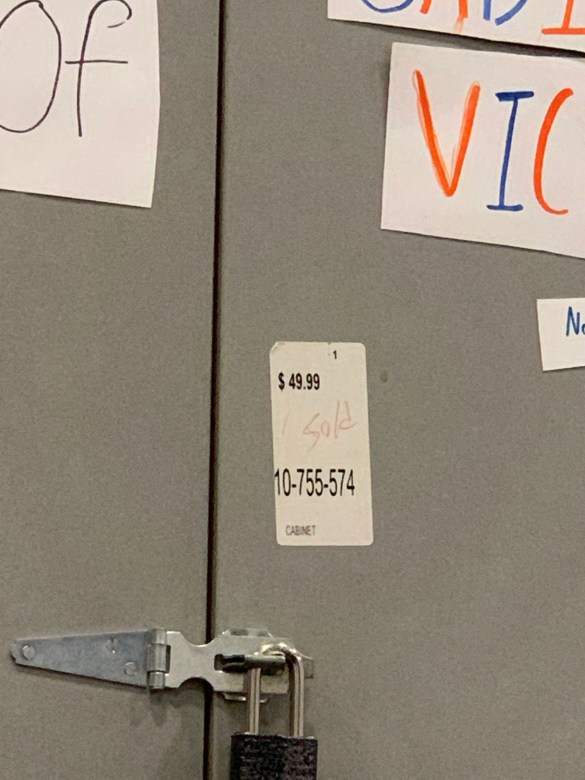
This post was originally published as a BakerHostetler Employment Alert on April 3, 2019. Cabinet joint employmentSometimes it’s obvious what something is, and you don’t need a label. Other times it’s not so obvious, and you do need a label. Then there’s the rare instance when it’s obvious what something is, but someone feels compelled to supply a label anyway. That third scenario is what I saw when I went to my daughter’s volleyball tournament last weekend and snapped this photo of a cabinet in the lobby. The label is small, but if you look closely, you’ll see that it helpfully declares the item to be a “cabinet.” It further announces, in red handwriting, that the item has been “sold,” thereby allaying my concerns that my daughter was spending her Saturday playing volleyball in a den of cabinet thieves.

The second scenario – label needed – is the focus of this Alert. And the territory is familiar ground ‒ joint employment.

It’s rarely obvious what that phrase means, and companies that use workers supplied by other companies have been seeking clarity for some time now. Ignoring Ronald Reagan’s famous quip about the nine most terrifying words in the English language, the Department of Labor (DOL) announced on Monday that it’s here to help.

Continue reading

We’ve Got Baby Steps Toward a New Definition of Joint Employment Under the FLSA.

Baby steps joint employment FLSA new rule

I still don’t know what this is, but I got it from Wikipedia.

According to Wikipedia, which knows everything, or thinks it does, Baby Steps is the name of a Japanese manga series by Hikaru Katsuki. I have no idea what that means, but apparently it’s a story of some sort, which I infer from the following description: “The story is centered on Eiichirō Maruo, a first year honor student who one day decides that he is lacking exercise.”

This does not make me want to watch it.

I will, however, be watching the baby steps being taken by the Department of Labor’s Wage and Hour Division (WHD). On February 28, the WHD submitted a proposed new rule on joint employment to the White House Office of Information and Regulatory Affairs (OIRA). The new rule would modify the meaning of “joint employment” under the Fair Labor Standards Act (FLSA), which is the federal law governing minimum wage and overtime requirements.

Continue reading

“Flooding” Tactic Creates New Risk for Using Mandatory Arbitration Agreements with Independent Contractors

flood arbitration independent contractorsIn the Biblical story of Noah’s Ark, a world-engulfing flood destroys everyone except Noah, his family, and his mini zoo. A similar story appears in the Quran, and a much earlier world-engulfing flood was described in the Epic of Gilgamesh, a Babylonian poem dating back to the 19th Century BC, featuring Utnapishtim as our hero, a fellow who was awarded with immortality but whose name (unfortunately, IMHO) appears much less frequently on the Social Security Administration’s list of most popular baby names than our more recent pal, Noah.

A more recent trend in flooding comes from our friends in the plaintiffs’ bar. A popular tactic by companies wishing to avoid class action misclassification lawsuits has been to require independent contractors to sign arbitration agreements with class action waivers. These agreements force misclassification clams into arbitration on an individual basis, where each individual single claim has little value. By forcing claims into individual arbitration, there’s much less incentive for plaintiffs’ lawyers to take these cases since each case is worth very little. It’s only in the class action arena that these claims are worth big money.

But according to a recent article in Bloomberg Law, some of the larger, more organized plaintiffs’ firms are fighting back by flooding companies with mass arbitration filings. Continue reading

Supreme Court Ruling May Stop Enforcement of Some Contractors’ Arbitration Agreements

New Prime v Olivieri double decker bus

The year 1925 was a banner year for transportation. Walter Percy Chrysler founded the Chrysler Corporation, London introduced its first double decker bus, and Malcolm Campbell became the first person to exceed 150 mph in an aero-engined car, accomplishing the feat at Pendine Sands in Wales. (Thanks, Wikipedia!)

Meanwhile, back in the States, American courts had developed a habit of not enforcing arbitration agreements, and Congress was determined to change that. In 1925, Congress enacted the Federal Arbitration Act (FAA), which is the law that allows parties to agree to arbitrate disputes and which tells courts to respect those agreements, subject to a few limited exceptions.

Those exceptions were at issue in the Supreme Court case of New Prime v. Olivieri, decided last week in an 8-0 decision. 

The Court ruled that:

(1) If there is a question about whether the FAA applies to an arbitration agreement, a court — not an arbitrator — decides whether the FAA protects the arbitration agreement. 

(2) The FAA’s exception — which says the FAA does not cover workers in the transportation industry — applies not just to employees in the transportation industry but also independent contractors. In other words, the FAA does not protect arbitration agreements entered into by independent contractors in the transportation industry.  

For business owners who wish to use arbitration agreements with their workers, what does this ruling mean?

I.  Who decides who decides?

Sometimes an arbitrator decides whether a dispute is subject to arbitration, and sometimes a court decides. Last month in the Henry Schein case, the Supreme Court held that an arbitrator can decide, in most instances, whether a dispute is covered under an arbitration agreement.

But last week’s New Prime case draws a distinction about who decides if the issue is whether the FAA applies to the dispute.

So, to simplify: On the issue of who decides whether a dispute is subject to an arbitration agreement, what’s the rule now? 

1. If the issue is whether the FAA protects the arbitration agreement, a court decides whether the FAA applies or not. (That’s the New Prime decision.)

2. If the FAA does apply and the issue is whether a particular dispute is subject to the agreement to arbitrate, then the arbitrator decides whether a dispute is subject to the agreement to arbitrate — assuming that the arbitration agreement has delegated to the arbitrator the ability to decide. (That’s the Henry Schein decision.)

The last sentence in Point 2 is the reason companies should consider adding a clause to their arbitration agreements saying that the arbitrator decides questions of arbitrability.

II.  How does the New Prime ruling apply to arbitration agreements with independent contractors? 

For independent contractors not in the transportation industry, this ruling does not apply. Arbitration agreements with independent contractors are generally enforceable and are protected by the FAA.

But how do we know the FAA doesn’t apply to all independent contractors in interstate commerce?

To answer that question, we need to head back to the Year 2001, a year after the electronic calendar shifted away from 19xx and technically-inclined doomsday prophets foretold of planes falling out of the sky. Shortly after mankind endured this potential calendar-caused calamity, the Supreme Court issued its decision in Circuit City Stores v. Adams.

The issue in Circuit City was whether the FAA applies to arbitration agreements between employers and employees. There is a carve out provision in the FAA, saying that the law favoring arbitration does not apply to “to contracts of employment of seamen, railroad employees, or any other class of workers engaged in foreign or interstate commerce.”

The issue in Circuit City was whether the carve out for “contracts of employment” of “workers engaged in foreign or interstate commerce” was intended to be broad and apply to all employees in interstate commerce or just those in the transportation industry. What was the intended meaning of “workers engaged in … interstate commerce”?

In Circuit City, the Court ruled that:

(1) the FAA generally does apply to arbitration agreements between employers and employees, but

(2) the FAA does not apply to workers in the transportation industry.

The Court decided that the phrase “workers engaged in … interstate commerce” was intended to refer only to workers in the transportation industry, not all workers. Arbitration agreements with employees in industries other than transportation would be enforceable under the FAA.

But that decision left open an important issue: What about independent contractors in the transportation industry? Do they have “contracts of employment”? Does the FAA apply to their arbitration agreements or not?

Fast forward to last week’s New Prime case.

The Supreme Court ruled that when the FAA was written in 1925, the phrase “contracts of employment” was understood to mean all work engagements, not just employer-employee relationships. Our understanding of the word “employment” has changed over time and, if that phrase were used in a statute today, it would likely refer only to true employer-employee relationships. But in 1925, it meant all work.

The Court therefore ruled that the FAA’s carve out applies to all workers in the transportation industry, regardless of whether such workers are employees or independent contractors. This means that arbitration agreements signed by employees or independent contractors in the transportation industry are not covered by the FAA, and therefore their agreements to arbitrate disputes are not protected by the FAA. Those disputes might have to go to court.

So what happens now?

First, the ruling is narrower than it may seem. The Court ruled only that the FAA did not apply to independent contractors’ arbitration agreements in the transportation industry.  It did not rule that these arbitration agreements were automatically void.

Many states have their own statutes that protect arbitration as a means for resolving disputes. Companies with workers in the transportation industry should check whether there is a state law that can be applied to protect these arbitration agreements.  If it would be reasonable to apply that state’s law, then companies should consider choosing that state’s law in the arbitration agreement’s Choice of Law provision. The right state’s law might still be able to save the arbitration agreement. We can expect further litigation on this subject, but here’s a tip for now. Try to pick a state with a favorable arbitration statute if your workers are in the transportation industry.

Second, we can expect the next battle to be over the meaning of the phrase, “transportation industry.” Does the “transportation industry” include only workers who transport goods across state lines? Or does the “transportation industry” include independent contractor drivers who transport passengers across town (such as ride share) or who deliver your pizza?

In Circuit City, the Supreme Court looked favorably on other court decisions that had defined the “transportation industry” to mean those workers “actually engaged in the movement of goods in interstate commerce.” If that holds true, then local drivers of passengers and late-night food cravings should be considered not part of the “transportation industry.” The FAA, therefore, would still apply to those workers.

But we can expect the plaintiffs’ bar to argue for a broad interpretation of the “transportation industry.” We can now expect to see arguments that rideshare drivers and local delivery drivers are in the “transportation industry” and that their arbitration agreements are not protected by the FAA. I think that argument is incorrect, but I do expect to see it.

I would expect Courts of Appeal (and perhaps eventually the Supreme Court) to adopt a narrow view of the “transportation industry,” meaning that the FAA still applies to independent contractors who transport people or make local deliveries. I expect the courts to rule that the carve out from the FAA exempts only those workers (employees and contractors) who routinely transport goods across state lines.

For now, here’s what you need to know:

  • Arbitration agreements with independent contractors in the “transportation industry” are not protected by the FAA. It may be more difficult to enforce those arbitration agreements unless they are governed by the law of a state with its own arbitration statute.
  • Arbitration agreements with independent contractors outside of the transportation industry should remain enforceable under the FAA.

And the bottom line for me is that maybe it’s time for self-driving cars.

For more information on joint employment, gig economy issues, and other labor and employment developments to watch in 2019, join me in Orlando on Jan. 24, Philadelphia on Feb. 26, or Chicago on Mar. 21 for the 2019 BakerHostetler Master Class on Labor Relations and Employment Law: Meeting Today’s Challenges. Advance registration is required. Please email me if you plan to attend, tlebowitz@bakerlaw.com. If you list my name in your RSVP, I will have your registration fee waived.

© 2019 Todd Lebowitz, posted on WhoIsMyEmployee.com, Exploring Issues of Independent Contractor Misclassification and Joint Employment. All rights reserved.

Enter your email address to subscribe to this blog and receive notifications of new posts by email.

2018_Web100Badge


Fecal Matter Meets Electrical Wind Machine: NLRB Scrambles to Re-Evaluate Joint Employment

NLRB rulemaking update browniong-ferris Hits the fanAccording to the British site, The Phrase Finder, the expression When the shit hits the fan “alludes to the unmissable effects of shit being thrown into an electric fan.” That’s lovely. The Cambridge Dictionary (also U.K.) describes the idiom a bit more delicately: “also, when the shit flies, [when] a situation suddenly causes a lot of trouble for someone.”

Thank you, British internet!

In any event, this expression seems to capture the predicament the NLRB suddenly finds itself in after the D.C. Court of Appeals issued its unexpected ruling a couple weeks ago in the ongoing Browning-Ferris case, which we wrote about here.

The ruling vastly complicated the NLRB’s efforts to adopt a more pro-business definition of “joint employment” that would require direct control over essential terms of employment before joint employment could be found. The D.C. Court of Appeals ruled that the meaning of “joint employment” under the National Labor Relations Act is determined by the common law Right to Control Test, and that the NLRB has no authority to change the definition in a way that is inconsistent with the common law meaning.

The common law Right to Control Test, to the current Board’s dismay, allows for a finding of joint employment when control is reserved, even if the right to control is not actually exercised. That ruling is contrary to the definition being proposed by the NLRB as part of its ongoing effort to enact a new regulation through the rulemaking process.

Since the D.C. Court of Appeals ruling, here’s what’s been happening:

First, two key Democratic lawmakers sent a letter to Board Chair John Ring, asking that the Board abandon its rulemaking effort in light of the court’s ruling. Nice effort, but that’s not likely to happen.

Second, “in light of the unique circumstance” posed by the court’s decision, the Board has again extended the period for the public to submit comments on the proposed rule. The new deadline is January 28, 2019, with reply comments due February 11, 2019. This is the third time the Board has extended the comment period. The second extension inspired one of my favorite posts, “Amazon Users (espec. Cindy, Amy & kris), Please Don’t Submit Comments On the NLRB’s Proposed Joint Employment Rule,” which if you missed, it’s not too late.

So what happens next?  The Board has a few options:

1. It can change the proposed rule to allow for a finding of joint employment when a company reserves the right to exercise control, even if the control is indirect and is never actually exercised, but only if the right to control covers “essential” terms and conditions of employment. That change would be consistent with the D.C. Court of Appeals ruling, but it’s not as sweeping a change as current pro-business Board majority would like.

2. It can plow forward with its current rulemaking plan and ignore the D.C. Court of Appeals. The NLRB typically ignores decisions by the U.S. Courts of Appeal on the basis that there are 12 regional federal Courts of Appeal and they don’t always agree, while on the other hand, the NLRB’s authority is national, not regional. This approach often results in circuit splits, in which Courts of Appeal issue contradictory rulings, a situation that generally results in the U.S. Supreme Court deciding the issue once and for all. If the NLRB takes this approach, a circuit split could develop, and the Supreme Court would be likely to get involved, but it would probably take years before that wound its way up to the Supreme Court.

3. It can ask the full slate of D.C. Court of Appeals judges to re-hear the case. This is called an en banc proceeding. Since the decision was 2-1, there could be some momentum toward the full slate of judges agreeing to reconsider the case, but even if that happens, there is no guarantee the ruling would be any different.

4. The D.C. Court of Appeals decision can be appealed to the Supreme Court. The Supreme Court could decide to hear the case, or it could decline and allow the law to further develop. The Supreme Court often waits to hear what other Courts of Appeal have to say before it issues a final decision. But even if the Supreme Court takes the case, there is no assurance that the NLRB will get the ruling it wants.

Here’s why. On one hand, the newly constituted Supreme Court is more conservative and is regarded as more pro-business, which would appear to suggest support for the outcome that the pro-business NLRB would want — authority to narrow the definition of joint employment to situations in which control is directly exercised, not merely reserved.

But on the other hand, the current Supreme Court seems less and less inclined to defer to agencies’ interpretations of statutes. While the current Supreme Court may be sympathetic to the outcome desired by the NLRB, it is unlikely to be sympathetic to the process by which the NLRB wants to achieve that outcome. The Supreme Court’s current members seem inclined to limit the authority of federal agencies to re-interpret the law.

There are lots of ways the joint employment saga might play out. But for now, it’s fair to say that the D.C. Court of Appeals decision was unexpected and messy, in a way that alludes to the unmissable effects of excrement being thrown into an electric fan (as the Brits might say).

For more information on joint employment, gig economy issues, and other labor and employment developments to watch in 2019, join me in Orlando on Jan. 24, Philadelphia on Feb. 26, or Chicago on Mar. 21 for the 2019 BakerHostetler Master Class on Labor Relations and Employment Law: Meeting Today’s Challenges. Advance registration is required. Please email me if you plan to attend, tlebowitz@bakerlaw.com. If you list my name in your RSVP, I will have your registration fee waived.

© 2019 Todd Lebowitz, posted on WhoIsMyEmployee.com, Exploring Issues of Independent Contractor Misclassification and Joint Employment. All rights reserved.

Enter your email address to subscribe to this blog and receive notifications of new posts by email.

2018_Web100Badge