
Snapshot or Long Exposure? Dep’t of Labor Approves New IC Test … For Now

Say cheese! Image by OpenClipart-Vectors from Pixabay
(Note: This post was updated on 1/6/21)

This octopus in New Zealand has been trained to take photos of visitors to the Sea Life Aquarium. That’s a pretty neat trick. I’m sure the visitors love it and will pay whatever exorbitant fee the aquarium charges to profit on the back of its cephalopod slave labor, but do the photos last? Do the visitors keep them, or do the pictures end up in the circular file at home?

Some photos are cherished and kept. Others, not so much.

So which category will the DOL’s new independent contractor test fall into — cherished and kept? Or not so much?

As reported here, in September 2020, the DOL published a new proposed rule for how to determine independent contractor vs. employee status under the Fair Labor Standards Act (FLSA). The DOL has been rushing to publish the new rule before Inauguration Day 2021, in case of a change in the Oval Office.

Now facing that change, the White House on Monday approved the proposed rule, and this morning the Department of Labor released the new rule. It takes effect on March 8, 2021–unless it doesn’t. The Biden administration’s incoming press secretary, Jen Psaki, has already said the new administration would try to kill this one in an early executive order. We’ll see how that plays out.

Meanwhile, whether the new rule goes into effect or not, the FLSA analysis for independent contractor vs. employee should not really change anyway. The new rule is essentially a repackaging of how the courts have already been applying the FLSA test. While Democrats have protested the new rule as an attempt to make it easier to classify someone as an independent contractor, I don’t see it that way. I see it as a clearer way to articulate the test that has been applied for years.

Once Biden takes office, there are so many things he’ll want to undo, he’ll need more hands than an octopus has legs, so this one might not quite hit the top of the list. We’ll continue to monitor the status of this proposed new rule, including whether and when it actually takes effect.

In the meantime, if you can get to New Zealand anytime soon, there’s an octopus that would like to snap your picture. Happy New Year!

© 2021 Todd Lebowitz, posted on WhoIsMyEmployee.com, Exploring Issues of Independent Contractor Misclassification and Joint Employment. All rights reserved.

Enter your email address to subscribe to this blog and receive notifications of new posts by email.

 
2018_Web100Badge
 

Today’s Tip: Beware of Multi-State Issues (and Rudolf is a girl?!)

Neil deGrasse Tyson broke the news last week that Santa’s reindeer must be female, since they still have their antlers in the winter. Mind blown: Rudolf is a girl. #girlpower

It seems like should have figured that out earlier. Sometimes things are not as they seem. So let’s play some reindeer games.

Assessing independent contractors status isn’t always as it seems either. Do you pass the IRS Test? Congratulations, but that tells you nothing about whether your relationship meets state law tests. Did you win an unemployment claim on the basis that your contractor was not your employee? Congratulations, but that tells you nothing about whether your relationship has contractor status under federal wage and hour law.

To determine whether an independent contractor relationship is legitimate requires you to look at multiple tests across multiple laws across multiple jurisdictions.

Companies that retain contractors across multiple states should pay particular attention to the differences among multiple states and across multiple laws. The same relationship can be deemed employment under one test and independent contractor under another.

For example, in my home state of Ohio, the analysis of whether a worker is an independent contractor or an employee is subject to a long list of competing legal standards:

  1. Federal Income Tax: Right to Control (IRS factors)
  2. Ohio Income Tax:  Follows IRS
  3. ERISA, ADA, Title VII, ADEA: Right to Control (Darden Test)
  4. Affordable Care Act: Right to Control (Treasury Regs.)
  5. FLSA: Economic Realities Test
  6. NLRA: multi-factor hybrid/right to control test
  7. OH Unemployment (ODJFS): IRS old 20-Factor Test
  8. OH Workers Comp / Construction: Need 10 of 20 old IRS Factors
  9. OH Workers Comp / Other: Ohio Right to Control Test
  10. OH Discrimination (RC 4112): Ohio Right to Control Test

The complexity is similar in every state.  In Illinois, the list is about as long, but with different state law tests and standards:

  1. Federal Tax: Right to Control (IRS factors)
  2. ERISA, ADA, Title VII, ADEA: Right to Control (Darden Test)
  3. Affordable Care Act: Right to Control (Treasury Regs.)
  4. FLSA: Economic Realities Test
  5. NLRA: multi-factor hybrid/right to control test
  6. IL Unemployment: ABC Test
  7. IL Wage Payment & Collection Act: ABC Test
  8. IL Workers Compensation: Various factors, including control, relationship to company’s business
  9. But, if Construction, then Employee Classification Act:
    – Presumption is employee,
    – Then apply ABC Test,
    – Then apply 12-factor test to prove sole proprietorship or partnership is IC

And there are 48 more states just like these (but different).

So bottom line: Just like you can’t make assumptions about your reindeer’s gender based on its name, you can’t make assumptions about your contractor’s status based on what you call the relationship. You’ve gotta check the antlers — or the appropriate law.

© 2020 Todd Lebowitz, posted on WhoIsMyEmployee.com, Exploring Issues of Independent Contractor Misclassification and Joint Employment. All rights reserved.

Enter your email address to subscribe to this blog and receive notifications of new posts by email.

 
2018_Web100Badge

Discomfit a Bear? Here’s a Quick Tip To Improve Your Independent Contractor Agreements

In this story from the Illustrated Police News, 1877, we see the courageous exploits of a young lady from Runcorn, England, skillfully discomfiting a bear with her parasol. Now, I question whether this really happened as captioned. The caption says she punched the bear in the eye with her parasol, but this artist’s rendering depicts more of a body blow, so I’m not sure which to believe. But either way, as you can see, the bear was discomfited and this atypical encounter ended well.

In this instance, a parasol was more than a mere umbrella. It served as a defensive weapon.

The lesson here is that objects we take for granted can be used as a defensive weapon with some proper planning. That includes your independent contractor agreements.

Independent contractor agreements should not be generic, off-the-shelf documents. Every agreement is an opportunity to build your defense against a claim of independent contractor misclassification.

Think about all of the factors that go into determining whether someone is an employee or an independent contractor. For a refresher, you can review some earlier posts on Right to Control Tests and Economic Realities Tests. Also here.

On factors where are you do not exert control and do not need to exert control, put that in the contract. Put in the contract that the contractor controls these factors and you have no right to control them.

For example, do you care what time of day the contractor works? Do you care if the contractor retains helpers? Do you care whose tools the contractor uses?

If not, put that in the contract: The contractor decides when to work, whether to hire helpers, and what tools to use. There are dozens more factors like these to consider. The point is to customize your agreement so that it is defensive weapon to help fend off a claim.

Then go a step further and put in the contract that you have no right to control these decisions. Remember, the Right to Control tests generally focus on whether you have the right to control something, even if you don’t actually exercise that right.

If you use your agreement to memorialize the good facts—those that support independent contractor status—then you can turn that agreement into a defensive weapon.

The agreement might not help if confronted with a bear in Victorian England (“here, read this contract while I run!”), but it may help to discomfit an independent contractor misclassification lawsuit.

© 2020 Todd Lebowitz, posted on WhoIsMyEmployee.com, Exploring Issues of Independent Contractor Misclassification and Joint Employment. All rights reserved.

Enter your email address to subscribe to this blog and receive notifications of new posts by email.

 
2018_Web100Badge
 

Election News: California Voters Adopt Prop 22; Kentucky Voters Elect Dog as Mayor

Zippy evaluates the candidates.

Some elections are more consequential than others. It can be tough to lose, but in Rabbit Hash, Kentucky, the candidates for mayor are probably indifferent to the outcome. Even the winner probably doesn’t do a lot of mayoring.

That’s because the mayor of Rabbit Hash is a dog. Since 1988, the mayor has always been a dog. This year’s winner is a six-month old French bulldog named Wilbur Beast. Wilbur succeeds incumbent Brynneth Pawltro, a pit bull who has served since 2016.

Click here for an adorable photo of the winner.

In other election news (in case you were wondering whether there was anything else happening in the category of elections), voters in California passed Proposition 22. Prop 22 will allow ride share and delivery drivers in California to maintain independent contractor status, so long as the app companies provide a suite of predetermined benefits. Read more here.

That means the ABC Test in AB 5 will no longer apply to ride share or delivery drivers in California. The new exemption does not apply to other industries.

Look for intense lobbying from other industries to obtain similar treatment. Hopefully Prop 22 serves as model legislation and will adopted elsewhere throughout the country.

There was intense lobbying in the Rabbit Hash race too. Wilbur Beast’s owner, Amy Noland, told CNN that the dog had done a lot of campaigning and had hosted a lot of events.

According to the Rabbit Hash Historical Society, “The people of Rabbit Hash generally elect mayors based on the candidates’ willingness to have their belly scratched.” Based on my informal survey of other recent political races, this appears to be a anomaly.

© 2020 Todd Lebowitz, posted on WhoIsMyEmployee.com, Exploring Issues of Independent Contractor Misclassification and Joint Employment. All rights reserved.

Enter your email address to subscribe to this blog and receive notifications of new posts by email.

2018_Web100Badge


Whaddaya Call It? DOL Proposes New Independent Contractor Test

Soda or pop? Pill bug or roly poly? What you call things depends on where you live. In 2014, the New York Times published this 25-question dialect quiz that will tell you, with startling accuracy, where you or your parents are from.

The test is fun, and you can see how words and dialects vary from region to region.

But some things should not vary from region to region — federal laws.

The Fair Labor Standards Act (FLSA) has one definition of “employ,” but when it comes to deciding who is an employee and who is an independent contractor, different courts in different states apply different standards.  The DOL is trying to fix that.

Under a proposed new rule, released on September 22, the same test would be used in all parts of the country, regardless of whether you call your lunch sandwich a hoagie, sub, or grinder.

Click here for the rest of the post, originally posted on BakerHostetler’s Employment Law Spotlight blog.

© 2020 Todd Lebowitz, posted on WhoIsMyEmployee.com, Exploring Issues of Independent Contractor Misclassification and Joint Employment. All rights reserved.

Enter your email address to subscribe to this blog and receive notifications of new posts by email.

 
2018_Web100Badge
 

Joint Employment Test Gets Muddied Again: Federal Court Rejects New DOL Test

Muddy Waters is how you want your blues, not how you want your laws.

A federal district judge in New York last week kicked up a lot of mud in an area of the law that had finally seen some clarity – the definition of “joint employment.” Now we’re back in the muck.

Click here to read all about it, and let me know if you; like to subscribe to the BakerHostetler Employment Law Spotlight Blog, where I originally posted this week’s post.

© 2020 Todd Lebowitz, posted on WhoIsMyEmployee.com, Exploring Issues of Independent Contractor Misclassification and Joint Employment. All rights reserved.

Enter your email address to subscribe to this blog and receive notifications of new posts by email.

 
2018_Web100Badge
 

California’s AB 5 Has Been Repealed, Sort Of.

Rain rain go away, come again another day.

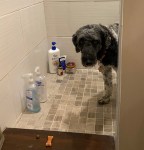
When Zeus sends his thunderbolts into Cleveland, Zippy gets scared. The snow, wind, and rain don’t bother her, but the thunder and lightning cause her to shake. Usually she hides in the shower.

Seeking shelter from the storm (apologies to Robert Zimmerman) is what California businesses are doing too. Assembly Bill 5 (AB 5), codifying the ABC Test for determining who is an employee, has been in effect since January 1, 2020.

On Friday, a new law repealed and replaced it. This new law, AB 2257, passed both chambers in the California legislature unanimously and was signed into law September 4 by Gov. Newsom. It contains an urgency clause, which means it takes immediate effect. So AB 5 is gone.

Great news for businesses, right? Not exactly.

AB 2257 moves the ABC test to a different part of the California Labor Code– new Sections 2775 through 2787–and cleans up some of the confusing and poorly considered language in AB 5. It does not, however, provide relief from the ABC Test for most large businesses.

The revisions make it easier for entertainers, freelance writers and photographers, and digital content aggregators to maintain independent contractor status. It scraps the arbitrary 35-article limit for freelance writers to maintain independent contractor status. It allows entertainers to perform single event gigs without becoming employees. It cleans up some other language too, but it does not make substantial changes that would excuse large businesses from the ABC test.

For example, subsection 2750.3(f) of AB 5 addressed whether an exception applies for work requiring a license from the Contractors State License Board (CSLB). The exception, with its multi-part test, is unchanged. It just moves to a new section of the Labor Code, new Section 2781.

One small glimmer of hope comes from some clarifying language for the business-to-business exception. That exception still does not apply for work that requires a CSLB license. To fall within that exception (meaning that the ABC Test would not apply), one of the requirements is that the work must be performed for the benefit of the contracting business, not its customers. Under the revised law, that requirement goes away if “the business service provider’s employees are solely performing the services under the contract under the name of the business service provider and the business service provider regularly contracts with other businesses.” For grammarians who despise double negatives, this is an exception to the exception. You’re welcome. What it means is if your subcontractor has its own employees, operates as its own business, and performs work not requiring a CSLB license, it may be easier to meet the business-to-business exception, thereby avoiding the ABC test.

So where does that leave us? On one hand, the fact that the bill passed both chambers unanimously shows a recognition that AB 5 had some serious flaws. But on the other hand, the fixes that both chambers thought were appropriate are of minimal help to large businesses. It’s like unleashing a horrible lab-created supermonster, then deciding that its eyelashes should be less curly. The largely-superficial changes in AB 2257 are mainly designed to help maintain independent contractor status for individuals who truly run their own businesses, particularly in the entertainment, journalism, and digital content fields.

This new law obliterates AB 5 in name, but not in function.

Like the blanket I gave Zippy, this move by the California legislature is not likely to provide any shelter from the storm. The ABC Test in California remains alive and well. Whether you grab a blanket or hide in the shower, the ABC Test is here to stay.

© 2020 Todd Lebowitz, posted on WhoIsMyEmployee.com, Exploring Issues of Independent Contractor Misclassification and Joint Employment. All rights reserved.
Enter your email address to subscribe to this blog and receive notifications of new posts by email.

 
2018_Web100Badge
 

Something Is Rotten in the State of California? Ride Share Misclassification Ruling Is Merely Act I

CA flag pole

“To be or not to be” are the opening words of a soliloquy by Prince Hamlet. With that, I have exhausted what I remember about Shakespearean plays without consulting Wikipedia. Having consulted Wikipedia, I can confirm that this soliloquy occurs in Hamlet, Act III, Scene 1.

A lot happens in Act III and beyond, and if you stopped reading Hamlet after Act I, you’d miss most of the action, including assorted plotting, scheming and mayhem.

Last week in California, a different kind of mayhem began in a major case involving alleged independent contractor misclassification. In California v. Uber, a state superior court judge granted a preliminary injunction, requiring ride-sharing app companies to reclassify California drivers as employees. But this order might not be the poisoned blade it seems to be. Either the ruling is a substantial blow, or it’s much ado about nothing. For now, it’s too early to tell. We’re still in Act I. Like in Hamlet, the real action will be in the later acts.

Read the rest of the post here, on BakerHostetler’s Employment Law Spotlight Blog.

© 2020 Todd Lebowitz, posted on WhoIsMyEmployee.com, Exploring Issues of Independent Contractor Misclassification and Joint Employment. All rights reserved.

Enter your email address to subscribe to this blog and receive notifications of new posts by email.

2018_Web100Badge


The Dishes Go Where? NLRB Reverses Major Joint Employer Ruling. Again.

text8-1-2020

– Me, to my mostly adult kids, on Friday (and the day before that, and the day before that, and the day before that…)

The text above should be no surprise to any of you who have elected to reproduce. Our offspring live in the stone ages. They do not understand the concept of an electric dishwasher. They are pre-Edison old school. If everything goes in the sink, they know that I will be the washer of the dishes.

For years, I have been sending the same message, usually face-to-face. It never gets through. But I keep trying and maybe, just maybe, one day we’ll get to the right result.

Same goes for the National Labor Relations Board and its repeated efforts to unravel the 2015 Browning-Ferris decision on joint employment.

Ah, yes, remember the Browning-Ferris case? Remember how in 2015, the Dem-controlled Board tried to rewrite the test for joint employment? The Board rejected 30 years of Board law and decided that indirect and reserved control would be enough to make someone a joint employer.

In 2017, the Board later tried to undo the Browning-Ferris decision but failed and — sorry, my bad — had to reinstate it. The case went to the Court of Appeals and then came back to the Board. But the Board it came back to is a more pro-business, Republican-controlled Board than the 2015 Board that issued the original decision.

Last week, the Board (for a second time) retracted the 2015 Browning-Ferris ruling. This time, the Board ruled that it had been “manifestly unjust” for the 2015 Board, after making up its new test, to apply that new test retroactively to Browning-Ferris Industries.  Cheers to that!

In last week’s ruling, the Board did not formally revoke the 2015 test, but it didn’t have to.

That’s because in February 2020, back in an era when mankind could roam the earth freely without hiding their lips, the Board issued a new test. The new test requires direct and immediate control before a company can be deemed a joint employer.

More information about NLRB’s new test is here, including a Q&A. For now, this is the test for joint employment under the National Labor Relations Act. A finding of joint employment requires direct and immediate control.

Before you go back to your home office all content and happy that you learned something already today and it’s not even coffee o’clock yet, remember — the NLRB test is not the full story when it comes to joint employment. The DOL has a different test for Fair Labor Standards Act (FLSA) disputes, summarized here.  And the courts may or may not apply either of these agency-created tests. As discussed here, there’s a lawsuit filed by 18 states that challenges the legitimacy of the DOL test.

So the Browning-Ferris case may be finally done (or maybe not). At least for now, it seem done. But what’s not done is the jousting and pivoting over the various tests for determining who is a joint employer. That battle rages on.

Much like my personal battle to fill the dishwasher at home.

© 2020 Todd Lebowitz, posted on WhoIsMyEmployee.com, Exploring Issues of Independent Contractor Misclassification and Joint Employment. All rights reserved.

Enter your email address to subscribe to this blog and receive notifications of new posts by email.

2018_Web100Badge


Silver Linings? DOL Looks to Adopt New Independent Contractor Test Before Year End

canoe

The past few months have included many silver linings — more family time, a Lake Michigan vacation, and professional cornhole on TV. I’ve also learned new things — governors have more power than I thought, remote work is more doable than many of us thought, and there’s such a thing as professional cornhole.

Now the Department of Labor wants us to learn something new too — about independent contractor status. (Too many long dashes so far? I’m flagging myself for excessive use.)

Last week the DOL published a notice that it intends to fast-track a new regulation covering the test for independent contractor vs employee under the Fair Labor Standards Act.

What would that test look like? The DOL gave no hints, but here is my educated guess.

The test for independent contractor status under the FLSA is an Economic Realities Test.  That is a court-created test, it’s well-established, and it’s not likely to change. If the DOL did try to change it, I don’t think the courts would follow the new regulation anyway. So the DOL is going to have to work more around the edges.

I expect the regulation to define more precisely the factors to be taken into account under the Economic Realities Test. Right now, different courts use different versions of it. Some uniformity would be helpful.

I also expect some examples to help illustrate how the factors should be applied. Look for sample fact patterns that seem like close calls but perhaps would be deemed supportive of independent contractor status under a new DOL interpretation.

We can expect the DOL will gently place its fingers on the scales, making it a bit easier to maintain independent contractor status under the FLSA. Don’t expect a full rewrite of the test.

The DOL will want to implement the new rule quickly, in case a new administration takes over in January. Look for a proposed regulation shortly, a quick public comment period, and a new regulation on the books late this year.

Hopefully by the time we see a final rule, we can watch real sports on TV and demote cornhole to livestream only. That way both people who care could still watch.

© 2020 Todd Lebowitz, posted on WhoIsMyEmployee.com, Exploring Issues of Independent Contractor Misclassification and Joint Employment. All rights reserved.

Enter your email address to subscribe to this blog and receive notifications of new posts by email.

2018_Web100Badge