
Arbitration Agreements & Staffing Company Workers: Can They Take You Anywhere You Want to Go?

1956 chevy bel air Arbitration agreements staffing agency

1956 Chevy Bel Air. The Ides of March’s Vehicle was a ‘55.

I’m your vehicle baby. I can take you anywhere you want to go.

That may be true for Jim Peterik, vocalist and frontman for The Ides of March, who issued this bold proclamation in the band’s 1970 single, “Vehicle.” (It worked. See more below.)

It’s not true for arbitration agreements, though. They can’t take you anywhere you want to go unless you draft them very carefully. A recent decision by the First Circuit Court of Appeals reminds us of this lesson, although the opinion disappointingly fails to quote the Ides of March.

In Hogan v. SPAR Group Inc., we have an independent contractor named Paradise Hogan (which seems like would have been a cool name for a rock band); a staffing company called SBS; and a retail services provider called SPAR.  SPAR contracted with the staffing company to use the services of its independent contractors, including Hogan.

Continue reading →

Do Pre-Employment Laws Apply When Running Background Checks on Independent Contractors? (Tip: Instead, Just Ask Edward)

Time traveller independent contractor background check requirements

A time traveler named “Edward” claims to have photographic proof that he is visiting from 5,000 years in the future. According to Metro UK, he described his experience as “unbelievable.” Ponder that.

One of the benefits of time travel is that you’d know if your workers are going commit crimes in the future that could jeopardize your company. With people like Edward in short supply, we are instead forced to try to predict future behavior through more widely accepted methods, like reading tarot cards or performing background checks. (Free tip: pick the latter.)

There are federal and state laws that strictly regulate the processes and procedures for running pre-employment background checks. A Ninth Circuit Court of Appeals decision last week highlights the importance of following all technical requirements, including that employers provide a “clear and conspicuous disclosure” that they may run a background check and that the disclosure is “in a document that consists solely of the disclosure.” In that decision, the court ruled that it’s illegal to provide a disclosure that includes state law disclosures on the same page as the federal disclosure. It is common for employers to combine these disclosures on the same form, so check your forms! I blogged about the ruling here, on BakerHostetler’s Employment Class Action blog.

In contrast, the rules for running background checks on independent contractors are not as strict. The federal law requiring a stand alone disclosure applies only to reports being run “for employment purposes.” Same thing for the pre-adverse action notification requirement. It applies only to reports that are run “for employment purposes.”

Interpreting the “for employment purposes” language, at least three federal courts have ruled that a report on a prospective independent contractor is not being run “for employment purposes” and, therefore, these requirements do not apply to reports being run on independent contractors. (The FTC has issued guidance that the “for employment purposes” requirements do apply to independent contractors, but the courts have so far rejected this guidance as being inconsistent with the language of the statute.)

Some of the requirements in the Fair Credit Reporting Act (FCRA) may still apply, depending on the purpose of the report, but the bottom line is that the rules are different for background checks being run on employees and independent contractors. The FCRA is somewhat complicated, and don’t forget the patchwork of state laws.

There’s also the risk of misclassification — that the independent contractor could be deemed an employee — in which case the FCRA and state law requirements for pre-employment background checks would need to be followed, and the failure to follow them can be costly. The FCRA allows for statutory damages of $100 to $1,000 per violation, plus attorneys’ fees.

So if you’re afraid of a misclassification claim should you just follow the “for employment purposes” requirements anyway? Not necessarily. Though it can be prudent to follow some of the technical disclosure and pre-adverse action requirements that apply to pre-employment checks, be careful about using any forms with independent contractors that say the background check is being run “for employment purposes.” In other words, the forms you are using for pre-employment background checks might not be suitable for use with independent contractors.

This earlier blog post discusses more of the issues (and potential risks) related to running background checks on independent contractors.

There are plenty of good reasons to run background checks on some types of contractors, particularly those who will be entering customers’ homes. The goal, of course, is to try to predict the risk of future wrongdoing. Background checks can be useful for that purpose.

But the only surefire way to know what is going to happen in the future is to ask Edward.

For more information on joint employment, gig economy issues, and other labor and employment developments to watch in 2019, join me in Philadelphia on Feb. 26 or Chicago on Mar. 21 for the 2019 BakerHostetler Master Class on Labor Relations and Employment Law: Meeting Today’s Challenges. Advance registration is required. Please email me if you plan to attend, tlebowitz@bakerlaw.com. If you list my name in your RSVP, I will have your registration fee waived.

© 2019 Todd Lebowitz, posted on WhoIsMyEmployee.com, Exploring Issues of Independent Contractor Misclassification and Joint Employment. All rights reserved.

Enter your email address to subscribe to this blog and receive notifications of new posts by email.

2018_Web100Badge


Five Easy New Years’ Resolutions for Companies That Use Independent Contractors

new years resolutions

Now that the hangover has worn off and the calories have not, it’s time for 2019 New Years’ Resolutions. I know you didn’t ask for help, but you also didn’t not ask.

Here are some suggestions for those of you whose companies rely on independent contractors:

  1. Do you have one of those doorbells you can answer from anywhere? So do I. That’s because we’re cautious (syn., paranoid). Be similarly cautious that your non-legal, non-HR co-workers in management might retain independent contractors without your knowledge. Unleash your inner Anita Ward and make them Ring Your Bell. Set up a gatekeeper system that requires everyone to go through you before they can retain a non-employee worker. But don’t aim little cameras at their desks or you will lose friends.
  2. Update your Independent Contractor Agreements, even if you haven’t been sued yet. I am reminded of the time Bart Simpson exclaimed, “This is the worst day of my life!” and the wise yogi, Homer, responded helpfully, “–the worst day of your life so far.” (Here’s the clip.) Be prepared for if/when you are sued. Use the contract to highlight the facts that support independent contractor status. Be prepared.
  3. Don’t walk slowly in airports. This is (arguably) not directly related to the use of independent contractors, but it is important nonetheless because it drives everyone bonkers when people do it.
  4. Include arbitration clauses with class action waivers. In an alternative universe, your company has been sued by all of your independent contractors in a class action. In your reality, the contractor’s requirement to go at it alone in arbitration convinces your contractor that it’s not worth the effort to sue you, making you — who inserted the arbitration clause — the hero!
  5. Try this exercise: Do a simple self-audit. Check your company’s list of 1099 recipients for 2018 and see how many are individuals with SSNs, rather than entities with EINs. A long list with the names of a lot of individuals may be a sign that there are some independent contractor issues. That little exercise won’t burn off a single cookie, but it’s nonetheless a simple way to try to get a sense of how many independent contractors your business may have. The number is often greater than people realize.

Wishing you all a happy and healthy 2019!

For more information on joint employment, gig economy issues, and other labor and employment developments to watch in 2019, join me in Orlando on Jan. 24, Philadelphia on Feb. 26, or Chicago on Mar. 21 for the 2019 BakerHostetler Master Class on Labor Relations and Employment Law: Meeting Today’s Challenges. Advance registration is required. Please email me if you plan to attend, tlebowitz@bakerlaw.com. If you list my name in your RSVP, I will have your registration fee waived.

© 2019 Todd Lebowitz, posted on WhoIsMyEmployee.com, Exploring Issues of Independent Contractor Misclassification and Joint Employment. All rights reserved.

Enter your email address to subscribe to this blog and receive notifications of new posts by email.

2018_Web100Badge


What It Means to “Suffer” in California, Independent Contractor Version

suffer or permit to work California

This article describes how gestures that are common in the U.S. can have very different meanings abroad. For example, the “ok” finger gesture is a vulgar bodily reference in Brazil, Germany, and Russia. (Not ok!) The thumbs up gesture in Greece or the Middle East can mean “up yours!” The University of Texas’s “hook ‘em horns” gesture in Italy means you’ve been cuckolded — your wife is cheating on you.

Same thing, different meaning.

To employers, California often feels like a foreign country. It has some of the most employee-friendly laws in the nation, creating migraines for multi-state employers. When it comes to interpreting legal phrases, California lives up to its reputation, especially in the Employee vs. Independent Contractor context.

Today we look at California’s definition of “employ” as it relates to determining whether someone is an employee or an independent contractor.

California’s wage and hour laws are set forth in the state’s Industrial Wage Orders, a bulky set of directives that set the rules for minimum wage, overtime, meal and rest breaks, and various record keeping requirements for California employers. These rules apply only to employees, not independent contractors, but the test for determining Who Is My Employee? in California is different than under any federal law.

California’s Industrial Wage Orders use the same language to define “employ” as used in the federal Fair Labor Standards Act (FLSA). But fittingly, the Republic of California applies a different meaning to the same phrase.

California’s wage and hour laws provide three alternative definitions for “employ”: (1) to exercise control over the wages, hours, or working conditions, (2) to suffer or permit to work, or (3) to engage, thereby creating a common law employment relationship.

The FLSA also defines “employ” as “to suffer or permit to work.”

On Monday, we described how the FLSA’s “suffer or permit” standard is applied when determining whether someone is an employee or an independent contractor.

Today’s post describes California’s test for the same phrase. It’s different. Hook ‘em horns.

Historically, California courts have rejected the federal interpretation of “suffer or permit” as not being broad enough. California courts interpret the phrase more literally. If you permit someone to work, that person is likely your employee.

In April 2018, California’s Supreme Court set up a test that cemented that expansive interpretation into law.

In Dynamex Operations West v. Superior Court, the California Supreme Court ruled that, to determine whether someone is an employee or an independent contract, an ABC Test must be used.

An ABC Test sets a higher bar than a Right to Control Test or an Economic Realities Test. It also sets a higher bar than California’s S.G. Borello test, which is the hybrid Right to Control/Economic Realities Test that California had been using since 1989 to answer the Employee vs. Independent Contractor question.

California’s ABC Test starts with the presumption that, for claims covered under California wage orders, every worker is an employee. Then, to prove otherwise, the business retaining that worker must prove (all 3):

(A) the worker is free from the control and direction of the hiring entity in connection with the performance of the work, both under the contract for the performance of the work and in fact, and

(B) the worker performs work that is outside the usual course of the hiring entity’s business, and

(C) the worker is customarily engaged in an independently established trade, occupation, or business.

Fail just one part, and the worker is an employee under California wage and hour law. This new test is even stricter than most other states’ ABC Tests, which usually include two ways that Part B can be satisfied.

As of now, the Dynamex test applies only to claims brought under California wage orders, we think.  These claims generally include minimum wage, overtime, and meal and rest break claims. So far, this test does not appear to apply to claims such as failure to reimburse expenses or failure to provide employee benefits.

© 2018 Todd Lebowitz, posted on WhoIsMyEmployee.com, Exploring Issues of Independent Contractor Misclassification and Joint Employment. All rights reserved.

Enter your email address to subscribe to this blog and receive notifications of new posts by email.

2018_Web100Badge

Pain, Humiliation & Self-Pity: How Does the Definition of “Employ” Relate to Independent Contractor Misclassification?

Suffer or Permit to Work FLSA Definition of Employ

According to the New World Encyclopedia, examples of “suffering” include pain, illness, disability, hunger, poverty, grief, hatred, frustration, heartbreak, guilt, humiliation, anxiety, loneliness, self-pity, and death.

According to federal wage and hour law, “suffer” means employment.

Ouch. Happy Monday.

One of the many problems with the Fair Labor Standards Act (FLSA) — the federal law that sets minimum wage and overtime standards — is that it’s archaic, outdated, old. It was passed in 1938.  Before Hitler invaded Poland.  Before the first Captain America comic book. Even before the invention of the Slinky.

In 1938, Mick Jagger wasn’t even born yet. (But Betty White was 16.)

The language used in the FLSA reflects a different era. In the definitions section of the Act, “employ” includes “to suffer or permit to work.” What exactly does that mean? At the time it was written, what did Congress intend for it to mean? And what does it mean now, in the modern economy, especially when trying to determine whether a worker is an employee or an independent contractor?

According to the FLSA regulations, if “the employer knows or has reason to believe that [the individual] is continuing to work,” then the time is working time. It’s employment. Even work that is “not requested” is work time if the employer permitted the work to be done.

When asking the question, Who Is My Employee?, this broad definition presents a challenge. As the Supreme Court has recognized, this definition is broader than the ordinary “common law” definition of employment, which looks at the extent of control the employer exercises (or has the right to exercise) over the worker. That’s the Right to Control Test, which is discussed in more detail here.

Because the definition of “employ” is different under the FLSA than under most other employment laws, the test for determining Who Is My Employee? is different too.

The FLSA uses an Economic Realities Test to determine whether a worker is an employee (as compared to an independent contractor).

The Economic Realities Test is expressed slightly differently by different federal courts but, in general, the test asks whether the worker is economically reliant on the potential employer to earn a living. If economically reliant, the worker is likely an employee. If the worker has other sources of income or is business for himself/herself, the worker is more likely an independent contractor, not an employee.

The Economic Realities Test is described in more detail here.

So that’s how the federal courts interpret the “suffer or permit to work” language in the FLSA. But to keep things interesting, California’s wage and hour laws use the same “suffer or permit” language in its state law definition of “employ,” but California interprets that phrase differently and imposes a different test. Same standard, different test.

As we will discuss in Thursday’s post, California’s alternative interpretation of that same phrase can lead to very different results when evaluating whether someone is an employee or independent contractor.

It’s California’s definition — more than the federal definition — that is more likely to cause pain, illness, disability, hunger, poverty, grief, hatred, frustration, heartbreak, guilt, humiliation, anxiety, loneliness, or self-pity. To the Golden State’s credit, though, probably not death. Good job, California.

© 2018 Todd Lebowitz, posted on WhoIsMyEmployee.com, Exploring Issues of Independent Contractor Misclassification and Joint Employment. All rights reserved.

Enter your email address to subscribe to this blog and receive notifications of new posts by email.

2018_Web100Badge

Village People’s Construction Worker Character Wins! Court Expands OSHA Liability for General Contractors

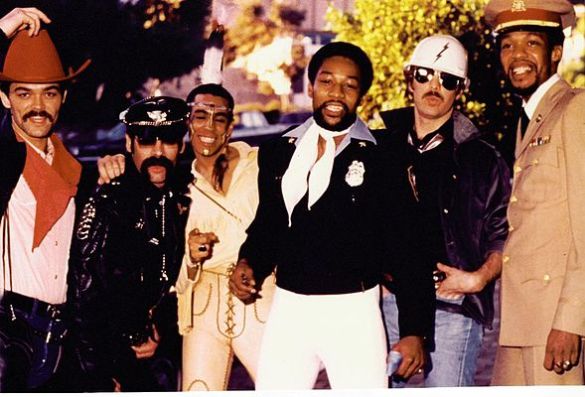
Village People from Wikipedia 1978

The Village People (1978), from Wikipedia

According to the Official Website of the Village People, the group’s original lineup included Disco King, Construction Worker, Cowboy, Leatherman, Indian, and two “Nondescripts.” They were later joined by Cop, G.I., and Biker. Keeping with the times, as we know the Village People do, the costume formerly known as Indian has been rebranded as Native American. (True!)

But Cop or No Cop, Biker or No Biker, there has always been a Construction Worker since the band’s founding in 1977.

A recent court case involving construction workers tests whether a general contractor in control of a worksite (we’ll call him “Macho Man,” after the 1978 hit) has a legal duty to protect another contractor’s employee (we’ll call him “Hot Cop,” after a different 1978 V.P. tune), when none of Macho Man’s own employees are at risk.

The issue arose during a library construction project in Austin, Texas. One subcontractor refused to allow its employees to work near a 12-foot high wall of dirt that had not been properly sloped or reinforced. A citation was issued to the general contractor for allowing the unsafe condition, but it was undisputed that none of the general contractors’ own employees were endangered by the wall of dirt.

“Why does that matter?” you might be asking.

Although the condition was a violation of the Occupational Health and Safety Act (OSHA), the Fifth Circuit Court of Appeals had taken the position since 1981 (when the V.P. released the album, Renaissance) that “OSHA regulations protect only an employer’s own employees.”

The Court’s ruling earlier this week abandoned that rule, instead finding that a general contractor could be cited under OSHA for allowing an unsafe condition that affected only the employees of another contractor.

In response to the Court’s ruling, the Village People have reportedly abandoned plans to introduce a nebishy Health Inspector character on their next tour.

© 2018 Todd Lebowitz, posted on WhoIsMyEmployee.com, Exploring Issues of Independent Contractor Misclassification and Joint Employment. All rights reserved.

Enter your email address to subscribe to this blog and receive notifications of new posts by email.

2018_Web100Badge

A Christmas Poem: ‘Twas the Night Before an Independent Contractor Misclassification Ruling

‘Twas the night before Christmas, when all through the nation,
Plaintiffs’ lawyers were alleging independent contractor misclassification;

The businesses’ owners hung by their lawyers with care,
In hopes they could prove that all claims were threadbare;

The workers were all independent contractors, we said,
But the plaintiff was claiming to be an employee instead.

Contracts were reviewed; deposition transcripts were read,
And visions of a dismissal entry danced in our heads.

The judge in her robe, and I in my suit,
Feeling confident our side could win this dispute—

We argued that the facts proved no right to control;
None of the workers were on the payroll.

They could bring their own tools and could hire assistants;
They had formed LLCs and had other means for subsistence.

They only accepted the jobs they desired;
They never were hired. No application required.

We felt pretty good that when the facts were applied,
The judge would agree that no contractors were misclassified.

We filed our motion for summary judgment and waited.
The ruling was issued, and we all were elated.

The court weighed the factors. Nothing was missed.
The workers were contractors. Case dismissed.

Thank you, dear readers. I hope you like what I write.
Happy Christmas (and Hanukkah) to all, and to all a good night!

© 2018 Todd Lebowitz, posted on WhoIsMyEmployee.com, Exploring Issues of Independent Contractor Misclassification and Joint Employment. All rights reserved.

Enter your email address to subscribe to this blog and receive notifications of new posts by email.

NYC May Expand Anti-Discrimination Law to Cover Contractors, Interns

NYC anti discrimination gapI will admit, without shame, that in the 1980s, I loved the Gap Band. Songs like “You Dropped a Bomb on Me” and “Burn Rubber on Me” were just plain fun to listen to. Tip: Try it!

The band’s name didn’t refer to any actual gap — the name comes from the first letters of streets in Tulsa, Oklahoma — but I do know there are many gaps in anti-discrimination law, leaving some types of workers without adequate protection.  

The federal laws that prohibit discrimination in employment, like many (but not all) state laws, protect only employees. That leaves a gap. Independent contractors and interns who have been discriminated against may have no recourse.

The New York City Council is trying to close that gap.

In the same bill we excoriated on Monday for unfairly attacking the franchise model, the New York City Council also proposes to expand the protections of the City’s anti-discrimination law (section 8-107 of the Administrative Code) to protect independent contractors and interns, not just employees. 

Closing that gap makes sense. Hopefully this bill will be amended to keep the parts that expand anti-discrimination protection to non-employee workers (a good idea), while removing the parts that would expand liability to companies not responsible for the discrimination (a bad one).

© 2018 Todd Lebowitz, posted on WhoIsMyEmployee.com, Exploring Issues of Independent Contractor Misclassification and Joint Employment. All rights reserved.
Enter your email address to subscribe to this blog and receive notifications of new posts by email.

G-L-O-R-I-A! California Court says to use different tests for different IC misclassification claims

California independent contractor misclassification tests

If someone were to ask whether you like the song, “Gloria,” you’d be right to ask, “Which version?”

There’s the version written by Van Morrison and recorded by his band Them, later covered by Patti Smith, The Doors, and a gaggle of others. That’s the version that goes, “G-L-O-R-I-A, Gloooooria!” (I’m gonna shout it out every day.)

Then there’s the version recorded by Laura Branigan in 1982, originally written in Italian by Umberto Tozzi. (Fun fact!) You know that one — “You’re always on the run now. Running after somebody, you gotta get him somehow.”

Of course the right answer is that you prefer the first version, but my point is that there are multiple versions of “Gloria.” Same name, different song.

This is the same approach California courts seem to be taking with the state’s test for Independent Contractor vs. Employee. Same question, different tests. Many of you will recall the April 2018 Dynamex decision, in which the California Supreme Court adopted a strict ABC Test for determining whether a worker is an employee under California’s Industrial Wage Orders.

But the Dynamex decision did not address whether the new ABC Test would be used to determine whether someone is a contractor or an employee under California’s other state labor laws. Now we know.

The answer, according to a California Court of Appeal decision last week, is that there’s room for both “G-L-O-R-I-A” and “You’re always on the run now.” (You’re welcome, Laura Branigan.)

In last week’s case, called Garcia v. Border Transportation Group, the court considered an eight-count complaint brought by a taxicab driver who had been treated as an independent contractor. The driver claimed he should have been treated as an employee and that various state laws, which apply only to employees, were not followed. The court ruled that different tests apply to different claims.

The Court ruled that the claims brought under California’s Industrial Wage Orders had to be evaluated under the Dynamex ABC Test and, for these claims, the driver had to be considered an employee. The claims subject to the Dynamex test were the claims alleging unpaid wages, failure to pay minimum wage, failure to provide meal and rest periods, failure to furnish itemized wage statements, and the unfair competition (UCL) claims arising out of the wage order violations.

On the other hand, the driver’s claims for wrongful termination in violation of public policy, waiting time penalties, and the UCL claims stemming from these allegations had to be evaluated under the more traditional S.G. Borello balancing test, which includes elements of a Right to Control Test but incorporates other factors too, making it a hybrid test. Under the S.G. Borello standard, the Court ruled that the driver was properly classified as an independent contractor.  (The plaintiff alleged failure to pay overtime too. Typically, overtime claims are governed by the Industrial Wage Orders, but the overtime rules do not apply to taxicab drivers.)

For those who like score cards, here is a list showing (a) the claims that were filed, and (b) which test must be used to determine Independent Contractor vs. Employee under each claim, according to the Garcia case. I have color-coded the claims because it looks pretty:

1. Wrongful termination in violation of public policy. (Lab. Code, §§ 923 [employees may organize], 6310 [retaliation for an OSHA complaint], 6400 [duty to provide a safe work environment], 1102.5 [whistleblower protection].)  S.G. Borello balancing test

2. Unpaid wages under the wage order. (Cal. Code Regs, tit. 8, § 11090.)  Dynamex ABC Test

3. Failure to pay minimum wage. (Lab. Code, §§ 1182.12 [minimum wage], 1194 [right of action], 1194.2 [liquidated damages], 1197 [duty to pay minimum wage].)  Dynamex ABC Test

4. Failure to pay overtime. (Lab. Code, §§ 510 [overtime], 1194 [right of action].) – Not applicable

5. Failure to provide meal and rest breaks. (Lab. Code, §§ 226.7 [rest periods], 512 [meal breaks].) Dynamex ABC Test

6. Failure to furnish accurate wage statements. (Lab. Code, §§ 226 [wage statements], 226.3 [civil penalties], 2699 [PAGA penalties].) Dynamex ABC Test

7. Waiting time penalties. (Lab. Code, §§ 201−202 [wages and leave due upon departure], 203 [penalties].) S.G. Borello balancing test

8. Unfair competition (UCL), based on the foregoing violations. (Bus. & Prof. Code, § 17200 et seq.; Lab. Code, § 2699 [PAGA penalties].) Dynamex ABC Test for the alleged violations of the wage order; S.G. Borello balancing test for the other claims


That’s the state of the law at this moment, but of course the California Supreme Court could weigh in again later as to whether S.G. Borello should still be used at all.

The explanation given in the Garcia case, though, for why the different tests should be used for different claims makes perfect sense. The definition of employee in Dynamex is broader than in the other statutes, as the California Supreme Court explained in the Dynamex decision.

So there you have it. Different definition of employee, different tests.

Shout it out all night!

Shout it out every day!

© 2018 Todd Lebowitz, posted on WhoIsMyEmployee.com, Exploring Issues of Independent Contractor Misclassification and Joint Employment. All rights reserved.

Enter your email address to subscribe to this blog and receive notifications of new posts by email.

Is this weird trick the key to defeating independent contractor claims? (Hahahahahaha. No.)

Weird trick to defeat independent contractor claims Jani-King

As everyone with an internet connection now knows, articles promising “one weird trick” to solve some real-world problem are everywhere. These articles are annoying. (It’s called clickbait.) You open up the article, and the “weird trick” is usually something you already knew anyway. Or the weird trick just doesn’t work.

So what’s the “weird trick” here?

Requiring independent contractors to form corporate entities. Then you have a business-to-business contract, not employment. Right?

Ok, it’s not weird at all. Lots of companies use this approach.

But does it work? Not necessarily.

Let’s consider the issue under the Fair Labor Standards Act (FLSA). The FLSA requires employees to be paid a minimum wage and overtime (unless there’s an exemption) and requires employers to keep certain kinds of pay records.

The test for determining whether someone is an employee under the FLSA is Ye Olde Economic Realities Test. 

Dear Reader, hold onto your seat, because we’re about to see this test in action!

Can you defeat independent contractor misclassification claims by requiring workers to form legal entities? Let’s see…

A federal appeals court recently considered a dispute involving Jani-King and its franchise model for providing janitorial services. Under Jani-King’s business model, the individuals who provide cleaning services are not treated by Jani-King as its employees. Rather, Jani-King requires that anyone who wants to provide janitorial services under the Jani-King name must form a legal entity, like an LLC. Then Jani-King enters into a franchise agreement with the LLC, and the LLC/franchisee provides the cleaning services. There is no job offer or employment agreement between Jani-King and the individuals performing the services. It’s all treated like a business-to-business, franchisor-franchisee relationship.

The Department of Labor (DOL) is questioning the legitimacy of this model.  The DOL began an investigation and then filed a lawsuit, claiming that Jani-King’s franchisees are really Jani-King’s employees under the FLSA, and Jani-King therefore had to comply with FLSA record-keeping requirements, as well as its overtime and minimum wage rules.

The reason Jani-King’s “one weird trick” doesn’t necessarily work is because to determine whether someone is an employee under the FLSA, it doesn’t matter what you call the worker. You can call the worker a contractor or a franchisee, but using that tag doesn’t mean the worker is not an employee under the FLSA. That’s a legal determination made using the Economic Realities Test.

In this case, the trial court judge in Oklahoma had dismissed the DOL’s case, ruling that Jani-King’s contracts were with entities, not individuals, so there could not be an employment relationship. The Tenth Circuit Court of Appeals, however, said that’s not true. 

The Court of Appeals ruled that a six-part Economic Realities Test must be used to determine whether the individual franchisees who performed the janitorial work should be considered employees under the FLSA. Under the Economic Realities Test, a court must examine the economic realities of the relationship, not merely rely on the parties’ labels. 

In the Tenth Circuit (which covers Oklahoma, New Mexico, Kansas, Colorado, Utah, and Wyoming), here are the factors to consider under the Economic Realities Test:

1) The degree of control exerted by the alleged employer over the worker; 

2) The worker’s opportunity for profit or loss; 

3) The worker’s investment in the business; 

4) The permanence of the working relationship; 

5) The degree of skill required to perform the work; and 

6) The extent to which the work is an integral part of the alleged employer’s business.

The not-so-weird trick of requiring workers to set up a legal entity does not necessarily work. It can be helpful, but only if the facts show that the entity is not economically reliant on the other party. The facts matter, not the labels.

This case is headed back to the trial court for some fact-finding to determine how these six factors play out.

In the meantime, remember that “one weird trick” to solve some real-world problem is probably not weird at all, and it may or may not work. But it may arouse your curiosity and cause you read the article. Here, Jani-King’s one weird trick aroused the DOL’s curiosity, which is not something a business should want to do.

© 2018 Todd Lebowitz, posted on WhoIsMyEmployee.com, Exploring Issues of Independent Contractor Misclassification and Joint Employment. All rights reserved.

Enter your email address to subscribe to this blog and receive notifications of new posts by email.