
Today’s Tip: Beware of Multi-State Issues (and Rudolf is a girl?!)

Neil deGrasse Tyson broke the news last week that Santa’s reindeer must be female, since they still have their antlers in the winter. Mind blown: Rudolf is a girl. #girlpower

It seems like should have figured that out earlier. Sometimes things are not as they seem. So let’s play some reindeer games.

Assessing independent contractors status isn’t always as it seems either. Do you pass the IRS Test? Congratulations, but that tells you nothing about whether your relationship meets state law tests. Did you win an unemployment claim on the basis that your contractor was not your employee? Congratulations, but that tells you nothing about whether your relationship has contractor status under federal wage and hour law.

To determine whether an independent contractor relationship is legitimate requires you to look at multiple tests across multiple laws across multiple jurisdictions.

Companies that retain contractors across multiple states should pay particular attention to the differences among multiple states and across multiple laws. The same relationship can be deemed employment under one test and independent contractor under another.

For example, in my home state of Ohio, the analysis of whether a worker is an independent contractor or an employee is subject to a long list of competing legal standards:

  1. Federal Income Tax: Right to Control (IRS factors)
  2. Ohio Income Tax:  Follows IRS
  3. ERISA, ADA, Title VII, ADEA: Right to Control (Darden Test)
  4. Affordable Care Act: Right to Control (Treasury Regs.)
  5. FLSA: Economic Realities Test
  6. NLRA: multi-factor hybrid/right to control test
  7. OH Unemployment (ODJFS): IRS old 20-Factor Test
  8. OH Workers Comp / Construction: Need 10 of 20 old IRS Factors
  9. OH Workers Comp / Other: Ohio Right to Control Test
  10. OH Discrimination (RC 4112): Ohio Right to Control Test

The complexity is similar in every state.  In Illinois, the list is about as long, but with different state law tests and standards:

  1. Federal Tax: Right to Control (IRS factors)
  2. ERISA, ADA, Title VII, ADEA: Right to Control (Darden Test)
  3. Affordable Care Act: Right to Control (Treasury Regs.)
  4. FLSA: Economic Realities Test
  5. NLRA: multi-factor hybrid/right to control test
  6. IL Unemployment: ABC Test
  7. IL Wage Payment & Collection Act: ABC Test
  8. IL Workers Compensation: Various factors, including control, relationship to company’s business
  9. But, if Construction, then Employee Classification Act:
    – Presumption is employee,
    – Then apply ABC Test,
    – Then apply 12-factor test to prove sole proprietorship or partnership is IC

And there are 48 more states just like these (but different).

So bottom line: Just like you can’t make assumptions about your reindeer’s gender based on its name, you can’t make assumptions about your contractor’s status based on what you call the relationship. You’ve gotta check the antlers — or the appropriate law.

© 2020 Todd Lebowitz, posted on WhoIsMyEmployee.com, Exploring Issues of Independent Contractor Misclassification and Joint Employment. All rights reserved.

Enter your email address to subscribe to this blog and receive notifications of new posts by email.

 
2018_Web100Badge

Buckle Up? Why The Gig Economy Should Love Biden’s HHS Pick

Back before seatbelts were a thing, Sears sold this handy Auto Strap for Front-Seat Tots. Tie your toddler to some part of the car, and drive carefree! What could go wrong?

Ok, things have changed a bit when it comes to driving. Seatbelts and airbags seem to have carried the day. Things have also changed quite a bit in the modern workforce, with the gig economy pushing aside traditional employer-employee work relationships.

Something important just happened to help California gig economy companies, and it’s gone under the radar. Biden named California Attorney General Xavier Becerra as his pick for Health & Human Services. Why should gig economy companies care who Biden’s HHS pick is? Because naming Becerra to HHS means Becerra will no longer be California’s Attorney General. And that’s good new because a key part of Becerra’s agenda as State AG had been to knock around gig economy companies as much as possible.

Becerra tried to sabotage Prop 22 by giving it a misleading description on the ballot, but voters saw through it and passed the measure anyway.

Becerra has been the driving force behind California’s lawsuits against ride share companies, trying to force them to reclassify drivers as employees.

But now, assuming he gets confirmed, someone else will take over as California AG. Hopefully it will be someone with less of an anti-gig economy agenda than Becerra. We’ll see. But for now, this pick seems to be good news. I don’t know what he’ll do as HHS Secretary, but I know what he won’t do as HHS Secretary, and that’s to pick fights with companies who help to keep the gig economy strong.

So strap in and let’s see what this new ride will bring. Just be sure to use a seatbelt, not a $1.88 standing harness.

© 2020 Todd Lebowitz, posted on WhoIsMyEmployee.com, Exploring Issues of Independent Contractor Misclassification and Joint Employment. All rights reserved.
Enter your email address to subscribe to this blog and receive notifications of new posts by email.

 
2018_Web100Badge
 

Discomfit a Bear? Here’s a Quick Tip To Improve Your Independent Contractor Agreements

In this story from the Illustrated Police News, 1877, we see the courageous exploits of a young lady from Runcorn, England, skillfully discomfiting a bear with her parasol. Now, I question whether this really happened as captioned. The caption says she punched the bear in the eye with her parasol, but this artist’s rendering depicts more of a body blow, so I’m not sure which to believe. But either way, as you can see, the bear was discomfited and this atypical encounter ended well.

In this instance, a parasol was more than a mere umbrella. It served as a defensive weapon.

The lesson here is that objects we take for granted can be used as a defensive weapon with some proper planning. That includes your independent contractor agreements.

Independent contractor agreements should not be generic, off-the-shelf documents. Every agreement is an opportunity to build your defense against a claim of independent contractor misclassification.

Think about all of the factors that go into determining whether someone is an employee or an independent contractor. For a refresher, you can review some earlier posts on Right to Control Tests and Economic Realities Tests. Also here.

On factors where are you do not exert control and do not need to exert control, put that in the contract. Put in the contract that the contractor controls these factors and you have no right to control them.

For example, do you care what time of day the contractor works? Do you care if the contractor retains helpers? Do you care whose tools the contractor uses?

If not, put that in the contract: The contractor decides when to work, whether to hire helpers, and what tools to use. There are dozens more factors like these to consider. The point is to customize your agreement so that it is defensive weapon to help fend off a claim.

Then go a step further and put in the contract that you have no right to control these decisions. Remember, the Right to Control tests generally focus on whether you have the right to control something, even if you don’t actually exercise that right.

If you use your agreement to memorialize the good facts—those that support independent contractor status—then you can turn that agreement into a defensive weapon.

The agreement might not help if confronted with a bear in Victorian England (“here, read this contract while I run!”), but it may help to discomfit an independent contractor misclassification lawsuit.

© 2020 Todd Lebowitz, posted on WhoIsMyEmployee.com, Exploring Issues of Independent Contractor Misclassification and Joint Employment. All rights reserved.

Enter your email address to subscribe to this blog and receive notifications of new posts by email.

 
2018_Web100Badge
 

Say Say Say: How Not to Bungle an Independent Contractor Relationship

Remember the 1983 song, Say Say Say, by Paul McCartney and Michael Jackson? “Say, say, say what you want. But don’t play games with my affection.”

The songs asks for some straight talk. Be direct. Say what you mean. Or as Michael says, “What can I do girl, to get through to you. Cause I love you, baby (baby).”

1983 was a memorable year for me for music. I had a cassette called CHART ACTION 1983 that was one of my favorites. It included songs from Dexy’s Midnight Runners, Adam Ant, the Stray Cats, Bonnie Tyler, and Golden Earring.

But it didn’t have Say, Say, Say, and that was fine by me because I don’t really like the song. If it was on CHART ACTION 1983, I’d have skipped it, but the old fashioned way: forward, forward more, a little more, oops too far, rewind, rewind, forward, got it. Hungry Like the Wolf.

“Say say say what you want” would have been good advice for a Pennsylvania agency that offered interpreter and transcription services. The agency tried to run its business with an independent contractor model, but failed to say say say the right things in its agreements.

A Pennsylvania court ruled that the agency had misclassified its interpreters as independent contractors. Under PA unemployment law, the interpreters were actually employees. (“You know I’m crying oo oo oo oo oo.”)

Let’s look at where the agency went wrong.

Bad facts, tending to support employee status: The interpreters had a set of policies and procedures they had to follow, including wearing name badges. The agency did the scheduling.

Good facts, tending to support contractor status: The interpreters are not supervised, reimbursed for their expenses, or provided benefits, training, equipment, or name badges. An interpreter could refuse work at any time.

Totally unnecessary bad fact: The interpreters had to sign a non-compete agreement. That’s evidence of employment because it restricts the interpreter’s ability to work for others as an entrepreneur would do. But it turns out that, in reality, the agency didn’t care if the interpreters worked for others, and many of the interpreters did work for others.

Even worse, the non-compete included language referencing an “existing contract of employment.” Oops. Poor choice of words when you’re trying to prove there was no employment relationship. I would bet that the agency just pulled this non-compete language off the internet, without having considered the legal implications. The court focused a lot of attention on the non-compete when ruling that the interpreters were really employees.

The non-compete was a self-inflicted wound. That misstep is a good example of why you can’t just pick template agreements off the internet and expect that they’ll be sufficient.

More bad facts were on the website: Another problem for the agency was its website, which described the extensive training provided to interpreters, referred to them as “new hires,” and indicated they were all required to undergo a final performance evaluation. These facts all suggest an employment relationship.

Pennsylvania unemployment law applies a two-part test for determining whether someone is an employee or an independent contractor. To be an independent contractor, the service had to prove that it did not exercise control (a Right to Control Test) and that the interpreters were “customarily engaged in an independently established trade, occupation, profession or business.”

This could have been done correctly. Because of the independent nature of an interpreter’s work, the agency probably could have set up legitimate independent contractor relationships. This case is a classic example of how a proactive legal review could have saved the day.

If the agency had asked a lawyer for help in setting up the business the right way, this case could have gone the other way. The agency could have eliminated the non-compete agreement (which it didn’t enforce anyway), modified the website to eliminate “new hire” language and to de-emphasize training, cut back on the specific training provided, and changed the name tag requirement to a more generic requirement to provide identification.

So to the song I say say say: You may have hit #1 in the U.S. that October, but I’m not the one who really loves you.

© 2020 Todd Lebowitz, posted on WhoIsMyEmployee.com, Exploring Issues of Independent Contractor Misclassification and Joint Employment. All rights reserved.

Enter your email address to subscribe to this blog and receive notifications of new posts by email.

2018_Web100Badge


Election News: California Voters Adopt Prop 22; Kentucky Voters Elect Dog as Mayor

Zippy evaluates the candidates.

Some elections are more consequential than others. It can be tough to lose, but in Rabbit Hash, Kentucky, the candidates for mayor are probably indifferent to the outcome. Even the winner probably doesn’t do a lot of mayoring.

That’s because the mayor of Rabbit Hash is a dog. Since 1988, the mayor has always been a dog. This year’s winner is a six-month old French bulldog named Wilbur Beast. Wilbur succeeds incumbent Brynneth Pawltro, a pit bull who has served since 2016.

Click here for an adorable photo of the winner.

In other election news (in case you were wondering whether there was anything else happening in the category of elections), voters in California passed Proposition 22. Prop 22 will allow ride share and delivery drivers in California to maintain independent contractor status, so long as the app companies provide a suite of predetermined benefits. Read more here.

That means the ABC Test in AB 5 will no longer apply to ride share or delivery drivers in California. The new exemption does not apply to other industries.

Look for intense lobbying from other industries to obtain similar treatment. Hopefully Prop 22 serves as model legislation and will adopted elsewhere throughout the country.

There was intense lobbying in the Rabbit Hash race too. Wilbur Beast’s owner, Amy Noland, told CNN that the dog had done a lot of campaigning and had hosted a lot of events.

According to the Rabbit Hash Historical Society, “The people of Rabbit Hash generally elect mayors based on the candidates’ willingness to have their belly scratched.” Based on my informal survey of other recent political races, this appears to be a anomaly.

© 2020 Todd Lebowitz, posted on WhoIsMyEmployee.com, Exploring Issues of Independent Contractor Misclassification and Joint Employment. All rights reserved.

Enter your email address to subscribe to this blog and receive notifications of new posts by email.

2018_Web100Badge


Signs of Trouble: California Ruling Raises Stakes for Ride Share

Please, no.

When governments try to help people, they don’t always get it right. The British Conservative party just wants to help. Or does it? This would be a rather sinister way to get rid of the homeless problem, don’t you think?

Same problem with the battle over whether ride share drivers are employees or independent contactors. Good intentions have unintended consequences. The California Attorney General claims to be helping drivers with his lawsuit against the ride share companies. But the state’s effort fails to recognize the massive unintended consequences.

In August, a California court issued a preliminary injunction requiring the major ride share companies to reclassify all California drivers as employees. The ruling was based on the California law (AB 5) and its ABC Test, which presumes that anyone performing services is an employee, unless three strict factors are met.

The August ruling was temporarily placed on hold while an appeals court reviewed it.

But on Thursday, the appeals court reviewed it and agreed that the ruling was proper. The stakes have been raised, and the future of ride share in California may now hinge on what happens with Prop 22, which is on the ballot right now in California.

Despite what the judges and the California Attorney General may think, ride share companies can’t just flip a switch and make all drivers employees. The logistics and expenses associated with making that change call into question whether the effort would even be worth it. When the initial court decision requiring reclassification came out in August, there were rumblings that ride share in California might shut down entirely, at least temporarily, while the companies re-evaluate and decide whether to re-tool.

The one saving grace would be Proposition 22.

As explained here, a Yes vote on Prop 22 would allow ride share companies to continue to classify drivers as independent contractors so long as they provide a suite of benefits and guarantees described in the proposed law. These would include:

  • Earnings Minimum. The measure would require app-based companies to pay at least 120 percent of the minimum wage for each hour a driver spends driving—but not time spent waiting for requests.
  • Health Insurance Stipend. The measure would require rideshare and delivery companies to provide a health insurance stipend of about $400 per month to drivers who regularly work more than 25 hours per week (not including waiting time). Drivers who average 15 driving hours per week but less than 25 driving hours would receive half as much.
  • Medical Expenses and Disability Insurance. The measure would require that companies buy insurance to cover driver medical expenses and provide disability pay when a driver is injured while driving.
  • Rest Policy. The measure would prohibit drivers from working more than 12 hours in a 24 hour period for a single rideshare or delivery company.
  • Other. The measure would require that rideshare and delivery companies have sexual harassment prevention policies and conduct criminal background checks and safety training for all drivers. It also would prohibit discrimination in hiring and firing.

The measure would also prevent cities and counties from passing further restrictions on driver classification.

The core problem with the Independent Contractor vs. Employee question is that, under U.S. law, the choice is binary. You’re one or the other. And even if ride share companies wanted to provide more benefits for drivers (and they have said they do), they are constrained by the current laws. The more companies do for the drivers, the more likely it is that the law will view those well-intentioned efforts as evidence that the drivers are really employees. This dilemma fits squarely within the box of “no good deed goes unpunished.”

Prop 22 offers a middle ground. Drivers would get more protection and benefits, and ride share companies would be protected from claims that providing those protections and benefits converts the drivers to employees. This type of law should serve as a model for how to deal with the Independent Contractor vs. Employee question–not just in California but nationwide. The choice should not be binary.

Thursday’s decision by the appeals court raises the stakes, and voters in California will decide the outcome in less than two weeks.

The homeless population in Britain thankfully has more time.

© 2020 Todd Lebowitz, posted on WhoIsMyEmployee.com, Exploring Issues of Independent Contractor Misclassification and Joint Employment. All rights reserved.

Enter your email address to subscribe to this blog and receive notifications of new posts by email.

2018_Web100Badge


Thanks, Electric Grandma! When Laws Collide, ABC Test Falls (This Time, at Least).

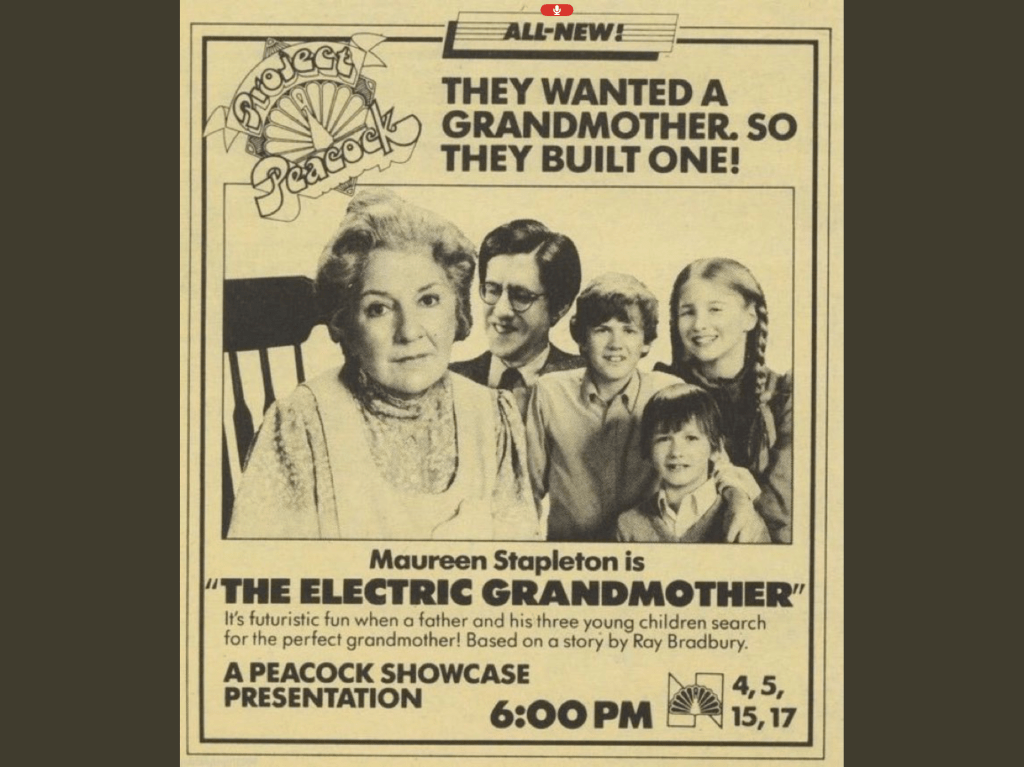
In 1982, a trio of children and their father had no grandma but desperately needed one. So, according to IMDB, they got “a very special robot grandmother to assist them.” It was futuristic fun and all the hijinks that accompany that sort of thing but, at its core, this was a simple clash of incompatible laws.

The Laws of Nature said “No Grandma,” but the Laws of Biomedical Engineering as Modified by 1980s Television Science Fiction said “Yes!”

This week’s post is also about what happens when two laws are incompatible, but we’ll steer clear of trying to figure out which part of grandma’s backside in the TV ad has father smiling in that way that makes me uncomfortable.

In Massachusetts, a group of 7-Eleven franchise owners sued 7-Eleven, Inc., claiming they should have been classified as employees of 7-Eleven, Inc. under the Massachusetts Independent Contractor Law. The Mass IC law is the strictest in the nation (take that, California!) and imposes an ABC Test that lacks the exceptions enjoyed by a select few Golden Staters.

Under the Mass IC law, “an individual performing any service” for another is presumed to be an employee. To avoid that conclusion, the alleged employer must prove all three parts of a strict ABC Test:

(A) the individual is free from control and direction in connection with the performance of the service, both under his contract for the performance of service and in fact; and

(B) the service is performed outside the usual course of the business of the employer; and

(C) the individual is customarily engaged in an independently established trade, occupation, profession or business of the same nature as that involved in the service performed.

The plaintiffs claimed that they were employees under Part A of the Mass IC Law because 7-Eleven exerted control over how they ran their stores.

But 7-Eleven said the type of control exerted was the type of control required under the Federal Trade Commission’s Franchise Rule and the 154-page Compliance Guide that instructs franchisors on what they need to do.

A federal district court agreed with 7-Eleven. The court ruled that the Mass IC Law and the FTC’s Franchise Rule were incompatible when it came to franchising, and the federal rule carries the day.

Case dismissed.

Other courts have agreed, even in California, that when the type of control exerted is required under another law, that is not the type of control that converts someone to an employee. The “required control” argument can be a powerful defense to a claim of independent contractor misclassification.

There has been a lot of concern in the franchising world that the increased adoption of ABC Tests and other laws designed to convert everyone into an employee may put the entire franchise model at risk. This decision, while certain to be appealed, should be somewhat reassuring to franchisors that the franchise model can survive, even in the face of the strictest of ABC Tests.

Meanwhile, The Electric Grandmother was nominated for a 1982 Primetime Emmy for Outstanding Children’s Program, and Maureen Stapleton went on to do voiceover for the non-electric grandmother in Snow Cat, showing her versatility in playing both electric and non-electric grandmothers.

Snow Cat, according to IMDB, was a “series of children’s videos with awesome original songs about awesome trucks.” In case you needed something to watch tonight.

© 2020 Todd Lebowitz, posted on WhoIsMyEmployee.com, Exploring Issues of Independent Contractor Misclassification and Joint Employment. All rights reserved.
Enter your email address to subscribe to this blog and receive notifications of new posts by email.

 
2018_Web100Badge
 

California’s AB 5 Has Been Repealed, Sort Of.

Rain rain go away, come again another day.

When Zeus sends his thunderbolts into Cleveland, Zippy gets scared. The snow, wind, and rain don’t bother her, but the thunder and lightning cause her to shake. Usually she hides in the shower.

Seeking shelter from the storm (apologies to Robert Zimmerman) is what California businesses are doing too. Assembly Bill 5 (AB 5), codifying the ABC Test for determining who is an employee, has been in effect since January 1, 2020.

On Friday, a new law repealed and replaced it. This new law, AB 2257, passed both chambers in the California legislature unanimously and was signed into law September 4 by Gov. Newsom. It contains an urgency clause, which means it takes immediate effect. So AB 5 is gone.

Great news for businesses, right? Not exactly.

AB 2257 moves the ABC test to a different part of the California Labor Code– new Sections 2775 through 2787–and cleans up some of the confusing and poorly considered language in AB 5. It does not, however, provide relief from the ABC Test for most large businesses.

The revisions make it easier for entertainers, freelance writers and photographers, and digital content aggregators to maintain independent contractor status. It scraps the arbitrary 35-article limit for freelance writers to maintain independent contractor status. It allows entertainers to perform single event gigs without becoming employees. It cleans up some other language too, but it does not make substantial changes that would excuse large businesses from the ABC test.

For example, subsection 2750.3(f) of AB 5 addressed whether an exception applies for work requiring a license from the Contractors State License Board (CSLB). The exception, with its multi-part test, is unchanged. It just moves to a new section of the Labor Code, new Section 2781.

One small glimmer of hope comes from some clarifying language for the business-to-business exception. That exception still does not apply for work that requires a CSLB license. To fall within that exception (meaning that the ABC Test would not apply), one of the requirements is that the work must be performed for the benefit of the contracting business, not its customers. Under the revised law, that requirement goes away if “the business service provider’s employees are solely performing the services under the contract under the name of the business service provider and the business service provider regularly contracts with other businesses.” For grammarians who despise double negatives, this is an exception to the exception. You’re welcome. What it means is if your subcontractor has its own employees, operates as its own business, and performs work not requiring a CSLB license, it may be easier to meet the business-to-business exception, thereby avoiding the ABC test.

So where does that leave us? On one hand, the fact that the bill passed both chambers unanimously shows a recognition that AB 5 had some serious flaws. But on the other hand, the fixes that both chambers thought were appropriate are of minimal help to large businesses. It’s like unleashing a horrible lab-created supermonster, then deciding that its eyelashes should be less curly. The largely-superficial changes in AB 2257 are mainly designed to help maintain independent contractor status for individuals who truly run their own businesses, particularly in the entertainment, journalism, and digital content fields.

This new law obliterates AB 5 in name, but not in function.

Like the blanket I gave Zippy, this move by the California legislature is not likely to provide any shelter from the storm. The ABC Test in California remains alive and well. Whether you grab a blanket or hide in the shower, the ABC Test is here to stay.

© 2020 Todd Lebowitz, posted on WhoIsMyEmployee.com, Exploring Issues of Independent Contractor Misclassification and Joint Employment. All rights reserved.

Enter your email address to subscribe to this blog and receive notifications of new posts by email.

 
2018_Web100Badge
 

Never Surrender: Appeals Court Grants Reprieve for Ride Share App Companies; Focus Turns to Prop 22.

Album cover: Boy in the Box.
Label: Aquarius in Canada, EMI America in the U.S.
Sleeves: Definitely rolled up if you could see them.

Thank you to Canadian singer Corey Hart for providing the theme to this week’s post. The Number 3 song this week in 1985 opens with, “Just a little more time is all we’re asking for.” The song, of course, is Never Surrender.

Last week we wrote about the preliminary injunction granted by a California Superior Court, preventing ride share app companies statewide from continuing to classify drivers as independent contractors. We called that ruling “Act I” because the matter was headed to appeal.

As expected, the matter was immediately appealed. Now it’s time to queue up Canada’s Juno Award winner for 1985 “Single of the Year“:

Just a little more time is all we’re asking for.

‘Cause just a little more time could open closing doors.

In a more musical world, those would have been the opening lines to the Motion for Stay in the Court of Appeals. Regardless, the motion was granted, and the ride share app companies are not going to reclassify anyone quite yet.

If the stay was not granted, the ride share app companies had threatened to shut down in California.

Oral arguments are scheduled for mid-October, which means a decision is months away. As we expected in last week’s post, the real action is on Proposition 22, on the ballot this November.

If Proposition 22 passes, the new ABC Test in Assembly Bill 5 (which went into effect Jan. 1, 2020) would not apply to workers in the app-based rideshare and delivery business. Instead, those workers could stay classified as independent contractors, but the app-based companies must ensure that the drivers receive a predetermined level of compensation and benefits, including:

  • Earnings Minimum. The measure would require app-based companies to pay at least 120 percent of the minimum wage for each hour a driver spends driving—but not time spent waiting for requests.
  • Health Insurance Stipend. The measure would require rideshare and delivery companies to provide a health insurance stipend of about $400 per month to drivers who regularly work more than 25 hours per week (not including waiting time). Drivers who average 15 driving hours per week but less than 25 driving hours would receive half as much.
  • Medical Expenses and Disability Insurance. The measure would require that companies buy insurance to cover driver medical expenses and provide disability pay when a driver is injured while driving.
  • Rest Policy. The measure would prohibit drivers from working more than 12 hours in a 24 hour period for a single rideshare or delivery company.
  • Other. The measure would require that rideshare and delivery companies have sexual harassment prevention policies and conduct criminal background checks and safety training for all drivers. It also would prohibit discrimination in hiring and firing.

The measure would also prevent cities and counties from passing further restrictions on driver classification.

Here’s the webpage for Yes on 22. Keep a close eye on the results of the vote because it will probably determine the future of ride share in California.

And don’t forget to wear your sunglasses at night.

© 2020 Todd Lebowitz, posted on WhoIsMyEmployee.com, Exploring Issues of Independent Contractor Misclassification and Joint Employment. All rights reserved.
Enter your email address to subscribe to this blog and receive notifications of new posts by email.

2018_Web100Badge

Identity Unclear? Court Adds to Confusion for Enforcing Arbitration Agreements

chickenZoanthropy is a mental disorder in which a person believes he or she is an animal. In this recent case, a 54-year old Belgian woman mistook herself for a chicken. The rare condition — and the woman’s clucking — stopped suddenly when she had a seizure, which apparently is a decidedly un-chickenlike thing to have.

Identity crises continue to plague the courts too. As we reported here, arbitration agreements can become unenforceable when applied to drivers of goods, if those drivers are in “interstate commerce.” What it means to drive in “interstate commerce” is not so clear. We reported last month on seemingly contradictory decisions by the New Jersey Supreme Court and the First Circuit Court of Appeals.

Last week, the Seventh Circuit Court of Appeals muddied things up more, ruling that GrubHub’s arbitration agreements with independent contractor drivers were enforceable, meaning that drivers who sued, claiming employee status, had to bring their claims individually through arbitration, not in a class action in court. The court ruled that these local food delivery drivers were not driving in “interstate commerce.” (Tip: If you’re craving fries, order from a fast food joint in your home state. )

That’s a nice win for GrubHub and for the enforcement of arbitration agreements in general.

Eventually, the Supreme Court is going to have to sort this out and tell us when drivers of goods are in “interstate commerce” and when they are not. Courts have tried to draw distinctions around whether the drivers cross state lines, whether the goods cross state lines even if the drivers do not, and whether the goods were “at rest” before being driven the last mile. We have different standards being used by different courts in different states — even though they’re all just trying to interpret the meaning of an exception in a federal law, the Federal Arbitration Act.

The end result is that companies using arbitration agreements with drivers of goods may — or may not — be able to enforce their arbitration agreements under the Federal Arbitration Act.

For now, confusion reigns. But at least our Belgian chicken lady is back to normal. OddityCentral reports that some cases of zoanthropy have lasted decades.

© 2020 Todd Lebowitz, posted on WhoIsMyEmployee.com, Exploring Issues of Independent Contractor Misclassification and Joint Employment. All rights reserved.

Enter your email address to subscribe to this blog and receive notifications of new posts by email.

2018_Web100Badge