
 Watching the National Labor Relations Board is like riding a see-saw (a very slow one, and not a very fun one, but stay with me here).
Board members serve five-year terms and, when they expire, the President has the right to appoint a successor, with confirmation by the Senate. Predictably, under Democratic administrations, the Board tips toward union workers’ rights, and under Republican administrations, the Board tips toward protecting businesses.
With the late September confirmation of William Emanuel to the Board’s fifth (and tie-breaking) seat, the see-saw tipped back toward the side of protecting businesses.
 Life is full of serious questions. For example, Should I stay or should I go? (
 Companies in distress sometimes retain management consultants to try to turn them around. Sometimes the plan works, sometimes not. When the turnaround effort fails and the company shuts down, can the management company be held liable as a joint employer?
 A federal Court of Appeals has
  On Monday,
  Congress may finally provide some clarity in determining who is a joint employer. In legislation introduced last week, the House proposed a bill that would rewrite the definition of “joint employer” under federal labor law (National Labor Relations Act) and federal wage and hour law (Fair Labor Standards Act).
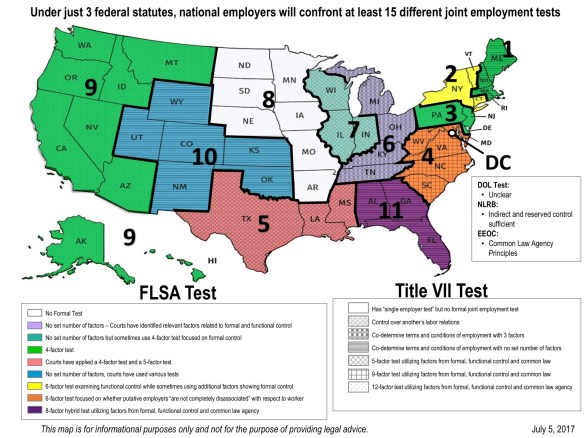 The tests for determining whether a business is a joint employer vary, depending on which law applies. That means there are different tests under federal labor law, wage and hour law, and employee benefits law, to name a few. There are also different tests under different states’ laws.

 Who Is My Employee?