

The chupacabra is a heavy creature, reportedly the size of a small bear, with a row of spines reaching from the neck to the base of the tail. Its name means “goat-sucker,” which comes from its habit of attacking livestock, especially goats, and sucking their blood. [Editor’s note: Please, folks, protect your goats.]
Why am I leading this post with information about the chupacabra?
[SPOILER ALERT:] Because it’s not real. Not a thing. Doesn’t exist.
Same with “1099 employees.” Businesses using this term almost certainly are trying to classify these individuals as independent contractors. As we know, independent contractors (if properly classified) are not employees at all. Business must report the Continue reading
 If you retain freelancers in New York City, pay attention.
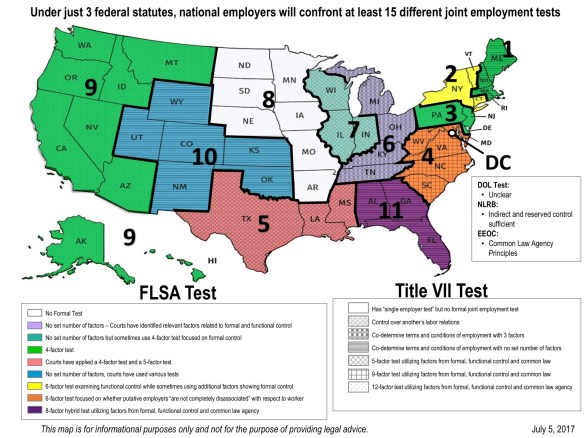 The tests for determining whether a business is a joint employer vary, depending on which law applies. That means there are different tests under federal labor law, wage and hour law, and employee benefits law, to name a few. There are also different tests under different states’ laws.
 When I was an undergrad at Michigan, any time I would drive to the airport or to Tiger Stadium, I’d see billboards for Deja Vu, a strip club with (apparently) lots of locations. I never visited (not into that sort of thing, thanks for asking), and I never thought much of it. I certainly did not expect to be writing about Deja Vu and independent contractor misclassification 25 years later. But here goes.
 In the Lynyrd Skynyrd song, “Gimme Three Steps,” we find our hero cutting a rug down at a place called The Jug with a girl named Linda Lou. This catchy song has nothing to do with labor law but does deal with someone who finds himself in a bad situation (shakin’ like a leaf on a tree!) and needs three steps to get out the back door.
 The Family and Medical Leave Act (FMLA) is already one of the hardest employment laws to comply with. Add joint employment into the mix, and the level of difficulty further increases.
 The EEOC’s jurisdiction is limited to claims brought under certain federal anti-discrimination laws. The reach of these laws, however, is limited to employees. It is not a violation of Title VII, for example, to discriminate against an independent contractor.
 Who Is My Employee?