In the early 1800s, Parisian doctor François Broussais popularized the use of leeches for bloodletting. Vampires, apparently, were going out of fashion, and besides, leeches can eat 10 times their weight in blood, which seems more efficient than vampires anyway.
By the 1830s, France was importing 40 million leeches a year for medical use. Someone was getting rich from the leech trade.
Almost 200 years later, the use of leeches is reserved for freaking out kids on camping trips. We have better ways of treating illness now, but blood collection is still important.
In fact, there is a whole industry based on blood collection (or, for those daring enough to proceed without spellcheck, phlebotomy).
If phlebotomy is your business, then your phlebotomists are your employees, ruled a district court in Michigan a few weeks ago. The case involved a group of blood collectors who were classified as independent contractors. They signed IC agreements and were paid in gross.
They sued under the Fair Labor Standards Act (FLSA), alleging that under the law, they were really employees and should have been paid overtime. The court agreed, with no trial, granting summary judgment to the plaintiffs. Ouch.
The court applied an Economic Realities Test, and found that the factors decisively pointed toward employee status for the phlebotomists. Key facts that weighed in favor of employee status included:
The permanency of the relationship: They worked regularly for the defendant for months at a time.
Skill required: No special certification is needed to draw blood (see, e.g., resumes of leeches, vampires).
Lack of investment in equipment: The phlebotomists didn’t bring or invest in their own equipment.
Opportunity for profit or loss based on managerial skill: Nope. They were paid based on hours worked.
Right to Control: The work was largely directed by the defendant, and the phlebotomists were required to sign non-compete agreements, which prevented them from operating their own businesses in phlebotomy.
Integral part of the business. Well, duh. It’s a phlebotomy business.
The case is a good reminder that it doesn’t matter what the parties call the relationship. The law dictates whether a worker is an employee or an independent contractor, and you can’t agree to contract out of the law.
The official state bee is the rusty patched bumblebee
The official state muffin is blueberry
Who knew the blueberry muffin lobby held such sway?
A less fun facts about Minnesota is that the state has made it really hard to be an independent contractor in the construction industry.
In 2024, the state legislature amended its independent contractor classification law to impose a 14-part test. In reality, it’s a 27-part test because some of the parts have mandatory subparts.
If you’re trying to engage an independent contractor in the construction industry in Minnesota, be extra careful. Construction includes commercial and residential improvement but excludes most landscaping services.
A collection of trade groups challenged the law, arguing that it was unconstitutionally vague and that its penalties (compensatory damages plus up to $10,000 per violation) were excessive. They sought a preliminary injunction to suspend the law while they could mount a more substantive challenge.
A district court denied the motion, and then last month the Eighth Circuit Court of Appeals affirmed. The new test therefore remains in place. The Eighth Circuit expressed skepticism about each of the trade groups’ arguments and ruled that they were unlikely to succeed on the merits.
This case is a reminder that the independent contractor tests vary widely. There are different tests for different laws in different states and even within different industries.
Companies using independent contractors should check the laws of their state and industry before assuming that their contract will be sufficient to support contractor status.
A miss here could be painful. Like the sting of a rusty patched bumblebee. If that kind even stings. But for today, let’s assume it stings. And stings hard.
Alabama jewelry store owner Slater Jones owns a two-carat diamond. That might not seem surprising, but stay with me here. Jones keeps the diamond in his eye. Literally, in his eye.
You see, Jones lost his right eye to illness. Rather than living with a boring old prosthetic eye that looks like, well, an eye, Jones engaged eye prosthetic expert John Lin to create a custom artificial eye from a diamond.
Having a diamond for an eye may seem a bit gaudy, but I guess if you’re in the jewelry business, you may as well just go for it.
Those in the home health care business, on the other hand, should not just go for it — especially if “it” is classifying in-home health aides as independent contractors.
In a settlement finalized earlier this month, California Attorney General Rob Bonta secured a $9.5 million settlement against the individual owners of a home health care company for misclassifying its workers in violation of California law. In this case, the owners appears to have operated the home health agency as a d/b/a without having incorporated. Oopsie. The settlement included another $1.5 million against a different incorporated home health care entity and its family of owners.
The settlement also prohibited all of the defendants from classifying their aides as independent contractors in the future.
We have seen a lot of recent cases brought against home health care companies that classify their workers as independent contractors. This settlement is a stern warning that home health care companies choosing that model need to be extremely cautious.
Because this case was brought by the State, some of the protections we often recommend, like individual arbitration agreements with class action waivers, provide no protection. This case and the settlement also serve as a reminder that individuals can be held liable for intentional misclassification.
The claims brought against the agencies focused largely on California’s Unfair Competition Law (UCL). Misclassification allegations under the UCL typically claim that the wrongdoer gained an improper advantage in the marketplace by unlawfully classifying employees as independent contractors.
Treating in-home aides as contractors may seem like a bright shiny object worth pursuing. But that sparkle you see is no diamond. It’s just the gleam in the eye of the State Attorney General, preparing to count the cash from another misclassification settlement.
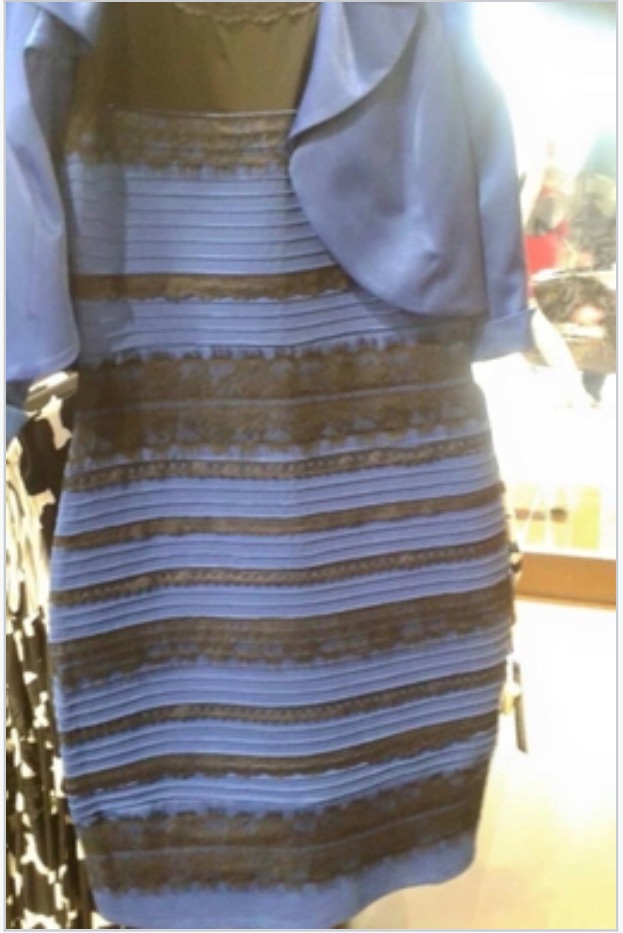
In 2015, this image was widely circulated on Facebook, with some people seeing the dress as white and gold, others seeing it as blue and black. Whichever camp you are in, you probably cannot understand how anyone could possibly think the dress is the other set of colors.
You can read more here if you want a refresher. But essentially it all comes down to neuroscience and differences in how people perceive color.
The core takeaway, though, was that two people could view the same object and reach opposite conclusions.
And so it goes with independent contractor misclassification disputes. A recent Fourth Circuit decision highlights the problem with the tools we use to assess whether a worker is properly classified. When a balancing test is used, different fact-finders can view the same evidence and reach opposite conclusions. And that’s exactly what happened here.
The case, Chavez-DeRemer vs. Medical Staffing of America d/b/a Steadfast, involved a staffing firm that provided independent contractor nurses to hospitals and medical clinics, as needed. The DOL launched an investigation in 2018, alleging that 1,100 nurses should have been classified by Steadfast as its employees under the Fair Labor Standards Act (FLSA). The DOL filed a lawsuit in federal court in Norfolk. After a bench trial, the judge ruled that under the FLSA’s six-factor Economic Realities Test, the nurses were employees. The judge awarded more than $9 million in damages.
Steadfast appealed. Last week, in a 2-1 decision, the Fourth Circuit affirmed. Two judges agreed with the trial court, finding that the evidence supported employee status under the Economic Realities Test.
The dissenting judge disagreed vehemently. As in, how-can-you-possibly-think-the-dress-is-blue-and-black vehemently. The dissenting judge excoriated the majority for cherry-picking facts and ignoring the realities of the relationship.
All three judges, of course, were evaluating the same facts and the same record. All three judges were applying the same six-factor Economic Realities Test. Yet, they reached very different conclusions.
If this is depressing, it should be. It shows how unpredictable balancing tests can be.
The outcome is an important reminder of how important it is, when building independent contractor relationships, to consider every relevant factor and to nudge as many factors as possible to the independent contractor side of the scale.
There is no way to predict which facts a judge will find most persuasive and no way to predict how a judge will weigh the factors, especially since it is pretty much inevitable that there will be at least some factions on each side of the scale.
I see the dress as white and gold. I can’t understand how anyone would think it’s black and blue. Those people are insane.
Actually they’re not insane. (Well maybe they’re insane.)
In the Medical Staffing case, the dissenting judge couldn’t see how the other two judges could have possibly reached the conclusion that the nurses were misclassified. Businesses using independent contractor models need to be prepared that no matter how supportable they think their classification decision is, a judge or agency might reach the opposite conclusion, even from the same facts.
When police in Spain pulled over a 70-year-old van driver for not wearing a seatbelt and driving erratically, they thought it would be a routine stop. The man had other ideas. After being asked to take and retake a breathalyzer test, the man threatened to kill the police officers, which is generally a thing you should not do when pulled over.
The man, who I should now mention was a beekeeper, went to the back of the van and released swarms of bees, which proceeded to attack the policemen, stinging them several times. The policemen fled to a nearby restaurant, and the beekeeper casually drove away. He was later arrested, bee that as it may.
The policemen that day didn’t know what they were getting into when they pulled over the van driver. But businesses in Colorado who misclassify workers as independent contractors should now bee on notice that they may get stung — financially — for their misdeeds.
Colorado has amended its wage and hour laws to add a mandatory fine for willful or repeated misclassification of employees as non-employees. Under the new law, an employer found to have misclassified an employee as a nonemployee must pay a fine in the following amounts, in addition to any other relief that may be awarded:
For a willful violation, $5,000;
For a violation not remedied within 60 days after the division’s finding, $10,000;
For a second or subsequent willful violation within 5 years, $25,000; or
For a second or subsequent willful violation not remedied within 60 days after the division’s finding, $50,000.
Colo. Rev. Stat. 8-4-113(1)(a)(I.5).
Misclassifying workers as independent contractors has always carried the risk that you’re not complying with employment laws. As states continue to crack down on the misclassification, we can expect to see more laws with mandatory fines, on top of the usual risk of backpay awards.
Businesses using independent contractors in Colorado and other states with fines should pay extra attention. The fines do not vary by size of the engagement, and they are per-violation fines.
A man was detained at Newark International Airport earlier this month for concealing a live turtle in his pants.
The turtle was detected as the man passed through TSA screening. When questioned about the bulge in his groin area, the man said he was just happy to see the TSA agent. No, that’s not what happened at all. Instead, the man reached into his pants and pulled out a 5-inch long red-ear slide turtle.
It is unclear whether the turtle was a pet and whether the man was charged. But he did miss his flight. So let this be a lesson to all of us.
Meanwhile, in California, an in-home healthcare agency learned the hard way that it was concealing a much larger problem. And this problem cost it $2.3 million in fines.
As explained in this news release from the Department of Industrial Relations (DIR), the agency had been classifying its in-home healthcare aides as independent contractors, not employees.
After receiving a complaint, the DIR investigated and found that under California law, the aides should have been treated as employees. The Labor Commissioner issued citations under a relatively new section of the California Labor Code, making this the first enforcement action in which the civil penalties for misclassification were collected as damages for the affected workers, rather than as a penalty paid to the state. (How generous, California!)
This enforcement action is an important reminder of three things.
First, when the work performed is within the company’s normal course of business, the workers are probably going to be deemed employees under California’s ABC Test (unless one of several exceptions applies). California law makes it very difficult to retain solo workers as independent contractors if you retain them to perform a core business function.
Second, in-home health care is an industry in which misclassification maybe widespread, especially when applying California law. The business of in-home healthcare is to provide in-home healthcare. It’s difficult to say that those who do the work are not employees.
Finally, this action illustrates the breadth and depth of penalties a company can face for misclassifying its workers. The $2.3 million in penalties here included:
$422,033 in unpaid minimum wages*
$424,809 in unpaid overtime wages*
$165,162 in meal and rest period premiums*
$27,400 in wage statement penalties
$108,094 in waiting time penalties for delayed final wages
$550,000 in penalties for willful worker misclassification
$81,673 in penalties for no workers’ compensation insurance for the misclassified employees
$422,033 in liquidated damages
$18,950 for other civil penalties
When a company treats its workers as contractors, it’s not following the laws that would apply to employees. If, by law, the workers were misclassified, then there are a whole lot of employment laws that the company was almost certainly not following. That makes for a lot of damages.
The advice here is the same as always. Companies using indepednent contractors should be proactive in evaluating these relationships and whether they can survive a legal challenge. There are almost always things that a company can do to better solidify its workers’ status as independent contractors. The best time to act is before an investigation or lawsuit begins.
Complacency is no defense. The fact that you’ve been doing it this way for years and haven’t been sued only means that you haven’t been sued yet.
In other words, if there’s a turtle in your pants, there’s a good chance you get caught at some point, so you better have a good explanation prepared in advance.
From mid-January to mid-February, I spent four weeks working remote from New Zealand’s South Island. It’s an astoundingly beautiful place, and I loved the experience. One experience I apparently missed out on, however, was seeing the now-famous blobfish.
The gelatinous blobfish lives at depths of 2,000-4,000 feet, a visit to which was not on my itinerary. But if it had been, I might have seen the 2025 Fish of the Year, as named by New Zealand’s Mountain to Sea Conservation Trust.
Its odd appearance is apparently caused by bringing the fish to the surface. In its deep sea habitat, the pressure causes it to look rather like a normal fish. So if you were deep in the sea, you might not have treated the blobfish any differently than its neighbors.
A recent federal court decision serves as a good reminder about the dangers of treating someone differently — in a way you might not have expected.
A recruiting firm was working with a candidate who had been threatening to sue her former employer for discrimination. The recruiting firm advised her against it and, when she sued anyway, it dropped her as a client.
But recruiting, staffing, and other firms can work with whomever they want, right? Generally yes, but they cannot decline to engage someone for an unlawful reason.
Title VII of the 1964 Civil Rights Act allows employees to assert their legal rights opposing discrimination and protects them against retaliation. The protection against retaliation extends beyond the company being sued. Another potential employer — or recruiting firm, or staffing firm, or even a company considering engaging the person as an independent contractor — cannot retaliate against that person for having asserted protected legal rights.
The lesson for recruiting, staffing, and other firms is this: Do not turn someone away for the sole reason that the person sued a former employer. That may be in violation of federal law.
In the federal case described above, the court denied a motion to dismiss by the recruiting firm, holding that the firm could potentially be liable for retaliation if the reason it declined to work with the individual was because she had asserted her federal protected rights under Title VII.
Like the blobfish, this seems like an ugly outcome for businesses. But also like the blobfish, if you go a little deeper, everything appears somewhat normal. If an individual was truly discriminated against, that person should not be punished for being a victim. That’s the theory anyway. We all know there are lots of meritless discrimination lawsuits. The anti-retaliation protections of Title VII extend to claims brought in good faith, even if the plaintiff doesn’t win.
When Joni Mitchell wrote “Big Yellow Taxi,” she had just arrived in Honolulu. She was inspired by the view outside her hotel window, with beautiful green mountains in the distance and, closer to the hotel, a “parking lot as far as the eye could see.” Ugly.
For business owners, the beautiful green mountains are successful business operations, with the business having been built the way you wanted and cultivated over a number of years. Paving over that paradise with a parking lot is the government coming in and forcing you to change how you do business. Ugly.
That’s what is happening to companies that rely on independent contractors but aren’t deliberate enough in how they set up their IC relationships. Looking back at 2024, here’s what I mean, with two specific examples.
Two companies with nationwide operations were forced to convert all independent contractors to employees, at least those working in California.
WorkWhile and Qwick provide gig workers to fill empty shifts. Qwick operates in the hospitality industry, and WorkWhile operates across multiple fields, including manufacturing, hospitality, and general labor.
The companies treat the gig workers as independent contractors. The City of San Francisco sued each company on behalf of the State. The lawsuits alleged that the gig workers were misclassified and should have been treated as employees under California law.
In 2024, both companies settled. Each agreed to pay a seven-figure settlement and to reclassify all gig workers as employees. (Press releases are here and here.)
Before the lawsuits, both companies had operated their businesses this way for years. They didn’t get sued and didn’t have to reclassify the contractors — until they did.
This case is a good reminder of two important rules.
1. Just because you have been doing it this way for years doesn’t mean it’s lawful.
2.The fact that you haven’t been sued means only that you haven’t been sued yet.
Before the lawsuits were filed, the companies had options.
They could have been proactive about changing the facts of the relationships and the contracts. They could have molded the facts the way they wanted without government oversight, in a way that would better insulate them from misclassification claims. This would have been difficult in California, with its strict ABC Test, but not impossible. But it would have taken hard work and a willingness to make changes proactively.
Or they could have converted their contractors to employees, but done it on their own terms, without the government telling them how they have to operate their business.
Now, as part of their settlements, these companies are forced to allow the government to monitor and dictate how they interact with these workers.
Don’t it always seem to go / that you don’t know what you’ve got ‘til it’s gone?
Once the government is monitoring how you do business, you’ve lost the flexibility to adapt and build on your terms. It’s too late. The time to act is before you get audited, investigated, or sued. See Rule #2.
I see the bad moon a-rising I see trouble on the way I see earthquakes and lightning I see bad times today
When John Fogerty wrote “Bad Moon Rising,” he was reportedly inspired by the 1941 film The Devil and Daniel Webster. There’s a scene in the film where a hurricane destroys the crops of several farms, but spares those of a man who had made a deal with the devil in exchange for wealth.
When classifying independent contractors, a deal with the devil generally doesn’t work. If you misclassify your workers as contractors, when the law says they should be employees, trouble will eventually be on the way.
A printed media delivery company found that out the hard way, after being investigated by the New Jersey Department of Labor and Workforce Development (DLWD).
There was no civil lawsuit here. A state agency went after the company. Be wary of state agency audits. This one cost the company $2.7 million in a recent settlement.
Overview: The New Jersey Attorney General and the DLWD reached a $2.7 million settlement with Publishers Circulation Fulfillment, Inc. (PCF) for misclassifying delivery workers as independent contractors.
Findings: The investigation revealed that PCF exerted significant control over its delivery workers, who were largely immigrants working overnight for low wages. PCF failed to classify these workers as employees, violating New Jersey labor laws.
Settlement Details: The settlement totals $2.7 million, covering approximately 2,400 workers.
History of the Investigation: The investigation began in 2021, focusing on PCF’s compliance with state employment laws from 2019 to 2022. It was found that PCF made unlawful deductions from workers’ pay and failed to provide essential protections. In a separate 2022 settlement, PCF was required to pay nearly $2.7 million for failing to contribute to the state’s Unemployment Compensation and Disability Benefits Funds between 2015 and 2018.
When considering independent contractor relationships, companies often make the mistake of assuming that if both parties are satisfied with the arrangement, it will be ok. Not so.
State agencies are becoming more and more aggressive in enforcing misclassification on their own. States lose money from misclassification because employers contribute funds to state unemployment and workers’ compensation funds for employees, but not for contractors.
So make sure your workers are properly classified, and heed this warning from John Fogerty and the band:
Hope you got your things together Hope you are quite prepared to die Looks like we’re in for nasty weather One eye is taken for an eye.
That’s because I just read the 65-page opinion in Johnson v. NCAA. The issue before the Third Circuit Court of Appeals was whether college athletes could plausibly be employees under the Fair Labor Standards Act (FLSA).
A massive class action had been brought, and the NCAA and other defendants filed a motion to dismiss. The district court denied it, allowing the case to move forward. The NCAA was allowed an immediate appeal, but the Third Circuit has affirmed and allowed the case to proceed.
Here’s why I am whelmed.
I am underwhelmed by the Third Circuit’s legal analysis, which has more faults than a novice tennis player learning to serve. I am overwhelmed by the massive unintended consequences that would flow from an eventual finding that college athletes are, in fact, employees.
Overwhelmed plus underwhelmed must equal whelmed, right?
The word overwhelmedcomes from the Middle English whelmen, which meant “to overturn.” For speakers of Modern English, that’s nothing more than a fun fact, though, because we’d have a really hard time understanding anyone speaking Middle English anyway. Maybe you had to read The Canterbury Tales in school? Cliffnotes, please.
I am underwhelmed by the legal analysis for many reasons.
1. The Third Circuit acknowledges but then disregards the Supreme Court’s instruction in Walling v Portland Terminal that “[a]n individual who ‘without promise or expectation of compensation, but solely for his personal purpose of pleasure, worked in activities carried on by other persons either for their pleasure or profit,’ is outside the sweep of the Act [FLSA].”
2. The Third Circuit acknowledges but the disregards the Department of Labor’s longstanding position and guidance in its Field Operations Handbook, sec. 10b03(e), which says that the activity of college students participating in interscholastic athletics primarily for their own benefit as part of the educational opportunities provided to the students by the school is not ‘work.’”
3. The Third Circuit ignores the long-recognized concept that play is not work. The dictionary definition relied upon by the Supreme Court in the Walling case differentiated “work” from “something undertaken primarily for pleasure, sport, or immediate gratification….”
4. The Third Circuit butchers the well-established Economic Realities Test, which is the standard for determining employee status under the FLSA. The Third Circuit instead advocates for applying the common law test of agency, which, according to the Supreme Court, is not the test.
5. The Third Circuit pays little attention to the fact that students who elect to play sports do so with no expectation of payment, making them volunteers. Volunteers are not subject to the FLSA (whether at U. Tenn. or otherwise).
6. The Third Circuit makes up a new four-part test (out of thin air) for determining when “college athletes may be employees”:
We therefore hold that college athletes may be employees under the FLSA when they (a) perform services for another party, (b) “necessarily and primarily for the [other party’s] benefit,” Tenn. Coal, 321 U.S. at 598, (c) under that party’s control or right of control, id., and (d) in return for “express” or “implied” compensation or “in-kind benefits,”
I am overwhelmed by the massive unintended consequences that would flow from a ruling that 500,000 collegiate athletes across 1,100 schools are employees of their schools.
If these schools had to pay minimum wage and overtime to all college athletes, that would bust their athletic budgets. Sports that do not pay for themselves (essentially all except major football and some basketball programs) would have to be cut.
Remember when Title IX caused schools to cut unprofitable men’s sports like diving and swimming so they could equalize their offerings of men’s and women’s sports? If only football and men’s basketball are profitable, then schools will need to maintain equivalent women’s sports to comply with the mandates of Title IX. That means some women’s sports will survive, at a loss to offset the opportunities given to men in football and basketball, and the other men’s sports will be cut. If we have to pay, then you can’t play.
International students on F-1 visas would have to be cut from their teams, since their visas generally do not allow them to engage in compensable employment. (That’s why international students can’t take NIL money.) Or federal immigration law will need to be changed.
Unless other laws are changed, schools might be required to provide these employees with healthcare benefits, family or medical leave (paid in some states), reimbursement of expenses in some states, unemployment insurance, workers compensation, and a range of other benefits.
If the courts mess this up, which seems very possible, Congress will need to step in and enact a comprehensive set of rules applicable to college athletes.
For now, the immediate impact of this decision is limited. The Third Circuit did not rule that college athletes are employees under the FLSA. They ruled only that it is plausible that circumstances may exist under which college athletes could be employees under the FLSA. Procedurally, all that happened here is that a motion to dismiss was denied.
Next, the parties will fight over class certification, which could cause the case to fall apart, given the massively divergent situations of, say, a D-1 football player at Alabama and a D-3 bowler at Whatsamatta U.
The issue of whether college athletes are employees under federal wage and hour laws, federal labor laws (NLRA), and a myriad of other laws (state and federal) is not going away soon.
My fear, though, is that courts are (1) likely to apply the wrong legal analysis (as the Third Circuit did here, appearing completely lost), (2) likely to misapply laws that were never intended for this situation, and (3) likely to cause a cascade of unintended consequences that will lead to the end of college sports — unless Congress steps in. (Insert joke here.)








 Who Is My Employee?