

New York State Jumps on the Band Wagon with New Freelancer Law

In the 1800s, P.T. Barnum used to promote the arrival of the circus with parades and clowns and band wagons through the town. By the late 1800s, politicians were noticing the excitement generated by the band wagons, and they would ride their own band wagons through town to generate support and excitement for the campaigns. Supporters would climb aboard, and the phrase “jump on the band wagon” was born.

So it seems fair to say, even back then, politicians were imitating clowns.

Over time, the phrase has come to mean rallying around any popular cause, clowns or no clowns.

And with the new statewide Freelance Isn’t Free Act, signed by Gov. Hochul on Nov. 22, the State of New York has done just that. New York’s statewide adoption of this freelancer law follows similar laws enacted in Illinois, New York City, Los Angeles, Minneapolis, Seattle, and Columbus. You can compare the four cities’ laws here and read more about Illinois’ law here.

Here’s what the NY State version will require, any time there is a contract with an individual independent contractor for services valued at $800 or more, either for one project or an aggregation of projects over 120 days:

  • Written contract required, which must include:
    • Name and address of hiring party and contractor
    • Itemization of services
    • Value of services
    • Rate and method of compensation
    • Date payment is due, or how due date will be determined
    • Any deadline by which the contractor must submit a list of services provided so that the hiring party can timely process payment.
  • The hiring party must provide a copy of the contract to the contractor.
  • The hiring party must retain the contract for six years!
  • Payment to the contractor must be made by the deadline specified in the contract or, if no deadline is specified, then within 30 days after the services have been completed.
  • The hiring party cannot require the contractor to accept less than the contracted amount. (The law does not seem to provide any exception for unsatisfactory services.)
  • Retaliation is prohibited against any contractor who seeks to exercise rights under the Act.

If there is a dispute over whether timely payment was made, the burden of proof is on the hiring party.

The law creates a private right of action.

The penalty for failing to provide a written contract is $250, if the contractor requested the written contract. Such a claim must be brought within two years.

The penalty for failing to make payment as required by the law or under the contract is the value of the contract, plus double damages, plus attorneys’ fees, and possibly injunctive relief. The statute of limitations for this type of claim is six years.

Waivers of any right under this Act are void as against public policy.

The law takes effect on May 20, 2024, and it will apply to contracts entered into after that date. In December 2022, Gov. Hochul vetoed an earlier version of this law, finding that it imposed too great a burden on the NYSDOL. Those concerns have been resolved in the new version of the Act.

The law does not apply to contracts with independent sales representatives, lawyers, medical professionals, or construction contractors.

The law applies not only to businesses, but to anyone in New York State who retains an independent contractor. As we discussed here when the New York City version of the law was enacted in 2017, the Act applies even to babysitters and dog walkers, if the minimum compensation amount is met.

Businesses and individuals who retain individual independent contractors in New York State, Illinois, Los Angeles, Minneapolis, Seattle, and Columbus need to know their obligations under these laws and act accordingly.

The Freelance Isn’t Free laws do not weigh in on whether the contractor is properly classified as an independent contractor.

There is a clear trend toward passing these types of laws, and we can expect more cities and states to jump on the band wagon.

Enter your email address to subscribe to this blog and receive notifications of new posts by email.

© 2023 Todd Lebowitz, posted on WhoIsMyEmployee.com, Exploring Issues of Independent Contractor Misclassification and Joint Employment. All rights reserved.

2018_Web100Badge
 

Tips for Avoiding Liability for Injuries by Contractor Employees, Thanks to Laura Branigan

Raise your hand if you remember songs by Laura Branigan? How about “Gloria”? Or this lyric? You take my self, you take my self control?

The song “Self Control” is about stepping into the nightlife, with a bit of seedier, seductive angle. The lyrics, though, remind us of another reason not to exert control over an independent contractor’s employees.

Suppose you retain a contractor to replace the roof on your building. The contractor has legitimate employees, and one falls through a weak spot on the roof. That’s a worker’s comp claim, and you’re not liable for some kind of premises liability claim, right?

The answer may depend on whether you’ve exerted control over the contractor’s employees.

Let’s look at California law, but the same principle can often be applied elsewhere. (Check your state’s law.) Under the Privette doctrine, a property owner who hires an independent contractor is liable to the contractor’s employee for injuries sustained on the job only if (1) the owner exercises control over any part of the contractor’s work in a manner that affirmatively contributes to the worker’s injuries, or (2) the employee is injured by a concealed hazard that is unknown and not reasonably ascertainable by the contractor.

The keys points in avoiding premises liability claims are, therefore:

  • Don’t exert control over how your contractors’ employees do their job, and
  • Make sure any hazards are marked or disclosed.

You could have other problems if the contractor misclassifies its workers and treats them as individual subcontractors. But avoiding control can also help you avoid joint employer liability in that situation.

The bottom line here when dealing with contractors’ employees is to avoid Laura Branigan’s idea of the nightlife: Don’t take their self, don’t take their self-control.

Enter your email address to subscribe to this blog and receive notifications of new posts by email.

© 2023 Todd Lebowitz, posted on WhoIsMyEmployee.com, Exploring Issues of Independent Contractor Misclassification and Joint Employment. All rights reserved.

2018_Web100Badge
 

No Unions? No Escape: NLRB’s Joint Employer Rule Imposes New Risks on Businesses Without Unions

TikTok star Matthew Lani earned a substantial following as a 27-year old medical prodigy, having graduated high school at age 16 before becoming a doctor. He posted videos of himself walking through a South African hospital, dishing out medical advice to his followers or selling them medication.

Lani, however, turns out not to be a doctor at all. When the ruse was uncovered and authorities went to arrest him, he said he had to pee and then tried to escape through a bathroom window. TikTok later banned his account.

The NLRB’s new joint employer rule has many employers trying to figure out whether they need a doctor or whether they can avoid the rule’s reach by escaping through a bathroom window.

Today we’ll answer questions about how the new joint employer rule affects non-union businesses.

We have no unions. Does the rule apply to me?

Yes, 100% yes. In fact, companies without unions may be most at risk here. If your business has vendors, suppliers, business partners, or even customers with employees, pay attention.

The point of the rule is that if your business exerts any control over any of the listed seven terms or conditions of employment, you’re a joint employer. In fact, the rule makes you a joint employer even if you merely have the right to exert control over one of these seven terms, even if you never do.

The listed terms and conditions are broader than the usual suspects, and they include control over health and safety matters.

If the other company’s workers are ever in your building while doing their jobs, you might be exercising control over their terms and conditions of employment without realizing it. Read more here.

What if the vendor’s employees don’t have a union?

Still yes. The rule may still directly affect your business’s rights and legal obligations.

What happens if I have no unions but am deemed a joint employer of someone else’s employees?

If you are a joint employer under the new rule, here’s what that means:

(1) If the other company’s employees form a union, your business would be required to participate in the collective bargaining process.

You’d be required to bargain regarding any term or condition that you have the authority to control. That could include your site-wide health and safety rules.

(2) If the other company’s employees have complaints about terms or conditions that your business can control, you cannot retaliate against them for raising these concerns.

Under federal labor law, all employees — including those not in unions — have the right to engage in protected concerted activity without being retaliated against.

Protected concerted activity can mean just about anything that involves more than one employee, including actions by one employee that are intended to seek support from other employees. Like an Instagram post or a Glassdoor review. Ending their assignment or asking the vendor to remove them from the project could be considered unlawful retaliation.

But these are not my employees? Why would I have to do these things?

Because joint employment.

The concept of joint employment is that more than one person can be the employer. If your business is deemed a joint employer of another company’s employees, then under the National Labor Relations Act (NLRA), you’re also their employer.

What about wage and hour law, unemployment compensation, and workers comp? Would I be a joint employer under those laws too?

No. The new NLRB joint employer rule applies only to the NLRA. Other laws have other tests for determining who is a joint employer.

You can be a joint employer under the NLRA and not a joint employer under other laws. But a finding of joint employment under one law could make it more likely that your business is deemed a joint employer under other laws — particularly if you comply with the new NLRB rule by, let’s say, participating in collective bargaining.

Do I need a real doctor, or will a TikTok doctor be good enough?

All businesses should pay attention to the new NLRB joint employer rule, even if you don’t have unions.

Proactively evaluate your risk of joint employment under the new rule. The whole point of the law is that you may be an employer of other workers without realizing it.

And you can’t escape the reach of the rule by climbing through a bathroom window.

Enter your email address to subscribe to this blog and receive notifications of new posts by email.

© 2023 Todd Lebowitz, posted on WhoIsMyEmployee.com, Exploring Issues of Independent Contractor Misclassification and Joint Employment. All rights reserved.

2018_Web100Badge
 

This Will Not Do! Health and Safety Rules May Create Joint Employment under New NLRB Rule

Ginsberg’s Theorem is a parody of the laws of thermodynamics. Generally attributed to the poet Allen Ginsberg, it goes like this:

  1. There is a game.
  2. You can’t win.
  3. You can’t break even.
  4. You can’t even get out of the game.

That’s the conundrum businesses now face when trying to comply with both the NLRB’s new joint employer rule and OSHA requirements (or general safe workplace practices).

Last week we looked at the new NLRB rule on joint employment. This week I want to focus on the most troubling part of that rule — the NLRB’s decision to include “Working conditions related to the safety and health of employees” as an “essential term and condition of employment” for purposes of determining joint employer status.

Businesses often have site-wide, plant-wide, or company-wide health and safety requirements. If you enter this building, you must follow the health and safety rules that apply in this building. For example, you must wear steel-toed shoes to enter the manufacturing floor. Or, you must not enter this high-voltage area without permission. Or, you must walk only on designated pathways to avoid the risk of being hit by a forklift.

Some of these rules are driven by OSHA compliance, some by other governmental regulations, and some by a general desire not to cause grievous injury to other human beings.

Those motivations may now cause your business to be joint employer. The reasoning goes like this:

  1. You have a site-wide safety rule, and anyone in the facility must comply.
  2. Employees of vendors work onsite.
  3. Employees of vendors must comply.

Under the new NLRB joint employer rule, the exercise of control over “working conditions related to the safety and health” of a vendor’s employees would automatically create a joint employment relationship.

More absurd, merely reserving the right to exert control over health and safety conditions would create a joint employer relationship, even if such control is never actually exercised. In other words telling a vendor, if your employees enter our facility, they will will have to follow our site safety rules, would also seem to make you a joint employer.

The NLRB’s position ignores reality and creates a conundrum for businesses: If you comply with health and safety laws, or if you take steps to protect human beings from injury, and those humans are not your employees, the NLRB would now apparently say you’re a joint employer. Beware of showing feelings, showing feelings of an almost human nature.

Queue Pink Floyd “The Trial” from The Wall:

Good morning, Worm your honor
The crown will plainly show
The prisoner who now stands before you
Was caught red-handed showing feelings
Showing feelings of an almost human nature
This will not do
Call the schoolmaster

What to do?

Could the NLRB and OSHA be teaming up to jointly enforce this conundrum? Well, yes.

It just so happens that the NLRB and OSHA have teamed up, and on October 31 — less than a week after the NLRB released its final rule on joint employment — the two agencies jointly released a Memorandum of Understanding (MOU). In the MOU, the agencies commit to sharing information and working together to enforce their respective laws, including notifying workers who make OSHA complaints of their NLRA rights, and notifying workers who make NLRA complaints about health and safety of their OSHA rights.

So what are businesses to do?

The answer can’t be to ignore health and safety rules or to waive these rules for non-employees. But the NLRB needs to recognize that exercising control over health and safety conditions does not — or should not — convert a company into a joint employer. Certainly this aspect of the rule will be tested in court, as it seems to go well beyond the bounds of the common law definition of joint employment, and the common law test is supposed to be the joint employer test under the NLRA.

One option for businesses to consider is to tie site-wide health and safety rules to legal requirements whenever possible. Compliance with the law is not supposed to be the type of control that is taken into account under the common law joint employer test. But that approach creates a conundrum too. Be careful that you don’t go too far and say that the law requires something when, in reality, it doesn’t.

Another option might be to revise how site-wide health and safety rules are drafted. Try to try to thread the needle, protecting everyone onsite, but not explicitly setting working conditions for vendor’s employees. It might be possible to draft this way; it might not be. But it’s worth looking at your policy language.

In the meantime, let’s keep an eye on how this new factor is interpreted by administrative law judges and the Board when actual disputes are adjudicated. Let’s also see if court challenges to the new joint employer rule will knock out this troubling provision.

This will not do. Call the schoolmaster!

Enter your email address to subscribe to this blog and receive notifications of new posts by email.

© 2023 Todd Lebowitz, posted on WhoIsMyEmployee.com, Exploring Issues of Independent Contractor Misclassification and Joint Employment. All rights reserved.

2018_Web100Badge
 

This Will Not Do! Health and Safety Rules May Create Joint Employment under New NLRB Rule

Ginsberg’s Theorem is a parody of the laws of thermodynamics. Generally attributed to the poet Allen Ginsberg, it goes like this:

  1. There is a game.
  2. You can’t win.
  3. You can’t break even.
  4. You can’t even get out of the game.

That’s the conundrum businesses now face when trying to comply with both the NLRB’s new joint employer rule and OSHA requirements (or general safe workplace practices).

Last week we looked at the new NLRB rule on joint employment. This week I want to focus on the most troubling part of that rule — the NLRB’s decision to include “Working conditions related to the safety and health of employees” as an “essential term and condition of employment” for purposes of determining joint employer status.

Businesses often have site-wide, plant-wide, or company-wide health and safety requirements. If you enter this building, you must follow the health and safety rules that apply in this building. For example, you must wear steel-toed shoes to enter the manufacturing floor. Or, you must not enter this high-voltage area without permission. Or, you must walk only on designated pathways to avoid the risk of being hit by a forklift.

Some of these rules are driven by OSHA compliance, some by other governmental regulations, and some by a general desire not to cause grievous injury to other human beings.

Those motivations may now cause your business to be joint employer. The reasoning goes like this:

  1. You have a site-wide safety rule, and anyone in the facility must comply.
  2. Employees of vendors work onsite.
  3. Employees of vendors must comply.

Under the new NLRB joint employer rule, the exercise of control over “working conditions related to the safety and health” of a vendor’s employees would automatically create a joint employment relationship.

More absurd, merely reserving the right to exert control over health and safety conditions would create a joint employer relationship, even if such control is never actually exercised. In other words telling a vendor, if your employees enter our facility, they will will have to follow our site safety rules, would also seem to make you a joint employer.

The NLRB’s position ignores reality and creates a conundrum for businesses: If you comply with health and safety laws, or if you take steps to protect human beings from injury, and those humans are not your employees, the NLRB would now apparently say you’re a joint employer. Beware of showing feelings, showing feelings of an almost human nature.

Queue Pink Floyd “The Trial” from The Wall:

Good morning, Worm your honor
The crown will plainly show
The prisoner who now stands before you
Was caught red-handed showing feelings
Showing feelings of an almost human nature
This will not do
Call the schoolmaster

What to do?

Could the NLRB and OSHA be teaming up to jointly enforce this conundrum? Well, yes.

It just so happens that the NLRB and OSHA have teamed up, and on October 31 — less than a week after the NLRB released its final rule on joint employment — the two agencies jointly released a Memorandum of Understanding (MOU). In the MOU, the agencies commit to sharing information and working together to enforce their respective laws, including notifying workers who make OSHA complaints of their NLRA rights, and notifying workers who make NLRA complaints about health and safety of their OSHA rights.

So what are businesses to do?

The answer can’t be to ignore health and safety rules or to waive these rules for non-employees. But the NLRB needs to recognize that exercising control over health and safety conditions does not — or should not — convert a company into a joint employer. Certainly this aspect of the rule will be tested in court, as it seems to go well beyond the bounds of the common law definition of joint employment, and the common law test is supposed to be the joint employer test under the NLRA.

One option for businesses to consider is to tie site-wide health and safety rules to legal requirements whenever possible. Compliance with the law is not supposed to be the type of control that is taken into account under the common law joint employer test. But that approach creates a conundrum too. Be careful that you don’t go too far and say that the law requires something when, in reality, it doesn’t.

Another option might be to revise how site-wide health and safety rules are drafted. Try to try to thread the needle, protecting everyone onsite, but not explicitly setting working conditions for vendor’s employees. It might be possible to draft this way; it might not be. But it’s worth looking at your policy language.

In the meantime, let’s keep an eye on how this new factor is interpreted by administrative law judges and the Board when actual disputes are adjudicated. Let’s also see if court challenges to the new joint employer rule will knock out this troubling provision.

This will not do. Call the schoolmaster!

Enter your email address to subscribe to this blog and receive notifications of new posts by email.

© 2023 Todd Lebowitz, posted on WhoIsMyEmployee.com, Exploring Issues of Independent Contractor Misclassification and Joint Employment. All rights reserved.

2018_Web100Badge
 

Feeling At Risk? You Might Be, Now That NLRB Issued New Joint Employer Rule

I took this picture on Friday of a window washer at the Hilton across the street.

Late last week, the NLRB issued its new joint employer rule. I’ve listed three takeways below. Don’t be left hanging. Click here for the full Alert.

1) The National Labor Relations Board has issued a Final Rule that changes the test for determining who is a joint employer.

2) The Final Rule rescinds the Rule enacted in 2020 and adopts a test that will vastly expand the circumstances under which a company is a joint employer of the employees of another company.

3) The new rule may cause absurd results, including creating joint employment from the application of worksite safety rules to everyone onsite, including a vendor’s employees. The new rule requires joint employers to participate in the collective bargaining process.

The full Alert explains in more detail. If you are not subscribed to BakerHostetler employment law alerts, let me know and I’ll add you to the distribution list.

Enter your email address to subscribe to this blog and receive notifications of new posts by email.

© 2023 Todd Lebowitz, posted on WhoIsMyEmployee.com, Exploring Issues of Independent Contractor Misclassification and Joint Employment. All rights reserved.

2018_Web100Badge
 

It’s Not Lemon Juice: Here’s the One Key Ingredient Missing from Your Staffing Agency Agreements

In 1995, a man robbed two Pittsburgh banks during the day. He wore no disguise and was easily identified by surveillance cameras and arrested. This surprised the man.

The man was surprised because he had covered himself in lemon juice, and he believed that lemon juice made him invisible to video cameras. Obviously, it doesn’t and it didn’t. Lemon juice does not prevent a person from being seen.

Now let’s talk about staffing agency temps and being seen. If your temps are integrated into your workforce, there is a high likelihood you are a joint employer.

If your staffing agency temp improperly pays your temp, and the temp files a wage and hour claim, you can’t just drench yourself in lemon juice and hope not to be seen. Chances are, you’ll be sued too.

If you are a joint employer, you are likely liable for wage and hour violations by the staffing agency, even though you had no control over the staffing agency‘s pay practices. For liability purposes, their mistake is your mistake.

One of the best ways to avoid getting drawn into a class action filed by an agency temp is to require, in your staffing agency agreements, that all temps sign an individual arbitration agreement. All temps should be required, as a condition of being placed at your company, to agree that any claims they have against your company will be resolved in arbitration, on an individual basis, not through a class action.

How do you do this? In three parts.

First, insert in your staffing agency agreement a clause requiring that all temps placed at your facility must first signed an arbitration agreement, a copy of which will be attached to the staffing agency agreement.

Second, draft the individual arbitration agreement exactly the way you want it, and attach it to the staffing agency agreement as an exhibit. Include a class waiver. Consider allowing small claims to be carved out and resolved in small claims court. Consider omitting AAA or JAMS as a designated arbitration administrator, to reduce the risk of mass arbitration filings. You can require arbitration without designating any agency to administer it. The agencies charge high fees, which creates the leverage that makes mass arbitration an effective tool of the plaintiffs’ bar. No arbitration agency = no administrative fees = probably no mass arbitration.

Third, require the agency to maintain copies of these agreements. You want the ability to audit compliance. You can also require the agency to show you a copy of each signed agreement before each temp begins an assignment.

It is frustrating to think that your business could be jointly liable for wage and hour violations by a staffing agency when you have no control over how they pay their employees. But with joint employment, that risk is a reality. You need to prepare for that possibility well in advance.

The staffing agency agreement provides you an ideal opportunity to plan ahead and protect yourself against this possibility.

Lemon juice might be a nice addition to iced tea, but it does not provide any protection against security cameras or class action lawsuits. You’ll need arbitration agreements for that.

Click here for more tips about what should be in your staffing agency agreements.

Enter your email address to subscribe to this blog and receive notifications of new posts by email.

© 2023 Todd Lebowitz, posted on WhoIsMyEmployee.com, Exploring Issues of Independent Contractor Misclassification and Joint Employment. All rights reserved.
2018_Web100Badge
 

Weighing Heavy: Rhode Island Makes Some Misclassification a Felony

Because of gravitational pull, topography, and geology, people apparently weigh a bit more when in Southern Illinois than in Ohio or Indiana.

For an adult human, the difference is only about .02 pounds, so relocation is probably not a viable weight loss strategy. But still. Who knew?

Meanwhile, in Rhode Island a new wage theft law is going to weigh heavily on some buysinesses, no matter what the gravitational pull might be in Providence.

Amendments to the Rhode Island Payment of Wages Act, effective 1.1.2024, drastically increase the penalties for independent contractor misclassification.

Outside of the construction industry, penalties for misclassification will include fines between $1,500 and $5,000 per misclassified employee. Complaints will result in an investigation and, if a violation is found, a lengthy new administrative process ensues that may result in referral to the state attorney general for criminal prosecution.

In the construction industry, independent contractor misclassification will now be a felony, punishable by up to three years in prison, if the violation (a) is knowing and willful, (b) is a second violation of the Rhode Island law, and (c) is valued at $1,500 or more. First violations, if knowing and willful, are misdemeanors punishable by up to one year of imprisonment, for violations valued at $1,500 or less. Violations may also result in a fine of up to $1,000, instead of or in addition to imprisonment.

The amendment contains a possible drafting error (using “and” instead of “or), creating ambiguity as to whether a first violation in the construction industry may be punishable as a felony if the offense is knowing and willful and results in an underpayment of more than $1,500. The questionably drafted section is 28-14-19.1(i)(2)(i).

“Construction industry” is defined broadly and includes remodeling, repairing, improving, and maintaining any building.

“Employer” is also defined broadly and includes “any agent” of the employing entity.

The standard for determining misclassification will be the same standard that applies to the Fair Labor Standards Act (FLSA). That means an Economic Realities Test.

The amendments also impose criminal felony penalties for other selected wage and hour violations, if knowing and willful, including (a) failure to follow payday requirements, (b) failure to timely pay wages or accrued unused vacation upon termination, and (c) failure to timely pay an employee’s family wages due upon an employee’s death. Penalties for violations of these provisions include imprisonment for up to three years.

According to this article on SHRM.org, the Rhode Island Attorney General supported the amendments as providing enhanced tools and penalties for wage theft violations. The Attorney General seems particularly focused on going after independent contractor misclassification in the construction industry.

Businesses with employees and contractors in Rhode Island should review their current practices and double check for misclassification risks. The penalties for wage and hour violations in Rhode Island will be heavier than ever, starting in 2024.

Enter your email address to subscribe to this blog and receive notifications of new posts by email.

© 2023 Todd Lebowitz, posted on WhoIsMyEmployee.com, Exploring Issues of Independent Contractor Misclassification and Joint Employment. All rights reserved.

2018_Web100Badge
 

Guard Your ‘Stache: Massachusetts May Consider Its Own Version of Prop 22

This is the Moustache Guard.

Invented by Virgil A. Gates of West Virginia, the Guard is intended for “holding the moustache out of the way of food or liquid while eating or drinking.” As you may have already guessed, Virgil filed for a patent in 1876. Why would you have guessed that? Because 1876 was the last time anyone was named Virgil.

Moustaches, while certainly worth guarding (especially those of the handlebar variety), aren’t the only thing in need of protection. Solo independent business owners in the delivery and rideshare industries have been under attack, as class action lawsuits and government agency activity increasingly seek to take away their independence by declaring them employees.

In 2020, California enacted Prop 22, which preserved independent contractor status for these drivers so long as the app companies provided a list of preset benefits and guaranteed pay. In a statewide vote, Prop 22 passed overwhelmingly with 59% of the vote.

Massachusetts may soon follow suit. A similar ballot measure is likely to be considered by voters in the Bay State about a year from now.

The ballot measure, if successful, would create a system like Prop 22 in Massachusetts. Delivery and rideshare drivers would be granted independent contractor status, so long as the app company they were using provided them with a litany of worker benefits. The required benefits would include:

  • Guaranteed pay at 120% of state minimum wage for time spent completing delivery or rideshare requests;
  • Additional per mile pay for each mile driven in a personal vehicle;
  • A healthcare stipend for drivers who average 25 or more hours per week;
  • One hour of paid sick time per 30 hours worked;
  • Accident insurance; and
  • Prohibitions on discrimination based on race, sex, sexual orientation, and other protected characteristics.

Click here for the official summary of the proposed law.

If the ballot initiative receives enough signatures, it may appear on the ballot for a statewide vote in November 2024. Alternatively, the legislature may choose to consider the issue on its own, before the 2024 general election.

Initiatives like this one and California’s successful Prop 22 provide a reasonable, common sense third alternative to what is usually a binary choice between classification as an independent contractor (with no employee rights) and an employee. Rideshare and delivery drivers generally value their independence and the ability to operate their own business. Laws like this one allow them to do so as contractors while receiving certain benefits and guarantees.

And that’s worth protecting.

Enter your email address to subscribe to this blog and receive notifications of new posts by email.

© 2023 Todd Lebowitz, posted on WhoIsMyEmployee.com, Exploring Issues of Independent Contractor Misclassification and Joint Employment. All rights reserved.

2018_Web100Badge
 

Odd Jobs and Not-So-Odd: Illinois to Enact New Freelancer Law

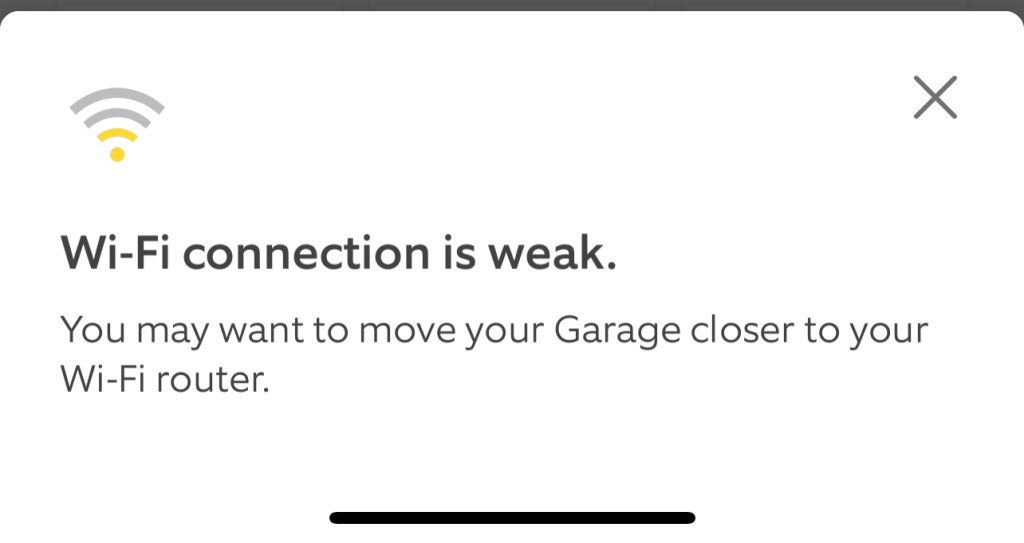
My Smart Home is book smart, not street smart.

It’s going to be hard to move my garage. I figure I’ll need at least four or five strong guys to help. My garage is heavy and seems pretty securely attached to the ground, so the work will be hard and I’m sure that I’d have to pay them at least $500 apiece.

But at least I don’t live in Illinois. Starting July 1, 2023, freelance labor will be governed by the Freelance Worker Protection Act (FWPA), another freelancer law similar to the ones in Los Angeles, Minneapolis, New York City, Seattle, and Columbus Ohio.

Here’s what you need to know before retaining a solo independent contractor in Illinois:

When the Law Applies

  • Independent contractor who is a natural person (i.e., a human, not an entity)
  • Providing services in Illinois
  • Providing services for a person or entity in Illinois
  • Total value is $500+, including all work aggregated over 120 days

Exclusions

  • N/a to construction or subcontractors, as defined in the Illinois Employee Classification Act (construction industry)
  • N/a to employees, as defined by the Illinois Wage Payment and Collection Act

Requirements

There must be a written contract that includes:

  • The name and contact information of both parties (including the hiring party’s mailing address);
  • An itemization of all products and services to be provided by the freelance worker;
  • The value of the products and services to be provided;
  • The rate and method of compensation;
  • The date when payment is due, which must be “no later than 30 days after the products or services are provided”; and
  • If the hiring party requires a list of products and services rendered in order to meet any payment processing deadlines (such as an invoice), the date by which the freelance worker must submit the list.
    (IDOL will provide model contracts)

Prohibitions

  • Once the IC “has commenced preparation of the product or performance of the services under the contract,” the hiring party cannot require, as a condition of timely payment, that the IC accept less compensation
  • Hiring party cannot threaten to withhold payment unless IC takes a lesser amount (no exception for unsatisfactory performance?)
  • Hiring party cannot do anything that would discourage the IC from exercising rights under the Act
  • No retaliation
  • Waivers are void against public policy (does that mean you can’t settle a dispute?)
  • If the contract failed to specify a due date for payment, the hiring party violates the Act if payment is made more than 30 days days “after the completion of the freelance worker’s services under the contract”

Record Keeping

  • Hiring party must retain a copy of the contract for two years

Enforcement

  • IC can file a civil lawsuit, or
  • IC can file an administrative complaint, which can lead to a broader investigation as to overall compliance

Penalties

  • For failure to timely pay: 2x amount owed, plus attorneys fees and costs
  • For failure to contract or to provide the contract: value of the contract or $500, whichever is greater
  • For discrimination or retaliation: value of contract, plus attorneys fees and costs

In addition, the IDOL may impose civil penalties up to $5000 for each violation, or $10,000 for each repeat violation within a five-year period, plus monetary damages to the state, restitution, and equitable relief, including injunctions.

Other Stuff

  • The law does not weigh in on whether the worker is misclassified
  • The Illinois DOL will issue regulations

Problems I See with the Law, as Written:

I see a few problems, and hopefully the IDOL will address these issues in its rulemaking.

First, suppose the IC’s work is unsatisfactory. Suppose the IC is slow or sloppy or rude or has terrible body odor. Suppose the IC does the work you requested but stomps all over your prized rose garden when walking in an out of the building. Suppose the IC comes into your home or business and breaks stuff or takes a cell phone picture of confidential information.

The law does not take into consideration all of the things that could warrant reduced or nonpayment, even if the products or services are ultimately provided. It seems that you’d still have to pay the value of the contract.

Second, the law seems to prohibit settlements. It says that any waiver of rights under this law is void as against public policy. It does say “except as otherwise provided by law,” so maybe a settlement would fall into that category.

Tips for Retaining ICs in Illinois after July 1, 2024

  • Consider including specifications or other requirements in the contract, to preserve an argument that the work is not yet completed or that the work was not performed as contractually agreed. (But don’t impose control over how the work is done, because that could lead to misclassification.)
  • Evaluate current use of individual ICs in Illinois, and consider whether this law will apply to those relationships.
  • Implement a Gatekeeper System like this, prohibiting managers from retaining ICs without going thorough an internal chokepoint for vetting. Managers who don’t know about the FWPA might retain ICs to get something done, creating liability for the company under the FWPA.
  • Look for the IDOL to release regulations that will hopefully provide clarity on the poor performance and settlement concerns.
  • Be careful about any IDOL investigation. If your business uses freelancers and the IDOL receives a complaint of a potential FWPA violation, the IDOL is likely conduct a thorough investigation that extends beyond the one complaining worker. With fines of $5,000 per occurrence, the penalties for noncompliance can get big in a hurry.

The scope of this law is broad. It applies to all “natural persons” (hey, no jokes about the weird guy down in the cubicle down the hall) who perform services for $500 or more. That would include your regular babysitter, your house cleaner, the guy you pay to wash the windows, solo consultants, or the guy you pay to assemble all the new modular furniture.

That would also include the guys I’m gonna need to pick up and move my garage.

Enter your email address to subscribe to this blog and receive notifications of new posts by email.

© 2023 Todd Lebowitz, posted on WhoIsMyEmployee.com, Exploring Issues of Independent Contractor Misclassification and Joint Employment. All rights reserved.

2018_Web100Badge