
Signs of Trouble: California Ruling Raises Stakes for Ride Share

Please, no.

When governments try to help people, they don’t always get it right. The British Conservative party just wants to help. Or does it? This would be a rather sinister way to get rid of the homeless problem, don’t you think?

Same problem with the battle over whether ride share drivers are employees or independent contactors. Good intentions have unintended consequences. The California Attorney General claims to be helping drivers with his lawsuit against the ride share companies. But the state’s effort fails to recognize the massive unintended consequences.

In August, a California court issued a preliminary injunction requiring the major ride share companies to reclassify all California drivers as employees. The ruling was based on the California law (AB 5) and its ABC Test, which presumes that anyone performing services is an employee, unless three strict factors are met.

The August ruling was temporarily placed on hold while an appeals court reviewed it.

But on Thursday, the appeals court reviewed it and agreed that the ruling was proper. The stakes have been raised, and the future of ride share in California may now hinge on what happens with Prop 22, which is on the ballot right now in California.

Despite what the judges and the California Attorney General may think, ride share companies can’t just flip a switch and make all drivers employees. The logistics and expenses associated with making that change call into question whether the effort would even be worth it. When the initial court decision requiring reclassification came out in August, there were rumblings that ride share in California might shut down entirely, at least temporarily, while the companies re-evaluate and decide whether to re-tool.

The one saving grace would be Proposition 22.

As explained here, a Yes vote on Prop 22 would allow ride share companies to continue to classify drivers as independent contractors so long as they provide a suite of benefits and guarantees described in the proposed law. These would include:

  • Earnings Minimum. The measure would require app-based companies to pay at least 120 percent of the minimum wage for each hour a driver spends driving—but not time spent waiting for requests.
  • Health Insurance Stipend. The measure would require rideshare and delivery companies to provide a health insurance stipend of about $400 per month to drivers who regularly work more than 25 hours per week (not including waiting time). Drivers who average 15 driving hours per week but less than 25 driving hours would receive half as much.
  • Medical Expenses and Disability Insurance. The measure would require that companies buy insurance to cover driver medical expenses and provide disability pay when a driver is injured while driving.
  • Rest Policy. The measure would prohibit drivers from working more than 12 hours in a 24 hour period for a single rideshare or delivery company.
  • Other. The measure would require that rideshare and delivery companies have sexual harassment prevention policies and conduct criminal background checks and safety training for all drivers. It also would prohibit discrimination in hiring and firing.

The measure would also prevent cities and counties from passing further restrictions on driver classification.

The core problem with the Independent Contractor vs. Employee question is that, under U.S. law, the choice is binary. You’re one or the other. And even if ride share companies wanted to provide more benefits for drivers (and they have said they do), they are constrained by the current laws. The more companies do for the drivers, the more likely it is that the law will view those well-intentioned efforts as evidence that the drivers are really employees. This dilemma fits squarely within the box of “no good deed goes unpunished.”

Prop 22 offers a middle ground. Drivers would get more protection and benefits, and ride share companies would be protected from claims that providing those protections and benefits converts the drivers to employees. This type of law should serve as a model for how to deal with the Independent Contractor vs. Employee question–not just in California but nationwide. The choice should not be binary.

Thursday’s decision by the appeals court raises the stakes, and voters in California will decide the outcome in less than two weeks.

The homeless population in Britain thankfully has more time.

© 2020 Todd Lebowitz, posted on WhoIsMyEmployee.com, Exploring Issues of Independent Contractor Misclassification and Joint Employment. All rights reserved.

Enter your email address to subscribe to this blog and receive notifications of new posts by email.

2018_Web100Badge


Thanks, Electric Grandma! When Laws Collide, ABC Test Falls (This Time, at Least).

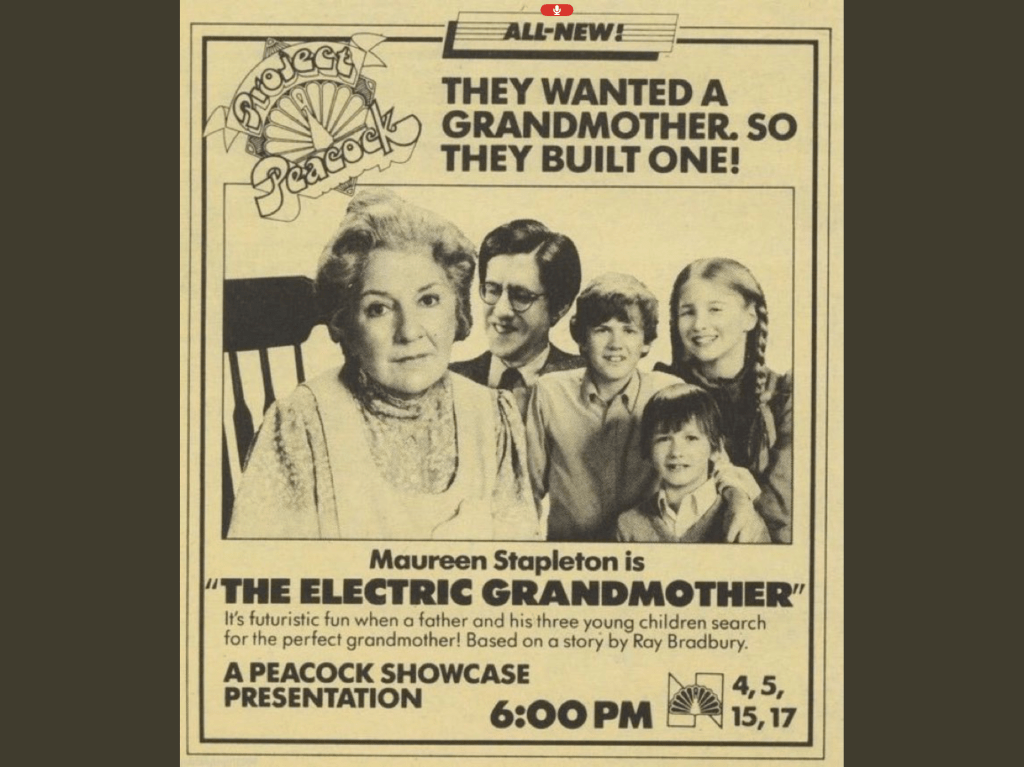
In 1982, a trio of children and their father had no grandma but desperately needed one. So, according to IMDB, they got “a very special robot grandmother to assist them.” It was futuristic fun and all the hijinks that accompany that sort of thing but, at its core, this was a simple clash of incompatible laws.

The Laws of Nature said “No Grandma,” but the Laws of Biomedical Engineering as Modified by 1980s Television Science Fiction said “Yes!”

This week’s post is also about what happens when two laws are incompatible, but we’ll steer clear of trying to figure out which part of grandma’s backside in the TV ad has father smiling in that way that makes me uncomfortable.

In Massachusetts, a group of 7-Eleven franchise owners sued 7-Eleven, Inc., claiming they should have been classified as employees of 7-Eleven, Inc. under the Massachusetts Independent Contractor Law. The Mass IC law is the strictest in the nation (take that, California!) and imposes an ABC Test that lacks the exceptions enjoyed by a select few Golden Staters.

Under the Mass IC law, “an individual performing any service” for another is presumed to be an employee. To avoid that conclusion, the alleged employer must prove all three parts of a strict ABC Test:

(A) the individual is free from control and direction in connection with the performance of the service, both under his contract for the performance of service and in fact; and

(B) the service is performed outside the usual course of the business of the employer; and

(C) the individual is customarily engaged in an independently established trade, occupation, profession or business of the same nature as that involved in the service performed.

The plaintiffs claimed that they were employees under Part A of the Mass IC Law because 7-Eleven exerted control over how they ran their stores.

But 7-Eleven said the type of control exerted was the type of control required under the Federal Trade Commission’s Franchise Rule and the 154-page Compliance Guide that instructs franchisors on what they need to do.

A federal district court agreed with 7-Eleven. The court ruled that the Mass IC Law and the FTC’s Franchise Rule were incompatible when it came to franchising, and the federal rule carries the day.

Case dismissed.

Other courts have agreed, even in California, that when the type of control exerted is required under another law, that is not the type of control that converts someone to an employee. The “required control” argument can be a powerful defense to a claim of independent contractor misclassification.

There has been a lot of concern in the franchising world that the increased adoption of ABC Tests and other laws designed to convert everyone into an employee may put the entire franchise model at risk. This decision, while certain to be appealed, should be somewhat reassuring to franchisors that the franchise model can survive, even in the face of the strictest of ABC Tests.

Meanwhile, The Electric Grandmother was nominated for a 1982 Primetime Emmy for Outstanding Children’s Program, and Maureen Stapleton went on to do voiceover for the non-electric grandmother in Snow Cat, showing her versatility in playing both electric and non-electric grandmothers.

Snow Cat, according to IMDB, was a “series of children’s videos with awesome original songs about awesome trucks.” In case you needed something to watch tonight.

© 2020 Todd Lebowitz, posted on WhoIsMyEmployee.com, Exploring Issues of Independent Contractor Misclassification and Joint Employment. All rights reserved.

Enter your email address to subscribe to this blog and receive notifications of new posts by email.

 
2018_Web100Badge
 

Shout It Like a Helium-Filled Gator: Don’t Limit Your Arbitration Agreements to Work-Related Disputes

Fig. 3. Atmosphere exchange during the experimental procedure without handling the subject

A team of researchers studying the vocalizations of Chinese alligators have won an Ig Nobel Prize for their method. They put the gators in helium-filled tanks and observed variations in their calls.

Sign me up.

I want to write papers with sentences like this one: “High-energy frequency bands in the bellows of the Chinese alligator were shifted towards higher frequencies when the animal vocalized in the heliox condition.”

My writing, for better or worse, is more focused on agreements. Here’s something to remember when writing arbitration agreements.

One of the main benefits of an arbitration agreement is the ability to prohibit class action lawsuits. When using arbitration agreements with employees or independent contractors, don’t forget to include the class action waiver. (There are pros and cons to mandatory arbitration, but we’ll leave that for another day.)

Too often, the scope of arbitration agreements is too narrow. Many agreements require arbitration of work-related or employment-related claims only.

Go broader. Expand your range, but without using helium.

In this case, a group of drivers alleged that a rideshare app company mishandled a data security breach. The drivers tried to bring a class action.

The court instead required them to seek relief one-by-one, in individual arbitration actions. That’s because their agreements required them to arbitrate disputes with the company and prohibited class litigation. The arbitration agreement here was broad enough to cover data breach claims.

Quick side note on what the legal dispute was really about: The drivers argued that the agreements were unenforceable. They pointed to the transportation worker exception in the Federal Arbitration Act (FAA). The FAA generally protects the enforcement of arbitration agreements, but it doesn’t apply to transportation workers in interstate commerce. The dispute was whether drivers who pick up passengers at airports for local rides are acting on interstate commerce because the passengers and their luggage flew in from other states. The district court said no, that these local drives are not interstate commerce, and the Ninth Circuit Court of Appeals agreed.

For our purposes, the lesson here is to be thoughtful about the scope of claims subject to arbitration. Go broader than just work-related claims. A data breach can be an expensive class action to defend if thousands of people are affected. Any single individual arbitration, however, is probably not worth the effort for a plaintiff’s lawyer. The damages for an individual arbitration will be too small to make it worth pursuing.

(The “go broad” concept has limits, and there are some claims that should be carved out of arbitration agreements, so I don’t want to overstate the point.)

Anyway, be creative and thoughtful when drafting agreements. Be sure the scope of covered claims is sufficiently broad. Careful planning can avoid class actions — or just maybe it can win you an Ig Nobel Prize.

Bonus track: Here’s audio of a helium-induced alligator bellow.

© 2020 Todd Lebowitz, posted on WhoIsMyEmployee.com, Exploring Issues of Independent Contractor Misclassification and Joint Employment. All rights reserved.

Enter your email address to subscribe to this blog and receive notifications of new posts by email.


2018_Web100Badge