
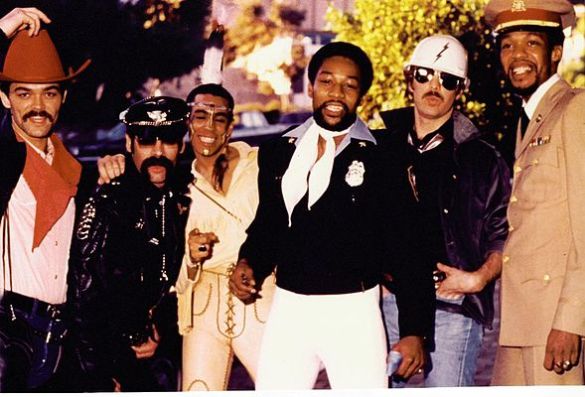
Village People’s Construction Worker Character Wins! Court Expands OSHA Liability for General Contractors

Village People from Wikipedia 1978

The Village People (1978), from Wikipedia

According to the Official Website of the Village People, the group’s original lineup included Disco King, Construction Worker, Cowboy, Leatherman, Indian, and two “Nondescripts.” They were later joined by Cop, G.I., and Biker. Keeping with the times, as we know the Village People do, the costume formerly known as Indian has been rebranded as Native American. (True!)

But Cop or No Cop, Biker or No Biker, there has always been a Construction Worker since the band’s founding in 1977.

A recent court case involving construction workers tests whether a general contractor in control of a worksite (we’ll call him “Macho Man,” after the 1978 hit) has a legal duty to protect another contractor’s employee (we’ll call him “Hot Cop,” after a different 1978 V.P. tune), when none of Macho Man’s own employees are at risk.

The issue arose during a library construction project in Austin, Texas. One subcontractor refused to allow its employees to work near a 12-foot high wall of dirt that had not been properly sloped or reinforced. A citation was issued to the general contractor for allowing the unsafe condition, but it was undisputed that none of the general contractors’ own employees were endangered by the wall of dirt.

“Why does that matter?” you might be asking.

Although the condition was a violation of the Occupational Health and Safety Act (OSHA), the Fifth Circuit Court of Appeals had taken the position since 1981 (when the V.P. released the album, Renaissance) that “OSHA regulations protect only an employer’s own employees.”

The Court’s ruling earlier this week abandoned that rule, instead finding that a general contractor could be cited under OSHA for allowing an unsafe condition that affected only the employees of another contractor.

In response to the Court’s ruling, the Village People have reportedly abandoned plans to introduce a nebishy Health Inspector character on their next tour.

© 2018 Todd Lebowitz, posted on WhoIsMyEmployee.com, Exploring Issues of Independent Contractor Misclassification and Joint Employment. All rights reserved.


Enter your email address to subscribe to this blog and receive notifications of new posts by email.

2018_Web100Badge

A Christmas Poem: ‘Twas the Night Before an Independent Contractor Misclassification Ruling

‘Twas the night before Christmas, when all through the nation,
Plaintiffs’ lawyers were alleging independent contractor misclassification;

The businesses’ owners hung by their lawyers with care,
In hopes they could prove that all claims were threadbare;

The workers were all independent contractors, we said,
But the plaintiff was claiming to be an employee instead.

Contracts were reviewed; deposition transcripts were read,
And visions of a dismissal entry danced in our heads.

The judge in her robe, and I in my suit,
Feeling confident our side could win this dispute—

We argued that the facts proved no right to control;
None of the workers were on the payroll.

They could bring their own tools and could hire assistants;
They had formed LLCs and had other means for subsistence.

They only accepted the jobs they desired;
They never were hired. No application required.

We felt pretty good that when the facts were applied,
The judge would agree that no contractors were misclassified.

We filed our motion for summary judgment and waited.
The ruling was issued, and we all were elated.

The court weighed the factors. Nothing was missed.
The workers were contractors. Case dismissed.

Thank you, dear readers. I hope you like what I write.
Happy Christmas (and Hanukkah) to all, and to all a good night!

© 2018 Todd Lebowitz, posted on WhoIsMyEmployee.com, Exploring Issues of Independent Contractor Misclassification and Joint Employment. All rights reserved.

Enter your email address to subscribe to this blog and receive notifications of new posts by email.

NYC May Expand Anti-Discrimination Law to Cover Contractors, Interns

NYC anti discrimination gapI will admit, without shame, that in the 1980s, I loved the Gap Band. Songs like “You Dropped a Bomb on Me” and “Burn Rubber on Me” were just plain fun to listen to. Tip: Try it!

The band’s name didn’t refer to any actual gap — the name comes from the first letters of streets in Tulsa, Oklahoma — but I do know there are many gaps in anti-discrimination law, leaving some types of workers without adequate protection.  

The federal laws that prohibit discrimination in employment, like many (but not all) state laws, protect only employees. That leaves a gap. Independent contractors and interns who have been discriminated against may have no recourse.

The New York City Council is trying to close that gap.

In the same bill we excoriated on Monday for unfairly attacking the franchise model, the New York City Council also proposes to expand the protections of the City’s anti-discrimination law (section 8-107 of the Administrative Code) to protect independent contractors and interns, not just employees. 

Closing that gap makes sense. Hopefully this bill will be amended to keep the parts that expand anti-discrimination protection to non-employee workers (a good idea), while removing the parts that would expand liability to companies not responsible for the discrimination (a bad one).

© 2018 Todd Lebowitz, posted on WhoIsMyEmployee.com, Exploring Issues of Independent Contractor Misclassification and Joint Employment. All rights reserved.

Enter your email address to subscribe to this blog and receive notifications of new posts by email.

NYC to Franchisors: We’re Going “Crazy on You”!

Barracuda NYCIn 1976, the band Heart released the album Dreamboat Annie. Soon after its release, the label (Mushroom Records) released a suggestive National Enquirer-style ad suggesting that sister Ann and Nancy Wilson might also be lesbian lovers. Ann’s outrage led her to write the song “Barracuda,” about ambush and false accusations.

A different Heart song title came to mind as I read the latest attempt by the New York City Council to hold franchisors responsible for acts they did not commit. 

A bill co-sponsored by 19 council members would amend the City’s anti-discrimination law to hold franchisors strictly liable for discriminatory acts by their franchisee. We have seen many attempts to expand the definition of “joint employer” to include franchisors, but this proposal goes beyond anything we’ve seen. This bill doesn’t even deal with the concept of “joint employment.” It just says that franchisors are liable for discriminatory acts of their franchisees, without any analysis of their involvement in the discriminatory acts or their level of control over the franchisee. It’s automatic.

That’s crazy. Holding one company strictly liable for the wrongful acts of another raises all sorts of legal concerns and, if passed, the bill will certainly be challenged in court.

Franchisors, the Council wants to go “Crazy on You.”

Now, truth be told, in the Heart song, going “Crazy on You” has a very different meaning than I intend it here. Ann Wilson and Roger Fisher (her bandmate, co-writer, and lover) meant it in an amorous way, but there is certainly no love between NYC and franchisors. The attacks by NYC on the franchisor-franchisee relationship are more like those of the sharp-toothed predator of the sea, the Barracuda.

© 2018 Todd Lebowitz, posted on WhoIsMyEmployee.com, Exploring Issues of Independent Contractor Misclassification and Joint Employment. All rights reserved.

Enter your email address to subscribe to this blog and receive notifications of new posts by email.

Preview of 2021? New Bill Would Revoke Arbitration Agreements, Raise Stakes for Independent Contractor vs. Employee Disputes

Independent contractor misclassification epic systems congressRegardless of your politics, I think we can all agree that the best part of Election Day being over is that there will be no more political ads for a while. You know what I mean: “Candidate A hates you and your family and supports legislation to tax you into bankruptcy. I’m Candidate B and I approve this message.” Or, “Candidate B hates you and your family and supports criminals and gangs. I’m Candidate A and I approve this message.” Finally and mercifully, that’s going to end for a while.

So let’s look ahead to 2020, when another vicious round of political ads will be unleashed upon your television screen, punishing all who have not yet cut the cord.

With the Democrats taking control of the House, and with several key Republican seats expected to be in play in 2020, a Democratic presidential win in two years could mean that the Democrats enter 2021 in control of both houses of Congress and the Executive Branch.

A bill recently introduced by prominent Democrats provides a hint of what would happen to recent wins for businesses in the areas of employee arbitration agreements and class action waivers.

H.R. 7109, the Restoring Justice for Workers Act, would prohibit class action waivers in employment contracts and would prohibit agreements to arbitrate future claims. The proposed law would roll back the Supreme Court’s recent Epic Systems decision and shift the balance of workplace power back toward employees.

According to a study cited in Justice Ginsburg’s dissent in Epic Systems, about 65% of companies with more than 1,000 employees have mandatory arbitration agreements. These contracts would become void.

The bill would also increase the stakes for businesses that use independent contractors. If employee arbitration agreements and class action waivers were unenforceable, then the determination of Independent Contractor vs. Employee becomes even more important. A misclassified contractor (who is deemed to be an employee) could then bring class action claims in court, rather than being restricted by contract to seeking an individual remedy through arbitration.

The bill has no chance of passage in the current Congress, but a tsunami of pro-worker legislation may be coming after the next couple of years. 

Meanwhile, enjoy the resumption of TV ads about erectile dysfunction and drugs that you should ask your doctor about even side effects include rare incurable cancers and in some cases death. These are the ads we know and love.

© 2018 Todd Lebowitz, posted on WhoIsMyEmployee.com, Exploring Issues of Independent Contractor Misclassification and Joint Employment. All rights reserved.

Enter your email address to subscribe to this blog and receive notifications of new posts by email.

Notification by Telex? Time to update your forms!

937EFF23-96B2-458B-B0DC-AA833A825379

Thank you Wikipedia, You know everything, making me feel so inadequate.

I recently edited a form agreement that allowed for notification “by facsimile or telex.” I deleted “telex” because, well, does telex even exist anymore? I then sent my edits back to the lawyer on the other side.

The other lawyer put it back in!

I then suggested he provide his client’s telex exchange and I asked if we could borrow his 50 baud modem and telex equipment to facilitate communications, because, um, our local antique store was fresh out of telex equipment. (I considered pushing back and insisting that all communications be in morse code but resisted. I admit to feeling pangs of regret that I didn’t push harder for the dashes and dots.)

People, update your forms!

If your independent contractor agreements and staffing agency agreements have not been reviewed since the widespread adoption of horseless carriages, it’s time for a fresh look. The risks of joint employment and independent contractor misclassification are real, and old forms almost definitely do not contain the types of clauses your business needs to protect itself.

For contracts with suppliers of labor, is your vendor accepting sole responsibility to do all of the things that employers must do, including hiring, firing, supervising, withholding taxes, tracking hours, and about a dozen other important tasks? Under many laws, you’re jointly liable if they fail, so you need robust contractual representations to shift liability.

Does your contract include sufficient insurance requirements and specific enough indemnity provisions to protect against a joint employment or misclassification claim?

Does your independent contractor agreement have specific descriptions of the types of control your business can and cannot exert? If you are not disclaiming the right to control a list of items, you’re missing a prime opportunity to turn the contract into strong evidence in your favor, in the event of a misclassification challenge.

For those of you, like me, who wouldn’t have the first clue how to telex someone, here’s what I learned on Wikipedia:

The telex network was a public switched network of teleprinters similar to a telephone network, for the purposes of sending text-based messages. Telex was a major method of sending written messages electronically between businesses in the post World War II period. Its usage went into decline as the fax machine grew in popularity in the 1980s.

The “telex” term refers to the network, not the teleprinters; point-to-point teleprinter systems had been in use long before telex exchanges were built in the 1930s. Teleprinters evolved from telegraph systems, and, like the telegraph, they used binary signals, which means that symbols were represented by the presence or absence of a pre-defined level of electric current. This is significantly different from the analog telephone system, which used varying voltages to encode frequency information. For this reason, telex exchanges were entirely separate from the telephone system, with their own signalling standards, exchanges and system of “telex numbers” (the counterpart of telephone numbers).

Telex provided the first common medium for international record communications using standard signalling techniques and operating criteria as specified by the International Telecommunication Union. Customers on any telex exchange could deliver messages to any other, around the world. To lower line usage, telex messages were normally first encoded onto paper tape and then read into the line as quickly as possible. The system normally delivered information at 50 baud or approximately 66 words per minute, encoded using the International Telegraph Alphabet No. 2. In the last days of the telex networks, end-user equipment was often replaced by modems and phone lines, reducing the telex network to what was effectively a directory service running on the phone network.

Keep your telex handy, my friends. You never know when you might need one — by contract.

© 2018 Todd Lebowitz, posted on WhoIsMyEmployee.com, Exploring Issues of Independent Contractor Misclassification and Joint Employment. All rights reserved.

Enter your email address to subscribe to this blog and receive notifications of new posts by email.