

Hungry for more COVID-19 info? I can help with that, but if your hunger pangs are for something more exotic — say, deep-fried bull testicles — I’m sorry to say you’re out of luck. Deerfield (Mich.) American Legion Post 392 has cancelled its 19th annual Testicle Festival, leaving festival supplier Dennis Gerth with 330 pounds of bull testicles in his freezer. That’s my 2020 submission if anyone is giving out awards for Sentences I Never Thought I’d Write.
Yes, the coronavirus is affecting society in ways we never imagined. Last week, Congress offered some relief to workers affected by the virus. While the new law doesn’t help Gerth or his ball-filled freezer, it does provide paid leave for employees of most small businesses.
But what about independent contractors?
The Families First Coronavirus Relief Act provides up to 12 weeks of partially paid time off for employees unable to work (or telework) for childcare reasons and up to 80 hours of paid sick time to employees unable to work (or telework) for six specified reasons.
Trying to apply the Act raises a lot of questions. Many are addressed here, in a conversational tone that acknowledges this is awfully confusing. But this post will focus on how the Act applies to independent contractors.
Do Independent Contractors Get the Benefits of the Act?
No. The Act provides paid sick leave and expanded Family and Medical Leave Act (FMLA) leave only to employees, and only if their employer has fewer than 500 employees.
How Does the Act Differentiate Between an Employee and an Independent Contractor?
Ah yes, the age old question of Who Is My Employee? The Act uses the definitions of “employee” in the FMLA and the Fair Labor Standards Act (FLSA). The FMLA uses the FLSA definition, so let’s focus on that.
The test for whether an independent contractor is really an employee under the FLSA is determined by using an economic realities test. This is a different test than the ones used for determining whether someone is an employee under tax, unemployment, workers compensation, and many other federal and state laws.
The economic realities test generally looks at these factors:
- The extent to which the services rendered are an integral part of the principal’s business.
- The permanency of the relationship.
- The amount of the alleged contractor’s investment in facilities and equipment.
- The nature and degree of control by the principal.
- The alleged contractor’s opportunities for profit and loss.
- The amount of initiative, judgment, or foresight in open market competition with others required for the success of the claimed independent contractor.
- The degree of independent business organization and operation.
This list is from DOL Fact Sheet #13, but it’s worth noting that different courts define the factors differently. Know your jurisdiction. Another commonly used listing of the factors can be found here.
The more independent the worker is from the business retaining his/her services, the more likely the worker is properly classified as an independent contractor.
How Could this Issue Arise?
With the economy in a cornoravirus-induced tailspin, lots of employees are losing their jobs, and lots of independent contractors are losing their engagements. When the income stream stops flowing, people look for a way to reopen the faucet.
Independent contractors might file unemployment claims. We’ve discuss the dangers of that here. They might also be tempted to file lawsuits claiming they’ve been misclassified. A successful claim could mean they’re entitled not only to the benefits of the Families First Act, but also potentially to unpaid overtime and other benefits that employees can receive.
Times are tough, and livelihoods are at stake. As contractors lose more work, we’re likely to see an increase in independent contractor misclassification claims. And that’s no bull.

© 2020 Todd Lebowitz, posted on WhoIsMyEmployee.com, Exploring Issues of Independent Contractor Misclassification and Joint Employment. All rights reserved.



 According to
 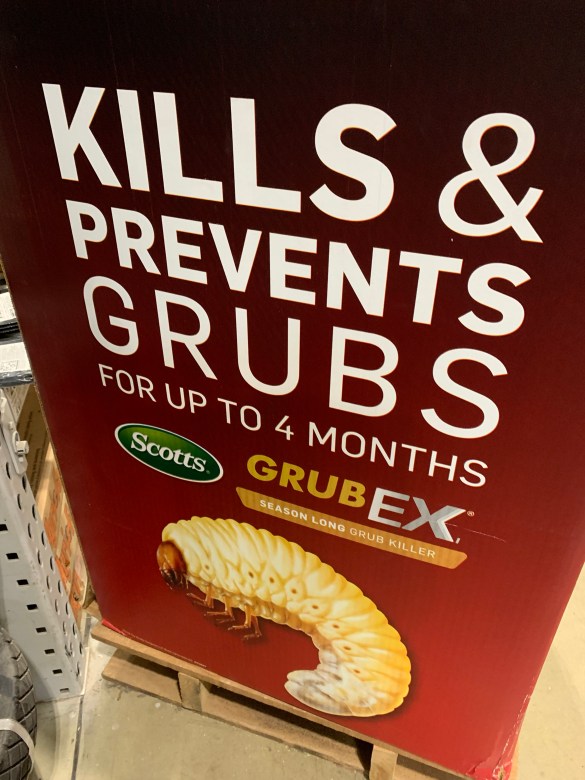 This product kills and prevents grubs. That’s good if you have a garden, bad if you’re a grub. But in either case, there’s quite a difference between preventing grubs — that is, keeping them away but allowing them to live a happy grublike existence elsewhere, like in your neighbor’s garden — and killing the grubs.
 You’re supposed to learn something new every day, right? Here’s something that’s definitely new, unless you are a fungus aficionado — and, lucky reader, because this is a read-only post, you do not have to identify yourself if you are indeed a fungus aficionado, and if you are, TMI, and keep it to yourself.
 I took a picture of this goat right before it tried to eat a small paper cup. The paper cup had food in it, but the paper cup was not the food. This confusion is understandable because, well, it’s a goat. The bar is set low for a goat.
 Where I play tennis, there’s a lake with a beach that is open all summer. Like most places in the Midwest, it closes for the season on Labor Day. The weekend after Labor Day, they open it up for everyone to bring their dogs to run around, jump off the high dive (I wish!), and sniff each other’s butts. Because dogs are not typically allowed at the lake, these dogs are unfamiliar with each other, so there’s even more butt-sniffing than you might normally see at a canine networking event.
 Who Is My Employee?