I was in Italy two weeks ago and visited Vatican City. Passport control at the Rome airport was annoyingly slow, but getting in and out of Vatican City – a sovereign nation – was surprisingly easy. Here is a photo of border control at the Vatican.
Navigating the border between independent contractor and employee status is usually more Rome airport than Vatican City, but a proposed new regulation from the Department of Labor (DOL) would make it a bit easier to support independent contractor status under the Fair Labor Standards Act (FLSA) and the Family and Medical Leave Act (FMLA).
The proposed rule would adopt a five-factor “economic reality” test, consistent with the test adopted during the first Trump administration. The defining feature of this test is that it highlights two core factors. If these two factors are met, the worker would almost always be an independent contractor under the FLSA and FMLA.
Click here to read more, originally posted on the BakerHostetler blog, Employment Law Spotlight.
This is a photo of the sun setting last week over the Tiber River, with St. Peter’s Basilica in the background. I’m not a great photographer, but it’s a nice record shot from my trip to Italy last week.
The National Labor Relations Board (NLRB) last week created its own record shot, formally readopting its 2020 joint employer rule and sunsetting the never-implemented Biden administration rule from 2023.
The NLRB skipped the normal rulemaking process, which typically requires a proper review and comment period, jumping directly to the final rule. It was able to avoid these steps because the final rule isn’t actually changing anything. The 2020 rule applied before the Biden administration tried to change the rule in 2023, but a federal court rejected the 2023 rule, which the Biden administration then withdrew. The result of that withdrawal was that the 2020 rule was still in effect. Last week’s action by the NLRB formalizes that outcome by officially readopting the 2020 joint employer rule.
What’s the Rule?
Read more here, originally posted today on BakerHostetler‘s Labor Relations blog, The Bargaining Table.
[Update 3/2/2026: A new proposed rule was released last Thu, a few days after this post. A blog post with further details will follow shortly. there’s still no new rule, but now there is a proposed new rule.]
A daycare teacher in St. Charles, Illinois, was arrested this month after she allegedly gave the children candy-flavored laxatives. The plan, apparently, was to cause them to get diarrhea, which meant they would have to be sent home. The teacher’s motivation? She was overwhelmed at work. Fewer kids means less work.
I would counsel against this. If overwhelmed at work, there are generally better options than making a bunch of kids get watery poops. But what do I know?
A client last week alerted me to a mess of a different type. She received a flyer from an HR training firm, offering (for a fee, of course) to train HR professionals and lawyers on the “New Rule Issued by the Department of Labor” on independent contractor classification. Failure to comply with this rule, they warned in the flyer, could result in “the IRS penalizing you for back income taxes, FICA and states going after you for unpaid income taxes, workers compensation premiums and unemployment payments.”
I’d say there’s just one problem here, but that’s not true. So much of this is wrong.
First, there is no new DOL rule on the test for independent contractor classification. The DOL has indicated its intent to propose a new rule at some point in the near future. The proposed rule, whenever it is prepared, would then have to be published and go through a public comment period. Even if a proposed rule were to be released tomorrow, we are many months away from any new rule being finalized and implemented.
The current status of any proposed, not-yet-published, possible rule is here, where the DOL indicates that “The Department intends to rescind the 2024 IC rule and is considering how it will proceed with respect to independent contractor classification under the FLSA employee or under the FLSA.” Nothing has happened yet.
Second, even if the DOL does publish a new rule (which can only happen after a notice-and-comment period), that rule will have no effect on federal or state taxes, withholdings, workers compensation premiums, or unemployment. The DOL rule would impact only the determination of employee status under the Fair Labor Standards Act (FLSA), which governs when workers must be paid a minimum wage and overtime. The DOL has no oversight or jurisdiction over any of those other laws.
Other laws — and other tests — determine whether someone is an employee for federal tax purposes, and the states have their own laws to determine whether someone is an employee for state law tax purposes, workers compensation purposes, and unemployment insurance purposes.
It is true that misclassifying a worker can result in all of these bad outcomes, but a new DOL rule would have no effect on any of them. Companies using independent contractors should remember that there are a myriad of standards for determining whether someone is an employee or an independent contractor, and these tests all exist simultaneously and apply to different laws at the federal and state level. A worker can be an employee under some laws and an independent contractor under other laws, at the same time. (Fun!)
Apparently anyone can advertise to speak on topics with legal significance, even if they’re just plain wrong on what they plan to say.
If all of this seems overwhelming, just take a deep breath and let’s wait for the DOL to propose a new rule, which undoubtedly will make it easier to classify someone as a contractor under the FLSA. In the meantime, if you still feel overwhelmed, please do not resort to giving children diarrhea.
In the early 1800s, Parisian doctor François Broussais popularized the use of leeches for bloodletting. Vampires, apparently, were going out of fashion, and besides, leeches can eat 10 times their weight in blood, which seems more efficient than vampires anyway.
By the 1830s, France was importing 40 million leeches a year for medical use. Someone was getting rich from the leech trade.
Almost 200 years later, the use of leeches is reserved for freaking out kids on camping trips. We have better ways of treating illness now, but blood collection is still important.
In fact, there is a whole industry based on blood collection (or, for those daring enough to proceed without spellcheck, phlebotomy).
If phlebotomy is your business, then your phlebotomists are your employees, ruled a district court in Michigan a few weeks ago. The case involved a group of blood collectors who were classified as independent contractors. They signed IC agreements and were paid in gross.
They sued under the Fair Labor Standards Act (FLSA), alleging that under the law, they were really employees and should have been paid overtime. The court agreed, with no trial, granting summary judgment to the plaintiffs. Ouch.
The court applied an Economic Realities Test, and found that the factors decisively pointed toward employee status for the phlebotomists. Key facts that weighed in favor of employee status included:
The permanency of the relationship: They worked regularly for the defendant for months at a time.
Skill required: No special certification is needed to draw blood (see, e.g., resumes of leeches, vampires).
Lack of investment in equipment: The phlebotomists didn’t bring or invest in their own equipment.
Opportunity for profit or loss based on managerial skill: Nope. They were paid based on hours worked.
Right to Control: The work was largely directed by the defendant, and the phlebotomists were required to sign non-compete agreements, which prevented them from operating their own businesses in phlebotomy.
Integral part of the business. Well, duh. It’s a phlebotomy business.
The case is a good reminder that it doesn’t matter what the parties call the relationship. The law dictates whether a worker is an employee or an independent contractor, and you can’t agree to contract out of the law.
The official state bee is the rusty patched bumblebee
The official state muffin is blueberry
Who knew the blueberry muffin lobby held such sway?
A less fun facts about Minnesota is that the state has made it really hard to be an independent contractor in the construction industry.
In 2024, the state legislature amended its independent contractor classification law to impose a 14-part test. In reality, it’s a 27-part test because some of the parts have mandatory subparts.
If you’re trying to engage an independent contractor in the construction industry in Minnesota, be extra careful. Construction includes commercial and residential improvement but excludes most landscaping services.
A collection of trade groups challenged the law, arguing that it was unconstitutionally vague and that its penalties (compensatory damages plus up to $10,000 per violation) were excessive. They sought a preliminary injunction to suspend the law while they could mount a more substantive challenge.
A district court denied the motion, and then last month the Eighth Circuit Court of Appeals affirmed. The new test therefore remains in place. The Eighth Circuit expressed skepticism about each of the trade groups’ arguments and ruled that they were unlikely to succeed on the merits.
This case is a reminder that the independent contractor tests vary widely. There are different tests for different laws in different states and even within different industries.
Companies using independent contractors should check the laws of their state and industry before assuming that their contract will be sufficient to support contractor status.
A miss here could be painful. Like the sting of a rusty patched bumblebee. If that kind even stings. But for today, let’s assume it stings. And stings hard.
We all know that ice cream comes in many flavors. But some are particularly unusual. For example, a French company sells ice cream with flavors like foie gras, caviar, mustard, and truffle. Presumably, those come in separate scoops.
A U.S. company sells deviled egg custard with smoked back team ice cream. That’s a firm no for me. A New York gelateria offers wasabi. Again, pass.
Less fun fact: Joint employment also comes in two flavors — vertical and horizontal.
Vertical joint employment is when the employee of one company performs services for the benefit of a second company, like in a staffing agency scenario. That’s probably what you think of when you consider joint employment.
But there’s also horizontal joint employment, and that flavor was the subject of a recent DOL opinion letter (FLSA 2025-05). The letter reminds us that even under the current administration, the concept of joint employment is alive and well.
Horizontal joint employment occurs when an employee works for two separate companies in the same week, but those companies share ownership, management, scheduling responsibility, or other significant areas of coordination.
Under the facts addressed in the opinion letter, a hostess worked at both a restaurant and a members-only club. She worked fewer than 40 hours per week at each, but worked more than 40 hours per week combined.
The restaurant and the club were on the same property, shared a kitchen, shared some managers, coordinated schedules, and were “operationally integrated with each other,” as the DOL put it. The employee also sometimes performed work for the club while clocked in at the restaurant.
While the locations were run by separately incorporated entities and had separate upper management teams, the overlap in operations was enough for the Acting Wage and Hour Administrator to conclude that the employee was jointly employed. That means her hours had to be combined for purposes of determining her eligibility for overtime. If she worked more than 40 hours combined for the two entities, she would be due an overtime premium. The two joint employers would have to determine how to allocate the premiums between them, and if they failed to do so, both would be jointly liable.
This opinion letter is a good reminder not to overlook the potential for horizontal joint employment. It’s a lesser known flavor of joint employment, but just as loaded with cream and sugar.
I took last week off work to visit Asheville. The first morning, we woke up at 5 am for a sunrise hike at Craggy Pinnacle, along the Blue Ridge Parkway. This was our view at the top.
Fortunately, the fog burned off after an hour or so. We waited and were rewarded with some spectacular views. Our 7-month old puppy Louie was just happy there were other dogs at the top to play with. Here he is, admiring the view.
The lesson, of course, is to be patient and sometime the fog will clear. (Or check the weather report?)
Franchisors are hoping for the same reward, through the proposed American Franchise Act, introduced in the House in September and now before the House Committee on Education and Workforce.
The bill, which has at least some bipartisan support, would change the definition of joint employment under the NLRA and FLSA for franchisee-franchisor relationships.
The bill would establish that a franchisor can be a joint employer only if it exercises “substantial direct and immediate control” over one or more “essential terms and conditions of employment of the employees of the franchisee.”
“Essential terms and conditions of employment” means wages, benefits, hours of work, hiring, discharge, discipline, supervision, and direction.
To be a joint employer, the franchisor would have to control these terms with respect to individual employees. Setting baseline standards and brand guidelines would not create joint employment.
The risk of joint employment liability is an ongoing concern for franchisors. The franchise business model requires a level of control to ensure brand consistency and a uniform customer experience across locations. The American Franchise Act, if passed, would help to protect the franchise model and establish clear guidelines for what level of control is needed to create a joint employment relationship.
If you’re a frequent online shopper and reading this post from Japan, you’re probably familiar with the online Japanese flea market app Mercari. What I mean is, I never heard of it either.
Mercari, though, made big news last month when it took the controversial step of banning the sale of prenatal photos on its website. Why would anyone buy someone else’s prenatal photo? For scamming purposes, apparently. And that’s what led Mercari to take action.
The practice of “ninshin sagi” (a phrase that autocorrect vehemently tried to reject) means pregnancy fraud. It occurs when a woman tries to blackmail a male partner into paying money for a supposed pregnancy or to get an abortion. Mercari wants no part in the scheme, so if you want to buy photos of someone else’s uterus, you’ll have to look elsewhere.
New Jersey lawmakers are also saying to look elsewhere, but their ire is aimed at the NJ Department of Labor. As we discussed here, the NJ DOL issued a proposed rule that would change the state’s test for determining independent contractor status. The public comment period for the rule has closed, and now the NJ DOL needs to consider each comment and decide what to do.
Several NJ lawmakers, however, are urging the DOL to back off, and the sentiment is bipartisan. The proposed rule, they say, is not consistent with the current state of NJ court decisions or the NJ statute. (I agree!)
There is no timetable for the NJ DOL to issue a final rule. Or the NJ DOL may abandon its effort to adopt the rule. It’s also possible that lawmakers would enact legislation to block the proposed rule.
Companies with independent contractors in NJ should keep an eye on what happens here. The proposed rule would make NJ’s current ABC Test much stricter and harder to meet, thereby making it very difficult to maintain independent contractor status in NJ.
But at least in New Jersey you can still buy online uterus pics.
For three hours each night, a policeman appears out of thin air in a busy park in Seoul, South Korea. His presence has, according to police data, reduced crime in the park by 22%. The policeman, however, has never arrested anyone, and he doesn’t even move around the park.
That’s because he’s a hologram.
The police chief attributes the program’s success to “citizens’ perceived safety,” although I’m not sure why anyone would perceive themselves safer in the presence of a hologram. Maybe I should not be so cynical. If it works, it works.
A new federal bill seeks to increase employers’ perceived safety, but without holograms.
The Save Local Business Act, H.R. 4366, would amend the National Labor Relations Act (NLRA) and the Fair Labor Standards Act (FLSA) to create a uniform test for joint employer status. By adding a new joint employer test to the statutes, Congress would prevent the NLRB and DOL from trying to change the test every time there’s a new party in the White House.
The Act is a pro-business bill. If it passes, joint employer status would be much harder to establish.
Under the proposed text, joint employer status could exist “only if each employer directly, actually, and immediately, exercises significant control over the essential terms and conditions of employment of the employees of the other employer.”
“Essential terms and conditions” would mean, for example, “hiring such employees, discharging such employees, determining the rate of pay and benefits of such employees, supervising such employees on a day-to-day basis, assigning such employees a work schedule, position, or task, or disciplining such employees.”
The bill is sponsored by James Comer (R-Ky.). It was introduced July 14, 2025. Previous versions of the bill were introduced in 2021 and 2023. Obviously, they failed.
With Republicans controlling the House, passage in the House seems possible, but the likelihood of getting 60 votes in the Senate is pretty remote.
So the bill, while it seems good for businesses, is probably the legislative equivalent of a Korean holographic police officer. It looks nice but exerts no real authority.
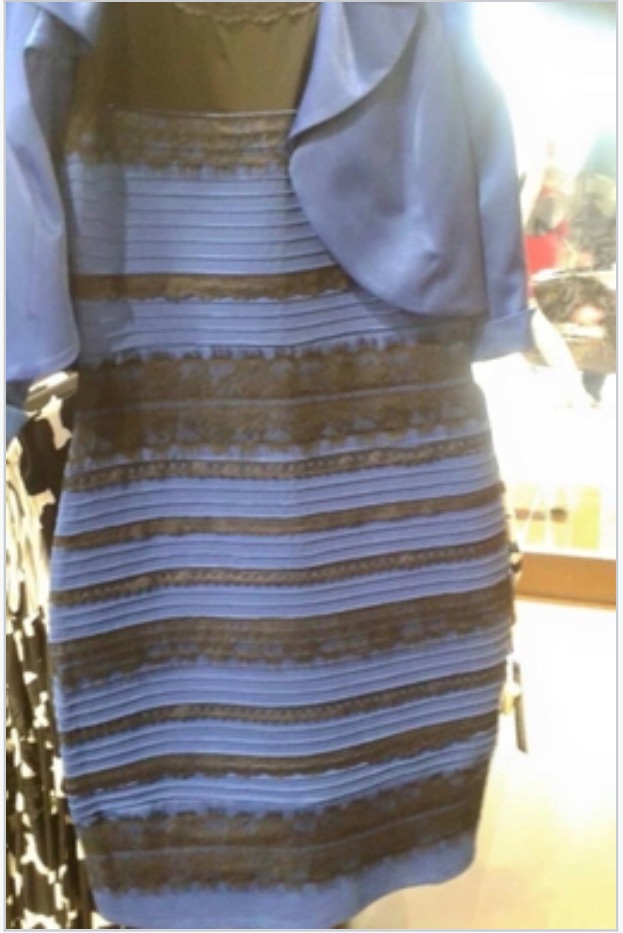
In 2015, this image was widely circulated on Facebook, with some people seeing the dress as white and gold, others seeing it as blue and black. Whichever camp you are in, you probably cannot understand how anyone could possibly think the dress is the other set of colors.
You can read more here if you want a refresher. But essentially it all comes down to neuroscience and differences in how people perceive color.
The core takeaway, though, was that two people could view the same object and reach opposite conclusions.
And so it goes with independent contractor misclassification disputes. A recent Fourth Circuit decision highlights the problem with the tools we use to assess whether a worker is properly classified. When a balancing test is used, different fact-finders can view the same evidence and reach opposite conclusions. And that’s exactly what happened here.
The case, Chavez-DeRemer vs. Medical Staffing of America d/b/a Steadfast, involved a staffing firm that provided independent contractor nurses to hospitals and medical clinics, as needed. The DOL launched an investigation in 2018, alleging that 1,100 nurses should have been classified by Steadfast as its employees under the Fair Labor Standards Act (FLSA). The DOL filed a lawsuit in federal court in Norfolk. After a bench trial, the judge ruled that under the FLSA’s six-factor Economic Realities Test, the nurses were employees. The judge awarded more than $9 million in damages.
Steadfast appealed. Last week, in a 2-1 decision, the Fourth Circuit affirmed. Two judges agreed with the trial court, finding that the evidence supported employee status under the Economic Realities Test.
The dissenting judge disagreed vehemently. As in, how-can-you-possibly-think-the-dress-is-blue-and-black vehemently. The dissenting judge excoriated the majority for cherry-picking facts and ignoring the realities of the relationship.
All three judges, of course, were evaluating the same facts and the same record. All three judges were applying the same six-factor Economic Realities Test. Yet, they reached very different conclusions.
If this is depressing, it should be. It shows how unpredictable balancing tests can be.
The outcome is an important reminder of how important it is, when building independent contractor relationships, to consider every relevant factor and to nudge as many factors as possible to the independent contractor side of the scale.
There is no way to predict which facts a judge will find most persuasive and no way to predict how a judge will weigh the factors, especially since it is pretty much inevitable that there will be at least some factions on each side of the scale.
I see the dress as white and gold. I can’t understand how anyone would think it’s black and blue. Those people are insane.
Actually they’re not insane. (Well maybe they’re insane.)
In the Medical Staffing case, the dissenting judge couldn’t see how the other two judges could have possibly reached the conclusion that the nurses were misclassified. Businesses using independent contractor models need to be prepared that no matter how supportable they think their classification decision is, a judge or agency might reach the opposite conclusion, even from the same facts.










 Who Is My Employee?