
Uncomfortably Numb: Minnesota’s New 14-Part Independent Contractor Test

Friday night I saw The Gilmour Project play at Northfield MGM, a smallish venue near Cleveland. Great show with plenty of Pink Floyd deep cuts and a “how did they just do that?” version of The Great Gig in the Sky with an electric guitar handling the Clare Torry solo vocals.

And, as many of you know, there is a law requiring that the last song at any Pink Floyd tribute show must be “Comfortably Numb.” There were no violations of law at this concert.

Last week I came across another law that, in a totally unrelated way, left me uncomfortably numb.

Tucked away in a 1,492-page omnibus bill that regulates, among other things, firearms law, agricultural policy, specialty dentist licensure, minerals taxes, combative sports, and broadband appropriation transfer authority, the Minnesota legislature adopted a new test for determining who is an independent contractor under state law, limited to the construction industry. Page 183.

To satisfy the test, each of 14 factors must be present. Construction includes building improvement but not landscaping services [@LKE: saved you an email].

Why am I posting about such a niche classification test? Two reasons.

First, I suffered through reading it, so I am sharing my pain.

Second, and more important, it’s a good reminder that there are so many worker classification laws out there, with different tests applying across different laws in different states and across different industries.

Minnesota is the champion of this nonsense. The state that brought us rollerblades, water skis, and diaper adhesives has 32 different tests for determining who is an employee under state workers’ compensation law, with different tests applicable to different types of work.

If you are working with large numbers of independent contractors across multiple jurisdictions, there’s a lot to know if you want to do it right. Penalties for noncompliance can be severe, including criminal penalties in some states.

Bonus tip: If you need to fall asleep, pull out that omnibus bill and skip to page 1,086 for the new regulations covering natural organic reduction vessels for human remains. Subdivision 19 prohibits the commingling of bodies in crematorium vessels. I guess that’s good. A different kind of comfortably numb maybe.

Enter your email address to subscribe to this blog and receive notifications of new posts by email.

© 2024 Todd Lebowitz, posted on WhoIsMyEmployee.com, Exploring Issues of Independent Contractor Misclassification and Joint Employment. All rights reserved.

2018_Web100Badge
 

Famous Olsons? Ninth Circuit Rejects Constitutional Challenge to California’s AB 5

If I type “Olson” into google, my top results are Matt Olson, first baseman for Atlanta (makes sense since a lot of my web activity is baseball-related); James A. Olson Guitars (no idea why since the only place I play guitar is on the radio); and Major John Olson of the U.S. Space Force (also no idea why since I have never been to outer space).

The most relevant Olson for me today though is none of these. Instead, it’s a long-awaited decision in a case called Olson v California. In this case, a group of app-based gig economy companies sued the State of California, alleging that AB 5 and its ABC Test are unconstitutional.

Their argument is that the arbitrary grab bag of exceptions to AB 5 is arbitrary and that the law unfairly targets rideshare and delivery drivers.

An 11-judge panel of the Ninth Circuit heard the case en banc, and rejected these arguments.

The Ninth Circuit ruled that AB 5 is constitutional and that the legislature had a rational basis for including and excluding various types of workers from the ABC Test.

The result: AB 5 remains in place. As for rideshare and delivery app companies, Prop 22 created an exception allowing them to treat drivers as independent contractors, although the validity of Prop 22 is being challenged as well. More on that in a future post. The California Supreme Court is hearing arguments on Prop 22 and when a decision is issued, I’ll post about it. But I expect the Prop 22 will survive, just like AB 5 survived.

If I googled Olsen instead of Olson, that might have been more fun. I hopefully would have landed on Keith Olsen, who produced a number of classic rock albums, including Fleetwood Mac by Fleetwood Mac, Double Vision by Foreigner, and a Rick Springfield album with one of the all-time great album covers, Working Class Dog.

Nice tie, pup!

Enter your email address to subscribe to this blog and receive notifications of new posts by email.

© 2024 Todd Lebowitz, posted on WhoIsMyEmployee.com, Exploring Issues of Independent Contractor Misclassification and Joint Employment. All rights reserved.

2018_Web100Badge
 

Battle of the Acronyms: Fifth Circuit to Rule First on NLRB Joint Employer Case

Battle knights

The government loves acronyms. Sometimes a little too much. If you check the DHS.gov website for its guide to acronyms, you’d see that AA can refer to eight different things, all entirely unrelated. AA can mean Affirmative Action, Approval Authority, or my favorite, Atomic Absorption. (A close second is Anti-Aircraft Improvised Explosive Device Incident. Sadly, no explanation is provided for why DHS drops the IEDI part.)

AAA has four approved meanings, including American Ambulance Association and Area Agency on Aging.

In law we get lots of acronyms too, and sometimes they show up in case names. Today we’re looking at the case of SEIU v. NLRB, which is battle over JE (joint employment, heh heh).

SEIU v. NLRB is one of two cases involving a challenge to the NLRB’s recent joint employer rule.

The NLRB joint employer rule is being challenged in both the D.C. Court of Appeals and the Fifth Circuit. The Fifth Circuit is generally viewed as more pro-business, with the D.C. Court a bit more deferential to the NLRB. So to U.S. businesses intent on squashing the new joint employer rule, location matters.

Last week, the D.C. Circuit issued an order that it will stay its case, and the Fifth Circuit gets to decide first. 

How did we get here?

In October 2023, the NLRB issued its new joint employer rule, which would vastly expand the scope of joint employment.

In November 2023, the SEIU, seeking a friendly ruling, filed a petition in the D.C. Court of Appeals, asking the court to review and uphold the rule. For those of you wondering how the SEIU could file directly with the Court of Appeals, there’s a rule allowing it.

Meanwhile, at about the same time, the U.S. Chamber of Commerce (and others) filed a lawsuit in the Eastern District of Texas, asking the court to stop the rule. In March 2024, the federal court in Texas enjoined the rule. The NLRB then appealed to the Fifth Circuit.

Then we had a potential stalemate, with two federal Courts of Appeal being asked to review the same rule.

Now that the D.C. Court of Appeals has agreed to hold its case in abeyance, the Fifth Circuit will go first, which is likely a good thing for the business community.

The Fifth Circuit case is just getting started. the NLRB’s appellate brief is due June 26, 2024. Until the Fifth Circuit rules, the joint employer rule remains stayed. The joint employer rule did not take effect. So now we wait to see what the Fifth Circuit will do, and we should not expect a ruling until 2025.

EOP.

(End of post.)

Enter your email address to subscribe to this blog and receive notifications of new posts by email.

© 2024 Todd Lebowitz, posted on WhoIsMyEmployee.com, Exploring Issues of Independent Contractor Misclassification and Joint Employment. All rights reserved.

2018_Web100Badge
 

[Image credit]

Weigh This Way: Baking Company Wins, Appeals Court Agrees that Distribution Route Drivers are Independent Contractors

About six months ago in Cambridge, Ontario, Sonny Ayres was born, the fifth child of parents Britteney and Chance. But Sonny was no ordinary baby. He weighed 14 1/2 pounds. (Yes, for the benefit of those moms reading this and looking aghast, he was delivered by c-section.)

According to Guinness (the book, not the beer), the heaviest recorded birth was 22 pounds, in 1879 in Seville, Ohio. That baby lived just 11 hours.

A different kind of weighing was at issue in a recent decision by the Third Circuit Court of Appeals, determining independent contractor status.

The issue was whether three plaintiffs who owned Pepperidge Farm distribution routes should have been considered employees under Pennsylvania’s wage and hour laws. The district court granted summary judgment for Pepperidge Farm, ruling that they were not employees, and the drivers appealed.

The drivers argued that the court should not have granted summary judgment because the job of weighing the evidence is supposed to be left to the jury. But, as the Third Circuit explained, it is the judge’s role to weigh the relevant legal factors. The judge can apply the undisputed facts to the relevant legal factors and can make a legal determination whether each factor supports employment or independent contractor status. And that’s exactly what the Third Circuit did here.

Applying a ten-factor Right to Control Test, the court determined that 8 of 10 factors supported independent contractor status, and so the plaintiffs were properly classified as contractors, not employees.

The plaintiffs argued that Pepperidge Farm set parameters and expectations for the distribution routes, thereby exerting control. The Third Circuit, however, explained that setting parameters and expectations is consistent with either independent contractor or employee status. The control factor tilts toward employee status when the hiring party sets parameters and expectations and directs the time, place, and manner of performance.

In this case, the right-to-control factors supported independent contractor status because the drivers determined the time, place, and manner for performing deliveries. The drivers bought and sold routes, organized their own distribution businesses, hired their own employees, set their own hours, and made deliveries when and how they chose.

This case is a good reminder of what type of control is relevant in the right-to-control analysis and what type of control is not. Some control is exerted over every relationship, whether it’s independent contractor or employment. The trick is knowing which type of control can be exerted without tipping the scales.

Pepperidge Farm prevailed in this case because it did not reserve or exercise the kind of control that supports employee status. And for that, we say Weigh to Go!

Enter your email address to subscribe to this blog and receive notifications of new posts by email.

© 2024 Todd Lebowitz, posted on WhoIsMyEmployee.com, Exploring Issues of Independent Contractor Misclassification and Joint Employment. All rights reserved.

2018_Web100Badge
 

Can You See It? NLRB Fights to Restore New Joint Employer Rule

This past weekend, the solar storm was supposed to be strong enough that we could see the aurora borealis in Cleveland. At 11:30 Friday night, my family went to the Polo Fields in nearby South Chagrin Metropark to see for ourselves.

Lots of others had the same idea, and the fields allowed us an unobstructed view of the sky, where we saw…. nothing really.

We read that iPhones capture light better than our eyes, so we too photos of the blank sky. Turns out there’s some truth to that. I took the photo above, which makes it appear that I saw a nice light show. But I didn’t. I took a photo of what appeared to me to be dark sky. So it was there, but I couldn’t see it.

The NLRB also wants us to see something that isn’t there.

Last week, the NLRB filed an appeal in the Fifth Circuit Court of Appeals, asking the court to reinstate its new joint employer rule.

A quick rewind, for context: In 2023 the NLRB tried to implement a new rule for determining whether joint employment exists. The rule would have made it much easier to find joint employment, including in situations where most of us never would have thought joint employment would exist. On March 8, 2024, a federal judge in Texas vacated the rule, just days before it was scheduled to take effect. You can read more about that decision here.

So with this latest filing, the NLRB is trying to revive the rule, but the NLRB faces an uphill battle in a largely conservative Fifth Circuit.

For now, the NLRB rule remains dead. It’s possible that could change, depending on how the Fifth Circuit rules.

But if you take an NLRB-issued iPhone to the courthouse in New Orleans that houses the Fifth Circuit Court of Appeals and snap a photo, you just might see a glimpse of the rule, invisible to the naked eye. Or maybe that’s just a picture of gumbo.

Enter your email address to subscribe to this blog and receive notifications of new posts by email.

© 2024 Todd Lebowitz, posted on WhoIsMyEmployee.com, Exploring Issues of Independent Contractor Misclassification and Joint Employment. All rights reserved.

2018_Web100Badge
 

Court Vacates New NLRB Rule

No quips or musical references today. Just hard news, and here it is. If you do not already subscribe to BakerHostetler labor and employment alerts but would like to, drop me an email.

https://www.bakerlaw.com/insights/court-vacates-new-nlrb-joint-employer-rule/

Hold On: Court Delays NLRB Rule, But More Detailed Ruling Will Follow

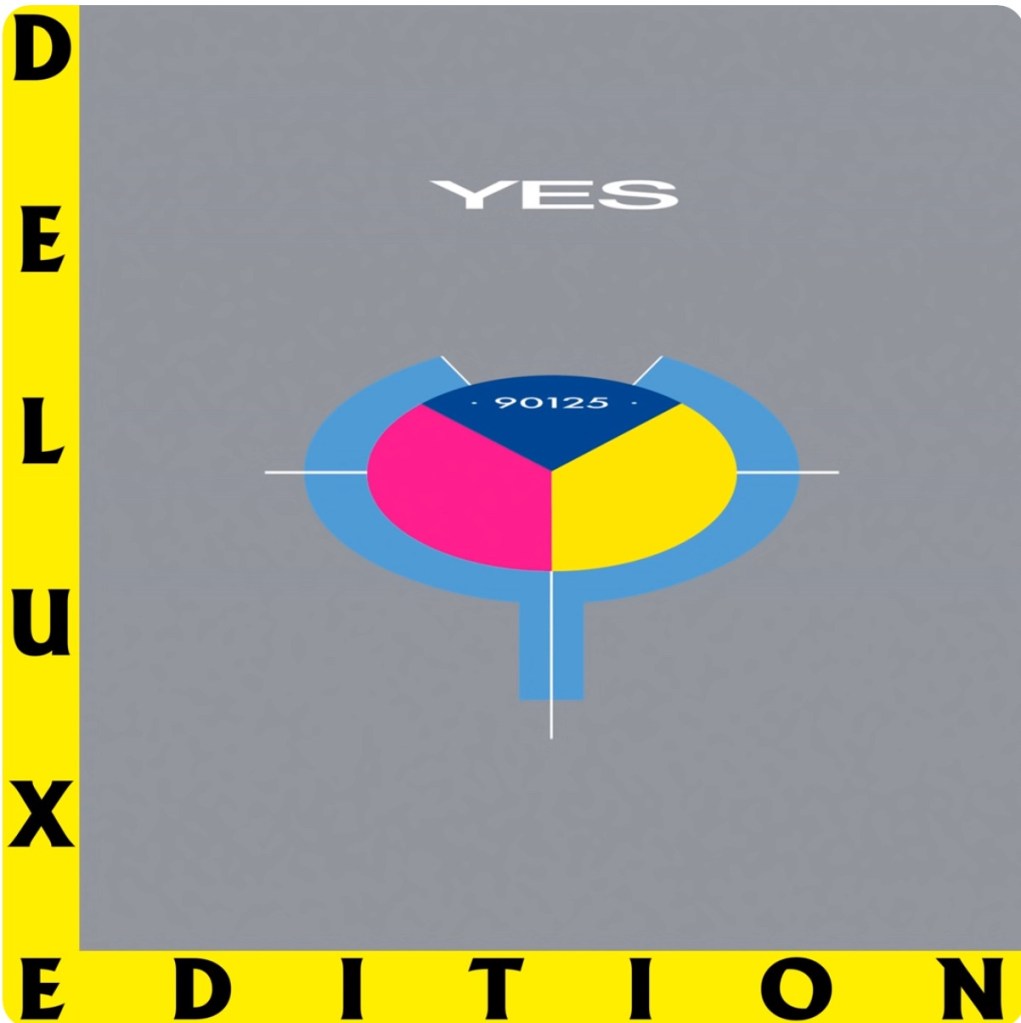
I could think of a few songs called “Hold On” – Yes and Wilson Philips were the two that first came to mind. But I had no idea how popular a song name that was.

According to Wikipedia, there are at least 17 albums called Hold On and 311 songs with that name. Who knew?

“Hold on” is the theme of today’s post because that’s what a federal court in Texas decided to do with the NLRB joint employer rule. Judge H. Campbell Barker pushed back the effective date of the rule from Feb. 26 to March 11.

But that doesn’t mean the rule will go into effect March 11.

In the meantime, the judge is considering the arguments presented by both sides and may invalidate the rule entirely. I believe the delay is to buy time to draft a thorough opinion. Whatever the ruling is, it will be appealed to the Fifth Circuit.

For now, employers should review their agreements with vendors supplying labor (e.g., staffing agencies, outsourced functions) and use this opportunity to button them up. Here are ten things that should be in your staffing agency agreements but probably aren’t.

Employers should also review the degree of control they exercise over outsourced labor. On one hand, staffing workers who are intermingled with regular employees and supervised by employer managers are likely in a joint employment relationship already. But with outsourced workers, steps should be taken to avoid joint employment. The new NLRB rule would make it harder to avoid joint employment, and employers should take steps to minimize control over outsourced workers.

Enter your email address to subscribe to this blog and receive notifications of new posts by email.

© 2024 Todd Lebowitz, posted on WhoIsMyEmployee.com, Exploring Issues of Independent Contractor Misclassification and Joint Employment. All rights reserved.
2018_Web100Badge
 

Will Congress Kill the NLRB Joint Employer Rule? Will a Court?

Before reading this post, please enjoy this adorable video of a porcupine eating an apple.

The porcupine seems harmless and cute, but remember – it’s still a porcupine. Those quills are sharp, and they can impale small would-be predators.

And speaking of impale: A Congressional resolution, if passed, would impale the NLRB’s joint employer rule. The effort has enough support that it could bear fruit. Like the tasty apple in this video.

On January 12, the House passed H.J. Res 98, which would nullify the NLRB’s new joint employer rule. The resolution passed, 206-177, with eight Democrats voting in favor.

The Senate is considering an identical companion bill, S.J. Res 49, which has the support of at least one Democrat. Senator Manchin is a co-sponsor.

Under the Congressional Review Act, Congress can nullify an agency regulation with a simple majority of votes in each house. Sixty votes are not needed in the Senate.

But if the bill passes, President Biden can still veto it, and he has indicated that he would.

Meanwhile, the rule continues to face challenges in federal court. If Congress does not nullify the rule, a court might enter an injunction to prevent it from taking effect. Having reviewed the arguments presented to a federal judge in Texas last week, I think there’s a strong chance the rule will be set aside, at least temporarily.

Remember: The NLRB joint employer test is supposed to be a common law right-to-control test. The scope of the new rule is substantially broader and would create joint employment relationships automatically, including in situations where the common law balancing test would not result in a finding of joint employment.

We can expect a ruling from the court this week, since the NLRB joint employer rule is scheduled to take effect next Monday, February 26.

Enter your email address to subscribe to this blog and receive notifications of new posts by email.

© 2024 Todd Lebowitz, posted on WhoIsMyEmployee.com, Exploring Issues of Independent Contractor Misclassification and Joint Employment. All rights reserved.

2018_Web100Badge
 

Face It: The New DOL Independent Contractor Rule Faces Court Challenges

“Faces” is a useful word.

It can mean the front part of the head, as in this selfie featuring two hairy-faced beasts. The one on the left has a wet drippy beard after sloppily drinking water from a bowl. No, I meant on your left.

It can mean the English rock band formed in 1969, which featured Rod Stewart and Ronnie Wood. Their 1971 album, A Nod Is As Good As a Wink… to a Blind Horse, reached #2 in the UK charts.

Or it can be a verb, as in “DOL Independent Contractor Test Faces Court Challenges.” In today’s post, we’re going with verb.

As expected, the independent contractor rule released by the DOL earlier this month is already being challenged in court.

A coalition of business groups is trying to invalidate the rule by asking the Fifth Circuit to reopen an earlier case. In the earlier case, these groups challenged the Biden DOL’s effort to withdraw the Trump DOL’s 2021 version of the independent contractor rule. The 2021 version would have simplified the test, focusing the analysis on two key factors — control and opportunity for profit or loss. In the lawsuit, the business groups argued that the Biden DOL’s efforts to delay and withdraw the Trump DOL’s 2021 rule violated the Administrative Procedure Act (APA).

These groups now argue that the new rule contains the same legal flaws and that that the Trump DOL rule should be the rule that rules. The case is Coalition for Workforce Innovation v. Su, 5th Cir., No. 22-40316.

A second challenge has been filed by freelancer writers and editors who argue that the new rule is impermissibly vague and “freewheeling” (an excellent word choice) and that it violates the APA. They claim that the new rule impermissibly threatens their ability to work as independent contractors and is too vague to allow them to reasonably structure their businesses.

These challenges will take a while to resolve, and more may be filed. Unless a court issues an injunction staying the rule while these cases proceed, the new rule will take effect March 11th.

In the meantime, we’ll keep watching to see what happens. It’s a real face off!

Enter your email address to subscribe to this blog and receive notifications of new posts by email.

© 2024 Todd Lebowitz, posted on WhoIsMyEmployee.com, Exploring Issues of Independent Contractor Misclassification and Joint Employment. All rights reserved.

2018_Web100Badge
 

Don’t Read This Post (Read This Instead)

I didn’t post last week because I was waiting for the DOL’s new independent contractor rule to drop.

And then it did. And I’m still focused on it. And businesses using independent contractors should be aware of it too.

So today, leave this page and don’t read this post.

Instead read this Client Alert, in which I break down the new DOL rule, its likely impact, and the practical implications for businesses.

https://www.bakerlaw.com/insights/the-dols-new-independent-contractor-test-just-dropped-now-what/

See you all next week!

Enter your email address to subscribe to this blog and receive notifications of new posts by email.

© 2024 Todd Lebowitz, posted on WhoIsMyEmployee.com, Exploring Issues of Independent Contractor Misclassification and Joint Employment. All rights reserved.

2018_Web100Badge