I was in Italy two weeks ago and visited Vatican City. Passport control at the Rome airport was annoyingly slow, but getting in and out of Vatican City – a sovereign nation – was surprisingly easy. Here is a photo of border control at the Vatican.
Navigating the border between independent contractor and employee status is usually more Rome airport than Vatican City, but a proposed new regulation from the Department of Labor (DOL) would make it a bit easier to support independent contractor status under the Fair Labor Standards Act (FLSA) and the Family and Medical Leave Act (FMLA).
The proposed rule would adopt a five-factor “economic reality” test, consistent with the test adopted during the first Trump administration. The defining feature of this test is that it highlights two core factors. If these two factors are met, the worker would almost always be an independent contractor under the FLSA and FMLA.
Click here to read more, originally posted on the BakerHostetler blog, Employment Law Spotlight.
[Update 3/2/2026: A new proposed rule was released last Thu, a few days after this post. A blog post with further details will follow shortly. there’s still no new rule, but now there is a proposed new rule.]
A daycare teacher in St. Charles, Illinois, was arrested this month after she allegedly gave the children candy-flavored laxatives. The plan, apparently, was to cause them to get diarrhea, which meant they would have to be sent home. The teacher’s motivation? She was overwhelmed at work. Fewer kids means less work.
I would counsel against this. If overwhelmed at work, there are generally better options than making a bunch of kids get watery poops. But what do I know?
A client last week alerted me to a mess of a different type. She received a flyer from an HR training firm, offering (for a fee, of course) to train HR professionals and lawyers on the “New Rule Issued by the Department of Labor” on independent contractor classification. Failure to comply with this rule, they warned in the flyer, could result in “the IRS penalizing you for back income taxes, FICA and states going after you for unpaid income taxes, workers compensation premiums and unemployment payments.”
I’d say there’s just one problem here, but that’s not true. So much of this is wrong.
First, there is no new DOL rule on the test for independent contractor classification. The DOL has indicated its intent to propose a new rule at some point in the near future. The proposed rule, whenever it is prepared, would then have to be published and go through a public comment period. Even if a proposed rule were to be released tomorrow, we are many months away from any new rule being finalized and implemented.
The current status of any proposed, not-yet-published, possible rule is here, where the DOL indicates that “The Department intends to rescind the 2024 IC rule and is considering how it will proceed with respect to independent contractor classification under the FLSA employee or under the FLSA.” Nothing has happened yet.
Second, even if the DOL does publish a new rule (which can only happen after a notice-and-comment period), that rule will have no effect on federal or state taxes, withholdings, workers compensation premiums, or unemployment. The DOL rule would impact only the determination of employee status under the Fair Labor Standards Act (FLSA), which governs when workers must be paid a minimum wage and overtime. The DOL has no oversight or jurisdiction over any of those other laws.
Other laws — and other tests — determine whether someone is an employee for federal tax purposes, and the states have their own laws to determine whether someone is an employee for state law tax purposes, workers compensation purposes, and unemployment insurance purposes.
It is true that misclassifying a worker can result in all of these bad outcomes, but a new DOL rule would have no effect on any of them. Companies using independent contractors should remember that there are a myriad of standards for determining whether someone is an employee or an independent contractor, and these tests all exist simultaneously and apply to different laws at the federal and state level. A worker can be an employee under some laws and an independent contractor under other laws, at the same time. (Fun!)
Apparently anyone can advertise to speak on topics with legal significance, even if they’re just plain wrong on what they plan to say.
If all of this seems overwhelming, just take a deep breath and let’s wait for the DOL to propose a new rule, which undoubtedly will make it easier to classify someone as a contractor under the FLSA. In the meantime, if you still feel overwhelmed, please do not resort to giving children diarrhea.
If you’re a frequent online shopper and reading this post from Japan, you’re probably familiar with the online Japanese flea market app Mercari. What I mean is, I never heard of it either.
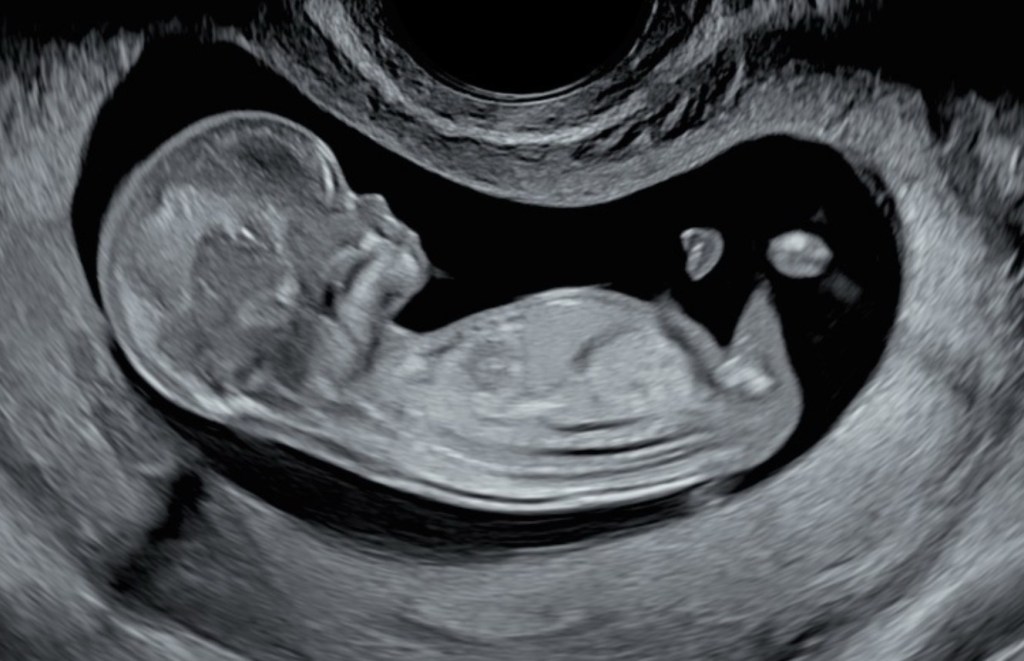
Mercari, though, made big news last month when it took the controversial step of banning the sale of prenatal photos on its website. Why would anyone buy someone else’s prenatal photo? For scamming purposes, apparently. And that’s what led Mercari to take action.
The practice of “ninshin sagi” (a phrase that autocorrect vehemently tried to reject) means pregnancy fraud. It occurs when a woman tries to blackmail a male partner into paying money for a supposed pregnancy or to get an abortion. Mercari wants no part in the scheme, so if you want to buy photos of someone else’s uterus, you’ll have to look elsewhere.
New Jersey lawmakers are also saying to look elsewhere, but their ire is aimed at the NJ Department of Labor. As we discussed here, the NJ DOL issued a proposed rule that would change the state’s test for determining independent contractor status. The public comment period for the rule has closed, and now the NJ DOL needs to consider each comment and decide what to do.
Several NJ lawmakers, however, are urging the DOL to back off, and the sentiment is bipartisan. The proposed rule, they say, is not consistent with the current state of NJ court decisions or the NJ statute. (I agree!)
There is no timetable for the NJ DOL to issue a final rule. Or the NJ DOL may abandon its effort to adopt the rule. It’s also possible that lawmakers would enact legislation to block the proposed rule.
Companies with independent contractors in NJ should keep an eye on what happens here. The proposed rule would make NJ’s current ABC Test much stricter and harder to meet, thereby making it very difficult to maintain independent contractor status in NJ.
But at least in New Jersey you can still buy online uterus pics.
This is Louie. He’s 11 weeks old. He has the teeth of a shark. If you play with him and there’s no toy in his mouth, your arm is the toy. Or your foot. Or sometimes your face. In my house, we all look like we just played with a blender. But he’s awfully cute.
Late last week, the Department of Labor (DOL) made some news that won’t bite companies in the face.
This Thursday, Feb 27 marks National Toast Day, an important annual celebration that commemorates this versatile form of bread. Toast for breakfast? Toast for brunch? Snack? PB&J? Is there anything toast can’t do?
National Toast Day is celebrated on the last Thursday of February each year, which means that this year it overlaps with National Polar Bear Day, National Strawberry Day, and National Kahlua Day.
Put all those things together and you’ve got one helluva picnic.
But why do I mention toast? Because of independent contractor classification tests, of course. Here’s what I mean.
Remember the 2024 DOL independent contractor rule — you know, the one that the Biden DOL passed in January 2024? We hardly had a chance to get acquainted.
I’ll tell you something that won’t surprise you. The Trump Administration is likely going to rescind it. Or maybe ignore it. Or maybe allow a court to reject it. One way or another, it’s gonna be toast.
There are several lawsuits challenging the 2024 rule, and one of them — Frisard’s Transportation v. US DOL — was scheduled for oral argument at the Fifth Circuit Court of Appeals in early February.
The DOL, however, asked the court to postpone oral argument to allow it time to consider how it wants to proceed. How it wanted to proceed under Biden was to defend the rule. Now, not so much.
However the case proceeds, we can expect that the Trump DOL will not apply the Biden Administration’s independent contractor test.
So what does that mean for the independent contractor test?
In reality, not much.
That’s because, first, the rule applied only to the Fair Labor Standards Act (FLSA), which is the federal wage and hour statute. It didn’t apply to tax law, benefits law, labor law, unemployment or workers’ comp law, or any state law.
And second, the test for who is an employee under the FLSA has always been an Economic Realities Test, and courts know what that test is. Every circuit court has a long line of case law describing the Economic Realities test. The courts don’t need the Biden or Trump Administration to tell them how to interpret the FLSA. The FLSA has been on the book since the 1930s, back when Biden and Trump were mere teenagers.
So what does this mean for employers? Again, not much. Employers should assume that under federal wage and hour law, the test for whether someone is an employee or independent contractor is the same as it has been for decades.
This anticipated change is not really going to change anything at all.
Now, if instead of toast, the Trump Administration made the rule into Kahlua, that would seem to be worth celebrating.
In this video, Muhammad Rashid of Pakistan, crushes 39 cans in 30 seconds. With his head. (I like the little fist pump he gives at the end.)
Why would a person do this? To get attention, I imagine. It caught my attention.
The House Committee of Education and the Workforce may also be trying to solicit a bit of attention, but I do want to know the answers to the Committee’s questions.
On August 8, they sent this letter to Acting Secretary of Labor Julie Su, asking her for information about the DOL’s enforcement activity under its new independent contractor rule. The Committee would like the DOL to answer three questions:
1) Since January 20, 2021, how many instances of misclassification have Wage and Hour Division (WHD) inspectors found? Please provide the total number of instances across each occupation that has been subject to investigation.
2) Please provide the number of misclassification enforcement investigations WHD has initiated for each specific industry sector since January 20, 2021.
3) Has DOL initiated any investigations related to misclassification based on its coordination with the National Labor Relations Board and the Federal Trade Commission? If so, please provide the number of investigations DOL has undertaken, broken down by each specific industry segment.
Committee Chair Virginia Foxx (R-not from Virginia) writes that she asked Su these questions when Su appeared before the Committee on May 1, but Su failed to answer. The letter begins by knocking Su around a bit, alleging that the DOL with its new independent contractor rule is trying to destroy all independent contractor relationships.
Maybe yes, maybe no. I don’t know where this letter falls on the continuum of publicity stunt vs. actual relevance for policy making, but I think these are good questions. It would be hopeful for businesses to know whether the DOL’s enforcement strategy has shifted since enactment of the new rule. And if so, how.
The Committee might get the answers it seeks, or it might just be banging its head against the wall cans. But it never hurts to ask.
What Mr. Rashid was doing, on the other hand, does hurt. Or it should hurt. And if it doesn’t hurt, then maybe that tells us something too. Also, I think Mr. Rashid owes someone the cost of 39 beers.
It can mean the front part of the head, as in this selfie featuring two hairy-faced beasts. The one on the left has a wet drippy beard after sloppily drinking water from a bowl. No, I meant on your left.
It can mean the English rock band formed in 1969, which featured Rod Stewart and Ronnie Wood. Their 1971 album, A Nod Is As Good As a Wink… to a Blind Horse, reached #2 in the UK charts.
Or it can be a verb, as in “DOL Independent Contractor Test Faces Court Challenges.” In today’s post, we’re going with verb.
As expected, the independent contractor rule released by the DOL earlier this month is already being challenged in court.
A coalition of business groups is trying to invalidate the rule by asking the Fifth Circuit to reopen an earlier case. In the earlier case, these groups challenged the Biden DOL’s effort to withdraw the Trump DOL’s 2021 version of the independent contractor rule. The 2021 version would have simplified the test, focusing the analysis on two key factors — control and opportunity for profit or loss. In the lawsuit, the business groups argued that the Biden DOL’s efforts to delay and withdraw the Trump DOL’s 2021 rule violated the Administrative Procedure Act (APA).
These groups now argue that the new rule contains the same legal flaws and that that the Trump DOL rule should be the rule that rules. The case is Coalition for Workforce Innovation v. Su, 5th Cir., No. 22-40316.
A second challenge has been filed by freelancer writers and editors who argue that the new rule is impermissibly vague and “freewheeling” (an excellent word choice) and that it violates the APA. They claim that the new rule impermissibly threatens their ability to work as independent contractors and is too vague to allow them to reasonably structure their businesses.
These challenges will take a while to resolve, and more may be filed. Unless a court issues an injunction staying the rule while these cases proceed, the new rule will take effect March 11th.
In the meantime, we’ll keep watching to see what happens. It’s a real face off!
This is a venomous Eastern Brown Snake, native to Australia. Stay away.
Tennis star Dominic Thiem knew what to watch for in his match this past weekend in Brisbane. It was on-court hazard he couldn’t ignore.
Play was interrupted when a “really poisonous snake” slithered onto the court near the ballkids. The intruder, an Eastern Brown Snake, “has the unfortunate distinction of causing more deaths by snake bite than any other species of snake in Australia.” The snake’s venom causes “progressive paralysis and uncontrollable bleeding,” which is not one of the on-court hazards typically of ballkidding.
(I don’t know if ballkidding is the real word for this, but it should be. Or ballkiddery maybe. I also learned from the snake bite article that the proper term for being bit by a venomous snake is “envenomation,” which is a word I hope to use elsewhere in a sentence sometime in 2024. So there’s a New Year’s resolution. [@Lisa, take note, I made one, even though you {correctly} say I am no fun because I won’t play the New Year’s Resolution game.])
The Eastern Brown Snake is not present in the U.S., so we don’t have to watch for any in 2024.
But here are several other things that could bite you in the behind in 2024 if you’re not paying attention:
1. New DOL test for independent contractor misclassification. The DOL issued its proposed new rule in October 2022 and targeted the fall of 2023 for release of a new final rule. The proposed rule would identify seven factors to consider when evaluating whether someone is an employee under the Fair Labor Standards Act (FLSA). The final rule will likely be very similar. We’re still waiting, and the final rule could be released at any time.
2. The new NLRB test for joint employment takes effect Feb. 26, 2024. Unless it doesn’t. The new rule is being challenged in both a federal district court in Texas and the U.S. Court of Appeals in D.C. Either court could quash the rule. The new rule will substantially expand who is a joint employer under the NLRA, even for worksites without unions.
3. Increased state and local enforcement activity. States and localities are filing their own lawsuits alleging worker misclassification. The New Jersey Attorney General recently filed a major lawsuit. The California Attorney General and California localities have been pursuing misclassification lawsuits too. Remember this: As much as I advocate for individual arbitration agreements with class waivers, they have no effect on enforcement actions brought by a state or local government. These lawsuits pose a substantial risk, and the governments love to issue one-sided accusatory press releases when they file the lawsuits.
4. The feds are doing this too. The DOL is bringing its own enforcement actions and publicizing them.
5. State and local laws that affect independent contractor classification and joint employment. We’re seeing legislative activity in three main areas:
(a) laws to change the tests; (b) laws that provide a safe harbor for independent contractor classification if certain protections are provided to the workers (Cal. Prop 22, this proposed Mass. state law); and (c) Freelancers laws that impose various requirements when retaining a solo independent contractor (currently: NY, IL, Los Angeles, Minneapolis, Seattle, NYC, Columbus).
6. State laws that criminalize worker misclassification. Take a look at recent legislation passed in NY State and Rhode Island.
7. State laws governing the use of temporary workers. Look for more states to enact laws like the Illinois Day and Temporary Worker Services Act (amended in Aug. 2023) and the New Jersey Temporary Workers’ Bill of Rights (enacted in Aug, 2023). These laws force companies that use staffing agencies to disclose the wages and benefits being paid to direct employees.
8. California’s AB 5 is still being challenged. This is the law that codified the ABC Test for most independent contractor relationships. But it also included a grab bag of miscellaneous and arbitrary exceptions. A full en banc Ninth Circuit has agreed to rehear Olson v. State of California, which challenges the constitutionality of AB 5.
Wishing you a happy, healthy, and litigation-free 2024.
I took this picture on Friday of a window washer at the Hilton across the street.
Late last week, the NLRB issued its new joint employer rule. I’ve listed three takeways below. Don’t be left hanging. Click here for the full Alert.
1) The National Labor Relations Board has issued a Final Rule that changes the test for determining who is a joint employer.
2) The Final Rule rescinds the Rule enacted in 2020 and adopts a test that will vastly expand the circumstances under which a company is a joint employer of the employees of another company.
3) The new rule may cause absurd results, including creating joint employment from the application of worksite safety rules to everyone onsite, including a vendor’s employees. The new rule requires joint employers to participate in the collective bargaining process.
The full Alert explains in more detail. If you are not subscribed to BakerHostetler employment law alerts, let me know and I’ll add you to the distribution list.










 Who Is My Employee?