
This Will Not Do! Health and Safety Rules May Create Joint Employment under New NLRB Rule

Ginsberg’s Theorem is a parody of the laws of thermodynamics. Generally attributed to the poet Allen Ginsberg, it goes like this:

  1. There is a game.
  2. You can’t win.
  3. You can’t break even.
  4. You can’t even get out of the game.

That’s the conundrum businesses now face when trying to comply with both the NLRB’s new joint employer rule and OSHA requirements (or general safe workplace practices).

Last week we looked at the new NLRB rule on joint employment. This week I want to focus on the most troubling part of that rule — the NLRB’s decision to include “Working conditions related to the safety and health of employees” as an “essential term and condition of employment” for purposes of determining joint employer status.

Businesses often have site-wide, plant-wide, or company-wide health and safety requirements. If you enter this building, you must follow the health and safety rules that apply in this building. For example, you must wear steel-toed shoes to enter the manufacturing floor. Or, you must not enter this high-voltage area without permission. Or, you must walk only on designated pathways to avoid the risk of being hit by a forklift.

Some of these rules are driven by OSHA compliance, some by other governmental regulations, and some by a general desire not to cause grievous injury to other human beings.

Those motivations may now cause your business to be joint employer. The reasoning goes like this:

  1. You have a site-wide safety rule, and anyone in the facility must comply.
  2. Employees of vendors work onsite.
  3. Employees of vendors must comply.

Under the new NLRB joint employer rule, the exercise of control over “working conditions related to the safety and health” of a vendor’s employees would automatically create a joint employment relationship.

More absurd, merely reserving the right to exert control over health and safety conditions would create a joint employer relationship, even if such control is never actually exercised. In other words telling a vendor, if your employees enter our facility, they will will have to follow our site safety rules, would also seem to make you a joint employer.

The NLRB’s position ignores reality and creates a conundrum for businesses: If you comply with health and safety laws, or if you take steps to protect human beings from injury, and those humans are not your employees, the NLRB would now apparently say you’re a joint employer. Beware of showing feelings, showing feelings of an almost human nature.

Queue Pink Floyd “The Trial” from The Wall:

Good morning, Worm your honor
The crown will plainly show
The prisoner who now stands before you
Was caught red-handed showing feelings
Showing feelings of an almost human nature
This will not do
Call the schoolmaster

What to do?

Could the NLRB and OSHA be teaming up to jointly enforce this conundrum? Well, yes.

It just so happens that the NLRB and OSHA have teamed up, and on October 31 — less than a week after the NLRB released its final rule on joint employment — the two agencies jointly released a Memorandum of Understanding (MOU). In the MOU, the agencies commit to sharing information and working together to enforce their respective laws, including notifying workers who make OSHA complaints of their NLRA rights, and notifying workers who make NLRA complaints about health and safety of their OSHA rights.

So what are businesses to do?

The answer can’t be to ignore health and safety rules or to waive these rules for non-employees. But the NLRB needs to recognize that exercising control over health and safety conditions does not — or should not — convert a company into a joint employer. Certainly this aspect of the rule will be tested in court, as it seems to go well beyond the bounds of the common law definition of joint employment, and the common law test is supposed to be the joint employer test under the NLRA.

One option for businesses to consider is to tie site-wide health and safety rules to legal requirements whenever possible. Compliance with the law is not supposed to be the type of control that is taken into account under the common law joint employer test. But that approach creates a conundrum too. Be careful that you don’t go too far and say that the law requires something when, in reality, it doesn’t.

Another option might be to revise how site-wide health and safety rules are drafted. Try to try to thread the needle, protecting everyone onsite, but not explicitly setting working conditions for vendor’s employees. It might be possible to draft this way; it might not be. But it’s worth looking at your policy language.

In the meantime, let’s keep an eye on how this new factor is interpreted by administrative law judges and the Board when actual disputes are adjudicated. Let’s also see if court challenges to the new joint employer rule will knock out this troubling provision.

This will not do. Call the schoolmaster!

Enter your email address to subscribe to this blog and receive notifications of new posts by email.

© 2023 Todd Lebowitz, posted on WhoIsMyEmployee.com, Exploring Issues of Independent Contractor Misclassification and Joint Employment. All rights reserved.

2018_Web100Badge
 

This Will Not Do! Health and Safety Rules May Create Joint Employment under New NLRB Rule

Ginsberg’s Theorem is a parody of the laws of thermodynamics. Generally attributed to the poet Allen Ginsberg, it goes like this:

  1. There is a game.
  2. You can’t win.
  3. You can’t break even.
  4. You can’t even get out of the game.

That’s the conundrum businesses now face when trying to comply with both the NLRB’s new joint employer rule and OSHA requirements (or general safe workplace practices).

Last week we looked at the new NLRB rule on joint employment. This week I want to focus on the most troubling part of that rule — the NLRB’s decision to include “Working conditions related to the safety and health of employees” as an “essential term and condition of employment” for purposes of determining joint employer status.

Businesses often have site-wide, plant-wide, or company-wide health and safety requirements. If you enter this building, you must follow the health and safety rules that apply in this building. For example, you must wear steel-toed shoes to enter the manufacturing floor. Or, you must not enter this high-voltage area without permission. Or, you must walk only on designated pathways to avoid the risk of being hit by a forklift.

Some of these rules are driven by OSHA compliance, some by other governmental regulations, and some by a general desire not to cause grievous injury to other human beings.

Those motivations may now cause your business to be joint employer. The reasoning goes like this:

  1. You have a site-wide safety rule, and anyone in the facility must comply.
  2. Employees of vendors work onsite.
  3. Employees of vendors must comply.

Under the new NLRB joint employer rule, the exercise of control over “working conditions related to the safety and health” of a vendor’s employees would automatically create a joint employment relationship.

More absurd, merely reserving the right to exert control over health and safety conditions would create a joint employer relationship, even if such control is never actually exercised. In other words telling a vendor, if your employees enter our facility, they will will have to follow our site safety rules, would also seem to make you a joint employer.

The NLRB’s position ignores reality and creates a conundrum for businesses: If you comply with health and safety laws, or if you take steps to protect human beings from injury, and those humans are not your employees, the NLRB would now apparently say you’re a joint employer. Beware of showing feelings, showing feelings of an almost human nature.

Queue Pink Floyd “The Trial” from The Wall:

Good morning, Worm your honor
The crown will plainly show
The prisoner who now stands before you
Was caught red-handed showing feelings
Showing feelings of an almost human nature
This will not do
Call the schoolmaster

What to do?

Could the NLRB and OSHA be teaming up to jointly enforce this conundrum? Well, yes.

It just so happens that the NLRB and OSHA have teamed up, and on October 31 — less than a week after the NLRB released its final rule on joint employment — the two agencies jointly released a Memorandum of Understanding (MOU). In the MOU, the agencies commit to sharing information and working together to enforce their respective laws, including notifying workers who make OSHA complaints of their NLRA rights, and notifying workers who make NLRA complaints about health and safety of their OSHA rights.

So what are businesses to do?

The answer can’t be to ignore health and safety rules or to waive these rules for non-employees. But the NLRB needs to recognize that exercising control over health and safety conditions does not — or should not — convert a company into a joint employer. Certainly this aspect of the rule will be tested in court, as it seems to go well beyond the bounds of the common law definition of joint employment, and the common law test is supposed to be the joint employer test under the NLRA.

One option for businesses to consider is to tie site-wide health and safety rules to legal requirements whenever possible. Compliance with the law is not supposed to be the type of control that is taken into account under the common law joint employer test. But that approach creates a conundrum too. Be careful that you don’t go too far and say that the law requires something when, in reality, it doesn’t.

Another option might be to revise how site-wide health and safety rules are drafted. Try to try to thread the needle, protecting everyone onsite, but not explicitly setting working conditions for vendor’s employees. It might be possible to draft this way; it might not be. But it’s worth looking at your policy language.

In the meantime, let’s keep an eye on how this new factor is interpreted by administrative law judges and the Board when actual disputes are adjudicated. Let’s also see if court challenges to the new joint employer rule will knock out this troubling provision.

This will not do. Call the schoolmaster!

Enter your email address to subscribe to this blog and receive notifications of new posts by email.

© 2023 Todd Lebowitz, posted on WhoIsMyEmployee.com, Exploring Issues of Independent Contractor Misclassification and Joint Employment. All rights reserved.

2018_Web100Badge
 

Village People’s Construction Worker Character Wins! Court Expands OSHA Liability for General Contractors

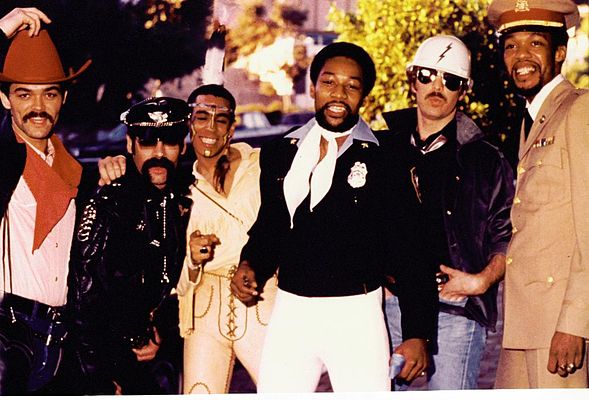
Village People from Wikipedia 1978

The Village People (1978), from Wikipedia

According to the Official Website of the Village People, the group’s original lineup included Disco King, Construction Worker, Cowboy, Leatherman, Indian, and two “Nondescripts.” They were later joined by Cop, G.I., and Biker. Keeping with the times, as we know the Village People do, the costume formerly known as Indian has been rebranded as Native American. (True!)

But Cop or No Cop, Biker or No Biker, there has always been a Construction Worker since the band’s founding in 1977.

A recent court case involving construction workers tests whether a general contractor in control of a worksite (we’ll call him “Macho Man,” after the 1978 hit) has a legal duty to protect another contractor’s employee (we’ll call him “Hot Cop,” after a different 1978 V.P. tune), when none of Macho Man’s own employees are at risk.

The issue arose during a library construction project in Austin, Texas. One subcontractor refused to allow its employees to work near a 12-foot high wall of dirt that had not been properly sloped or reinforced. A citation was issued to the general contractor for allowing the unsafe condition, but it was undisputed that none of the general contractors’ own employees were endangered by the wall of dirt.

“Why does that matter?” you might be asking.

Although the condition was a violation of the Occupational Health and Safety Act (OSHA), the Fifth Circuit Court of Appeals had taken the position since 1981 (when the V.P. released the album, Renaissance) that “OSHA regulations protect only an employer’s own employees.”

The Court’s ruling earlier this week abandoned that rule, instead finding that a general contractor could be cited under OSHA for allowing an unsafe condition that affected only the employees of another contractor.

In response to the Court’s ruling, the Village People have reportedly abandoned plans to introduce a nebishy Health Inspector character on their next tour.

© 2018 Todd Lebowitz, posted on WhoIsMyEmployee.com, Exploring Issues of Independent Contractor Misclassification and Joint Employment. All rights reserved.

Enter your email address to subscribe to this blog and receive notifications of new posts by email.

2018_Web100Badge

Did You Know You Can Be Cited for OSHA Violations for Non-Employee Workers?

osha violations joint employment

Can OSHA cite your business for conditions that affect another company’s employees? Maybe.

OSHA’s Multi-Employer Citation Policy addresses who gets cited for violations that occur on a multi-employer worksite. If your company hosts staffing agency workers, that may include you.

The policy has been subjected to several legal challenges, though, based on an argument that OSHA obligations extend only to an employer’s own employees. One of these challenges is currently pending in the Fifth Circuit Court of Appeals, based on a dispute over an Austin, Texas, construction site.

While we wait for a decision, though, here’s what OSHA has to say about its authority to issue citations on multi-employer worksites: Continue reading