If I type “Olson” into google, my top results are Matt Olson, first baseman for Atlanta (makes sense since a lot of my web activity is baseball-related); James A. Olson Guitars (no idea why since the only place I play guitar is on the radio); and Major John Olson of the U.S. Space Force (also no idea why since I have never been to outer space).
The most relevant Olson for me today though is none of these. Instead, it’s a long-awaited decision in a case called Olson v California. In this case, a group of app-based gig economy companies sued the State of California, alleging that AB 5 and its ABC Test are unconstitutional.
Their argument is that the arbitrary grab bag of exceptions to AB 5 is arbitrary and that the law unfairly targets rideshare and delivery drivers.
An 11-judge panel of the Ninth Circuit heard the case en banc, and rejected these arguments.
The Ninth Circuit ruled that AB 5 is constitutional and that the legislature had a rational basis for including and excluding various types of workers from the ABC Test.
The result: AB 5 remains in place. As for rideshare and delivery app companies, Prop 22 created an exception allowing them to treat drivers as independent contractors, although the validity of Prop 22 is being challenged as well. More on that in a future post. The California Supreme Court is hearing arguments on Prop 22 and when a decision is issued, I’ll post about it. But I expect the Prop 22 will survive, just like AB 5 survived.
If I googled Olsen instead of Olson, that might have been more fun. I hopefully would have landed on Keith Olsen, who produced a number of classic rock albums, including Fleetwood Mac by Fleetwood Mac, Double Vision by Foreigner, and a Rick Springfield album with one of the all-time great album covers, Working Class Dog.
About six months ago in Cambridge, Ontario, Sonny Ayres was born, the fifth child of parents Britteney and Chance. But Sonny was no ordinary baby. He weighed 14 1/2 pounds. (Yes, for the benefit of those moms reading this and looking aghast, he was delivered by c-section.)
According to Guinness (the book, not the beer), the heaviest recorded birth was 22 pounds, in 1879 in Seville, Ohio. That baby lived just 11 hours.
A different kind of weighing was at issue in a recent decision by the Third Circuit Court of Appeals, determining independent contractor status.
The issue was whether three plaintiffs who owned Pepperidge Farm distribution routes should have been considered employees under Pennsylvania’s wage and hour laws. The district court granted summary judgment for Pepperidge Farm, ruling that they were not employees, and the drivers appealed.
The drivers argued that the court should not have granted summary judgment because the job of weighing the evidence is supposed to be left to the jury. But, as the Third Circuit explained, it is the judge’s role to weigh the relevant legal factors. The judge can apply the undisputed facts to the relevant legal factors and can make a legal determination whether each factor supports employment or independent contractor status. And that’s exactly what the Third Circuit did here.
Applying a ten-factor Right to Control Test, the court determined that 8 of 10 factors supported independent contractor status, and so the plaintiffs were properly classified as contractors, not employees.
The plaintiffs argued that Pepperidge Farm set parameters and expectations for the distribution routes, thereby exerting control. The Third Circuit, however, explained that setting parameters and expectations is consistent with either independent contractor or employee status. The control factor tilts toward employee status when the hiring party sets parameters and expectations and directs the time, place, and manner of performance.
In this case, the right-to-control factors supported independent contractor status because the drivers determined the time, place, and manner for performing deliveries. The drivers bought and sold routes, organized their own distribution businesses, hired their own employees, set their own hours, and made deliveries when and how they chose.
This case is a good reminder of what type of control is relevant in the right-to-control analysis and what type of control is not. Some control is exerted over every relationship, whether it’s independent contractor or employment. The trick is knowing which type of control can be exerted without tipping the scales.
Pepperidge Farm prevailed in this case because it did not reserve or exercise the kind of control that supports employee status. And for that, we say Weigh to Go!
Darling, you got to let me know Should I stay, or should I go?
These lines open the 1981 hit single “Should I Stay or Should I Go” by the Clash. Slight correction, according to Genius lyrics, the opening lines of the song are “Oh! Hola!” which is kind of fun.
Should I stay or should I go is the question the Supreme Court answered last week regarding arbitration cases. In January, we previewed this pending case.
The case involves independent contractors who sued, alleging misclassification. The contractors had signed individual arbitration agreements, and the business successfully moved to compel arbitration. If there is an arbitration agreement, the Federal Arbitration Act (FAA) will generally apply (subject to some exceptions), and the district court must refer the case to arbitration.
This technical question then arises: Does the court dismiss the case or merely issue a stay?
It matters. A dismissal can be immediately appealed. An order to stay typically is not appealable.
The Supreme Court ruled that, under the FAA, a court is required to stay a case when granting a motion to compel arbitration. The court cannot dismiss the case.
So, stay. Not go.
This outcome is required under the text of the statute. The effect is that an order granting a motion to compel arbitration is not immediately appealable. The federal court case gets stayed, not dismissed; so there is no appeal. If you’re the party moving for arbitration, that’s good.
On the other hand, if a motion to compel arbitration is denied, the party moving to compel arbitration can appeal — even though the case remains with the district court. That’s because the FAA and case law allow for this immediate appeal.
So here’s the decision tree for how things must proceed after a motion to compel (MTC):
1. If MTC is granted, the court case gets stayed. The losing party cannot immediately appeal.
2. If MTC is denied, the case remains in court, but the losing party can immediately appeal.
There is no longer an option for the court case to be dismissed when the MTC is granted.
Turns out then, it’s not really true that If I go there will be trouble, If I stay it will be double. At least not if we’re talking about motions to compel arbitration. Something tells me, though, that’s not what the Clash were singing about.
The world’s largest passenger elevator is inside the Jio World Center building in Mumbai, India. It can hold 235 people and is designed to cater to large gatherings, such as weddings or convention attendees.
The elevator has glass windows, offers panoramic views of the gardens below, and features a crystal-studded ceiling. It has two sofas so passengers can relax while ascending the maximum five floors at the slow but deliberate rate of 1 meter per second.
Thinking big doesn’t just work when building elevators. It also works when building independent contractor agreements.
Here’s what I mean.
When lots of contractors are being retained, an important feature to include in independent contractor agreements is the requirement to arbitrate disputes on an individual basis, with a waiver of class claims. Under the Federal Arbitration Act (FAA), arbitration agreements and class action waivers are generally valid and enforceable.
But there’s that pesky transportation exemption in Section 1 of the FAA, which says that the FAA does not apply to transportation workers. The Supreme Court recently issued its decision in Bissonette v. LePage Bakeries, holding that to determine whether the transportation worker exception applies, you need to look at what the worker does, not what industry the worker is in. But this post isn’t about Bissonette. It’s about a Ninth Circuit decision issued a few weeks earlier.
The Ninth Circuit ruled that the transportation exemption applies only to individual workers, not to entities. Why does that matter? Well, is your independent contractor agreement with an individual or an entity?
If it’s with an individual, and the worker is engaged in transportation work related to interstate commerce, the transportation worker exception of the FAA might apply, which means the FAA and all of its protections for mandatory arbitration agreements would not apply.
But, according to the Ninth Circuit, if your arbitration agreement is with a business entity, then the transportation worker exception does not apply, since it is inapplicable to business-to-business disputes. That means the FAA does apply.
Engaging small businesses, even single member LLCs, can offer a number of advantages when trying to protect independent contractor status. This recent Ninth Circuit decision offers another advantage, better protecting the parties’ ability to require arbitration of disputes and waivers of class claims.
So when engaging independent contractors, remember to think bigger than the individual. If you can contract with an entity, even a single member LLC, you might be better off — for lots of reasons, even if none of them come with a sofa or panoramic views.
I’m taking today off for the eclipse. The Federal Trade Commission never takes the day off. More on that below. But first, some fun facts, courtesy of exploratorium.edu.
-> In Vietnam, legend has it that a giant frog swallows the Sun. Its master, the lord of Hahn, then convinces the frog to spit it out.
-> In Javanese mythology, the god of darkness, Batara Kala, swallows the Sun. Javanese villagers try to make Batara Kala release the Sun by offering sacrifices and beating drums.
-> In Andean mythology, a puma devours the Sun. To prevent the Sun’s death, the puma must be frightened away by the screams of children and the cries of animals.
I don’t feel the need to ask my children or animals to scream away the eclipse, but I may do some crying and screaming on my own if the FTC has its way and starts getting involved in independent contractor classification disputes.
According to a recent speech by FTC Commissioner Alvaro Bedoya, the FTC may consider trying to bring independent contractor misclassification claims.
Misclassification has always been viewed as an issue of employment and tax law. But according to Bedoya, the FTC may choose to see misclassification as an unfair competition issue, thereby granting it jurisdiction (so he says) to bring enforcement actions of its own.
In his published remarks, Bedoya outlined several examples of egregious misclassification that would not pass muster under any law. Then he used these extreme and unusual examples as reasons why the FTC should get involved in pursuing misclassification wrongdoers. He argues that the FTC should get involved because misclassifiers are engaging in unfair competition, in violation of section 5 of the FTC Act.
But if the examples he gave already violate the FLSA and NLRA and state laws, why does the FTC need to pile on? It doesn’t.
Bedoya acknowledged that the DOL and the NLRB “are doing everything they can to stop it.” But then in the next sentence he said he thinks the FTC should “step up to the plate” too.
We have already seen that the FTC is trying to flex its muscle on issues like noncompete agreements, seeking to expand its authority beyond the traditional antitrust arena. Fighting misclassification might be the next battle the FTC wants to take on.
Businesses should remain vigilant and know that misclassification claims can come from lots of different places. Soon we may need to add the FTC to that list.
I think for now he’s just testing the waters and floating the idea to see what kind of support it might garner. I doubt the FTC truly has the jurisdiction or authority to enforce worker misclassification, but that doesn’t mean it won’t try — just like it’s trying to prohibit noncompete agreements by calling them a tool of unfair competition.
We’ll watch what the FTC does, but if it gets more aggressive on this issue, I may need to gather some children and animals to try to scream the FTC away.
I would not go so far as to offer sacrifices or beat drums. I’ll leave that to the ancient Javans.
If you’re in the line of totality, enjoy the eclipse!
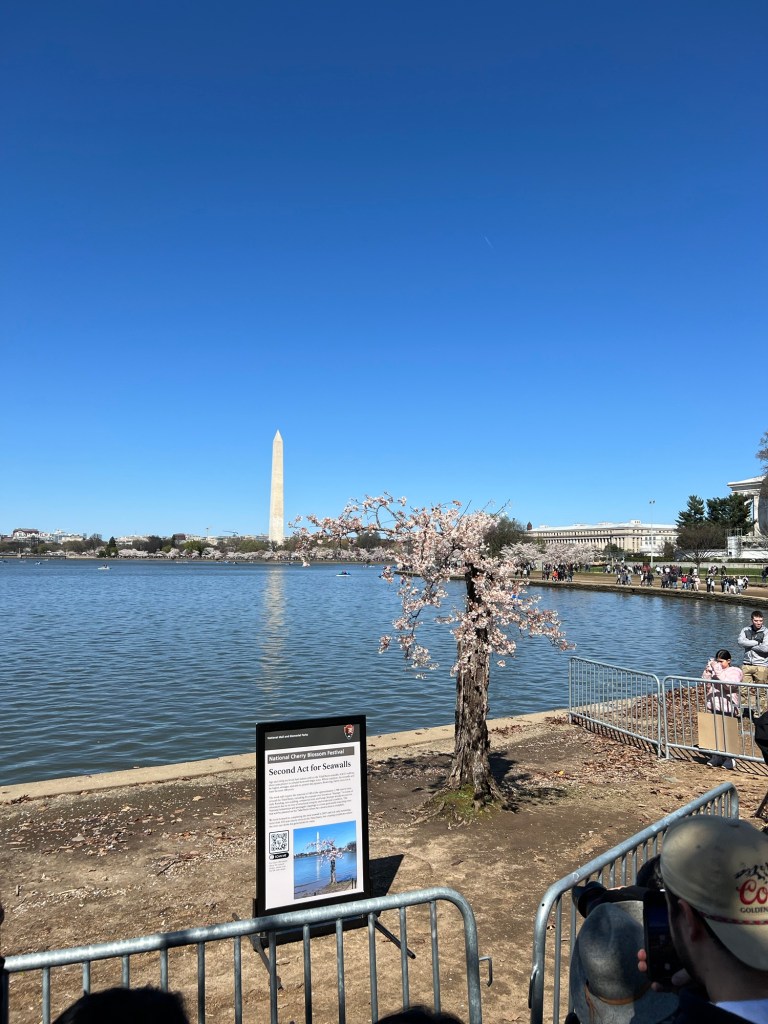
Last weekend, I didn’t post because I was in D.C., where I had my first tour of the cherry blossoms. One of the most beloved trees at the Tidal Basin is this poor shrub of a tree affectionately known as Stumpy.
Stumpy looks dead, but every March he (he?) sprouts a cheery hat of blooming cherry blossoms. But this bloom will be Stumpy’s last. Because of repeated flooding around the Tidal Basin, the sea wall is being raised, which will require the chopping down of 150 trees.
While Stumpy is in for a rude surprise after the bloom, companies using independent contractors can plan in advance to avoid their own demise.
I was asked recently what are the most common ways that claims of independent contractor arise. I thought, that’s a good blog post topic. So here goes.
Here are the most common way that a claim of independent contractor misclassification can arise:
Individual lawsuit
Class action lawsuit
Government audit, random – IRS, DOL, state DOLs, state tax agencies
Government audit, based on complaint – IRS, DOL, state DOLs, state tax agencies
Former IC files for unemployment. Employer denies IC was an employee, but the agency investigates and concludes the worker was misclassified. Typically, the agency will then assume all similarly situated ICs were also misclassified and the employer failed to pay into the unemployment system for the lookback period (probably 3-4 years) and will then issue a large bill for unpaid assessments, often six figures+.
Workers’ compensation claim, same scenario as for unemployment
There are also unexpected and odd situations that can arise, like here.
A similar list for Stumpy might look like this:
Most likely ways that Stumpy might meet his demise:
Chainsaw
Axe
Lightning strike
George Washington’s chopping method of choice if he could tell a lie
Typhoon
Ok, typhoon seems unlikely. I assume it’ll be a chainsaw.
Police in Wejherowo, Poland arrested a 19-year-old man for stealing a horse. The man was caught after neighbors reported that he was trying to lead a horse up the stairs to his third floor apartment.
Why would someone do that? Apparently he was trying to conceal the horse and thought his apartment would make a good hiding place. (After all, who would look in a third-floor walk up for a missing horse?) But getting the horse to the apartment was the man’s undoing.
He didn’t think through his plan. Don’t be like that man. Today’s post is to help you think through your plan in advance, but in the context of retaining non-employee labor, not stealing a horse.
I generally recommend having three types of agreements in your stable of documents. (Heh heh, see what I did there?) Each serves a different purpose and contains different features, even though there is often some overlap.
1. Independent Contractor Agreement. This should be crafted for use with solo independent contractors (1099s), regardless of whether there’s a single member LLC or a sole proprietorship.
The goal here is limit the risk of misclassification, that is, a finding that the worker is really your employee.
The agreement should identify and memorialize the facts that support IC status, such as that the company retains no right to control how the work is done, where it’s done, when it’s done, steps, sequence, etc.
If there are lots of ICs doing the same thing, individual arbitration agreements with class waivers can be highly useful to include too, as they reduce the downside risk of misclassification.
2. Vendor Outsourcing Agreement. This document is for when a function is entirely outsourced, such as in the hospitality industry, where it is common to outsource the housekeeping function.
There are two goals here.
One goal is to memorialize the facts that will help avoid a finding of joint employment. These workers should be managed independently of your company’s employees and should not be directly supervised by your managers.
The second goal is make it difficult for a disgruntled worker of the vendor to allege joint employment, and there are various tools in the toolbox to help accomplish this objective.
3. Staffing Services Agreement. This document is to be used when a third party provides staff augmentation services or other workers who are commingled with your employees or supervised by your managers. In this scenario, there’s a reasonable risk of joint employment.
We want to use the contract to build defenses.
First, we want to lay the groundwork for a claim against the vendor if the vendor fails to pay its employees in accordance with the law.
Second, we want to throw obstacles in the way of anyone who might want to bring a joint employment claim. Individual arbitration agreements with class waivers are helpful in that regard.
If you’re working with a staffing agency, the form they provide you is not likely to help limit your legal risks. It’s always better to start with your own form.
Don’t Horse Around
Agreements provided by your vendors are unlikely to provide you with any meaningful protections. Different agreements have different purposes, and these three agreements should each be used in different situations.
It doesn’t work to use a staffing agreement with outsourced employees, and it doesn’t work to use an independent contractor agreement with outsourced labor employed by the vendor. Those workers aren’t independent contractors at all; they’re employees of the vendor. The legal risk you’re trying to address is whether you’re a joint employer. That’s a very different legal question than whether the worker is misclassified.
So be sure to use the right kind of agreement for the right kind of situation.
That means planing ahead and having the right forms on hand, ready to go. As our friend in Wejherowo learned the hard way, you’ve got think all the way through your plan in advance.
The 1982 release by the Clash asked, “Should I Stay or Should I Go?” The song included backing vocals in Spanish, but since none of the band members spoke Spanish, they had tape operator, Eddie, call his mother, who was Ecuadorian. Eddies’ mom translated the backing vocals into what we hear on the recording (Yo me enfrio o lo soplo).
The Supreme Court agreed last month to address the same question — should I stay or should I go? — but in a different context.
The case involves independent contractors who sued, alleging misclassification, the contractors had signed individual arbitration agreements, and the business successfully moved to compel arbitration. So far, this is all very ordinary.
But when a court sends a case to arbitration, should it stay the case or dismiss it? Different federal courts handle this differently. There’s a good ol’ fashioned circuit split, and the Supreme Court will decide whether courts have the discretion to dismiss cases instead of merely staying them.
Why does it matter? In most cases, it won’t matter. But there are varying points of view. A dismissed case can be appealed; the decision to stay a case usually cannot. A stayed case may require updates to be filed; a dismissed case does not. A stayed case may lead to a streamlined order adopting the arbitrator’s decision; a dismissed case would require a new filing.
Sometimes cases have claims that are subject to arbitration and claims that are not. In those instances, a stay is probably the only logical option. When the arbitration is done, the court will decide the remaining claims. But when all parties have agreed, by contract, that their dispute must be arbitrated, many courts see no basis for staying the case, and they dismiss it.
The textualist argument is that a stay is the only way to go (see what I did there?). Section 3 of the Federal Arbitration Act says that a court, “shall on application of one of the parties stay the trial of the action until such arbitration has been had….”
But if there’s no dispute that the court can hear, because all parties have agreed to arbitrate disputes, then there’s nothing left for the court, and dismissal would seem proper.
We’ll continue to watch this case. The Supreme Court will likely hear the matter in late 2024.
In the meantime, This indecision’s buggin’ me (esta indecisión me molesta).
It can mean the front part of the head, as in this selfie featuring two hairy-faced beasts. The one on the left has a wet drippy beard after sloppily drinking water from a bowl. No, I meant on your left.
It can mean the English rock band formed in 1969, which featured Rod Stewart and Ronnie Wood. Their 1971 album, A Nod Is As Good As a Wink… to a Blind Horse, reached #2 in the UK charts.
Or it can be a verb, as in “DOL Independent Contractor Test Faces Court Challenges.” In today’s post, we’re going with verb.
As expected, the independent contractor rule released by the DOL earlier this month is already being challenged in court.
A coalition of business groups is trying to invalidate the rule by asking the Fifth Circuit to reopen an earlier case. In the earlier case, these groups challenged the Biden DOL’s effort to withdraw the Trump DOL’s 2021 version of the independent contractor rule. The 2021 version would have simplified the test, focusing the analysis on two key factors — control and opportunity for profit or loss. In the lawsuit, the business groups argued that the Biden DOL’s efforts to delay and withdraw the Trump DOL’s 2021 rule violated the Administrative Procedure Act (APA).
These groups now argue that the new rule contains the same legal flaws and that that the Trump DOL rule should be the rule that rules. The case is Coalition for Workforce Innovation v. Su, 5th Cir., No. 22-40316.
A second challenge has been filed by freelancer writers and editors who argue that the new rule is impermissibly vague and “freewheeling” (an excellent word choice) and that it violates the APA. They claim that the new rule impermissibly threatens their ability to work as independent contractors and is too vague to allow them to reasonably structure their businesses.
These challenges will take a while to resolve, and more may be filed. Unless a court issues an injunction staying the rule while these cases proceed, the new rule will take effect March 11th.
In the meantime, we’ll keep watching to see what happens. It’s a real face off!










 Who Is My Employee?