
Have a Seat: Alabama Passes Portable Benefit Bill for Contractors

I started to look up fun facts about Alabama and learned that the world’s largest office chair is in Anniston, Alabama. I was content with that find, but then I fell down a rabbit hole when I found this website, which lists other roadside attractions in the category of Oversized Chairs.

There’s a giant ladderback chair in Sebastopol, California. There’s a big chair you can drive under at the Los Angeles Merchandise Mart. Homer, Alaska has a big Adirondack-style chair, in case you’re headed out that way.

Whatever your destination, you may want to sit down and relax. I have some good news for a change.

Alabama passed a new law creating a portable benefit system for independent contractors. Unlike other portable benefit systems, this one allows for 100% tax deductibility for both contractors and the paying party for all contributions to the account.

Under the Portable Benefits Act (SB 86), contractors can create a portable benefit account through a third party. The account can be used to fund health insurance, life insurance, or other benefits. Starting in January 2026, funds contributed by the contractor are excluded from taxable income. Funds contributed by the party that retained the contractor are 100% tax-deductible.

The tax consequences here apply only to Alabama law, not federal tax law; but this is a solid step in the right direction for solo and small business owners.

The push by unions and some deep blue states to reclassify contractors as employees is motivated mainly by the desire to give contractors the same protections and benefits received by employees. If contractors have portable benefit accounts that can be funded tax-free, that certainly helps them and removes some of the incentive to reclassify.

There have been portable benefit bills passed in a few other states, with varying scopes. Utah and Tennessee, for example, have portable benefit programs, but neither offers 100% tax-deductibility.

There have been some efforts at the federal level to pass a nationwide portable benefits bill, but nothing is close to being passed.

In the meantime, this is good news for Alabama contractors and the companies that engage them. Y’all deserve to relax and enjoy a cocktail in an oversized comfortable chair. I’d recommend the big chair in Anniston, Alabama. California and Alaska are a bit too far a drive.

Enter your email address to subscribe to this blog and receive notifications of new posts by email.

© 2025 Todd Lebowitz, posted on WhoIsMyEmployee.com, Exploring Issues of Independent Contractor Misclassification and Joint Employment. All rights reserved.

2018_Web100Badge
 

Different Strokes: Be Careful With Choice of Law Clauses in IC Agreements

The phrase “Different strokes for different folks” originated in the 1960s and seems to have been popularized by Muhammad Ali. Describing his knock-out punches against Sonny Liston and Floyd Patterson, he said, “I got different strokes for different folks.”

In 1979, Ali appeared in the sitcom “Diff’rent Strokes,” which was probably named for the Ali quote and which was actually spelled that way and I can’t find anything that explains why. I guess when it comes to punctuation, different strokes for different folks?

Today’s post is a variation on that theme: Different states for different fates.

When drafting independent contractor agreements, choice of law matters. Choose carefully and thoughtfully. And remember three things:

First, state laws differ significantly on several subjects that might be relevant to your IC agreement — for when someone is considered an employee, for when non-competes can be enforced, for when non-solicitation agreements can be enforced, and for other terms that are likely to be in your contractor agreements. Don’t choose the law of a state that is less likely to enforce the clauses you want to include. If you can avoid California law for example, do yourself a favor and avoid California law.

Second, the state you choose needs to have some nexus to the parties or their relationship. Examples of a nexus that can justify use of a state’s law may be that one party is based there, or the work is being performed there, or (maybe) that one party is incorporated there. But there needs to be some connection.

Third, for worker classification disputes, the law of the state where the work is performed might apply anyway, since if a worker works in State A and the laws of State A would consider that person to be an employee, the parties cannot agree to contract out of the law of State A. But don’t concede so easily. Aim to apply the law of a favorable jurisdiction, even if there’s a chance that a court or arbitrator might disregard the choice of law clause in a classification dispute. Besides, there are going to be many other clauses in your agreement for which you’ll want the most favorable state law to apply.

For employment relationships, it is unlawful in some states (and unenforceable in others) to require application of the law of a state where the work is not performed, but it’s much less clear when and whether such laws apply to non-employment relationships.

The bottom line: Be strategic and thoughtful when inserting a choice of law provision in an independent contractor agreement. Depending on what law is applied to a particular issue or contract clause, the result and enforceability of that term may be different. Or diff’rent.

And the wrong choice of law could mean a knock-out punch for a clause you’d like to enforce.

Enter your email address to subscribe to this blog and receive notifications of new posts by email.

© 2025 Todd Lebowitz, posted on WhoIsMyEmployee.com, Exploring Issues of Independent Contractor Misclassification and Joint Employment. All rights reserved.

2018_Web100Badge
 

Rubbish? Ninth Circuit Upholds California’s ABC Test, Rejects Constitutional Challenge

(AI image generators are fun!)

In 1959, residents of São Paulo, Brazil, elected Cacareco to city counsel. Cacareco was a five-year and female and lived at the Sao Paulo zoo. She was a big girl, known to eat 70 pounds of vegetables a day. Cacareco was a rhinoceros.

Cacareco, which means “rubbish,” got on the ballot through a student prank. Her success is generally attributed to residents’ frustration with city officials over local conditions, which included unpaved streets and open sewers. Said one local, “Better to elect a rhino than an ass.”

Back in the U.S., businesses in California have been calling the state’s independent contractor test “rubbish” since it went into effect in 2020. A group of truckers, called the Owner-Operator Independent Drivers Association (OOIDA) mounted one of the more persistent challenges to the law, known as AB 5, and that challenge finally resulted in a Ninth Circuit Court of Appeals decision earlier this month.

Unfortunately for the OOIDA and its owner-operator trucker members, the Ninth Circuit upheld the constitutionality of AB5 and rejected the truckers’ challenge to the law.

The truckers had argued that AB 5 violates the dormant Commerce Clause because it imposes a substantial burden on interstate commerce, which outweighs its putative benefits. the truckers also- argued that the law’s business-to-business exception violates the dormant Commerce Clause because it discriminates against interstate commerce and violates the Equal Protection Clause because it treats interstate and intrastate drivers differently. the truckers argued that there is no rational basis to support this alleged disparate treatment.

The Ninth Circuit saw things differently. In an unpublished opinion, the court rejected each argument and upheld the law.

The ABC Test appears here to stay, and the chances of getting it overturned now seem about as likely as electing a rhinoceros to the California State Assembly.

Enter your email address to subscribe to this blog and receive notifications of new posts by email.

© 2025 Todd Lebowitz, posted on WhoIsMyEmployee.com, Exploring Issues of Independent Contractor Misclassification and Joint Employment. All rights reserved.
2018_Web100Badge
 

What Animals! New Jersey Proposes to Toughen Independent Contractor Test

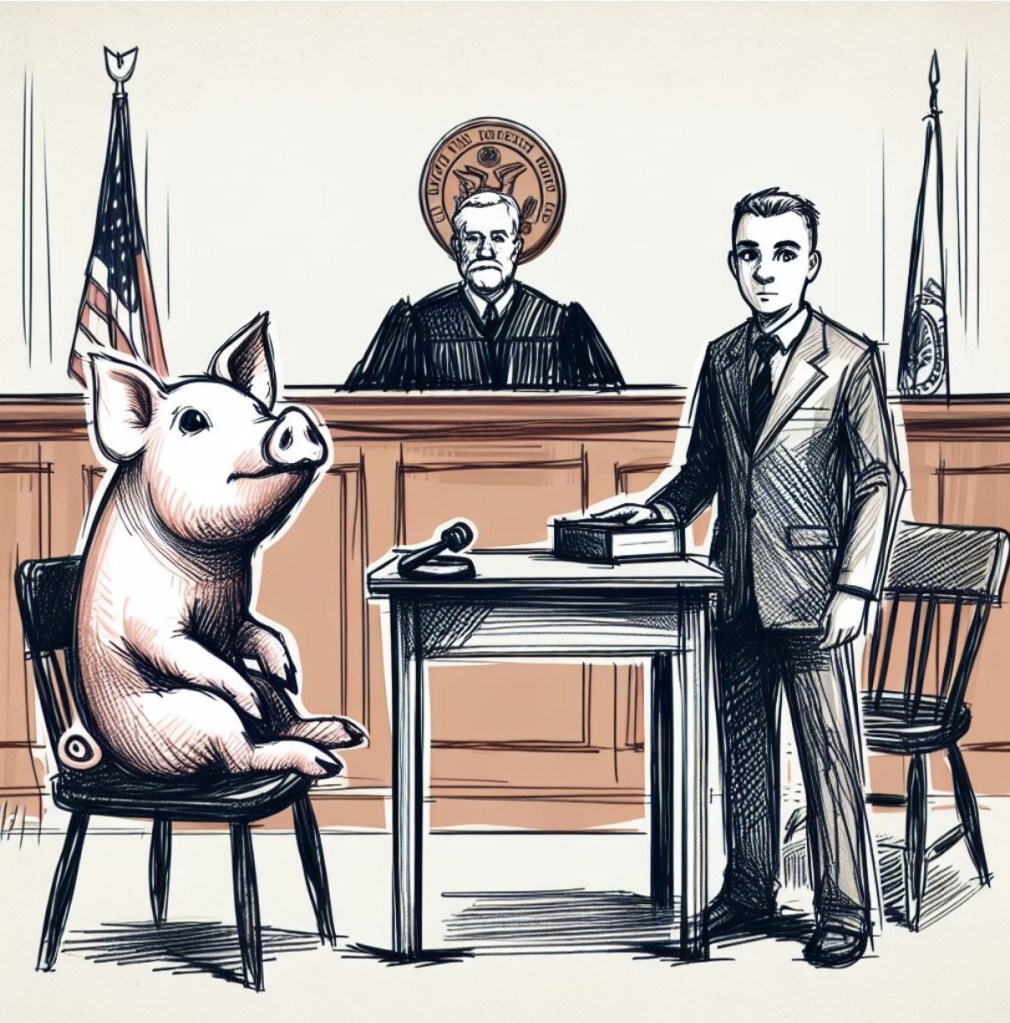
In medieval Europe, it was not uncommon to put animals on trial for various crimes. In France, Italy, Switzerland, and elsewhere, courts tried pigs, dogs, rats, grasshoppers, and snails for crimes against people, property, and God. 

Examples include cases brought against vermin who dared to ransack stores of grain and prosecutions for pigs having maimed or killed people.

There’s a whole book about the practice, Chronological List of the Prosecution of Animals from the Ninth to the Twentieth Century, by E.P. Evans. I typed the name of the book in the search bar at Amazon. Apparently it is not available, and the site instead recommended that I purchase a DVD of Ransom, starring Mel Gibson. (?)

No, thank you.

I also say no, thank you to New Jersey Department of Labor and Workforce Development (NJ DLWD), which has proposed new independent contractor classification regulations.

The regulations would re-interpret NJ’s ABC Test in a way that would make it much harder to maintain IC status. The regulations would apply to the NJ Wage Payment Law, the Unemployment Compensation Law, and the Earned Sick Leave Law.

For years New Jersey has used an ABC Test, but with the standard version of part B, unlike California and Massachusetts, which have a strict version of part B.

To satisfy a standard ABC Test, like in NJ, the party engaging the contractor must prove (all three):

  1. The individual has been and will continue to be free from control or direction over the performance of work performed, both under contract of service and in fact; and
  2. The work is either outside the usual course of the business for which such service is performed, or the work is performed outside of all the places of business of the enterprise for which such service is performed; and
  3. The individual is customarily engaged in an independently established trade, occupation, profession or business.

The regulations would largely re-interpret part B to make it more like the strict version, which can be met only if the work is performed “outside the course of the business for which such service is performed.”

The regulation would essentially eviscerate the second option — that the work is performed outside of all the places of business of the enterprise for which such service is performed — and make it nearly impossible to satisfy this alternative.

For example, under the regulations, the retaining party’s “place of business” could include any place where the work is typically performed, even customer’s homes.

The regulations would also make parts A and C harder to meet. In part A, for example, the regulations would declare that control exerted to make sure a contractor follows the law is relevant control that can convert the worker to an employee. But control exerted to ensure compliance with a law is control imposed by the government, which passed the law, not by the company retaining the contractor. This re-imagining of part A would be inconsistent with a multitude of court decisions that have addressed this issue.

I say no, thank you, because the regulation is not consistent with New Jersey law and is not consistent with how other courts around the country have interpreted the ABC factors. The NJ DLWD is supposed to apply the law, not change it. The NJ DLWD is not a legislative body and is not a court.

Nonetheless, it seems like there’s a good chance this will pass.

A 60-day public comment period began with the publication of the proposed rule on May 5. Companies that will be impacted by the rule should consider submitting comments. Page 1 of the proposed regulations explains how.

Misclassification in New Jersey is serious business. The state has been aggressive about pursuing legal action against companies that systemically misclassify workers as ICs. (But so far, no cases against pigs, dogs, rats, grasshoppers or snails. I think.)

Enter your email address to subscribe to this blog and receive notifications of new posts by email.

© 2025 Todd Lebowitz, posted on WhoIsMyEmployee.com, Exploring Issues of Independent Contractor Misclassification and Joint Employment. All rights reserved.

2018_Web100Badge
 

DOL Softens Its Bite on Independent Contractor Rule

This is Louie. He’s 11 weeks old. He has the teeth of a shark. If you play with him and there’s no toy in his mouth, your arm is the toy. Or your foot. Or sometimes your face. In my house, we all look like we just played with a blender. But he’s awfully cute.

Late last week, the Department of Labor (DOL) made some news that won’t bite companies in the face.

Read more here.

Originally published 5/5/25 as a BakerHostetler alert.

A Parliament of Owls? Senate Committee Seeks Support for Portable Benefits Bill for Contractors

I found this guy while running in the neighborhood

When animals flock together, we use strange collective names to describe them. You’ve heard of a flock of seagulls, a pod of whales, and a murder of crows. But did you know the collective nouns for apes, hippos, and wildebeests?

Fortunately, this wildlife writer does. It’s a shrewdness of apes, a bloat of hippopotamuses, and a confusion of wildebeests.

My favorite, though, is a parliament of owls. The phrase was apparently coined by CS Lewis in the 1950s and stuck. Good for the owls! I wish for them to form a strong government and pass wise laws.

When independent contractors flock together, we don’t really have a good word for that. Contractors generally can’t flock together for employee benefit plans since they’re not employees, even though some states have enacted portable benefits laws as models for what may be viable on a national level.

One impediment to companies providing contractors with benefits is that doing so can be evidence of an employment relationship. Companies are perversely incentivized not to help contractors remain self-sufficient because companies don’t want to risk misclassification claims.

That could change with a national portable benefits bill.

There has been interest for a long time among trade associations and small business groups to allow portable healthcare and retirement benefits for independent contractors. A recently released white paper by Sen. Bill Cassidy, Chair of the Senate Health, Education, Labor, and Pensions (HELP) Committee, advocates for a national portable benefits bill.

The white paper proposes various options for providing affordable health care options for independent contractors, including association health plans, health reimbursement arrangements, pooled employer plans, and single employee pension IRAs. For these programs to work, Congress would have to ensure that a company’s participation in such plans is not a factor in determining whether the contractor receiving such benefits is misclassified.

The concept of portable benefits for contractors is one that should have bipartisan support. The main obstacle to such a bill is likely the desire by some for contractors to receive all of the benefits of employees, and so this concept (for them) is only half a loaf.

Once upon a time, we used to have a Congress that would consider half a loaf to be better than no loaf at all. My hope is that legislators will find a way to make this concept work.

It would be wise. Something that a parliament of owls could probably get done.

Enter your email address to subscribe to this blog and receive notifications of new posts by email.

© 2025 Todd Lebowitz, posted on WhoIsMyEmployee.com, Exploring Issues of Independent Contractor Misclassification and Joint Employment. All rights reserved.

2018_Web100Badge
 

Holy Bat Trap: Here’s How to Protect IP Created by Contractors

Two London police officers had to get creative to break up a gambling ring that was profiting off tourists on Westminster Bridge. The gambling rings would target tourists by setting up rigged games. Police would break up the games, but the wrongdoers learned to tell when the police were coming.

Cue the dynamic duo!

Police officers dressed as Batman and Robin mingled with the crowds, then struck when the time was right. Or as Mr. Kim might say, Sneak attack.

Companies retaining independent contractors can avoid needing to sneak attack if they set certain ground rules up front. One of these important ground rules relates to ownership of IP.

Intellectual property created by a non-employee is not automatically a work made for hire under US copyright law. Instead, an assignment of inventions clause is needed.

Ensuring that your own the contractor’s creations and the IP rights can be critical to getting the benefit of why you retained the IP. Consider the contractor who writes computed code or creates copy for your website. You want to own that IP.

(Or sometimes, like with an IC photographer, you might want to license it and allow the photographer to retain the copyright. But either way, you need to consider these issues in advance.)

But don’t wait until the protectable IP has been created to seek the assignment. Do it up front, in your independent contractor agreement.

Use a present assignment clause. The clause should say that any works created by the contractor and any IP rights arising out of those works are automatically assigned by the contractor upon creation, with no further affirmative act needed to effectuate the assignment. Do not merely say that the IP will be assigned, because that requires future action.

If you plan ahead with a proper assignment clause, you can avoid later trying to chase down the contractor for an assignment of the IP, which may already have been embedded into vital company property, such as computer code. Chasing down a contractor later might be easier than breaking up a gambling ring, and you might not even have to dress up as a superhero or his trusty sidekick.

Enter your email address to subscribe to this blog and receive notifications of new posts by email.

© 2025 Todd Lebowitz, posted on WhoIsMyEmployee.com, Exploring Issues of Independent Contractor Misclassification and Joint Employment. All rights reserved.

2018_Web100Badge
 

Lessons from a Blobfish: How to Avoid an Unexpected Retaliation Claim When Deciding Who to Engage

From mid-January to mid-February, I spent four weeks working remote from New Zealand’s South Island. It’s an astoundingly beautiful place, and I loved the experience. One experience I apparently missed out on, however, was seeing the now-famous blobfish.

The gelatinous blobfish lives at depths of 2,000-4,000 feet, a visit to which was not on my itinerary. But if it had been, I might have seen the 2025 Fish of the Year, as named by New Zealand’s Mountain to Sea Conservation Trust.

Its odd appearance is apparently caused by bringing the fish to the surface. In its deep sea habitat, the pressure causes it to look rather like a normal fish. So if you were deep in the sea, you might not have treated the blobfish any differently than its neighbors.

A recent federal court decision serves as a good reminder about the dangers of treating someone differently — in a way you might not have expected.

A recruiting firm was working with a candidate who had been threatening to sue her former employer for discrimination. The recruiting firm advised her against it and, when she sued anyway, it dropped her as a client.

But recruiting, staffing, and other firms can work with whomever they want, right? Generally yes, but they cannot decline to engage someone for an unlawful reason.

Title VII of the 1964 Civil Rights Act allows employees to assert their legal rights opposing discrimination and protects them against retaliation. The protection against retaliation extends beyond the company being sued. Another potential employer — or recruiting firm, or staffing firm, or even a company considering engaging the person as an independent contractor — cannot retaliate against that person for having asserted protected legal rights.

The lesson for recruiting, staffing, and other firms is this: Do not turn someone away for the sole reason that the person sued a former employer. That may be in violation of federal law.

In the federal case described above, the court denied a motion to dismiss by the recruiting firm, holding that the firm could potentially be liable for retaliation if the reason it declined to work with the individual was because she had asserted her federal protected rights under Title VII.

Like the blobfish, this seems like an ugly outcome for businesses. But also like the blobfish, if you go a little deeper, everything appears somewhat normal. If an individual was truly discriminated against, that person should not be punished for being a victim. That’s the theory anyway. We all know there are lots of meritless discrimination lawsuits. The anti-retaliation protections of Title VII extend to claims brought in good faith, even if the plaintiff doesn’t win.

Enter your email address to subscribe to this blog and receive notifications of new posts by email.

© 2025 Todd Lebowitz, posted on WhoIsMyEmployee.com, Exploring Issues of Independent Contractor Misclassification and Joint Employment. All rights reserved.

2018_Web100Badge
 

How do Trump’s DEI Orders Affect Independent Contractor Retention?

In Canadian folklore, the Wendigo is an evil creature that can possess humans and turn them into cannibals. Wendigos cannot control their bloodlust and will even eat their loved ones, according to facts.net. The term “Wendigo Psychosis” has been used to describe a psychiatric condition in which patients experience intense desires to eat human flesh.

And that brings us to Trump’s executive orders on DEI.

On Friday, the Fourth Circuit Court of Appeals lifted a nationwide injunction that stalled enforcement of Trump’s DEI orders. The injunction was lifted for technical legal reasons, not because of policy reasons. In fact, two of the three judges wrote concurring opinions to show their support for DEI initiatives, even though they agreed the injunction should be lifted.

In one concurrence, Judge Albert Diaz expressed his frustration that they were unable to address the real substantive issue, referring to DEI initiatives (which he favors) as“a monster in America’s closet.” But hopefully not a Wendigo.

So how do the DEI orders affect independent contractors, and what should businesses do?

First, every business should be conducting an overall DEI audit right now. Programs and initiatives that overtly favor one group need to go. Scholarships and internships available only to certain racial or ethnic groups should be changed. Hiring quotas or targets must be removed. There’s a lot of gray area too, and there are a lot of things we are doing for clients in this area, but this post isn’t about DEI audits, so I’ll stop there.

Second, here’s what to look for with contractor relationships:

  • Check your supplier retention policies.
  • Eliminate any requirements to retain a certain percentage of minority or women-owned businesses.
  • Remove contractor (or supplier or vendor) selection criteria that consider race or sex.
  • Make sure that your supervisors who make retention decisions are not evaluated based on their performance in reaching targets to retain contractors based on race or sex.
  • Check supplier and vendor contracts for staffing criteria that favor or disfavor any protected group.

The attack on DEI is real, and companies who rightly remain committed to ensuring fair opportunities for all need to evaluate how they are seeking to achieve these goals. The government has an appetite for consuming companies whose DEI initiatives go too far. Like the Wendigo.

Enter your email address to subscribe to this blog and receive notifications of new posts by email.

© 2025 Todd Lebowitz, posted on WhoIsMyEmployee.com, Exploring Issues of Independent Contractor Misclassification and Joint Employment. All rights reserved.

2018_Web100Badge
 

Image from https://www.giantbomb.com/wendigo/3005-21605/images/

Death Whistle for IC Tests: New Bill Would Create Unified Standard

The Aztec Death Whistle is shaped like a human skull and produces a hideous shrieking sound, as if conjuring up 1000 piercing human screams. These whistles have been discovered in burial site excavations. Scholars believe that they played a role in warfare or burial ceremonies.

Either way, they make a pretty awful sound. Here’s a youtube video demonstration. Enjoy! 😳

Rep. Kevin Kiley (R-CA) hopes that two new bills will sound a death whistle to the confusing morass of independent contractor tests.

The Modern Worker Empowerment Act (MWEA) would codify the test for employee status under the Fair Labor Standards Act (FLSA) and the National Labor Relations Act (NLRA). The new test would create a two-part test. It would be a blend of the Right to Control Test and the Economic Realities Test.

An individual would be deemed an independent contractor if (1) the hiring party does not exercise significant control over how the work is performed, and (2) the person performing the work has the opportunities and risks inherent to entrepreneurship.

The bill would also prohibit consideration of certain facts, such as any requirement to comply with legal and safety standards.

The Modern Worker Security Act (MWSA) would create a safe harbor so that companies could provide portable benefits to independent contractors.

These laws would apply only to classification under the FLSA and NLRA. The bills do not attempt to modify the IRS’s Right to Control standard or any state law tests.

So are these bills a death whistle for the current IC tests?

Probably not. My Aztec-themed prediction device says the bills are not likely to become law. But I like the thinking. Any increase in clarity for the IC tests would be helpful to the business community.

Meanwhile, if you’d like to learn more about Aztec death whistles, there’s an actual study published in Nature that investigates the “Psychoacoustic and Archeoacoustic nature of ancient Aztec death whistle.” Here’s the link.

Enter your email address to subscribe to this blog and receive notifications of new posts by email.

© 2025 Todd Lebowitz, posted on WhoIsMyEmployee.com, Exploring Issues of Independent Contractor Misclassification and Joint Employment. All rights reserved.

2018_Web100Badge