
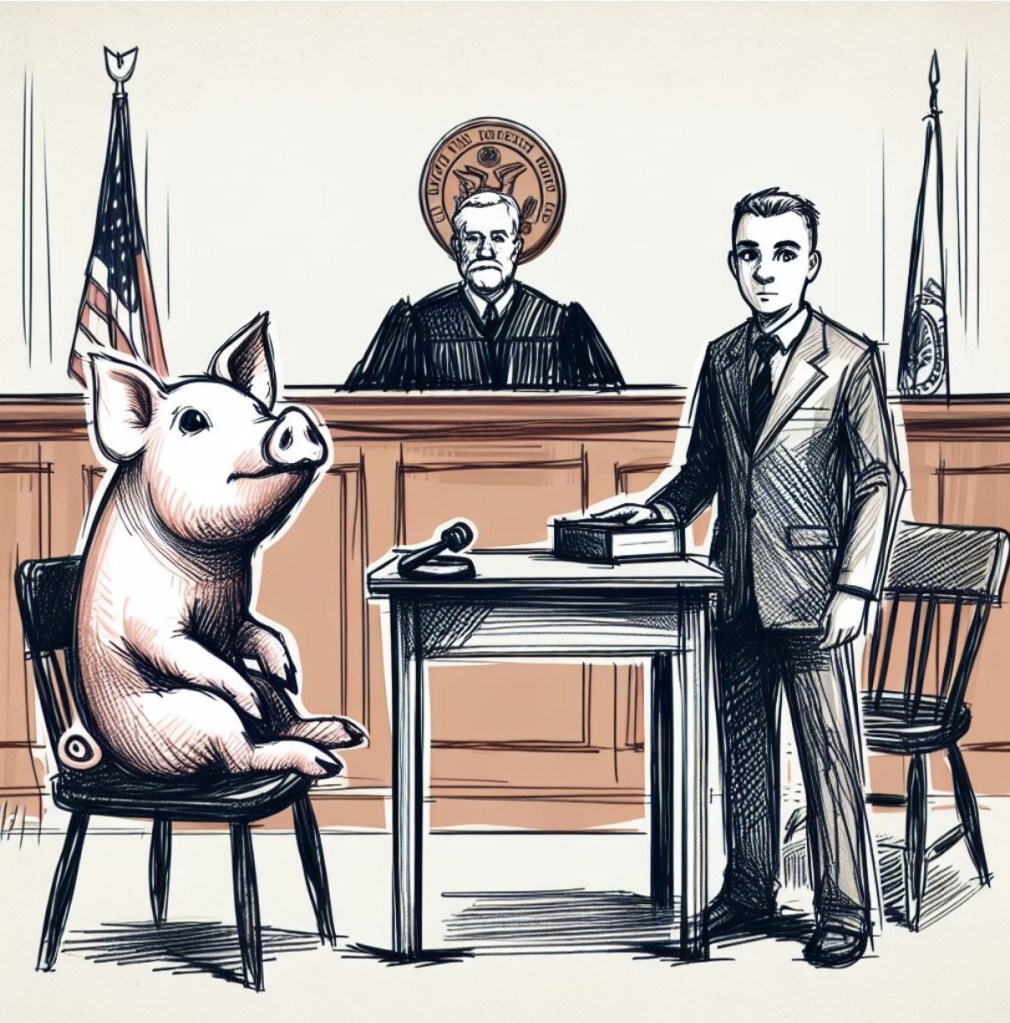
Death Whistle for IC Tests: New Bill Would Create Unified Standard

The Aztec Death Whistle is shaped like a human skull and produces a hideous shrieking sound, as if conjuring up 1000 piercing human screams. These whistles have been discovered in burial site excavations. Scholars believe that they played a role in warfare or burial ceremonies.

Either way, they make a pretty awful sound. Here’s a youtube video demonstration. Enjoy! 😳

Rep. Kevin Kiley (R-CA) hopes that two new bills will sound a death whistle to the confusing morass of independent contractor tests.

The Modern Worker Empowerment Act (MWEA) would codify the test for employee status under the Fair Labor Standards Act (FLSA) and the National Labor Relations Act (NLRA). The new test would create a two-part test. It would be a blend of the Right to Control Test and the Economic Realities Test.

An individual would be deemed an independent contractor if (1) the hiring party does not exercise significant control over how the work is performed, and (2) the person performing the work has the opportunities and risks inherent to entrepreneurship.

The bill would also prohibit consideration of certain facts, such as any requirement to comply with legal and safety standards.

The Modern Worker Security Act (MWSA) would create a safe harbor so that companies could provide portable benefits to independent contractors.

These laws would apply only to classification under the FLSA and NLRA. The bills do not attempt to modify the IRS’s Right to Control standard or any state law tests.

So are these bills a death whistle for the current IC tests?

Probably not. My Aztec-themed prediction device says the bills are not likely to become law. But I like the thinking. Any increase in clarity for the IC tests would be helpful to the business community.

Meanwhile, if you’d like to learn more about Aztec death whistles, there’s an actual study published in Nature that investigates the “Psychoacoustic and Archeoacoustic nature of ancient Aztec death whistle.” Here’s the link.

Enter your email address to subscribe to this blog and receive notifications of new posts by email.

© 2025 Todd Lebowitz, posted on WhoIsMyEmployee.com, Exploring Issues of Independent Contractor Misclassification and Joint Employment. All rights reserved.

2018_Web100Badge
 

Toast! Trump DOL Signals an End to the 2024 Biden Independent Contractor Rule

This Thursday, Feb 27 marks National Toast Day, an important annual celebration that commemorates this versatile form of bread. Toast for breakfast? Toast for brunch? Snack? PB&J? Is there anything toast can’t do?

National Toast Day is celebrated on the last Thursday of February each year, which means that this year it overlaps with National Polar Bear Day, National Strawberry Day, and National Kahlua Day.

Put all those things together and you’ve got one helluva picnic.

But why do I mention toast? Because of independent contractor classification tests, of course. Here’s what I mean.

Remember the 2024 DOL independent contractor rule — you know, the one that the Biden DOL passed in January 2024? We hardly had a chance to get acquainted.

I’ll tell you something that won’t surprise you. The Trump Administration is likely going to rescind it. Or maybe ignore it. Or maybe allow a court to reject it. One way or another, it’s gonna be toast.

There are several lawsuits challenging the 2024 rule, and one of them — Frisard’s Transportation v. US DOL — was scheduled for oral argument at the Fifth Circuit Court of Appeals in early February.

The DOL, however, asked the court to postpone oral argument to allow it time to consider how it wants to proceed. How it wanted to proceed under Biden was to defend the rule. Now, not so much.

However the case proceeds, we can expect that the Trump DOL will not apply the Biden Administration’s independent contractor test.

So what does that mean for the independent contractor test?

In reality, not much.

That’s because, first, the rule applied only to the Fair Labor Standards Act (FLSA), which is the federal wage and hour statute. It didn’t apply to tax law, benefits law, labor law, unemployment or workers’ comp law, or any state law.

And second, the test for who is an employee under the FLSA has always been an Economic Realities Test, and courts know what that test is. Every circuit court has a long line of case law describing the Economic Realities test. The courts don’t need the Biden or Trump Administration to tell them how to interpret the FLSA. The FLSA has been on the book since the 1930s, back when Biden and Trump were mere teenagers.

So what does this mean for employers? Again, not much. Employers should assume that under federal wage and hour law, the test for whether someone is an employee or independent contractor is the same as it has been for decades.

This anticipated change is not really going to change anything at all.

Now, if instead of toast, the Trump Administration made the rule into Kahlua, that would seem to be worth celebrating.

Enter your email address to subscribe to this blog and receive notifications of new posts by email.

© 2025 Todd Lebowitz, posted on WhoIsMyEmployee.com, Exploring Issues of Independent Contractor Misclassification and Joint Employment. All rights reserved.

2018_Web100Badge
 

Did Joni See It Coming? Two Companies Forced to Reclassify All Gig Workers as Employees

They paved paradise and put up a parking lot.

When Joni Mitchell wrote “Big Yellow Taxi,” she had just arrived in Honolulu. She was inspired by the view outside her hotel window, with beautiful green mountains in the distance and, closer to the hotel, a “parking lot as far as the eye could see.” Ugly.

For business owners, the beautiful green mountains are successful business operations, with the business having been built the way you wanted and cultivated over a number of years. Paving over that paradise with a parking lot is the government coming in and forcing you to change how you do business. Ugly.

That’s what is happening to companies that rely on independent contractors but aren’t deliberate enough in how they set up their IC relationships. Looking back at 2024, here’s what I mean, with two specific examples.

Two companies with nationwide operations were forced to convert all independent contractors to employees, at least those working in California.

WorkWhile and Qwick provide gig workers to fill empty shifts. Qwick operates in the hospitality industry, and WorkWhile operates across multiple fields, including manufacturing, hospitality, and general labor.

The companies treat the gig workers as independent contractors. The City of San Francisco sued each company on behalf of the State. The lawsuits alleged that the gig workers were misclassified and should have been treated as employees under California law.

In 2024, both companies settled. Each agreed to pay a seven-figure settlement and to reclassify all gig workers as employees. (Press releases are here and here.)

Before the lawsuits, both companies had operated their businesses this way for years. They didn’t get sued and didn’t have to reclassify the contractors — until they did.

This case is a good reminder of two important rules.

1. Just because you have been doing it this way for years doesn’t mean it’s lawful.

2.The fact that you haven’t been sued means only that you haven’t been sued yet.

Before the lawsuits were filed, the companies had options.

They could have been proactive about changing the facts of the relationships and the contracts. They could have molded the facts the way they wanted without government oversight, in a way that would better insulate them from misclassification claims. This would have been difficult in California, with its strict ABC Test, but not impossible. But it would have taken hard work and a willingness to make changes proactively.

Or they could have converted their contractors to employees, but done it on their own terms, without the government telling them how they have to operate their business.

Now, as part of their settlements, these companies are forced to allow the government to monitor and dictate how they interact with these workers.

Don’t it always seem to go / that you don’t know what you’ve got ‘til it’s gone?

Once the government is monitoring how you do business, you’ve lost the flexibility to adapt and build on your terms. It’s too late. The time to act is before you get audited, investigated, or sued. See Rule #2.

Enter your email address to subscribe to this blog and receive notifications of new posts by email.

© 2024 Todd Lebowitz, posted on WhoIsMyEmployee.com, Exploring Issues of Independent Contractor Misclassification and Joint Employment. All rights reserved.

2018_Web100Badge
 

What is the S.G. Borello Test? (Hint: It’s No Ashley Paradox)

Remember Rick Astley? Yes, this guy. And this song. I assume he had other songs but I know of none of them.

I recently read a Reddit post that offers the Astley Paradox. And it’s a good one.

If you ask Rick Astley for his copy of the movie Up, he cannot give it you as he will never give you up. However, in doing so, he lets you down. Thus creating the Astley Paradox.

California’s tests for determining independent contractor status are not paradoxical, But they are complicated.

There are essentially two tests, the ABC Test and the S.G. Borello Test. The ABC Test is the default test, and it’s the hardest to please.

There are a gazillion exceptions to the ABC Test, and you can find these in California Labor Code sections 2776-2784. But when an exception applies, it doesn’t mean the worker is an independent contractor. It means you use the S.G. Borello test to make that determination instead of the ABC Test.

The S.G. Borello Test is a balancing test. In contrast to the ABC Test, you don’t have to satisfy every factor.

Here’s the S.G. Borello test, with some bonus commentary from the California Department of Industrial Relations:

The California Supreme Court established the Borello test in S.G. Borello & Sons, Inc. v. Dept. of Industrial Relations (1989) 48 Cal.3d 341. The test relies upon multiple factors to make that determination, including whether the potential employer has all necessary control over the manner and means of accomplishing the result desired, although such control need not be direct, actually exercised or detailed. This factor, which is not dispositive, must be considered along with other factors, which include:

  1. Whether the worker performing services holds themselves out as being engaged in an occupation or business distinct from that of the employer;
  2. Whether the work is a regular or integral part of the employer’s business;
  3. Whether the employer or the worker supplies the instrumentalities, tools, and the place for the worker doing the work;
  4. Whether the worker has invested in the business, such as in the equipment or materials required by their task;
  5. Whether the service provided requires a special skill;
  6. The kind of occupation, and whether the work is usually done under the direction of the employer or by a specialist without supervision;
  7. The worker’s opportunity for profit or loss depending on their managerial skill;
  8. The length of time for which the services are to be performed;
  9. The degree of permanence of the working relationship;
  10. The method of payment, whether by time or by the job; 
  11. Whether the worker hires their own employees;
  12. Whether the employer has a right to fire at will or whether a termination gives rise to an action for breach of contract; and
  13. Whether or not the worker and the potential employer believe they are creating an employer-employee relationship (this may be relevant, but the legal determination of employment status is not based on whether the parties believe they have an employer-employee relationship). 

Borello is referred to as a “multifactor” test because it requires consideration of all potentially relevant facts – no single factor controls the determination. Courts have emphasized different factors in the multifactor test depending on the circumstances. For example, where the employer does not control the work details, an employer-employee relationship may be found if (1) the employer retains control over the operation as a whole, (2) the worker’s duties are an integral part of the operation, and (3) the nature of the work makes detailed control unnecessary. (Yellow Cab Cooperative, Inc. v. Workers’ Compensation Appeals Board (1991) 226 Cal.App.3d 1288.) 
As the Supreme Court has explained, Borello “emphasizes statutory purpose as the touchstone for deciding whether a particular category of workers should be considered employees rather than independent contractors for purposes of social welfare legislation.” (Dynamex, 4 Cal.5th at 935.) The emphasis on statutory purpose “sets apart the Borello test for distinguishing employees from independent contractors from the [common law] standard . . . in which the control of details factor is given considerable weight.” (Id.)

Most contractor relationships won’t satisfy all of the factors, but you’re going to need to satisfy most if you want independent contractor status under the S.G. Borello test. There’s no precise mathematical formula for how many factors you need, and different judges may evaluate the same set of facts differently, so it’s important to satisfy as many factors as you can.

California law isn’t as forgiving as Rick Astley. California law will often let you down and desert you.

Enter your email address to subscribe to this blog and receive notifications of new posts by email.

© 2024 Todd Lebowitz, posted on WhoIsMyEmployee.com, Exploring Issues of Independent Contractor Misclassification and Joint Employment. All rights reserved.

2018_Web100Badge
 

A Car Crash? Trump’s Labor Secretary Pick Supports ABC Test for Worker Classification

Sometimes things don’t make sense when you read them. Like this: Here’s an adorable video of a dog getting hit by a car.

You need to dig deeper to make sense of it. If you watch the video, you’ll understand. The sentence is true, and the video is adorable.

Another thing that didn’t make sense to me when I first read it is that Trump’s pick for Secretary of Labor, Lori Chavez-DeRemer, was a co-sponsor of the PRO Act.

I had to dig deeper. Is that really true? It is.

Remember the PRO Act? It’s an acronym for Protecting the Right to Organize. It’s a Democrat-sponsored bill that threatens to blow up the gig economy and convert most independent contractors to employees.

The PRO Act would change the definition of “employee” under the NLRA so that all workers are presumed to be employees, not independent contractors, unless the strictest version of the ABC Test is met. That’s the same test as in California, but without all the exceptions.

In the 2023 version of the PRO Act, a worker is an employee under the NLRA unless (all 3):

(A) the individual is free from control and direction in connection with the performance of the service, both under the contract for the performance of service and in fact;

(B) the service is performed outside the usual course of the business of the employer; and

(C) the individual is customarily engaged in an independently established trade, occupation, profession, or business of the same nature as that involved in the service performed.

Yes, that’s the same dreaded Part B that makes California such a difficult place to maintain independent contractor relationships.

The PRO Act would also broaden the definition of joint employment under the NLRA.

Chavez-DeRemer was one of three Republicans to co-sponsor the bill.

The PRO Act will not get the 60 votes needed in the Senate, so it’s not going to pass anytime soon (so long as the filibuster rule remains intact). But this bill is so pro-union that her support should be of concern to any business that engage contractors.

Chavez DeRomer served only one term in Congress, so she did not build an extensive record. But her support of the PRO Act is a part of that limited record.

I expect we’ll learn more about her views during the confirmation process. Her support of the PRO Act is something to keep an eye on. Getting hit with the PRO Act (or some DOL-authorized version of it) would be far worse that the damage done by the car hitting the dog in the video, which you really should watch if you skipped over the link above.

Enter your email address to subscribe to this blog and receive notifications of new posts by email.

© 2024 Todd Lebowitz, posted on WhoIsMyEmployee.com, Exploring Issues of Independent Contractor Misclassification and Joint Employment. All rights reserved.

2018_Web100Badge
 

Bad Moon Rising: Another State Cracks Down on Misclassification with $2.7M Due

I see the bad moon a-rising
I see trouble on the way
I see earthquakes and lightning
I see bad times today

When John Fogerty wrote “Bad Moon Rising,” he was reportedly inspired by the 1941 film The Devil and Daniel Webster. There’s a scene in the film where a hurricane destroys the crops of several farms, but spares those of a man who had made a deal with the devil in exchange for wealth. 

When classifying independent contractors, a deal with the devil generally doesn’t work. If you misclassify your workers as contractors, when the law says they should be employees, trouble will eventually be on the way.

A printed media delivery company found that out the hard way, after being investigated by the New Jersey Department of Labor and Workforce Development (DLWD).

There was no civil lawsuit here. A state agency went after the company. Be wary of state agency audits. This one cost the company $2.7 million in a recent settlement.

  • Overview: The New Jersey Attorney General and the DLWD reached a $2.7 million settlement with Publishers Circulation Fulfillment, Inc. (PCF) for misclassifying delivery workers as independent contractors.
  • Findings: The investigation revealed that PCF exerted significant control over its delivery workers, who were largely immigrants working overnight for low wages. PCF failed to classify these workers as employees, violating New Jersey labor laws.
  • Settlement Details: The settlement totals $2.7 million, covering approximately 2,400 workers.
  • History of the Investigation: The investigation began in 2021, focusing on PCF’s compliance with state employment laws from 2019 to 2022. It was found that PCF made unlawful deductions from workers’ pay and failed to provide essential protections. In a separate 2022 settlement, PCF was required to pay nearly $2.7 million for failing to contribute to the state’s Unemployment Compensation and Disability Benefits Funds between 2015 and 2018.

When considering independent contractor relationships, companies often make the mistake of assuming that if both parties are satisfied with the arrangement, it will be ok. Not so.

State agencies are becoming more and more aggressive in enforcing misclassification on their own. States lose money from misclassification because employers contribute funds to state unemployment and workers’ compensation funds for employees, but not for contractors.

So make sure your workers are properly classified, and heed this warning from John Fogerty and the band:

Hope you got your things together
Hope you are quite prepared to die
Looks like we’re in for nasty weather
One eye is taken for an eye.

Enter your email address to subscribe to this blog and receive notifications of new posts by email.

© 2024 Todd Lebowitz, posted on WhoIsMyEmployee.com, Exploring Issues of Independent Contractor Misclassification and Joint Employment. All rights reserved.

2018_Web100Badge
 

For Upcoming Changes to Independent Contractor Rules, Look to Band Names

The band America (“A Horse with No Name,” “Ventura Highway”) was formed in England. Yes, really. But by three Americans whose fathers were in the U.S. Air Force and stationed overseas.

That got me thinking about other bands with place names. When I was growing up in Miami in the 1980s, if someone mentioned Boston, I thought of just another band out of Boston, on the road to make ends meet. If someone mentioned Kansas, I thought of dust in the wind, even though I never particularly liked that song. Chicago made me think of the Cubs, but only in 1984. Otherwise, does anybody really know what time it is?

Not that I am older and have a life, place names mean something different to me. They now make me think of federal, state, and local laws affecting independent contractor status.

(Ok, I take back the comment about having a life. I realize this is a sad and pathetic way to think of place names.)

After the election, place names are going to take on greater importance as businesses aim to protect their independent contractor relationships. Federal enforcement activity isn’t going away, but I expect to see a growing emphasis on legislation and enforcement at the state and local level.

In the realm of non-employee workers (independent contractors, staffing agency temps), I expect to more state and local legislation in these areas:

1) Freelancer Laws. We now have freelancer laws in CA, NY, IL, Los Angeles, NYC, Minneapolis, Seattle, and Columbus. These laws impose requirements when retaining individuals who are independent contractors. The laws generally require written contracts that contain several mandatory components.

2) Temporary Worker Laws. We have these in NJ and IL. They generally require that staffing agencies pay their workers an equivalent wage rate (and sometimes the value of benefits) being paid to workers they work alongside at the company where they are providing services.

3) Misclassification Laws – the Bad Kind. In states with Democrat trifectas (house, senate, governor), expect new laws that make it harder to be an independent contractor. Expect more ABC Tests, like in CA and MA. Other states have ABC Tests for determining who is an employee under workers’ comp and unemployment law.

4) Misclassification Laws – the Good Kind. In states with Republican trifectas, expect more safe harbor laws. If you satisfy a set of basic requirements in your dealings with a non-employee worker, then the worker is an independent contractor under that state’s laws. Pesky balancing tests (and long-haired freaky people) need not apply. We have these state laws in WV and LA (not L.A.)

We will likely see changes at the federal level too, but these may take years to develop. The federal agency rulemaking process is slow and cumbersome, and agency rules will take on less importance as federal agency power continues to diminish after the Supreme Court’s Loper Bright decision.

I haven’t touched on Europe or Asia, but those are bands for another day and another post. When? At some point, in the heat of the moment, but only time will tell.

Enter your email address to subscribe to this blog and receive notifications of new posts by email.

© 2024 Todd Lebowitz, posted on WhoIsMyEmployee.com, Exploring Issues of Independent Contractor Misclassification and Joint Employment. All rights reserved.

2018_Web100Badge
 

Hugs! 7-Eleven Franchisees Are Not Employees, Court Rules

Have you ever heard the expression, “I was so happy I could hug a goose”?

Me either. That’s because it’s not an expression. But no one told the sculptor here.

I took this photo while touring the gardens at a villa in Varenna, Italy. I am still haunted by the image. The goose seems none too pleased, but the boy is playing him like a guitar, no matter the feelings of the goose.

Franchise owners in Massachusetts are so happy that they could hug a goose after a recent Massachusetts Supreme Court ruling.

For years, there’s been ongoing litigation in which five 7-Eleven franchise owners sued 7-Eleven, claiming to be employees of the franchisor. The franchise industry has been closely monitoring the case because a ruling for the plaintiffs could threaten the franchise model.

The case has twice been before the Massachusetts Supreme Court. The first time, the Mss. S.Ct. ruled that individual franchise owners could, potentially, be deemed employees under the Massachusetts ABC Test if the individuals were “performing any services” for the franchisor. This ruling, in 2022, merely answered a hypothetical question, but the answer made franchisors nervous.

The litigation continued and made its way to the Mass. S.Ct. a second time. This time the issue was whether the individuals, by operating their stores as 7-Eleven franchises (and following 7-Eleven brand guidelines, etc.) were “performing any services” for the franchisor.

In a goose-hug-worthy decision, the Mass. S.Ct. ruled in late September that “the franchisees operate independent stores not for 7-Eleven
but rather for themselves.” Therefore, they are not performing services for the franchisor, and they cannot be deemed the franchisor’s employees.

This is great news for franchisors (and bad news for plaintiffs’ lawyers). Celebrate however you think is best, but please consider the feelings of the goose.

Enter your email address to subscribe to this blog and receive notifications of new posts by email.

© 2024 Todd Lebowitz, posted on WhoIsMyEmployee.com, Exploring Issues of Independent Contractor Misclassification and Joint Employment. All rights reserved.

2018_Web100Badge
 

What Does It Mean? Supreme Court Weighs in on California’s Independent Contractor Law (Sort of)

I am entertained by poorly translated things. I have no idea what this shirt means or what the designer thought it would mean. I saw this one in Italy.

I can’t help but wonder what the reaction would be if I wore this shirt in the U.S. Would people say anything to me? I was tempted to ask the wearer about it or to try to buy it from her, but I chickened out.

Last week, the U.S. Supreme Court kind of chickened out too.

A petition had been filed with the Court, asking it to invalidate California’s AB5, its stringent independent contractor law. The petition argued that the law singles out certain businesses and therefore violates the Equal Protection Clause of the U.S. Constitution.

As you may recall, AB5 is the California law that makes it much harder to maintain independent contractor status. The law presumes that most workers are employees and requires a hiring party to satisfy a three-part ABC Test to classify someone as a contractor.

The law, however, does not apply the same standards to everyone. The law exempts loads of industries and types of workers from the ABC Test, and — if we’re being honest here — the law was really targeted toward rideshare and delivery companies.

And that’s exactly what the rideshare and delivery companies argued.

In June 2024, the Ninth Circuit voted to preserve the law, and the case (called Olson v. State of California) was appealed to the U.S. Supreme Court. The Supreme Court, however, can decide which cases to hear and does not have to give a reason for declining to hear a case.

Last week, the Supreme Court declined the petition, opting not to hear the case. The Court provided no reason.

A year earlier, in July 2023, the U.S. Supreme Court denied a different petition asking it to review AB5. The earlier petition, in Mobilize the Message LLC v Bonta, argued that the law’s restrictions on freelance work violated the first Amendment.

For some companies, the Supreme Court’s decision last week not to hear the Olson case will have limited effect. The passage of Prop 22 in late 2020 exempted certain rideshare and delivery app companies from having to comply with AB5. (Prop 22 was also challenged in court and survived.) But AB5 and its ABC Test, later recodified in AB2257, remain in effect for many industries and businesses.

This most recent petition to the Supreme Court alleged that AB5 violated the Equal Protection Clause by unfairly singling out certain industries. I think the evidence is plain that this is what motivated the law, but whether that motivation rises to the level of an Equal Protection violation is another matter.

But no matter. The Supreme Court can decline to hear the appeal, and that’s exactly what it did.

AB5 remains on the books, and I can now start thinking about how I could turn all of this into a poorly translated t-shirt.

Enter your email address to subscribe to this blog and receive notifications of new posts by email.

© 2024 Todd Lebowitz, posted on WhoIsMyEmployee.com, Exploring Issues of Independent Contractor Misclassification and Joint Employment. All rights reserved.

2018_Web100Badge
 

Don’t Look Surprised: House Committee Presses DOL for Detail on Misclassification Investigations

My impression of European electrical outlets is that they seem surprised, as if they don’t know what might be coming. I saw this one in our Airbnb in Lake Como.

Am I wrong? Didn’t think so.

The outlet should not be surprised at what’s coming. And DOL Acting Director Julie Su should not have been surprised either when she was issued a subpoena by the House Committee on Education and the Workforce.

The committee, chaired by Rep. Virginia Foxx (R-NC) has been at odds with the DOL for some time. In particular, Foxx et al. have doubts about the legitimacy of the Su-led DOL’s belief that independent contractor misclassification is rampant. The Committee believes that the DOL is being too aggressive in seeking to find misclassification in relationships that are, in reality, properly classified as independent contractor relationships.

In March, the Committee sent the DOL a series of inquiries about its enforcement efforts. But the DOL largely evaded the questions. After ongoing back and forth, the Committee has finally issued a subpoena to the DOL, demanding production of specific information about the DOL’s enforcement activities.

More specifically, the subpoena requests documents sufficient to show, since January 20, 2021:

  1. The number of instances of misclassification that Wage and Hour Division (WHD) inspectors have found.
  2. The number of misclassification enforcement investigations that WHD has initiated.
  3. The number of misclassification enforcement investigations that WHD has jointly undertaken with the NLRB.
  4. The number of misclassification enforcement investigations that WHD has jointly undertaken with the FTC.

Responses to the subpoena are due October 7th. I don’t expect we’ll see direct answers.

And when that happens, it will be no surprise.

Enter your email address to subscribe to this blog and receive notifications of new posts by email.

© 2024 Todd Lebowitz, posted on WhoIsMyEmployee.com, Exploring Issues of Independent Contractor Misclassification and Joint Employment. All rights reserved.

2018_Web100Badge