I was in Italy two weeks ago and visited Vatican City. Passport control at the Rome airport was annoyingly slow, but getting in and out of Vatican City – a sovereign nation – was surprisingly easy. Here is a photo of border control at the Vatican.
Navigating the border between independent contractor and employee status is usually more Rome airport than Vatican City, but a proposed new regulation from the Department of Labor (DOL) would make it a bit easier to support independent contractor status under the Fair Labor Standards Act (FLSA) and the Family and Medical Leave Act (FMLA).
The proposed rule would adopt a five-factor “economic reality” test, consistent with the test adopted during the first Trump administration. The defining feature of this test is that it highlights two core factors. If these two factors are met, the worker would almost always be an independent contractor under the FLSA and FMLA.
Click here to read more, originally posted on the BakerHostetler blog, Employment Law Spotlight.
In the early 1800s, Parisian doctor François Broussais popularized the use of leeches for bloodletting. Vampires, apparently, were going out of fashion, and besides, leeches can eat 10 times their weight in blood, which seems more efficient than vampires anyway.
By the 1830s, France was importing 40 million leeches a year for medical use. Someone was getting rich from the leech trade.
Almost 200 years later, the use of leeches is reserved for freaking out kids on camping trips. We have better ways of treating illness now, but blood collection is still important.
In fact, there is a whole industry based on blood collection (or, for those daring enough to proceed without spellcheck, phlebotomy).
If phlebotomy is your business, then your phlebotomists are your employees, ruled a district court in Michigan a few weeks ago. The case involved a group of blood collectors who were classified as independent contractors. They signed IC agreements and were paid in gross.
They sued under the Fair Labor Standards Act (FLSA), alleging that under the law, they were really employees and should have been paid overtime. The court agreed, with no trial, granting summary judgment to the plaintiffs. Ouch.
The court applied an Economic Realities Test, and found that the factors decisively pointed toward employee status for the phlebotomists. Key facts that weighed in favor of employee status included:
The permanency of the relationship: They worked regularly for the defendant for months at a time.
Skill required: No special certification is needed to draw blood (see, e.g., resumes of leeches, vampires).
Lack of investment in equipment: The phlebotomists didn’t bring or invest in their own equipment.
Opportunity for profit or loss based on managerial skill: Nope. They were paid based on hours worked.
Right to Control: The work was largely directed by the defendant, and the phlebotomists were required to sign non-compete agreements, which prevented them from operating their own businesses in phlebotomy.
Integral part of the business. Well, duh. It’s a phlebotomy business.
The case is a good reminder that it doesn’t matter what the parties call the relationship. The law dictates whether a worker is an employee or an independent contractor, and you can’t agree to contract out of the law.
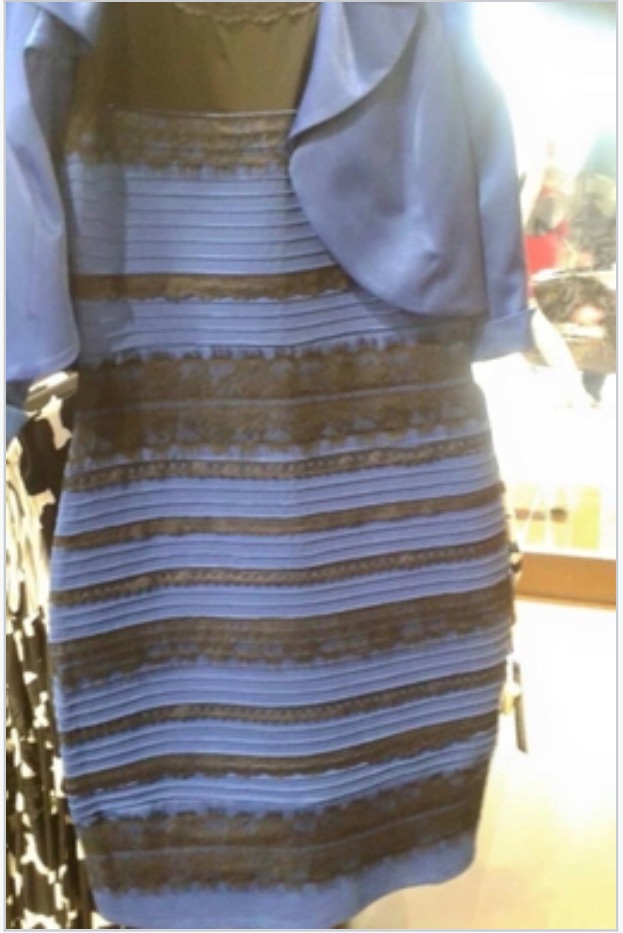
In 2015, this image was widely circulated on Facebook, with some people seeing the dress as white and gold, others seeing it as blue and black. Whichever camp you are in, you probably cannot understand how anyone could possibly think the dress is the other set of colors.
You can read more here if you want a refresher. But essentially it all comes down to neuroscience and differences in how people perceive color.
The core takeaway, though, was that two people could view the same object and reach opposite conclusions.
And so it goes with independent contractor misclassification disputes. A recent Fourth Circuit decision highlights the problem with the tools we use to assess whether a worker is properly classified. When a balancing test is used, different fact-finders can view the same evidence and reach opposite conclusions. And that’s exactly what happened here.
The case, Chavez-DeRemer vs. Medical Staffing of America d/b/a Steadfast, involved a staffing firm that provided independent contractor nurses to hospitals and medical clinics, as needed. The DOL launched an investigation in 2018, alleging that 1,100 nurses should have been classified by Steadfast as its employees under the Fair Labor Standards Act (FLSA). The DOL filed a lawsuit in federal court in Norfolk. After a bench trial, the judge ruled that under the FLSA’s six-factor Economic Realities Test, the nurses were employees. The judge awarded more than $9 million in damages.
Steadfast appealed. Last week, in a 2-1 decision, the Fourth Circuit affirmed. Two judges agreed with the trial court, finding that the evidence supported employee status under the Economic Realities Test.
The dissenting judge disagreed vehemently. As in, how-can-you-possibly-think-the-dress-is-blue-and-black vehemently. The dissenting judge excoriated the majority for cherry-picking facts and ignoring the realities of the relationship.
All three judges, of course, were evaluating the same facts and the same record. All three judges were applying the same six-factor Economic Realities Test. Yet, they reached very different conclusions.
If this is depressing, it should be. It shows how unpredictable balancing tests can be.
The outcome is an important reminder of how important it is, when building independent contractor relationships, to consider every relevant factor and to nudge as many factors as possible to the independent contractor side of the scale.
There is no way to predict which facts a judge will find most persuasive and no way to predict how a judge will weigh the factors, especially since it is pretty much inevitable that there will be at least some factions on each side of the scale.
I see the dress as white and gold. I can’t understand how anyone would think it’s black and blue. Those people are insane.
Actually they’re not insane. (Well maybe they’re insane.)
In the Medical Staffing case, the dissenting judge couldn’t see how the other two judges could have possibly reached the conclusion that the nurses were misclassified. Businesses using independent contractor models need to be prepared that no matter how supportable they think their classification decision is, a judge or agency might reach the opposite conclusion, even from the same facts.
This is Louie. He’s 11 weeks old. He has the teeth of a shark. If you play with him and there’s no toy in his mouth, your arm is the toy. Or your foot. Or sometimes your face. In my house, we all look like we just played with a blender. But he’s awfully cute.
Late last week, the Department of Labor (DOL) made some news that won’t bite companies in the face.
This Thursday, Feb 27 marks National Toast Day, an important annual celebration that commemorates this versatile form of bread. Toast for breakfast? Toast for brunch? Snack? PB&J? Is there anything toast can’t do?
National Toast Day is celebrated on the last Thursday of February each year, which means that this year it overlaps with National Polar Bear Day, National Strawberry Day, and National Kahlua Day.
Put all those things together and you’ve got one helluva picnic.
But why do I mention toast? Because of independent contractor classification tests, of course. Here’s what I mean.
Remember the 2024 DOL independent contractor rule — you know, the one that the Biden DOL passed in January 2024? We hardly had a chance to get acquainted.
I’ll tell you something that won’t surprise you. The Trump Administration is likely going to rescind it. Or maybe ignore it. Or maybe allow a court to reject it. One way or another, it’s gonna be toast.
There are several lawsuits challenging the 2024 rule, and one of them — Frisard’s Transportation v. US DOL — was scheduled for oral argument at the Fifth Circuit Court of Appeals in early February.
The DOL, however, asked the court to postpone oral argument to allow it time to consider how it wants to proceed. How it wanted to proceed under Biden was to defend the rule. Now, not so much.
However the case proceeds, we can expect that the Trump DOL will not apply the Biden Administration’s independent contractor test.
So what does that mean for the independent contractor test?
In reality, not much.
That’s because, first, the rule applied only to the Fair Labor Standards Act (FLSA), which is the federal wage and hour statute. It didn’t apply to tax law, benefits law, labor law, unemployment or workers’ comp law, or any state law.
And second, the test for who is an employee under the FLSA has always been an Economic Realities Test, and courts know what that test is. Every circuit court has a long line of case law describing the Economic Realities test. The courts don’t need the Biden or Trump Administration to tell them how to interpret the FLSA. The FLSA has been on the book since the 1930s, back when Biden and Trump were mere teenagers.
So what does this mean for employers? Again, not much. Employers should assume that under federal wage and hour law, the test for whether someone is an employee or independent contractor is the same as it has been for decades.
This anticipated change is not really going to change anything at all.
Now, if instead of toast, the Trump Administration made the rule into Kahlua, that would seem to be worth celebrating.
That’s because I just read the 65-page opinion in Johnson v. NCAA. The issue before the Third Circuit Court of Appeals was whether college athletes could plausibly be employees under the Fair Labor Standards Act (FLSA).
A massive class action had been brought, and the NCAA and other defendants filed a motion to dismiss. The district court denied it, allowing the case to move forward. The NCAA was allowed an immediate appeal, but the Third Circuit has affirmed and allowed the case to proceed.
Here’s why I am whelmed.
I am underwhelmed by the Third Circuit’s legal analysis, which has more faults than a novice tennis player learning to serve. I am overwhelmed by the massive unintended consequences that would flow from an eventual finding that college athletes are, in fact, employees.
Overwhelmed plus underwhelmed must equal whelmed, right?
The word overwhelmedcomes from the Middle English whelmen, which meant “to overturn.” For speakers of Modern English, that’s nothing more than a fun fact, though, because we’d have a really hard time understanding anyone speaking Middle English anyway. Maybe you had to read The Canterbury Tales in school? Cliffnotes, please.
I am underwhelmed by the legal analysis for many reasons.
1. The Third Circuit acknowledges but then disregards the Supreme Court’s instruction in Walling v Portland Terminal that “[a]n individual who ‘without promise or expectation of compensation, but solely for his personal purpose of pleasure, worked in activities carried on by other persons either for their pleasure or profit,’ is outside the sweep of the Act [FLSA].”
2. The Third Circuit acknowledges but the disregards the Department of Labor’s longstanding position and guidance in its Field Operations Handbook, sec. 10b03(e), which says that the activity of college students participating in interscholastic athletics primarily for their own benefit as part of the educational opportunities provided to the students by the school is not ‘work.’”
3. The Third Circuit ignores the long-recognized concept that play is not work. The dictionary definition relied upon by the Supreme Court in the Walling case differentiated “work” from “something undertaken primarily for pleasure, sport, or immediate gratification….”
4. The Third Circuit butchers the well-established Economic Realities Test, which is the standard for determining employee status under the FLSA. The Third Circuit instead advocates for applying the common law test of agency, which, according to the Supreme Court, is not the test.
5. The Third Circuit pays little attention to the fact that students who elect to play sports do so with no expectation of payment, making them volunteers. Volunteers are not subject to the FLSA (whether at U. Tenn. or otherwise).
6. The Third Circuit makes up a new four-part test (out of thin air) for determining when “college athletes may be employees”:
We therefore hold that college athletes may be employees under the FLSA when they (a) perform services for another party, (b) “necessarily and primarily for the [other party’s] benefit,” Tenn. Coal, 321 U.S. at 598, (c) under that party’s control or right of control, id., and (d) in return for “express” or “implied” compensation or “in-kind benefits,”
I am overwhelmed by the massive unintended consequences that would flow from a ruling that 500,000 collegiate athletes across 1,100 schools are employees of their schools.
If these schools had to pay minimum wage and overtime to all college athletes, that would bust their athletic budgets. Sports that do not pay for themselves (essentially all except major football and some basketball programs) would have to be cut.
Remember when Title IX caused schools to cut unprofitable men’s sports like diving and swimming so they could equalize their offerings of men’s and women’s sports? If only football and men’s basketball are profitable, then schools will need to maintain equivalent women’s sports to comply with the mandates of Title IX. That means some women’s sports will survive, at a loss to offset the opportunities given to men in football and basketball, and the other men’s sports will be cut. If we have to pay, then you can’t play.
International students on F-1 visas would have to be cut from their teams, since their visas generally do not allow them to engage in compensable employment. (That’s why international students can’t take NIL money.) Or federal immigration law will need to be changed.
Unless other laws are changed, schools might be required to provide these employees with healthcare benefits, family or medical leave (paid in some states), reimbursement of expenses in some states, unemployment insurance, workers compensation, and a range of other benefits.
If the courts mess this up, which seems very possible, Congress will need to step in and enact a comprehensive set of rules applicable to college athletes.
For now, the immediate impact of this decision is limited. The Third Circuit did not rule that college athletes are employees under the FLSA. They ruled only that it is plausible that circumstances may exist under which college athletes could be employees under the FLSA. Procedurally, all that happened here is that a motion to dismiss was denied.
Next, the parties will fight over class certification, which could cause the case to fall apart, given the massively divergent situations of, say, a D-1 football player at Alabama and a D-3 bowler at Whatsamatta U.
The issue of whether college athletes are employees under federal wage and hour laws, federal labor laws (NLRA), and a myriad of other laws (state and federal) is not going away soon.
My fear, though, is that courts are (1) likely to apply the wrong legal analysis (as the Third Circuit did here, appearing completely lost), (2) likely to misapply laws that were never intended for this situation, and (3) likely to cause a cascade of unintended consequences that will lead to the end of college sports — unless Congress steps in. (Insert joke here.)
It can mean the front part of the head, as in this selfie featuring two hairy-faced beasts. The one on the left has a wet drippy beard after sloppily drinking water from a bowl. No, I meant on your left.
It can mean the English rock band formed in 1969, which featured Rod Stewart and Ronnie Wood. Their 1971 album, A Nod Is As Good As a Wink… to a Blind Horse, reached #2 in the UK charts.
Or it can be a verb, as in “DOL Independent Contractor Test Faces Court Challenges.” In today’s post, we’re going with verb.
As expected, the independent contractor rule released by the DOL earlier this month is already being challenged in court.
A coalition of business groups is trying to invalidate the rule by asking the Fifth Circuit to reopen an earlier case. In the earlier case, these groups challenged the Biden DOL’s effort to withdraw the Trump DOL’s 2021 version of the independent contractor rule. The 2021 version would have simplified the test, focusing the analysis on two key factors — control and opportunity for profit or loss. In the lawsuit, the business groups argued that the Biden DOL’s efforts to delay and withdraw the Trump DOL’s 2021 rule violated the Administrative Procedure Act (APA).
These groups now argue that the new rule contains the same legal flaws and that that the Trump DOL rule should be the rule that rules. The case is Coalition for Workforce Innovation v. Su, 5th Cir., No. 22-40316.
A second challenge has been filed by freelancer writers and editors who argue that the new rule is impermissibly vague and “freewheeling” (an excellent word choice) and that it violates the APA. They claim that the new rule impermissibly threatens their ability to work as independent contractors and is too vague to allow them to reasonably structure their businesses.
These challenges will take a while to resolve, and more may be filed. Unless a court issues an injunction staying the rule while these cases proceed, the new rule will take effect March 11th.
In the meantime, we’ll keep watching to see what happens. It’s a real face off!
Driving back from Ann Arbor after dropping off my youngest daughter at college, I decided it would be a good time to catch up on some albums I hadn’t heard in a while. Soon I settled on Amy Winehouse’s Back to Black, which was her second and final album, released in 2006. The article liked here describes the conversation with her father that led to the song.
If Amy had gone to rehab, it’s fair to assume she would not have expected to be considered an employee of the rehab center where she was being treated. That was probably the expectation of a number of rehab patients at a Texas facility too, but a court ruling last month found otherwise.
It’s true, the situation in this case was a bit unusual, but it still involves rehab patients being deemed employees of their rehab enter. Here’s how it went down.
The patients, as part of their treatment, were required to undergo vocational, on-the-job training at third parties, where they worked regular shifts. The third parties would pay the rehab center, and the fees were used to offset operating costs. The patients signed agreements that they did not expect compensation for their work.
The rehab center, though, essentially functioned as a staffing agency. It charged the third parties for the patients’ time, even charging time-and-a-half when they worked overtime hours. The patients saw none of that cash, and some of them sued.
A district court in Texas applied the economic realities test and found the patients to be acting as employees of the rehab center / staffing agency when it performed the offsite work. After discovery, the court certified a collective action under the FLSA, and the case is ongoing.
An interlocutory appeal to the Fifth Circuit Court of Appeals failed, with the appeals court holding that the district court applied the right test for determining whether the patients could have been employees.
This case, while still underway, is a good reminder that employment relationships can be created in unexpected ways. This time it was the rehab center that tried to say, no no no.
In school we all learned that the longest river is the Nile. But some say the Amazon is longer. In the atlas “Maps of Useful Knowledge” (1846), the Amazon was listed as 3200 miles and the Nile 2750 miles. The current U.S. Geological Survey shows the Nile at 4132 miles and the Amazon at 4000 miles. Brazilian researchers claim the Amazon is 4331 miles long and the Nile a mere 4258 miles.
So which is it, and how can it be changing? Apparently the controversy involves disputes over where the rivers start, where they end, and how to track changes in the rivers’ course.
Whatever you learned about the test for who is an independent contractor under the Fair Labor Standards Act is subject to change too.
Remember October 2022? Elon Musk completed a $44B deal to take over twitter. Germany took steps to legalize marijuana. And the DOL released a proposed new regulation to modify the independent contractor test.
The proposed rule received more than 50,000 comments. We’ve been speculating about when the DOL might issue a final rule.
We’ve now learned that the DOL is targeting this fall for release of the new rule. The latest version of the regulatory agenda lists August as the target release date. August may be a bit ambitious, but the fall seems likely. On June 9, a federal court of appeals granted a motion by the DOL for a 120-day stay in a pending lawsuit. The DOL asked for the stay to allow it time to release the new rule.
So it seems that whatever we know now about the length of the Nile River, the length of the Amazon River, and the independent comntractor test under the FLSA is subject to change. Hopefully we’ll know more about all three by sometime this fall.
We can be pretty sure the final rule will closely resemble the multi-factor balancing test released in October 2022. Businesses can plan accordingly by being proactive in assessing their relationships with independent contractors and taking steps to reduce risk now.
If you weren’t in Turkey last month, you missed the annual Selçuk Efes Camel Wrestling Festival, which featured 162 competitors in four categories.
The camels are paired by weight and skill, and their techniques include tripping their opponents with foot tricks or applying headlocks then sitting on their opponents. Some just push until the other camel gives up. A winner is declared when one camel scares away the other, making him scream or collapse. The camels are muzzled so there is no biting.
Among those missing the spectacle were the owners of Steadfast Medical Staffing, a Virginia-based firm that maintains a database of nurses and pairs them with healthcare facilities. That’s because they were in federal court, defending against a lawsuit by the Department of Labor. The DOL alleged that they had misclassified the nurses as independent contractors in violation of the Fair Labor Standards Act (FLSA).
After a bench trial, the judge agreed with the DOL and ruled that the nurses — which included CNAs, LPNs and RNs — were employees of the staffing agency. The Court applied the Economic Realities Test, which is the proper test for determining who is an employee under the FLSA.
The Court considered all relevant factors, then applied camel-style headlocks while sitting on the defendant, causing the staffing agency to either scream or collapse (unclear from the opinion). The Court ruled that the staffing agency failed to pay overtime and failed to comply with FLSA record keeping requirements. The agency will be liable for approximately $3.6M in back wages plus another $3.6M in liquidated damages.
Following the judgment, the DOL issued a statement with quotes from the Secretary of Labor, Marty Walsh, and the Solicitor of Labor, Seema Nanda, that the DOL was sending an “unequivocal message” to Steadfast and other staffing companies that the DOL is serious about pursing independent contractor misclassification.
Staffing agencies that treat workers as independent contractors are on notice that the DOL is serious about enforcement. Remember, the facts of the relationship determine whether a worker is an employee or an independent contractor, not how the parties choose to characterize the relationship.
More than 1,100 nurses will share in the award, with a healthy-but-to-be-determined amount of fees headed to the plaintiffs’ lawyers.
A prized wrestling camel can be sold for more than a million Turkish lira. That’s about $75,000. Large awards like this for systemic misclassification are not surprising. This one will cost the staffing firm about 96 wrestling camels.






 Who Is My Employee?