I was in Italy two weeks ago and visited Vatican City. Passport control at the Rome airport was annoyingly slow, but getting in and out of Vatican City – a sovereign nation – was surprisingly easy. Here is a photo of border control at the Vatican.
Navigating the border between independent contractor and employee status is usually more Rome airport than Vatican City, but a proposed new regulation from the Department of Labor (DOL) would make it a bit easier to support independent contractor status under the Fair Labor Standards Act (FLSA) and the Family and Medical Leave Act (FMLA).
The proposed rule would adopt a five-factor “economic reality” test, consistent with the test adopted during the first Trump administration. The defining feature of this test is that it highlights two core factors. If these two factors are met, the worker would almost always be an independent contractor under the FLSA and FMLA.
Click here to read more, originally posted on the BakerHostetler blog, Employment Law Spotlight.
[Update 3/2/2026: A new proposed rule was released last Thu, a few days after this post. A blog post with further details will follow shortly. there’s still no new rule, but now there is a proposed new rule.]
A daycare teacher in St. Charles, Illinois, was arrested this month after she allegedly gave the children candy-flavored laxatives. The plan, apparently, was to cause them to get diarrhea, which meant they would have to be sent home. The teacher’s motivation? She was overwhelmed at work. Fewer kids means less work.
I would counsel against this. If overwhelmed at work, there are generally better options than making a bunch of kids get watery poops. But what do I know?
A client last week alerted me to a mess of a different type. She received a flyer from an HR training firm, offering (for a fee, of course) to train HR professionals and lawyers on the “New Rule Issued by the Department of Labor” on independent contractor classification. Failure to comply with this rule, they warned in the flyer, could result in “the IRS penalizing you for back income taxes, FICA and states going after you for unpaid income taxes, workers compensation premiums and unemployment payments.”
I’d say there’s just one problem here, but that’s not true. So much of this is wrong.
First, there is no new DOL rule on the test for independent contractor classification. The DOL has indicated its intent to propose a new rule at some point in the near future. The proposed rule, whenever it is prepared, would then have to be published and go through a public comment period. Even if a proposed rule were to be released tomorrow, we are many months away from any new rule being finalized and implemented.
The current status of any proposed, not-yet-published, possible rule is here, where the DOL indicates that “The Department intends to rescind the 2024 IC rule and is considering how it will proceed with respect to independent contractor classification under the FLSA employee or under the FLSA.” Nothing has happened yet.
Second, even if the DOL does publish a new rule (which can only happen after a notice-and-comment period), that rule will have no effect on federal or state taxes, withholdings, workers compensation premiums, or unemployment. The DOL rule would impact only the determination of employee status under the Fair Labor Standards Act (FLSA), which governs when workers must be paid a minimum wage and overtime. The DOL has no oversight or jurisdiction over any of those other laws.
Other laws — and other tests — determine whether someone is an employee for federal tax purposes, and the states have their own laws to determine whether someone is an employee for state law tax purposes, workers compensation purposes, and unemployment insurance purposes.
It is true that misclassifying a worker can result in all of these bad outcomes, but a new DOL rule would have no effect on any of them. Companies using independent contractors should remember that there are a myriad of standards for determining whether someone is an employee or an independent contractor, and these tests all exist simultaneously and apply to different laws at the federal and state level. A worker can be an employee under some laws and an independent contractor under other laws, at the same time. (Fun!)
Apparently anyone can advertise to speak on topics with legal significance, even if they’re just plain wrong on what they plan to say.
If all of this seems overwhelming, just take a deep breath and let’s wait for the DOL to propose a new rule, which undoubtedly will make it easier to classify someone as a contractor under the FLSA. In the meantime, if you still feel overwhelmed, please do not resort to giving children diarrhea.
We all know that ice cream comes in many flavors. But some are particularly unusual. For example, a French company sells ice cream with flavors like foie gras, caviar, mustard, and truffle. Presumably, those come in separate scoops.
A U.S. company sells deviled egg custard with smoked back team ice cream. That’s a firm no for me. A New York gelateria offers wasabi. Again, pass.
Less fun fact: Joint employment also comes in two flavors — vertical and horizontal.
Vertical joint employment is when the employee of one company performs services for the benefit of a second company, like in a staffing agency scenario. That’s probably what you think of when you consider joint employment.
But there’s also horizontal joint employment, and that flavor was the subject of a recent DOL opinion letter (FLSA 2025-05). The letter reminds us that even under the current administration, the concept of joint employment is alive and well.
Horizontal joint employment occurs when an employee works for two separate companies in the same week, but those companies share ownership, management, scheduling responsibility, or other significant areas of coordination.
Under the facts addressed in the opinion letter, a hostess worked at both a restaurant and a members-only club. She worked fewer than 40 hours per week at each, but worked more than 40 hours per week combined.
The restaurant and the club were on the same property, shared a kitchen, shared some managers, coordinated schedules, and were “operationally integrated with each other,” as the DOL put it. The employee also sometimes performed work for the club while clocked in at the restaurant.
While the locations were run by separately incorporated entities and had separate upper management teams, the overlap in operations was enough for the Acting Wage and Hour Administrator to conclude that the employee was jointly employed. That means her hours had to be combined for purposes of determining her eligibility for overtime. If she worked more than 40 hours combined for the two entities, she would be due an overtime premium. The two joint employers would have to determine how to allocate the premiums between them, and if they failed to do so, both would be jointly liable.
This opinion letter is a good reminder not to overlook the potential for horizontal joint employment. It’s a lesser known flavor of joint employment, but just as loaded with cream and sugar.
If you’re a frequent online shopper and reading this post from Japan, you’re probably familiar with the online Japanese flea market app Mercari. What I mean is, I never heard of it either.
Mercari, though, made big news last month when it took the controversial step of banning the sale of prenatal photos on its website. Why would anyone buy someone else’s prenatal photo? For scamming purposes, apparently. And that’s what led Mercari to take action.
The practice of “ninshin sagi” (a phrase that autocorrect vehemently tried to reject) means pregnancy fraud. It occurs when a woman tries to blackmail a male partner into paying money for a supposed pregnancy or to get an abortion. Mercari wants no part in the scheme, so if you want to buy photos of someone else’s uterus, you’ll have to look elsewhere.
New Jersey lawmakers are also saying to look elsewhere, but their ire is aimed at the NJ Department of Labor. As we discussed here, the NJ DOL issued a proposed rule that would change the state’s test for determining independent contractor status. The public comment period for the rule has closed, and now the NJ DOL needs to consider each comment and decide what to do.
Several NJ lawmakers, however, are urging the DOL to back off, and the sentiment is bipartisan. The proposed rule, they say, is not consistent with the current state of NJ court decisions or the NJ statute. (I agree!)
There is no timetable for the NJ DOL to issue a final rule. Or the NJ DOL may abandon its effort to adopt the rule. It’s also possible that lawmakers would enact legislation to block the proposed rule.
Companies with independent contractors in NJ should keep an eye on what happens here. The proposed rule would make NJ’s current ABC Test much stricter and harder to meet, thereby making it very difficult to maintain independent contractor status in NJ.
But at least in New Jersey you can still buy online uterus pics.
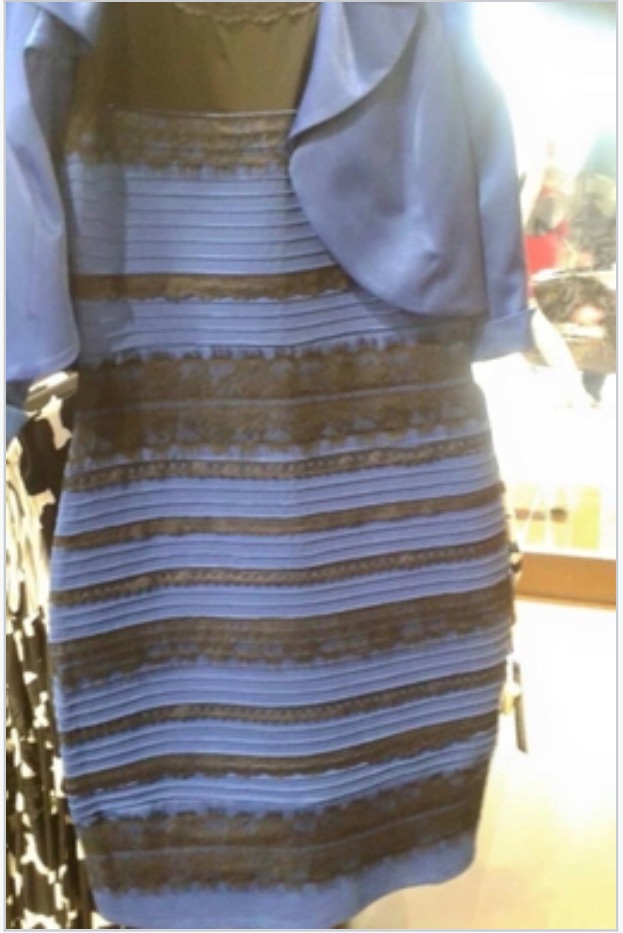
In 2015, this image was widely circulated on Facebook, with some people seeing the dress as white and gold, others seeing it as blue and black. Whichever camp you are in, you probably cannot understand how anyone could possibly think the dress is the other set of colors.
You can read more here if you want a refresher. But essentially it all comes down to neuroscience and differences in how people perceive color.
The core takeaway, though, was that two people could view the same object and reach opposite conclusions.
And so it goes with independent contractor misclassification disputes. A recent Fourth Circuit decision highlights the problem with the tools we use to assess whether a worker is properly classified. When a balancing test is used, different fact-finders can view the same evidence and reach opposite conclusions. And that’s exactly what happened here.
The case, Chavez-DeRemer vs. Medical Staffing of America d/b/a Steadfast, involved a staffing firm that provided independent contractor nurses to hospitals and medical clinics, as needed. The DOL launched an investigation in 2018, alleging that 1,100 nurses should have been classified by Steadfast as its employees under the Fair Labor Standards Act (FLSA). The DOL filed a lawsuit in federal court in Norfolk. After a bench trial, the judge ruled that under the FLSA’s six-factor Economic Realities Test, the nurses were employees. The judge awarded more than $9 million in damages.
Steadfast appealed. Last week, in a 2-1 decision, the Fourth Circuit affirmed. Two judges agreed with the trial court, finding that the evidence supported employee status under the Economic Realities Test.
The dissenting judge disagreed vehemently. As in, how-can-you-possibly-think-the-dress-is-blue-and-black vehemently. The dissenting judge excoriated the majority for cherry-picking facts and ignoring the realities of the relationship.
All three judges, of course, were evaluating the same facts and the same record. All three judges were applying the same six-factor Economic Realities Test. Yet, they reached very different conclusions.
If this is depressing, it should be. It shows how unpredictable balancing tests can be.
The outcome is an important reminder of how important it is, when building independent contractor relationships, to consider every relevant factor and to nudge as many factors as possible to the independent contractor side of the scale.
There is no way to predict which facts a judge will find most persuasive and no way to predict how a judge will weigh the factors, especially since it is pretty much inevitable that there will be at least some factions on each side of the scale.
I see the dress as white and gold. I can’t understand how anyone would think it’s black and blue. Those people are insane.
Actually they’re not insane. (Well maybe they’re insane.)
In the Medical Staffing case, the dissenting judge couldn’t see how the other two judges could have possibly reached the conclusion that the nurses were misclassified. Businesses using independent contractor models need to be prepared that no matter how supportable they think their classification decision is, a judge or agency might reach the opposite conclusion, even from the same facts.
This is Louie. He’s 11 weeks old. He has the teeth of a shark. If you play with him and there’s no toy in his mouth, your arm is the toy. Or your foot. Or sometimes your face. In my house, we all look like we just played with a blender. But he’s awfully cute.
Late last week, the Department of Labor (DOL) made some news that won’t bite companies in the face.
This Thursday, Feb 27 marks National Toast Day, an important annual celebration that commemorates this versatile form of bread. Toast for breakfast? Toast for brunch? Snack? PB&J? Is there anything toast can’t do?
National Toast Day is celebrated on the last Thursday of February each year, which means that this year it overlaps with National Polar Bear Day, National Strawberry Day, and National Kahlua Day.
Put all those things together and you’ve got one helluva picnic.
But why do I mention toast? Because of independent contractor classification tests, of course. Here’s what I mean.
Remember the 2024 DOL independent contractor rule — you know, the one that the Biden DOL passed in January 2024? We hardly had a chance to get acquainted.
I’ll tell you something that won’t surprise you. The Trump Administration is likely going to rescind it. Or maybe ignore it. Or maybe allow a court to reject it. One way or another, it’s gonna be toast.
There are several lawsuits challenging the 2024 rule, and one of them — Frisard’s Transportation v. US DOL — was scheduled for oral argument at the Fifth Circuit Court of Appeals in early February.
The DOL, however, asked the court to postpone oral argument to allow it time to consider how it wants to proceed. How it wanted to proceed under Biden was to defend the rule. Now, not so much.
However the case proceeds, we can expect that the Trump DOL will not apply the Biden Administration’s independent contractor test.
So what does that mean for the independent contractor test?
In reality, not much.
That’s because, first, the rule applied only to the Fair Labor Standards Act (FLSA), which is the federal wage and hour statute. It didn’t apply to tax law, benefits law, labor law, unemployment or workers’ comp law, or any state law.
And second, the test for who is an employee under the FLSA has always been an Economic Realities Test, and courts know what that test is. Every circuit court has a long line of case law describing the Economic Realities test. The courts don’t need the Biden or Trump Administration to tell them how to interpret the FLSA. The FLSA has been on the book since the 1930s, back when Biden and Trump were mere teenagers.
So what does this mean for employers? Again, not much. Employers should assume that under federal wage and hour law, the test for whether someone is an employee or independent contractor is the same as it has been for decades.
This anticipated change is not really going to change anything at all.
Now, if instead of toast, the Trump Administration made the rule into Kahlua, that would seem to be worth celebrating.
My impression of European electrical outlets is that they seem surprised, as if they don’t know what might be coming. I saw this one in our Airbnb in Lake Como.
Am I wrong? Didn’t think so.
The outlet should not be surprised at what’s coming. And DOL Acting Director Julie Su should not have been surprised either when she was issued a subpoena by the House Committee on Education and the Workforce.
The committee, chaired by Rep. Virginia Foxx (R-NC) has been at odds with the DOL for some time. In particular, Foxx et al. have doubts about the legitimacy of the Su-led DOL’s belief that independent contractor misclassification is rampant. The Committee believes that the DOL is being too aggressive in seeking to find misclassification in relationships that are, in reality, properly classified as independent contractor relationships.
In March, the Committee sent the DOL a series of inquiries about its enforcement efforts. But the DOL largely evaded the questions. After ongoing back and forth, the Committee has finally issued a subpoena to the DOL, demanding production of specific information about the DOL’s enforcement activities.
More specifically, the subpoena requests documents sufficient to show, since January 20, 2021:
The number of instances of misclassification that Wage and Hour Division (WHD) inspectors have found.
The number of misclassification enforcement investigations that WHD has initiated.
The number of misclassification enforcement investigations that WHD has jointly undertaken with the NLRB.
The number of misclassification enforcement investigations that WHD has jointly undertaken with the FTC.
Responses to the subpoena are due October 7th. I don’t expect we’ll see direct answers.
But it’s not the farmers’ fault. While Iceland has fewer than 400,000 permanent residents, the country produces about six million cucumbers per year. This BBC article blames the shortage on the popularity of a cucumber salad recipe circulating on TikTok.
I could blame TikTok for many things, but probably not that. According to experts interviewed in the article, other factors may also be responsible, including seasonal crop rotation and school going back into session.
While this journalistic deep dive created more questions for me than it answered, a recent court decision made me a little more confident in answering an entirely different question.
Remember the DOL’s new independent contractor classification test? The one that went into effect in March 2024? The rule is being challenged in court, and a Fifth Circuit Court of Appeals decision in late August may provide a clue about whether the rule will survive.
This recent Fifth Circuit case was about a different DOL rule. It addresses a restaurant industry regulation that deals with the tip credit and minimum wage law. The court said that the DOL did not have the authority to add legal requirements that are not in the Fair Labor Standards Act (FLSA).
Why is this relevant to the independent contractor test? Because the DOL is essentially doing the same thing in both contexts.
With the independent contractor rule (like the tip credit rule), the DOL is setting up a new test with requirements that are not written into the FLSA. After the Supreme Court’s recent Loper Bright decision, which limits the authority of federal agencies, the DOL may have a much harder time getting courts to apply the DOL’s regulations. It would not at all surprise me if the courts ignored or rejected the DOL independent contractor rule. With or without a DOL rule, there are already decades of case law telling courts how to determine employee status under the FLSA. Federal judges don’t need the DOL to tell them what the test should be.
We’ll continue to watch what happens with the DOL independent contractor rule. You could grab a box of popcorn and watch things unfold slowly. Or maybe you prefer to shop for other snacks. Just don’t expect to find cucumber salad if you’re shopping in Iceland.
For now, businesses should assume that the DOL will apply its independent contractor test in its own enforcement actions, even if the courts may be more skeptical.
At a chess tournament earlier this month in Makhachkala, Russia, one competitor tried a new strategy. She (allegedly) smeared mercury on the board and chess pieces of her opponent before the match. There’s video. This seems a bit outside the rules. After her opponent began experiencing respiratory distress and tasted iron in her mouth, the Mercury Gambit proved not to be a long-term winning play.
The saboteur now faces criminal prosecution and a lifetime chess ban. So don’t try this at home.
The DOL is facing an array of gambits too. But these gambits are lawsuits, each trying to get a court to revoke the DOL’s recently adopted independent contractor rule. The rule went into effect March 11, 2024, and we wrote about it here.
I’m aware of four pending challenges to the rule, all in federal court:
In a Texas case brought by a coalition of business groups, the plaintiffs filed a brief July 1st arguing that under the Supreme Court’s Loper Bright decision, the DOL lacked authority to issue the rule. Coalition for Workforce Innovation v Su, E.D. Texas.
In a Georgia case filed by freelance writers and editors, the parties have filed cross-motions for summary judgment, all of which are still pending. Warren v Su, N.D. Ga.
In a Louisiana case, a family-owned trucking company sought a temporary restraining order to prevent the rule from taking effect. The motion was denied, and the plaintiffs intend to appeal. The court has stayed the case pending the appeal. Frisard’s Transportation v DOL, E.D. La.
In a Tennessee case, two writers filed suit to try to enjoin the rule, and the parties have filed cross-motions for summary judgment. Pittman v. DOL, M.D., Tenn.
When compared to mercury poisoning, court challenges really seem to be the way to go. I commend the strategy. Perhaps not as original, but tried and true.
The DOL’s 2024 independent contractor rule remains in effect for now, and businesses should structure their independent contractor arrangements to comply.








 Who Is My Employee?