In 2009, the James Brown compilation album The Godfather’s Smackdown, Live! was released. It’s a two-disc compilation of live shows from 1980. I never saw James Brown live, but I did see James Brown’s Celebrity Hot Tub.
The D.C. Circuit Court of Appeals issued a different kind of smackdown, chastising the National Labor Relations Board (NLRB) for ignoring the Circuit Court’s earlier directive about the joint employer test. Believe it or not, this case is another chapter in the ongoing Browning-Ferris saga.
Click here to read the rest, originally posted on the BakerHostetler Employment Law Spotlight blog.
Todd Lebowitz, posted on WhoIsMyEmployee.com, Exploring Issues of Independent Contractor Misclassification and Joint Employment.
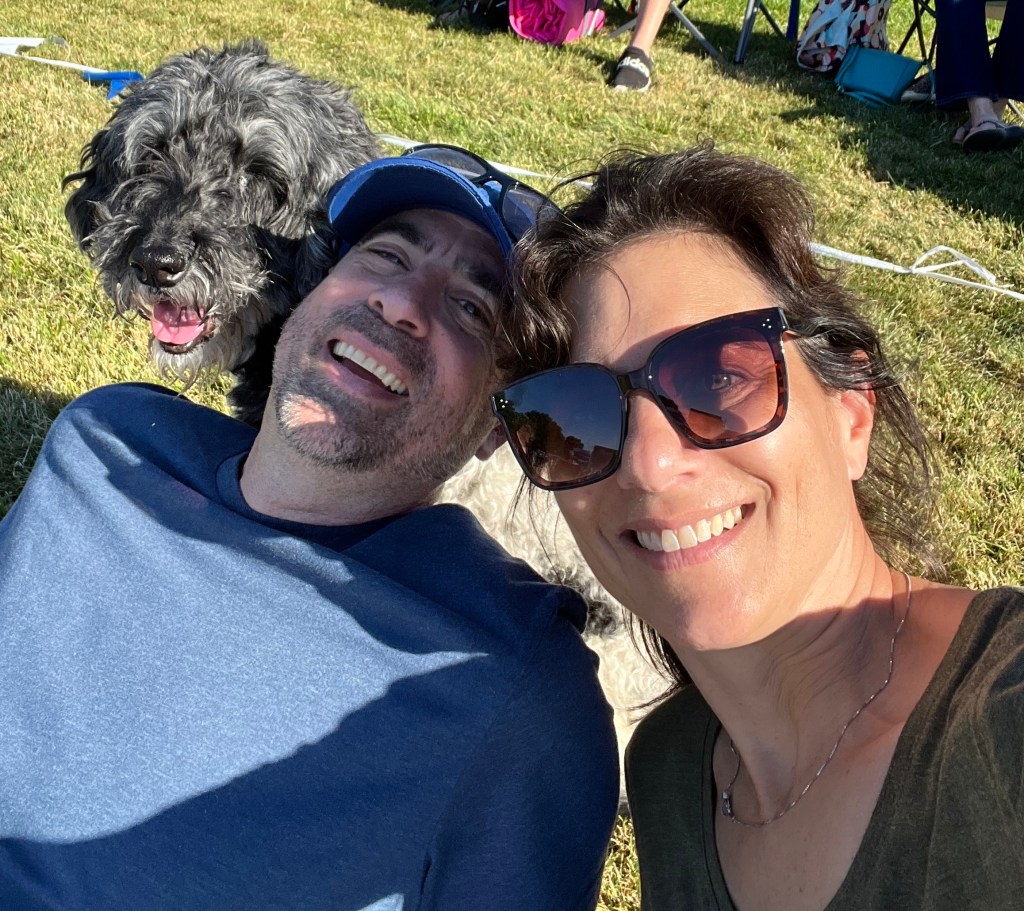
In my house, we have declared this to be the Summer of Fun, and we’ve committed to going to events around Cleveland that we haven’t tried before. Sometimes the dog gets to come too. Last month, we took Zippy to her first reggae concert. You can tell she enjoyed it because she’s smiling. (Or she’s thirsty. Still not sure.)
No concert t-shirt for Zippy though. They had suitably small sizes but nothing with four arm holes.
The Federal Trade Commission is also trying new things this summer. In a July press release, the FTC announced that one of its new initiatives is a crackdown on gig economy abuses.
The FTC can’t bring independent contractor misclassification cases, but it can bring enforcement actions when it believes there have been unfair or deceptive business practices that disadvantage gig workers.
The FTC announced that “the agency will continue to take action to stop deceptive and unfair acts and practices aimed at workers; particularly those in the ‘gig economy’ who often don’t enjoy the full protections of traditional employment relationships.” The press release then listed several examples of enforcement actions the FTC has been pursuing against gig economy companies. The cases tend to involve deceptive claims about earning opportunities, including for gig workers who use their platforms.
The FTC further announced that it’s teaming up with the NLRB to share information about alleged wrongdoers in the gig space. We already know that the NLRB’s General Counsel is on a mission to crack down on independent contractor business models. The decisions by the NLRB and FTC to join forces only heightens the risks for companies using an independent contractor business model.
Business using an independent contractor model need to remember that misclassification claims are not the only legal risk. Be sure that representations made to independent contractors about potential earning opportunities and other business practices are accurate and realistic.
Otherwise, despite it being the Summer of Fun, with reggae concerts and other goodness, the FTC may soon be on your doorstep, ready to Stir It Up.
Good news for old passengers traveling to New York!
The caption above may be too small to read, but it’s from a recent New York Times article about updates to the airport. The caption says, “An old passenger walkway in the process of being demolished at La Guardia Airport.”
You might not think this applies to you, but I say it’s about time! The idea of a walkway for old passengers doesn’t seem right, and old passengers should be allowed to use the same walkway as everyone else.
Another area where I sometimes hear “this doesn’t apply to me” is when we talk about the National Labor Relations Board’s views on independent contractor misclassification. But even if your business is union-free (meaning no union, not that the union is complimentary), the NLRB’s position on independent contractor misclassification matters. (Also, how is it that we intuitively know caffeine free means there’s no caffeine, rather than there’s lots of it and there’s no extra charge?)
The NLRB wants to make it harder to maintain independent contractor status under the National Labor Relations Act (NLRA).
Here are four reasons your non-union business should care about the NLRB’s views on independent contractor misclassification:
The NLRB’s General Counsel has issued a policy memo indicated that she intends to have independent contractor misclassification declared to be an automatic unfair labor practice (ULP). This spring, the Board issued a complaint in a case that may help it achieve this policy goal. If misclassification becomes an automatic ULP, that would overturn the Board’s 2019 decision in Velox Express, when the Board said it was reasonable for a company to express its opinion that a worker was a contractor, not an employee, even if the company turned out to be wrong.
If the NLRB rules that your contractors are employees, you can hang up a welcome shingle for your favorite union. (Aside: I don’t think anyone would welcome shingles, but you can buy welcome shingles on amazon.) Such a ruling would empower the unions to try to organize your newly-declared employees. If some independent contractors were already feeling mistreated enough to seek employee status, they’ll likely welcome union representation to help them fight back against The Man.
The protections granted to employees under the NLRA apply to non-union employees too. But the NLRA doesn’t apply to independent contractors. Non-union employees have the right to engage in protected, concerted activity without fear of retaliation or reprisal. Contractors don’t. Protected, concerted activity can include more than you might think. Any time two employees get together to object to a business practice, that’s potentially protected, concerted activity. If two contractors jointly complain, the NLRA doesn’t apply.
The NLRB has an information sharing agreement with the Department of Labor (DOL). If the NLRB thinks your contractors are misclassified, they’re probably gonna tell on you. The DOL may then starts its own investigation, viewing your company as an easy target for misclassification, even though the tests for employee status are different under the NLRA and the federal wage and hour laws administered by the DOL.
Like La Guardia, the NLRB is trying to do a little remodeling, but the NLRB’s remodeling is not for the benefit of old passengers. Instead, the Board is trying to make it harder to classify a worker as an independent contractor. The Board also wants to declare worker misclassification to be an automatic ULP.
Whether your workforce is union or non-union, businesses should pay attention. This is a rebuild that’s worth watching.
This weekend we tried goat yoga. Highly recommended. It was a mix of basic yoga (my kind of yoga) to help get me stretched out, but held in a pen with goats who know no boundaries.
We then toured the farm, which featured llamas, long-haired pigs, guinea hens, a few obligatory dogs, and several varieties of goats, including the kind of fainting goats featured in that George Clooney movie.
Having to watch my back during yoga was something I signed up for and was part of the fun. Not so for California’s AB 5, which should be watching its back after what we saw at the Ninth Circuit last week.
The Ninth Circuit held oral argument in a case brought by Uber called Olson v State of California. Uber is arguing that AB 5 is unconstitutional.
While it’s hard to predict cases based on oral argument, the three judges on the panel seemed pretty sympathetic to Uber’s argument, which is that the statute arbitrarily picks winners and losers, i.e., the exemptions make no sense from an equal protection/due process standpoint.
Unlike the strict ABC Test in Massachusetts, the California ABC Test codified in AB 5 (and later AB 2257) contains loads of exceptions. The statute says to use the ABC Test to determine employee vs independent contractor status for all workers — except for dozens of categories of workers and various other situations.
Let’s not pretend. We all know this bill was written to target ride share and delivery app companies. The unfairness of making this law apply to everyone soon became apparent and led to the insertion of dozens of exceptions. If an exception applies, the Borello balancing test applies instead of the ABC Test.
The exceptions just about swallow the rule, and a law targeting a handful of companies presents constitutional problems. Or so the argument goes.
We can expect a decision in the next few months, and this is one to watch. Unlike me at goat yoga, imagining a decision that strikes down or severely limits AB 5 is not a big stretch.
This weekend we tried goat yoga. Highly recommended. It was a mix of basic yoga (my kind of yoga) to help get me stretched out, but held in a pen with goats who know no boundaries.
We then toured the farm, which featured llamas, long-haired pigs, guinea hens, a few obligatory dogs, and several varieties of goats, including the kind of fainting goats featured in that George Clooney movie.
Having to watch my back during yoga was something I signed up for and was part of the fun. Not so for California’s AB 5, which should be watching its back after what we saw at the Ninth Circuit last week.
The Ninth Circuit held oral argument in a case brought by Uber called Olson v State of California. Uber is arguing that AB 5 is unconstitutional.
While it’s hard to predict cases based on oral argument, the three judges on the panel seemed pretty sympathetic to Uber’s argument, which is that the statute arbitrarily picks winners and losers, i.e., the exemptions make no sense from an equal protection/due process standpoint.
Unlike the strict ABC Test in Massachusetts, the California ABC Test codified in AB 5 (and later AB 2257) contains loads of exceptions. The statute says to use the ABC Test to determine employee vs independent contractor status for all workers — except for dozens of categories of workers and other situations.
Let’s not pretend. We all know this bill was written to target ride share and delivery app companies. The unfairness of making this law apply to everyone soon became apparent and led to the insertion of dozens of exceptions. If an exception applies, the Borello balancing test applies instead of the ABC Test.
The exceptions just about swallow the rule, and a law targeting a handful of companies presents constitutional problems. Or so the argument goes.
We can expect a decision in the next few months, and this is one to watch. Unlike me at goat yoga, imagining a decision that strikes down or severely limits AB 5 is not a big stretch.
For businesses using independent contractor vendors, misclassification claims are usually well-suited for class certification. A plaintiff’s path toward certifying a class can be relatively smooth when all vendors of a particular kind are treated as contractors. The argument goes that if one is misclassified, all are misclassified.
But a new Ninth Circuit ruling may help businesses change the path toward class certification into a dead-end road.
Click here to read the rest of the post, originally published on BakerHostetler’s Employment Class Action Blog.
Have you heard? There’s a baby goat in Pakistan who may have set the world record for Longest Ears by a Goat. The ears are each 1.6 feet long. Which also means there’s category for Longest Ears by a Goat.
The goat, named Simba, reportedly trips on its ears, which are so long that they drag on the ground. That’s a problem, I hear.
I’m also hearing of a problem in Massachusetts, but it’s of a different sort entirely.
Efforts to add exceptions to Massachusetts’ ABC Test for independent contractor misclassification have been scuttled by the state’s Supreme Judicial Court. A ballot measure modeled after California’s Prop 22* would have created exemptions to support independent contractor status for app-based rideshare and delivery drivers. The Court, however, ruled that the proposed ballot measure covered too many subjects and could not lawfully be placed on the ballot.
What does all this mean?
As many of you know, Massachusetts has the toughest test in the nation when it comes to classifying independent contractors. Under Massachusetts wage and hour law, a worker is deemed an employee unless —
A) the individual is free from control and direction in connection with the performance of the service, both under his contract for the performance of service and in fact; and
B) the service is performed outside the usual course of the business of the employer; and,
C) the individual is customarily engaged in an independently established trade, occupation, profession or business of the same nature as that involved in the service performed.
That’s a strict ABC Test, like California’s. But California’s ABC Test has a slew of exceptions, memorialized in AB 2257, formerly AB 5. The Massachusetts Independent Contractor Law has no exceptions, which makes Massachusetts a favorite venue for plaintiffs’ lawyers who like to bring misclassification cases.
With the ballot measure struck down, voters will not have an opportunity to pass a Prop 22-like bill in Massachusetts that would have allowed app-based rideshare and delivery drivers to maintain independent contractor status, so long as certain requirements were met.
States with ABC Tests continue to pose significant compliance risks for businesses that rely on independent contractors. It’s easy to trip and fall, regardless of the size of one’s goat ears.
*California’s Prop 22 is in limbo too. As explained here, a state court ruled the ballot measure unconstitutional. The issue is now on appeal.
I drove behind this band of safety-conscious paddle boarders near Chicago recently. The guy in back is secured in by bungy cord. At least he looks comfortable.
The NLRB is about to make things a lot more uncomfortable for businesses concerned about joint employment.
As discussed here, the NLRB made clear earlier this year that it wants to revamp the independent contractor vs. employee test under the National Labor Relations Act.
Expect a new rule on joint employment to drop any day. The NLRB indicated several months ago that the joint employment rule was a target in its rulemaking agenda, and the expected release date is July 00, 2022.
Like most of you, I switched from the Julian calendar to the Gregorian calendar in 1752. While the changeover caused 11 days in September 1752 to be lost, I missed the memo about inserting a 0th day in July, starting 270 years later. Since I could find no way to mark the expected release date in my iPhone, I’ll give the NRLB the benefit of doubt and assume the date is a placeholder for “sometime in July.”
On Friday, it will be “sometime in July.” So get your bungy cord ready. You may need to take steps to better protect your business against joint employment risks.
The new rule will displace the current Trump-era regulation, which currently requires direct and substantial control over essential terms and conditions of employment before joint employment can be found.
Expect the new rule to track the Browning-Ferrisstandard imposed by the Board in 2015. Under Browning-Ferris, when one company has the right to control aspects of the work, joint employment exists — regardless of whether control is actually exerted, and regardless of whether the control is over wages, hours, scheduling or anything else that fits within the meaning of essential terms and conditions.
Joint employment under the NLRA can have several effects:
1. It can force you to the bargaining table for matters involving workers you did not consider to be your employees.
2. It can open the door to bargaining units that include workers you didn’t think were your employees.
3. It can open another door to bring union organizing activity into your business – through non-employee workers.
4. It can convert illegal secondary picketing into lawful primary picketing. If another company’s employees picket your site but the workers turn out to be your joint employees, they have the right to be there.
5. Each business that is a joint employer may be found jointly and severally liable for the other’s unfair labor practices.
When the new rule is posted, we’ll discuss what employers should do in response. Until then, enjoy the summer and try paddle boarding. But try to use a car with enough seats.
I saw this truck while driving home last week from my daughter’s college graduation. Now I’m no livestock dietician (I failed that course in law school), but this seems like the worst possible thing to feed your animals.
Whoever’s behind the labeling also needs some help with marketing. I know I wouldn’t buy that.
I’m also not buying the DOL’s recent announcement that it’s holding two public forums to help it decide what to do about a new independent contractor misclassification test. I think we all know what the DOL is going to do already.
The DOL will hold an Employer Forum on June 24, then a Worker Forum on June 29. Anyone can attend. RSVP links are here (6/24) and here (6/29).
After this charade open-minded exchange of viewpoints, the DOL will get to work preparing a new rule for determining who is an employee under the Fair Labor Standards Act (FLSA). The current regulation, issued by the Trump DOL, refocuses the traditional Economic Realities Test inquiry on two core factors: (1) the nature and degree of the individual’s control over the work, and (2) the individual’s opportunity for profit or loss. The Biden DOL tried (unsuccessfully) to prevent the Trump rule from going into effect, but a federal court ruled that the Biden DOL’s attempt to dismantle the rule was flawed, and the Trump rule therefore went into effect.
Now, let’s not kid ourselves. Just because a court told the Biden DOL that it’s stuck with this Trump-made rule doesn’t mean anyone at the DOL is actually applying it. The Biden DOL has said it plans to rewrite the rule, pronto. The new rule will make it harder to classify workers as independent contractors under the FLSA. We already know that’s going to happen, even if we don’t know the precise language to be used.
In late 2022, the DOL will issue its new rule, which will be like the old rule that we had before the Trump DOL’s new rule. Meet the new boss, same as the old boss. And with each new administration, it will become harder then easier then harder to be classified as a contractor under the FLSA.
So I will not be wasting my time listening in on these forums. I expect they’ll be as useful as inedible food. Which cannot be good for the GI tract.
Zippy incorrectly chooses portrait instead of landscape
Getting properly aligned is important. That’s true not only when using a dog bed, but also when using independent sales reps.
Sales reps generally receive commissions. When commissions systems are unclear, disputes arise. We don’t want disputes. You may think your commission system is clear, whether by tradition or otherwise. But it’s probably not as clear as you think. Unclear commission plans lead to lawsuits, especially after the relationship with a sales rep ends.
Here are ten tips for avoiding commission disputes. These tips are helpful whether your sales rep is an independent contractor or an employee.
1. Put the commission plan in writing, and get the rep to sign it. Many states require written, signed commission plans for employees. (California, I’m looking at you!) But even when not required by law, a clearly drafted and accepted plan is the best way to avoid disputes.
2. Define what constitutes a sale. Is a sale complete when the customer pays for the good? When the good is delivered? When it’s accepted? When some period for returns has expired? Whatever you decide, state it clearly.
3. Define when a commission is earned. Usually there are several things that have to happen before a commission is earned. List them all, and make clear that a commission is not earned until all of these things have occurred.
4. Specify the timing of when commission payments are due. For employee sales reps, you might have less flexibility than with contractors, since state laws often require that employees are paid at certain intervals. But you can also create some space for yourself in your definition of when a commission is considered “earned.”
5. Clarify whether the sales rep must still be employed (or still under contract) to earn a commission. This term will be viewed in tandem with your explanation of when a commission is considered “earned.” Some states (hey there, California!) require that the commission has been paid if the employee has basically done everything needed to earn the commission, even if employment has ended. Calling the rep a contractor won’t necessarily get around that, since as we know, California does not grant a lot of deference to classifying workers as contractors instead of employees.
6. Explain how the commission amount is calculated. The formula might be A times B times C. Whatever it is, write it out.
7. Clarify the relevant time period. If the commission plan is for 2022 only, say so. If the commission plan overrides all prior year plans, say that too.
8. What about charge backs? Are there circumstances when a commission might be paid but you’d have to recoup some of the payment through a charge back? Describe when chargebacks are permitted, if at all.
9. Don’t assume. Spell everything out. Just because there haven’t been commission disputes in the past doesn’t mean they won’t happen in the future. A recently departed sales rep is going to be more aggressive about a commission dispute than one who is still happily engaged, especially if the rep just closed a big deal was separated before the company received payment from the customer. Without a clearly drafted plan, that’s a lawsuit waiting to happen.
10. Write for the jury. A stranger reading your commission plan should be able to tell whether a commission is earned or not, how much the commission should be, and when the commission is due. It needs to be that clear. If there’s ambiguity, expect that the disputed term will be interpreted in favor of the sales rep. After all, you wrote the plan, not the rep.
Bonus 11th Tip: Don’t forget state law. State law may contain requirements for commission plans. Know where your salespeople are working and where they are selling. If multiple states are involved, consider adding a choice of law clause.
Getting aligned on commissions before there’s a dispute can go a long way toward preventing a dispute. Getting misaligned on a dog bed may lead to back pain or a funny picture, but getting misaligned on commissions can lead to expensive litigation.