Cover art from the single, released on Epic Records
In the early 80s, I had two cassettes by the Australian band Men at Work — Business as Usual, released in 1981, and Cargo two years later.
Cargo includes the single, “It’s a Mistake,” a satirically upbeat Cold War-inspired song in which a soldier tries to figure out whether the Cold War is about to turn hot. The video features too-short shorts, bad lip syncing, and old ladies hitting the band members with umbrellas on the battlefield, all of which leads to an accidental nuclear launch, triggered when an officer tries to stub out his cigar in an ashtray but hits the wrong button.
All in all — a good song, a mediocre video, and a strong commentary on the politics of the day.
A recent move by the NLRB’s General Counsel revives the “It’s a Mistake” narrative, this time in the context of independent contractor misclassification. There are no accidental nukes involved, but the move is definitely politically motivated.
If the General Counsel has her way, the Board will rule that independent contractor misclassification is an automatic unfair labor practice (ULP), even if it’s a mistake.
To reach that conclusion, the Board would have to overturn its 2019 decision in Velox Express, in which the Republican-controlled Board ruled that misclassifying a worker, by itself, is not automatically a ULP.
The GC’s actions are no surprise. In mid-2021, she issued a strategy memo announcing that one of her strategic (political) priorities was to get Velox Express overturned during her tenure. With the NLRB now featuring a 3-2 Democratic majority, she’s likely to prevail.
What does this mean for companies that use independent contractors?
It means the stakes are higher. If Velox Express is overturned, misclassification of independent contractors would likely become an automatic ULP, even if the classification was well-intentioned. Essentially, there would be strict liability for misclassification.
Traditional remedies for ULPs include back pay and reinstatement, which could mean forced reclassification as employees. The GC has been pushing to further expand the scope of available remedies because, hey, why not.
If your business is hit with a ULP and forced to reclassify workers under the NLRA, good luck trying to maintain independent contractor status under wage and hour laws or other laws.
A reversal of Velox Express, therefore, may have sweeping ramifications, making it much harder to maintain independent contractor status across a broad range of federal and state laws.
The consequences of this expected reversal will be serious — not quite on the scale of nuclear devastation, but worse than old ladies hitting you on the head with an umbrella.
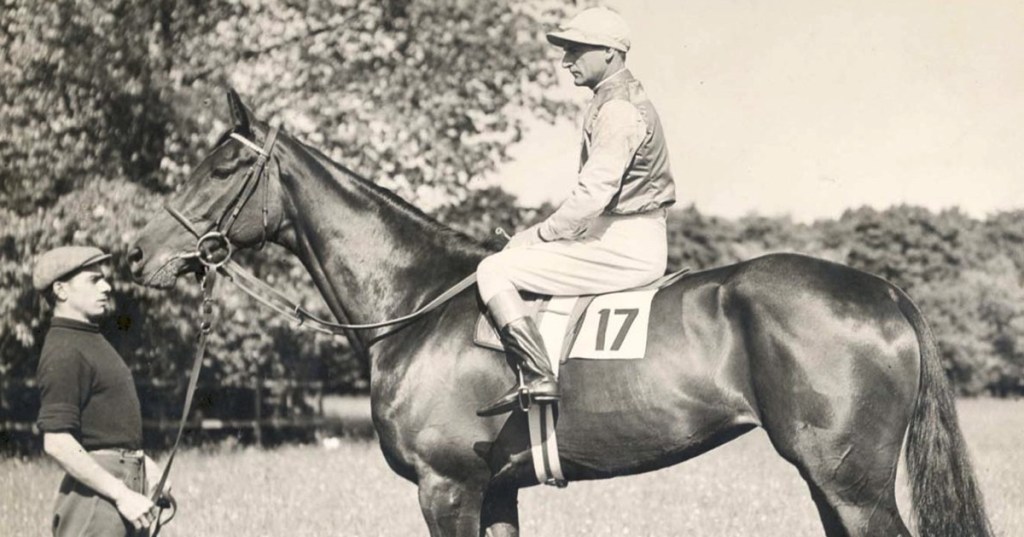
On June 4, 1923, jockey Frank Hayes rode 20-1 long shot Sweet Kiss to victory at Belmont Park. While that seems impressive, what made the win even more memorable is that at some point during the race, poor Frank died. He somehow stayed on the horse and ended up in the winner’s circle. Or six feet under it. It was his first (and last) win as a jockey.
Jockeys are in the news again, and we’ve got another surprise finish. But this one has implications far beyond the racetrack.
Click here for the rest of the story, originally posted yesterday on the BakerHostetler blog, Employment Law Spotlight.
There’s an optical illusion known as a negative afterimage. If you stare at the red dot on this woman’s nose for about 15 seconds, then look at a blank wall, you’ll see the woman on your wall – but in full color and with dark hair. And yet, there is no woman on your wall.
You see what isn’t there because the illusion tricks the photoreceptors in your retina.
Monday’s ruling by a federal judge in Texas also has us seeing what isn’t there – or what was there and then wasn’t there – or something like that, but with respect to the test for independent contractor classification.
In early January 2021, the Trump DOL issued a new regulation that sought to provide clarity on how to determine whether someone is an employee or an independent contractor under the Fair Labor Standards Act (FLSA). Even though the FLSA is a federal law that is supposed to apply everywhere, different courts around the country used different versions of the FLSA’s Economic Realities Test to make that determination.
Under the new regulation, 29 CFR Part 795, there would be just one test. It was simple, and the same rule would apply all over the country. The regulation was scheduled to take effect March 8, 2021. But a few days before the effective date, the Biden Administration postponed implementation of the new rule. Then in May, they rescinded it. They replaced it with nothing. If you go to the Code of Federal Regulations, there is no 29 CFR Part 795. (Here, try it!)
But Monday’s ruling said to stare a little harder. It’s there.
The court ruled that the Biden Administration’s effort to delay and then withdraw Part 795 was unlawful and violated the Administrative Procedure Act. The delay provided too short a comment period, failing to offer the public a meaningful period to provide input. The withdrawal was improper because the DOL failed to consider alternatives and instead “left regulated parties without consistent guidance.”
Because the delay and withdrawal of the Trump era rule were deemed unlawful, the court ruled that Part 795 did, in fact, go into effect March 8, 2021, and “remains in effect.”
Who knew?
So now you probably want to know what the rule is, since you cannot find it online in the Code of Federal Regulations – at least as of Tuesday night.
The test in Part 795 identifies two “core factors” for determining the independent contractor vs. employee question under the FLSA. If both factors point in the same direction, the issue is generally decided. If the core factors point in different directions, three “other factors” are considered.
• The nature and degree of the individual’s control over the work; and
• The individual’s opportunity for profit or loss.
The control factor supports independent contractor status if the worker “exercises substantial control over key aspects of the work,” including setting schedules, selecting projects, and being allowed to work for others.
The profit or loss factor weighs in favor of independent contractor status if the worker has the opportunity to earn profits or incur losses based on the exercise of initiative, managerial skill, business acumen or judgment, or based on management of his or her own investments or capital expenditures. Examples of investments may include hiring helpers or buying equipment.
Other Factors
If the two core factors do not determine the issue, three other factors are to be considered:
• Amount of skill required for the work;
• Degree of permanence of the working relationship between the individual and the potential employer; and
• Whether the work is part of an integrated unit of production.
Amount of skill required. This factor weighs in favor of independent contractor status if the work requires specialized skill or training that the potential employer does not provide.
Degree of permanence. This factor weighs in favor of independent contractor status if the work is definite in duration or sporadic. This factor supports employee status if the work is indefinite. Work that is seasonal by nature does not weigh in favor of independent contractor status, even though it’s definite in duration.
Whether the work is part of an integrated unit of production. This factor is likely to receive the heaviest criticism from worker advocates. The “integrated unit of production” factor comes from a pair of 1947 U.S. Supreme Court cases. Over the years, this factor has morphed into the question of whether the work is “integral” to the potential employer’s business. Part 795 takes a firm stance here, saying that — based on the 1947 Supreme Court decisions — the relevant question is whether the work is “integrated,” not whether it is “integral.”
This factor weighs in favor of independent contractor status if the work is “segregable” from the potential employer’s processes for a good or service. For example, a production line is an integrated process for creating a good. A software development program may require an integrated process for creating a computer program. Work that is performed outside of an integrated unit of production is more likely performed by an independent contractor.
What Happens Now?
First, the DOL can appeal the decision to the Fifth Circuit. We expect that will happen. In the meantime, a stay might be issued or might not be issued.
Second, Part 795 is now in effect, unless a stay is issued.
Third, it’s a fair question how much this really matters anyway. The test was not intended to change the outcome in most instances. It was instead intended to articulate more clearly how these determinations were already being made. The two “core factors” were already determinative in almost all cases, even if courts were not explicitly identifying two factors as being most important. Also, the Circuit Courts of Appeal do not have to adopt the DOL’s interpretation of the test. They can go on using their five-part and six-part tests, or they can apply the Part 795 analysis.
The Part 795 should now be the applicable test. But we shall see.
If you stare hard enough at your handy copy of the Code of Federal Regulations, and then look at a blank wall, Part 795 just might appear.
Raise your hand if you remember the 1982 song “Twilight Zone”? Seeing several hands raised, I will continue. The tune is catchy, but the lyrics are hard to understand. I heard the song this weekend and decided to finally check the lyrics. “There’s a storm on the loose, zarmines in my head” couldn’t be right, could it?
Raise your hand if you knew the chorus was this:
Help I’m steppin’ into the twilight zone The place is a madhouse, Feels like being cloned My beacon’s been moved under moon and star Where am I to go, now that I’ve gone too far?
Seeing no hands raised, I will continue.
It’s all very confusing to me, but it made sense once I read through it more carefully.
I had the same reaction after seeing an amicus brief that the AFL-CIO recently filed with the NLRB. The brief was filed in a case that may — yet again — change the test for independent contractor status.
In Atlanta Opera, the Regional Director for Region 10 ruled that a proposed unit of makeup artists and hairstylists were employees, not independent contractors, and that an election could proceed.
The NLRB then issued a notice asking the parties and the public for briefs addressing whether the Board should reconsider the test for determining whether workers are independent contractors or employees. It seems inevitable that the Board will rewrite the test to make it harder for a worker to be deemed a contractor. But is Atlanta Opera the right case to use for rewriting the test?
The AFL-CIO, somewhat surprisingly, said no. Like the lyrics to “Twilight Zone,” that was confusing to me at first, but it makes sense when I read through it more carefully.
Undoubtedly the unions want a rewrite of the test to make it as hard as possible for someone to maintain contractor status. But the AFL-CIO urged the NLRB to wait, arguing this isn’t the right set of facts to make a sweeping change.
The AFL-CIO’s brief argued that, even under the existing test, it was pretty clear the makeup artists and stylists were employees. It would be more impactful to wait for a closer case to rewrite the test. Ah, so that’s their angle — wait til later then really shake things up.
Eventually, the NLRB is going to change the test. The current test, explained in SuperShuttle DFW (discussed here), examines ten Right to Control factors.
At a minimum, it seems clear that the Board would like to go back to the FedEx Home Delivery test. The FedEx test asked whether the worker was “in fact, rendering services as part of an independent business” and essentially adopted an Economic Realities Test, rather than the Right to Control Test that had always been applied.
When the Board revises the test, it could go back to FedEx or it could try to adopt a new, more stringent test, like an ABC Test. (The courts probably would not allow the Board to adopt an ABC Test without Congressional action, but that’s for another day.)
And the Board will revise the test. It’s just a question of when and to what. The Board will make it harder to be an independent contractor under federal labor law. That means it will become easier for unions to file election petitions and try to organize groups of workers that might now be operating as independent contractors.
Yeah there’s a storm on the loose, sirens in my head.
Last week I read that Sirhan Sirhan had been denied parole again. No surprise there. But what captured my attention was his attorney’s comment that there was not “one iota” of evidence he would be a threat to society if released.
Not even one iota? Why are there never any iotas? And what is the plural of iota anyway? And how do you even respond to that? Well, actually, we had a few iotas. Let me check my notes here. Yes, three iotas.
“Iota” means an infinitesimal amount. Synonyms include bupkus and diddly-squat. But if you search for “iota” online, no one ever has any iotas. The word is always used in the negative.
Well here are a few iotas for you. The Supreme Court has agreed to hear two cases that will affect when arbitration agreements with independent contractors can be enforced. The Supreme Court generally gets involved when there are at least a few iotas of good arguments on both sides.
Both cases address the scope of the Federal Arbitration Act (FAA), which creates a presumption that arbitration agreements should be enforced, but includes a few iotas of carveouts.
In the first case, Viking River Cruises v. Moriana, the Supreme Court will determine whether cases brought under California’s Private Attorneys General Act (PAGA) are subject to arbitration. California courts have said they are not.
In the second case, Southwest Airlines Co. v. Saxon, the Court will address the scope of the Section 1 exemption, which makes the FAA inapplicable to certain types of transportation workers in interstate commerce. The Saxon decision is likely to clear up the mass confusion (and circuit split) over whether last mile delivery drivers and local rideshare fall within the exemption.
In the political arena, arbitration agreements have come under fire, and there is a movement among Democrats to abolish mandatory pre-dispute arbitration agreements. The Supreme Court, on the other hand, appears more likely to enforce the contracts as written, deferring to the contractual intent of the parties and interpreting any exemptions to the FAA narrowly.
There is more than one iota of evidence to support both sides of these disputes. But expect some 6-3s.
If I am pulling out my crystal ball, I expect the Supreme Court will uphold the arbitration agreements, at least in Saxon. Moriana is tougher to predict since PAGA is a state law creation in which the individual bringing the claim acts as a private attorney general, bringing the claim on behalf of the state. On one hand, the state never agreed to arbitrate. But on the other hand, the individual bringing the PAGA claim did agree to arbitrate any disputes, not to bring them in court under the guise of PAGA.
Whenever the Court rules, we’ll see arbitration agreements back in the news. More visibility on this issue will mean louder and more urgent calls from politicians to abolish pre-dispute arbitration agreements.
We can expect many iotas of news on arbitration agreements later in 2022.
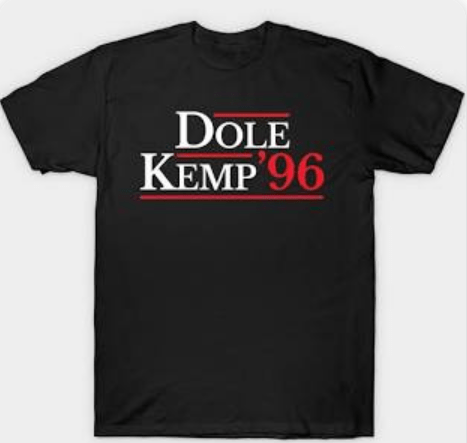
The internet may be a playground and an encyclopedia, but it’s also a living graveyard. For those of you politically inspired, it’s not too late to join up with Dole-Kemp ‘96. Fans of the X-Files, who still await the next episode, can stay caught up at Inside the X. And anyone still looking to join the Heaven’s Gate cult can check out the group’s webpage here. The site is supposedly maintained by two of the only members who did not commit suicide in 1997, so leadership opportunities may be available.
The NLRB is hopping on the retro train too. Earlier this month, the Board announced its intent to adopt a new rule on joint employment. The new rule would displace the Trump-era regulation, which currently requires direct and substantial control over essential terms and conditions of employment before joint employment can be found.
The NLRB’s Notice of Proposed Rulemaking follows the trail blazed by the Wage and Hour Division (WHD) of the DOL, which in July rescinded the joint employment regulations passed during the Trump Administration. The WHD didn’t make a new rule; it just left a giant crater in the landscape, and now for Fair Labor Standards Act claims, there is no regulation at all.
The NLRB seems intent on adopting its own rule, not just rescinding the current regulation. There’s little doubt as to what the new rule will look like. Expect it to track the Browning-Ferris standard imposed by the Board in 2015. Under Browning-Ferris, when one company has the right to control aspects of the work, joint employment exists — regardless of whether control is actually exerted, and regardless of whether the control is over wages, hours, scheduling or anything else that fits within the meaning of essential terms and conditions.
Expect a substantial expansion in the scope of who a joint employer under the NLRA after the new rule is released. The impacts of joint employment under the NLRA can include being forced into bargaining with workers directly employed by a different company (a subcontractor, for example), being accused of a broader range of unfair labor practices, and being subjected to picketing that would be illegal secondary picketing if there were no joint employment relationship.
Back when Bob Dole was seeking the White House, actual control was required to be a joint employer under the NLRA. Since 2015, the standard has ping-ponged back and forth as the political winds have shifted. We’re about to see another major change sometime in mid-2022. If after the change you find yourself missing the good ol’ days, at least you can still cozy up with your Apple 2E and check out the Dole-Kemp campaign website.
One of my favorite twitter accounts is @ACrimeADay, which reminds us of arcane things that are against the law. A few recent gems:
18 USC §1865 & 36 CFR §2.16(f) make it a federal crime to make an unreasonable noise while a horse is passing by in a national park.
42 USC §271(a) & 21 CFR §1250.44(b) make it a federal crime for an airline to provide a brush for the common use of passengers on a flight.
16 USC §707 & 50 CFR §21.55(c)(2) make it a federal crime to kill a barn owl in Hawaii by shooting it, unless you use nontoxic bullets.
There are lots of ridiculous laws. If it’s up to the NLRB’s new General Counsel, we’re about to see another one — and it may ruin college football as we know it.
In a memo issued last week, the NLRB’s General Counsel and chief prosecutor, Jennifer Abruzzo, announced that her office now take the position that college student athletes are employees of their universities, with full rights to bargain collectively, strike, and file unfair labor practice charges.
Her analysis is based on a Right to Control Test. She thinks that universities control the working conditions of student-athletes in a way that makes them employees under the test. She explains this in the memo, if you care to read the details.
The memo also takes the position that universities’ use of the phrase “student-athlete” instead of “employee” is itself an unfair labor practicebecause it intentionally misleads these students employees into thinking that they do not have Section 7 rights. Her position is directly contrary to current Board law, established in Velox Express (discussed here).
And it gets worse. Because the NLRB has jurisdiction over private employers but not public ones, her position applies only to private universities, not public ones. That means — if her memo becomes law — that Northwestern’s football players are employees, but Ohio State’s are not.
And she sets up the NCAA as a joint employer, alleging that it too controls the working conditions of these students.
Abruzzo is a former union lawyer, so it’s not surprising that she subscribes to the worldview that everyone’s an employee, but for this to be the official prosecutorial position of the Board is inane. With Democratic Board appointees now holding a 3-2 majority on the Board, it feels like only a matter of time before the right case comes along and the NLRB rubber stamps her position as Board law.
Let’s imagine how this plays out in real life:
It’s the end of a long practice, and two players tell Coach they’re not going to run that last required wind sprint because they think it’s just too much. Coach says to run anyway because I’m the coach. Coach disciplines the players by not playing them or demoting them on the depth chart or whatever. Based on the memo, that might be an unfair labor practice because the employer is taking adverse action against employees for engaging in protected concerted activity.
Coach tells his team not to criticize the program publicly because we’re a team and we need to speak with one voice. Based on the memo, that could be an unfair labor practice because employers cannot prohibit employees from speaking out collectively about working conditions.
When the fifth- and sixth-string senior running backs refuse to show up for practice as a way of protesting Coach’s decision not to play them in last week’s blowout win, Coach tells them they’re off the team. Under the Abruzzo memo, that might be an unfair labor practice.
At a press conference, the athletic director is asked about team discipline and responds that these are “student-athletes” and not “employees” and they’ll do what Coach says and they’ll do it quietly, without objection, if they want to play. Under the Abruzzo worldview, that sounds like an unfair labor practice too.
Let’s play this out a little further. If the reason student-athletes are employees is because of the Right to Control Test analysis, then wouldn’t the same analysis apply to other laws that use the Right to Control Test? The Affordable Care Act and ERISA use Right to Control Tests. Could it become the law that student-athletes must be made an offer of coverage under ACA? Would the school have to allow the players to participate in employee retirement programs?
And what about the Economic Realities Test used for determining whether someone is an employee under the Fair Labor Standards Act (FLSA), which requires minimum wage and overtime? The Economic Realities Test is generally viewed as more expansive and inclusive than the Right to Control Test. If Abruzzo’s position is embraced by the NLRB and later affirmed by the U.S. Courts of Appeal, would that open the door for requiring private universities to pay student-athletes a minimum wage and overtime?
This is sounding like Absurdistan (which, by the way, it the title of a pretty entertaining book by Gary Shtenygart).
I’m making unreasonable noises just thinking about all of this. Good think I’m not in a national park with a horse nearby or I’d really be in trouble.
If background checks were run on bulls, you probably wouldn’t hire Bodacious for rides at your child’s next birthday party. Bodacious has been described by some in the bull riding community as the meanest, most dangerous bull that ever was.
Fortunately, the identity of bulls with a history of violence is readily attainable, probably through some kind of bull riding database available to those in the industry. Or wikipedia.
When it comes to identifying humans with a history of violence, we can run criminal background checks. We do this for employee applicants and often for independent contractors. When using staffing agencies, we ask the agencies to run background checks for their employees before sending them to perform services onsite at our businesses.
Except that a recent Court of Appeal ruling in California may have just broken the criminal background check process throughout the state.
In a case called All of Us or None, the Fourth District Court of Appeal ruled that it violates the California Rules of Court, Rule 2.507(c), for Superior Courts to maintain criminal case databases that are searchable by date of birth or driver’s license number.
Wait, what?
If you want to run a criminal background check, you need additional identifying information such as date of birth or driver’s license number. There are thousands of people with identical surnames and similar sounding full names. According to mynamestats.com, there are 81,585 Californians with the surname Gomez, and 5,277 of them are named Maria Gomez. Check out this map to go down a state-by-state rabbit hole. Background check companies need additional identifying information to make sure they’re reporting on the right person.
Rule 2.507(c) says that certain types of information must be excluded from “court calendars, indexes, and registers of actions.” Taking a waaaay-broad interpretation of this rule, the Court of Appeal held that the “excluded” categories can’t be used at all, not even when searching for criminal records. Other “excluded” categories of information include such important differentiators as ethnicity, age, and gender. The Riverside Superior Court, defending the legality of its searchable database, argued that Rule 2.507(c) is intended to prevent people from searching for the excluded information in a database, but it cannot possibly be intended to prohibit searches when the searcher already knows that information.
The Court of Appeal disagreed.
Under federal law, a background check company must maintain reasonable procedures to ensure that the information they report is accurate. Using names alone would obviously produce absurdly unreliable results. Just ask anyone named Maria Gomez. Most Maria Gomezes are undoubtedly wonderful people and don’t want their background check reports to show that some other Bad Maria got into criminal trouble. But if a background check company cannot use important identifying and differentiating information it already knows to help verify someone’s identity and criminal record, how can it provide reliable reports in California at all?
I’m not sure how that’s gonna work. Leave it to California to break the whole background check system. We’ll see if the courts and background check companies find a way around this.
Meanwhile, if you’re running background checks in applicants or independent contractors in California, expect some delays, thanks to this ruling. And if you’re planning to have livestock at your child’s next birthday, may I suggest a pony?
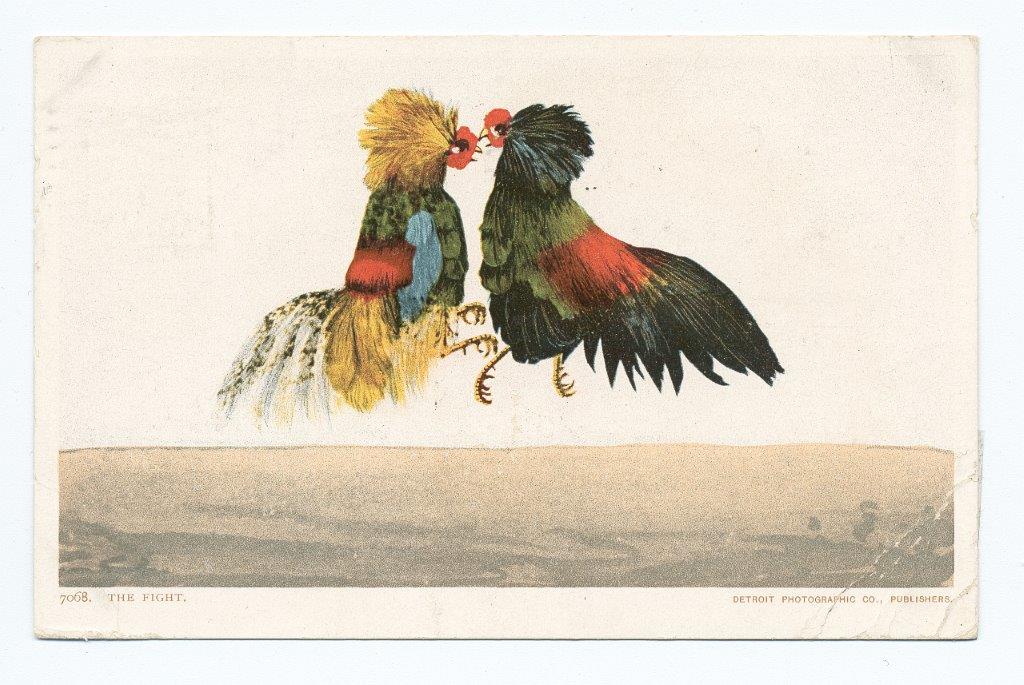
There’s a fight brewing over cockfighting, and it may be headed to the Supreme Court. The dispute is over who can regulate the bloodsport and how. The Commonwealth of Puerto Rico has joined a cadre of cockfighting enthusiasts to ask the Supreme Court to rule that it’s unconstitutional for the federal government to ban the contests.
In 1933, Puerto Rico changed its laws to allow the sport, in which gamecocks are often fitted with spurs and battle until death or dismemberment. The federal government later stepped in to ban the fights. People bet on this stuff, really. On chickens. Wearing spurs.
Closer to home, another fight is brewing, and it’s on a subject familiar to readers of this blog – Prop 22 in California. Passed in late 2020 through a ballot initiative, Prop 22 exempts app-based drivers from the ABC Test and allows them to maintain independent contractor status, so long as the app companies provide certain types of benefits to drivers.
But on Friday, an Alameda County Superior Court judge ruled that Prop 22 is unconstitutional. Wait, what?
Even though Prop 22 passed with 58% support, the SEIU and a vocal group of drivers weren’t too happy and sued. The matter initially went to the California Supreme Court, but the Court dismissed the petition and said it would not hear the case. The SEIU tried again, this time starting in Superior Court, which is where cases are supposed to start. The union found a sympathetic ear in Judge Frank Roesch, who issued this 12-page opinion, which is confusing, hard to follow, and seems to me to be just plain wrong.
What was the basis for the ruling? Two things.
First, Judge Roesch concluded that Prop 22 was unconstitutional because it limits the legislature’s ability to regulate workers’ compensation. Prop 22 defines app-based drivers as contractors, and contractors don’t get workers comp coverage. The law limits the ability of the legislature to undo Prop 22, which was smart since the legislature hated the bill.
The judge found that these limitations made Prop 22 unconstitutional because the California constitution grants the legislature “plenary” power to oversee workers’ compensation. Prop 22 allows the legislature to make limited amendments to Prop 22 but not to undo the whole thing or reclassify the drivers as employees. In making his ruling, the judge essentially concluded that if the legislature couldn’t undo the law, then the law unduly restricted the legislature. But wait! Just a few pages earlier, the judge conceded that “The term ‘legislature’ in [the California constitution] includes the people acting through the initiative power.” Yes, that’s quite the internal contradiction. If the term “legislature” includes initiatives by the people, then initiatives by the people are the equivalent of legislative action. They are acting as the legislature. An appeals court will likely take care of that confusing mess.
Second, the judge concluded that Prop 22 violated the state constitution’s rule that legislation can only be about one subject. Judge Roesch pointed to the part of Prop 22 that gave app-based drivers the right to collectively bargain in a quasi-union environment. He concluded that the bargaining piece of the law is “utterly unrelated” to the law’s purpose. Huh? That utterly makes no sense. The whole point of Prop 22 was to grant app-based drivers various concessions in exchange for clarity on their status as contractors. These concessions include a minimum rate of pay, contributions to healthcare funds, automobile insurance, and the right to collectively bargain in a specified manner. How could the right to collectively bargain be unrelated to these other rights, all of which were part of the quid pro quo in exchange for preserving independent contractor status? The ruling makes no sense, and this too is likely to be cleaned up on appeal.
So what’s the status of Prop 22? Is it dead? Dismembered? The judge may have tied spurs to his feet and kicked the law around a bit, but I am cautiously optimistic that this law will live to see another day.
The case is now headed to the Court of Appeal, and it may end up back with the California Supreme Court.
Meanwhile, for those of you wagering on whether cockfighting will return to legal status, I’d say the odds are against. I don’t think the Supreme Court will take the case and, if it does, I don’t think the Court will say the federal government lacks the power to regulate chicken gladiator shows. I’d put my money on Prop 22 to survive on appeal. I think Judge Roesch’s analysis is incorrect and will be overturned on appeal. But I can’t say I have the same sense of optimism for our cockfighting aficionado friends.
I had a great intro all ready for this week. I really did. WXYZ.com reported last week that Monica, a Detroit woman, took home a free puppy, only to learn days later that it was not a puppy at all, but a hyena.
I was about to share this great piece of investigative journalism with you when I was hit with this surprise: The woman’s story is now in doubt, and WXYZ has retracted the story. Thanks to the Wayback Machine, you can read the original story here and (to my great disappointment, because I so badly wanted this to be true) the retraction here.
Sometimes we are given something that seems wonderful — say, a puppy, or even a fun story about a woman who mistook a hyena for a puppy — but then it gets taken away. For all of you who were pleased with any NLRB pro-business decisions over the past four years, get ready to see those taken away too.
Last week new NLRB General Counsel Jennifer Abruzzo issued a Memo listing roughly 40 decisions and principles that she’d like to undo. She has a more diplomatic way of saying it — let’s just say we’ll “carefully examine” these. But expect many of these principles to be toast, now that the Board features a 3-2 Democratic majority.
You can see the full list here, but I’ll focus on three:
(1) “Cases involving the applicability of SuperShuttle DFW,” a case that made it easier to be classified as an independent contractor. You can read my post about SuperShuttlehere.
(2) “Cases involving the applicability of Velox Express,” a case in which the NLRB ruled that independent contractor misclassification, by itself, is not an automatic unfair labor practice. You can read my post about Velox Express here.
(3) “Cases involving the applicability of UPMC,” which relates to the standard for the Board to accept settlements voluntarily entered into by the parties. What she’s really talking about here is the McDonald’s franchise joint employer case, in which her predecessor as NLRB General Counsel settled a case against McDonald’s that she (and an Administrative Law Judge) didn’t think should have been settled. The NLRB eventually approved the settlement. Here is an amicus brief I wrote for the Restaurant Law Center in that case, arguing that the settlement should be approved.
The General Counsel for the NLRB is the equivalent of its chief prosecutor. These are Abruzzo’s priorities. With a sympathetic 3-2 majority on the Board, you can be sure that many of these desired changes will take place.
Like a good hyena story, the pro-business Board decisions from the last four years aren’t likely to last.








 Who Is My Employee?