

Time to Dance? Momentum Builds for Proposed New Joint Employment Law

Screen Shot 2017-10-28 at 11.47.09 AM

Leadership Lessons from Dancing Guy is a low-quality youtube video that has somehow amassed more than a million hits. In the video, a lone (possibly intoxicated) festival goer starts dancing in a field. After a minute or so, momentum builds and others join him, showing off their terrible dance moves in a video you’ll wish you hadn’t wasted three minutes watching. (Just speaking from experience here.)

Several weeks ago, the House began considering a bill that would rewrite the definition of “joint employment” under federal wage and hour law (Fair Labor Standards Act) and federal labor law (National Labor Relations Act). The Save Local Business Act would require “direct” and “significant” control over “essential terms” of employment before a business could be considered a joint employer of a worker employed by another business (such as a staffing agency or a subcontractor). Read more here and here.

Originally sponsored by Rep. Bradley Byrne of Alabama (you might think of Rep. Byrne as the original dancer in the Leadership video, but dressed as a conservative Southern gentleman), the bill now has 112 co-sponsors, including a few Democrats. Dance party!

Continue reading

NLRB Shifts to Republican Majority; Change in Joint Employment Doctrine Is Likely

NLRB joint employment william emanuelWatching the National Labor Relations Board is like riding a see-saw (a very slow one, and not a very fun one, but stay with me here).

Board members serve five-year terms and, when they expire, the President has the right to appoint a successor, with confirmation by the Senate. Predictably, under Democratic administrations, the Board tips toward union workers’ rights, and under Republican administrations, the Board tips toward protecting businesses.

With the late September confirmation of William Emanuel to the Board’s fifth (and tie-breaking) seat, the see-saw tipped back toward the side of protecting businesses.

Continue reading

Update: Uber’s Misclassification Cases, Arbitration, and the Supreme Court

Independent contractor vs employee Uber misclassification lawsuit arbitration agreements IMG_1111Remember the children’s game called Red Light, Green Light? One ambitious youngster is selected as the traffic cop, who randomly shouts “red light” or “green light,” requiring all the children to run and stop and start in short bursts that would cause an adult human to tear an ACL.

That’s essentially what’s happening in the big Uber misclassification case that has been pending in California since 2014. The case is called O’Connor v. Uber Technologies and is being overseen by traffic cop / federal judge Edward Chen in San Francisco. If anyone ever gets to the finish line, it will eventually be determined whether Uber drivers are properly classified as independent contractors, rather than employees.

Continue reading

Drivers Rack Up Misclassification Settlements, While GrubHub Fights Back

In 1984, the Cars released a sad-sounding song called Drive. I assume it was about a guy longing for a girl, but it’s too depressing to listen to the whole thing. Throughout the song, Ric Ocasek asks “Who’s gonna drive you home tonight?” (Why the long face, Ric? Kidding.)

If you use a ride hailing service, chances are it’s an independent contractor driver who’s gonna drive you home. But in several high profile lawsuits, drivers have challenged their independent contractor status. While these suits have been in the news for years, there have been a recent flurry of high dollar settlements. Earlier this year, Lyft agreed to pay $27 million to a class of 95,000 drivers in California and Door Dash agreed to pay $5 million. Just last week, Postmates agreed to pay $8.75 million.

Continue reading

Can Independent Contractors Form Unions? Seattle Wants to Allow It.

space-needle-independent contrcator drivers seattle uber lyft seattle law ordinanceA legal battle in Seattle (“The Battle of Seattle!”) may soon determine whether independent contractor drivers can form unions. In 2015, the city passed a law allowing Uber and Lyft drivers to organize. The mayor allowed the law to go into effect but didn’t sign it because he was concerned it would spawn expensive litigation. He was right.

This month, a federal judge handed the City a victory, dismissing a lawsuit by the U.S. Chamber of Commerce which had argued that the ordinance was illegal. The decision is certainly not the last word on the subject, since the Chamber will appeal and there is a companion lawsuit still pending anyway.

The issues go beyond the basic question of whether independent contractors can form unions.

Generally, they cannot. Independent contractors are separate businesses. Antitrust law Continue reading

Appeals Court Slams NLRB Joint Employer Finding in Landmark CNN Case, But Ruling May Prove Hollow

NLRB CNN joint employment Browning-Ferris overrule Second Circuit Court of Appeals IMG_1094A federal Court of Appeals has ruled that the NLRB cannot abruptly change its definition of joint employment without sufficient explanation. This decision (the CNN case) rebukes the NLRB for its initial attempt, in 2014, to expand the definition of joint employment.

This decision does not, however, address the Browning-Ferris case that followed in 2015, in which the Board similarly expanded the definition of joint employment but, that time, with an expansive explanation and justification for doing so. Browning-Ferris in on appeal too.

Here’s what happened.

Back in the good old days, when TV was pure and the world had not yet been exposed to Janet Jackson’s halftime nipple, CNN used to contract with an outside company who Continue reading

Joint Employment Legislation Needs to Be Expansive — If It’s to Be Effective

IMG_1093On Monday, we wrote about the Save Local Business Act — proposed legislation that, if passed, would create a new definition for joint employment under the NLRA and FLSA. But would that law go far enough?

No. Not at all.

On the bright side for businesses, the law would provide some predictability in that staffing agency workers would most likely be excluded from bargaining units. It would also remedy the current unfairness that results when a staffing agency makes payroll and overtime miscalculations but the company using the workers is held responsible as a joint employer.

But much more needs to be done to provide real clarity and predictability for business owners.

First, the law fails to address who is a joint employer under other federal employment Continue reading

Congress May Rewrite “Joint Employment” Definition

IMG_1092Congress may finally provide some clarity in determining who is a joint employer. In legislation introduced last week, the House proposed a bill that would rewrite the definition of “joint employer” under federal labor law (National Labor Relations Act) and federal wage and hour law (Fair Labor Standards Act).
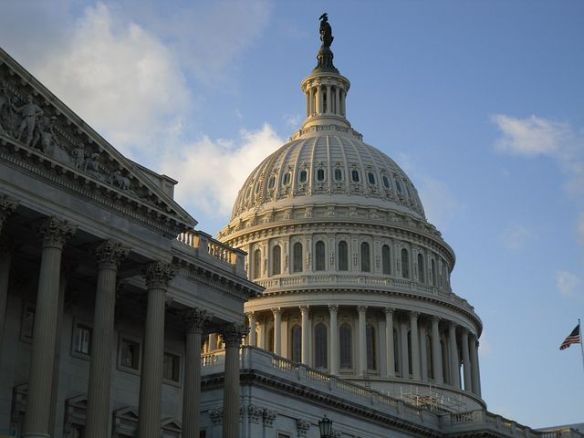
The Save Local Business Act — despite lacking a fun-to-say acronym — would create a new standard for determining who is a joint employer under these two laws. The proposed new standard would allow a finding of joint employment “only if such person [business] directly, actually, and immediately, and not in a routine and limited manner, exercises significant control over the essential terms and conditions of employment….”

The definition provides examples of what are “essential terms and conditions,” including: Continue reading

Two Key Developments in Joint Employment are Expected This Week

IMG_1091.JPG

This could be a busy week for developments in the joint employment area.

1) Congressional Republicans have begun drafting legislation that could change the definition of joint employment, Bloomberg BNA reports. Presumably the goals of a new bill would be (a) to add clarity to the standards for deciding who is a joint employer, and (b) to make it more difficult for workers or unions to claim they are jointly employed.

Continue reading

Labor Dept Withdraws 2015-16 Joint Employment, Independent Contractor Guidance

IMG_1084

Did the new Labor Secretary of Labor finally throw employers a bone? I think so, but it’s too early to tell whether it’s delicious bacon-flavored or some generic processed meat flavor.

On June 7th, the Department of Labor (DOL) announced it was withdrawing the 2015 and 2016 informal guidance on joint employment and independent contractors.

Read the full post here, on BakerHostetler’s Employment Law Spotlight blog.