Kathleen Corradi has been an educator, a land use and sustainability expert and — now — New York City’s first Rat Czar.
The word czar derives from the Latin Caesar and had been used by the Russians to describe their emperor from the 1500s until the 1917 February Revolution, which led to Czar Nicholas II’s unemployment (and, not to bury the lede, the subsequent imprisonment and murder of the former czar, his family and staff).
But Ms. Corradi does not seek to be emperor of the rats. She seeks to eradicate them. Hell of a thing for an emperor to do, don’t you think?
NYC advertised the position with a bit of whimsy, seeking someone “bloodthirsty” with a “general aura of bassassery.”
NYC exercises considerably less whimsy, however, when dealing with independent contractors in its midst.
In most jurisdictions, independent contractors receive none of the protections of employees. NYC, however, imposes some additional burdens on businesses retaining contractors. Here are four things that New Yorkers retaining independent contractors should know:
1. NYC independent contractors are protected against discrimination and harassment under the NYC Human Rights Law.
2. NYC businesses with 15 or more workers must provide annual sexual harassment training to independent contractors, if the contractors (a) work for that business more than 80 hours in a calendar year, and (b) perform on at least 90 days, which don’t have to be consecutive.
3. NYC’s Freelance Isn’t Free Act requires written contracts with freelancers who provide services worth $800 or more, and the contracts must include specified information. This law applies to individuals retaining contractors, not just businesses.
4. NYC rideshare drivers must receive at least a specified minimum wage.
In Japan’s Aomori Prefecture, bald men compete annually in a Suction Cup Tug of War. In each round, two contestants attach suction cups to their heads and pull in opposite directions. The person whose cup detaches first is the loser.
The event is sponsored by the Tsuruta Hagemasu Association, which aims to shed positive light on male baldness. The Association’s website, which I cannot read because it is Japanese, includes several hilarious/serious photos, including one of six elderly gents with flags suction cupped to their heads. Only the guy on the far right seems to be in on the joke. The others seem deadly serious about what their heads can do.
Using your head to win is not unique to the Suction Cup Tug of War. Well, maybe it is unique to the Suction Cup Tug of War if we take that in the most literal way, but now I’m straying into the figurative so that I can transition from something absurd to something topical.
Using your head to win independent contractor misclassification disputes often involves relying on individual arbitration agreements, which can help to prevent class action lawsuits. But the DOL is using its head too, and it’s pulling in an opposite direction. When the DOL pulls against your individual arbitration agreements, the DOL is going to win. The arbitration agreement will lose its stickiness.
Recent DOL news releases have highlighted the Department’s success in prosecuting misclassification cases, even when the target company had its independent contractors sign arbitration agreements. The DOL, in other words, doesn’t care about your arbitration agreements. The DOL is not a party to those agreements, and the DOL isn’t bound by them.
While an individual contractor can waive the right to file a lawsuit, the DOL is not waiving that right. The DOL can — and will — bring misclassification claims against companies that use arbitration agreements. I’m not suggesting that having arbitration agreements makes businesses a target for enforcement; I have seen no evidence of that. My point is just that arbitration agreements have their weak points, and the major weak point is that they do nothing to prevent a government agency, state or federal, from conducting an audit or bringing an enforcement action.
The US DOL, state labor departments, state unemployment agencies, and state and federal tax services have all made misclassification an enforcement priority.
Businesses should keep using arbitration agreements with their independent contractors, but be aware that these agreements do not protect against all mass enforcement activity. The stickiness of these agreements is useful, but when the DOL pulls in the opposite direction, the suction cup is probably coming off your head.
For those of you wishing you could have been there, here’s a video of the 2023 Suction Cup Tug of War. After some bizarre preliminaries, including tournament officials and a young girl throwing wet paper rectangles at the competitors’ heads, the thrilling tug of war action begins at about 1:20 into the clip.
The Rolling Stones’ song, “You Can’t Always Get What You Want” features the London Bach Choir and addresses the predominant themes of the 1960s — love, protest, and drugs. There’s some controversy as to whether Mr. Jimmy refers to vagrant Minnesotan Jimmy Hutmaker, who supposedly uttered the famous lyric-to-be during a chance 1964 encounter with Jagger at Bacon’s Drugstore, or Jimmy Miller, a record producer who also played drums on this track instead of Charlie Watts.
“You Can’t Always Get What You Want” is also a suitable theme for the main problem that dominates every aspect of independent contractor misclassification. The problems is that the laws are binary. A worker is either an employee who receives all of the protections of employment laws, or an independent contractor, who receives none. The exceptions creating a middle ground have been sparse.
But if you try sometimes.
California voters tried and succeeded in creating a middle ground in 2022, when they passed Prop 22. Prop 22 guarantees independent contractor status for rideshare and delivery drivers if a series of conditions are met, and then the app companies are required to provide a range of protections for drivers, including minimum rates of pay, a health insurance stipend, accident insurance, sexual harassment prevention, safety training, and rest requirements.
Prop 22 was and is a model for the middle ground that has been missing.
But Prop 22 has also been under attack. In a case called Castellenos, the SIEU and other worker advocates have argued that Prop 22 violates the California constitution and had to be invalidated. Without Prop 22, rideshare and delivery drivers could be subjected to California’s ABC Test for determining drivers’ status.
As you may have read, a California Court of Appeals ruled earlier this month that Prop 22 did not violate the California Constitution and could take effect, except for one small part of the law governing future amendments. The dispute will likely be heard by the California Supreme Court, so the fight isn’t over.
The point I want to make, though, is that Prop 22 carves out a middle ground that should be a model for other states to follow. It guarantees workers certain protections while allowing them to operate their own businesses as independent contractors.
The unions and worker advocates calling for the protection of worker rights routinely ignore the surveys showing that a vast majority of drivers prefer independent contractor status. Much of the noise on this issue is coming from a vocal minority.
The Prop 22 model is a middle ground that provides workers with protections they otherwise lack, while allowing workers to retain their preferred independent contractor status and flexibility.
We’ll continue to watch whether the California Supreme Court decides to hear this dispute but, either way, Prop 22 should be held up as a model for other states to follow, carving out a middle ground that balances the concerns of all sides. Worker status does not have to be binary. Binary laws that mandate employee or independent contractor status, with no middle ground, do not reflect the realities of the modern gig economy.
It’s time for reform.
You can’t always get what you want. But if you try sometimes, well, you just might find, you get what you need.
The Rolling Stones’ song, “You Can’t Always Get What You Want” features the London Bach Choir and addresses the predominant themes of the 1960s — love, protest, and drugs. There’s some controversy as to whether Mr. Jimmy refers to vagrant Minnesotan Jimmy Hutmaker, who supposedly uttered the famous lyric-to-be during a chance 1964 encounter with Jagger at Bacon’s Drugstore, or Jimmy Miller, a record producer who also played drums on this track instead of Charlie Watts.
“You Can’t Always Get What You Want” is also a suitable theme for the main problem that dominates every aspect of independent contractor misclassification. The problems is that the laws are binary. A worker is either an employee who receives all of the protections of employment laws, or an independent contractor, who receives none. The exceptions creating a middle ground have been sparse.
But if you try sometimes.
California voters tried and succeeded in creating a middle ground in 2022, when they passed Prop 22. Prop 22 guarantees independent contractor status for rideshare and delivery drivers if a series of conditions are met, and then the app companies are required to provide a range of protections for drivers, including minimum rates of pay, a health insurance stipend, accident insurance, sexual harassment prevention, safety training, and rest requirements.
Prop 22 was and is a model for the middle ground that has been missing.
But Prop 22 has also been under attack. In a case called Castellenos, the SIEU and other worker advocates have argued that Prop 22 violates the California constitution and had to be invalidated. Without Prop 22, rideshare and delivery drivers could be subjected to California’s ABC Test for determining drivers’ status.
As you may have read, a California Court of Appeals ruled earlier this month that Prop 22 did not violate the California Constitution and could take effect, except for one small part of the law governing future amendments. The dispute will likely be heard by the California Supreme Court, so the fight isn’t over.
The point I want to make, though, is that Prop 22 carves out a middle ground that should be a model for other states to follow. It guarantees workers certain protections while allowing them to operate their own businesses as independent contractors.
The unions and worker advocates calling for the protection of worker rights routinely ignore the surveys showing that a vast majority of drivers prefer independent contractor status. Much of the noise on this issue is coming from a vocal minority.
The Prop 22 model is a middle ground that provides workers with protections they otherwise lack, while allowing workers to retain their preferred independent contractor status and flexibility.
We’ll continue to watch whether the California Supreme Court decides to hear this dispute but, either way, Prop 22 should be held up as a model for other states to follow, carving out a middle ground that balances the concerns of all sides. Worker status does not have to be binary. Binary laws that mandate employee or independent contractor status, with no middle ground, do not reflect the realities of the modern gig economy.
It’s time for reform.
You can’t always get what you want. But if you try sometimes, well, you just might find, you get what you need.
When I hear the name Lorena, my mind automatically goes back to 1993, which is probably true for many men about my age. That’s the year when Lorena Bobbitt brought a kitchen knife into the bedroom and cut off her husband John’s member while he was sleeping. She then tossed it in a field near the house, alerted police where to find it, and became an overnight celebrity for having taken revenge after years of alleged domestic abuse.
John later tried to cash in on the detachment, forming a band called The Severed Parts and appearing in two pornos called John Wayne Bobbitt Uncut and Frankenpenis.
It was a different Lorena who grabbed headlines last week, when the Ninth Circuit Court of Appeals considered whether it’s unconstitutional to pass a law because of personal animus.
The law is California’s AB 5, and the Lorena is former California assemblywoman Lorena Gonzalez. As a quick refresher, AB 5 is the California law that imposed a hard-to-satisfy ABC Test for determining independent contractor status. Lorena Gonzalez, a driving force behind the bill, was vocal in her animus toward rideshare and delivery app companies.
In Olson v. California, the rideshare and delivery app companies sued to invalidate AB 5, arguing that the law contained dozens of exceptions targeted toward a grab bag of industries, and their exclusion from the list of exemptions was due to animus toward them, rather than reason.
This might have been a hard argument to make, but for Lorena. Congresswoman Gonzalez made frequent public statements against rideshare and delivery companies, claiming they mistreated workers by not classifying them as employees. Gonzalez said she was open to including exceptions in the bill, but not for these companies. The legislature then passed an exemption for other referral-based app businesses, but not rideshare or delivery, even though the business models are basically the same. A few other vocal lawmakers joined Gonzalez with similar public statements targeting the rideshare and delivery app companies. It’s the old familiar “[insert name] said the quiet part aloud” story.
Last week the Ninth Circuit ruled that personal animus is not a legit reason to pass a law. The Court wrote, “We are persuaded that these allegations plausibly state a claim that the ‘singling out’ of Plaintiffs effectuated by A.B. 5, as amended, fails to meet the relatively easy standard of rational basis review.” The Court was referring to the standard used for evaluating equal protection claims under the Constitution. It does not advance a governmental interest to pass a law out of a desire to harm a politically unpopular group of citizens.
The Court’s ruling did not overturn AB 5. The ruling sent the case back to the district court, which will have to reopen the case against AB 5.
For now the law remains in effect, and there is no immediate impact to businesses in California. But the fight to overturn AB 5 has fresh legs and some momentum.
In other words, businesses in California are still subject to the ABC Test — unless you’re a licensed insurance business or individual, physician, surgeon, dentist, podiatrist, psychologist, veterinarian, lawyer, architect, engineer, private investigator, accountant, registered securities broker-dealer or investment adviser, direct sales salesperson, commercial fisherman working on American vessels for a limited period, marketer, human resources administrator, travel agent, graphic designer, grant writer, fine artist, payment processing agent, still photographer or photo journalist, freelance writer, editor, or cartoonist, licensed esthetician, electrogist, manicurist, barber, cosmetologist, real estate licensee, repossession agent, recording artist, songwriter, lyricist, composer, proofer, manager of recording artists, record producer or director, musical engineer or mixer, vocalist, musician engaged in the creation of sound recording, photographer working on recording photo shoots or album covers, independent radio promoter, newspaper distributor working under contract with a newspaper publisher, newspaper carrier working under contract either with a newspaper publisher or newspaper distributor, contracting party in certain types of business-to-business relationships, or referral agency other than for rideshare or delivery — all of which are subject to possible exemptions.
And so you can see the point. The exemptions are a mishmosh created by special interests and lobbying efforts, with no coherent overall theme — except to make sure rideshare and delivery apps are subject to the ABC Test.
We’ll continue to follow this case. Meanwhile, if you’d like to read more about the original Lorena and the incident, there’s a Lifetime movie, an Amazon docuseries, and a whole bunch ofarticles.
As promised during the Master Class session last week, here are Ten Things That Should Be in Your Staffing Agency Agreements But Probably Aren’t.
There are still four Master Class sessions to go. The next one will be Tuesday at 2pm ET, covering the NLRB and the Uncertain State of Labor Law. There is no charge to participate. CLE and HR credits are available. You can register here.
This headline does not refer to the Chinese spy ballon.
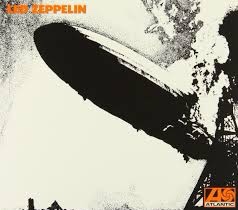
Instead, I’m thinking about 1968. Jimmy Page and John Paul Jones had joined up to form a new band after the breakup of the Yardbirds. Drummer Keith Moon of The Who supposedly said the project would go down like a lead balloon.
One of the largest balloons, of course, is the zeppelin. The zeppelin was a passenger airship used until the Hindenberg disaster in 1937. So the band named itself Led Zeppelin, dropping the ‘a’ in Lead so people wouldn’t mispronounce the name of the band.
In 1971, the band released Led Zeppelin IV, which included the song “Going to California” and this lyric:
Spent my days with a woman unkind
Smoked my stuff and drank all my wine
Made up my mind to make a new start
Going to California with an aching in my heart
For today’s post, I’m going to California with an aching in my heart.
Cities in California have upped their game when going after companies that use independent contractors. They’re taking the lead (not led) in bringing their own lawsuits.
In January 2023, the City of San Francisco secured a $5.25 million settlement to cover 5,000 independent contractor delivery drivers. The lawsuit alleged a failure to comply with the city’s health care security and paid sick leave ordinances, which apply to employees.
In October 2022, San Diego’s city attorney settled its own independent contractor misclassification lawsuit for $46.5 million. That deal covered 300,000 independent contractor delivery drivers.
In 2021, San Francisco reached agreement on another delivery driver misclassification lawsuit, settling for $5.3 million to cover 4,500 local drivers.
The mountains and the canyons start to tremble and shake
The children of the sun begin to awake (watch out)
States are following a similar playbook, as we recently saw when New Jersey obtained a $100 million settlement, alleging that a rideshare app company failed to pay into the state unemployment insurance fund for independent contractor drivers.
It seems that the wrath of the gods got a punch on the nose
And it's startin' to flow, I think I might be sinkin'
Government-initiated lawsuits can be particularly dangerous because arbitration agreements and class action waivers are ineffective. The governments are fighting for funds they think are rightfully theirs.
They also have political motives driving their prosecutions. Officials facing re-election want to be able to show their constituents they’re making a difference and fighting for workers’ rights (and ignoring, as usual, the fact that most IC drivers want to remain ICs).
Throw me a line, if I reach it in time
I'll meet you up there where the path runs straight and high
The trend of government-backed compliance efforts is going to continue and will likely increase. Companies making widespread use of independent contractors should be proactive in evaluating these relationships, the contracts, and the local laws to build a comprehensive defense strategy — before getting sued.
If you google “what to watch for 2023,” you’ll mostly get tips on soon-to-be-released movies and streaming video shows. You’ll get grammatically impossible generic hype like “movies we can’t wait to see” (except the whole point is that you have to wait to see them) and you’ll get grammatically impossible niche hype like “The most anticipated Korean dramas and movies we can’t wait to watch in 2023.”
We won’t peddle hype in this post, and you’ll literally have to wait for all of the things addressed below. But here are five important developments to watch for in 2023.
1. The test for Independent Contractor vs. Employee is likely to change, at least under the Fair Labor Standards Act (FLSA). The Department of Labor proposed a new multi-factor test, and the period for public comment ended December 13. The DOL is likely to roll out a new test in 2023. It will replace the current core factors test described here.
2. The test for Joint Employment is likely to change, at least under the National Labor Relations Act (NLRA). In September, the NLRB proposed a new test for determining when joint employment exists under the NLRA. You can read more here. The public comment period has closed, and we can expect a new test sometime in 2023.
3. The NLRB is likely to rule that independent contractor misclassification, by itself, is an unfair labor practice. The NLRB General Counsel has expressed an intent to reverse the Velox Express decision from 2019, in which the Board ruled that misclassification was not an automatic ULP. More information is here. Now that the Board majority has switched from Republican to Democrat, expect a decision in 2023 that creates an automatic ULP when there’s a finding of worker misclassification.
4. Expect state legislatures to keep changing the tests for Independent Contractor vs. Employee. Some states will try to make it harder to maintain independent contractor status by passing ABC Tests, in either a standard or strict version. A few conservative states may go the other way and adopt the latest version of the Uniform Worker Classification Act proposed by ALEC. The law would create a safe harbor for independent contractor classification if certain requirements are followed, including having a written contract. Versions of this law have been passed in West Virginia and Louisiana. You can read more here. Expect Oklahoma to be next.
5. Expect significant rulings on California independent contractor law. Several important cases are pending. These include Olson v. State of California, which challenges the constitutionality of AB 5. Oral argument was held in the Ninth Circuit in July 2022. In another case, the California Court of Appeal is considering the legality of Prop 22, the successful ballot measure that helped to protect independent contractor status for rideshare and delivery drivers using app services. Oral argument in that case, Castellanos v. State of California, was held in December 2022.
The law regarding contingent workforce is constantly changing, and 2023 looks to be another year of significant transformation. As always, it will be a good idea to watch these new developments carefully, as they will likely have a significant impact on companies using independent contractors and other contingent workforce arrangements.
The world’s dirtiest man died last month at the (ripe) age of 94, having reportedly going 60 years without bathing. Covered in soot and living in a cinder-block shack, the Iranian hermit was known for eating roadkill, smoking a pipe filled with animal excrement, and believing that cleanliness would make him ill.
The newest dirtiest man alive may be this guy in India, who as of 2009 hadn’t bathed in a mere 35 years. Instead of water, this man of the people opts for a “fire bath,” in which he lights a bonfire, smokes marijuna and stands on a leg praying to Lord Shiva. The man told a reporter from the Hindustan Times, “Fire bath helps kill all the germs and infections in the body.” Of course it does.
Sometimes when we settle lawsuits, we also feel dirty. Maybe not that dirty, but at least icky. It feels wrong to pay money to a plaintiff when we feel the other party doesn’t deserve it. But settlements are often driven by factors other than the merits of a claim, such as business conditions or considerations other than purely financial.
In independent contractor misclassification cases, a settlement is sometimes the only way to ensure that a lawsuit does not result in forced reclassification of workers. In a settlement, the parties can agree upon terms, including financial payments, without conceding that anyone was misclassified and without requiring a reclassification going forward.
That is what happened in a recent case involving A Place for Rover, which is an app-based gig economy company that connects dog walkers with dog owners.
In May 2021, the app company won summary judgment in a misclassification dispute. The company argued that dog walkers were independent contractors, not employees, even under California law. The company argued that it could satisfy each prong of the ABC Test and that, regardless, it was a referral service under California law, which would exempt it from the ABC Test usually used in California to determine whether a worker is an employee. The company urged the court instead to analyze the classification dispute using the S.G. Borello balancing test, not an ABC Test.
The district court did not reach a conclusion on whether the company was a referral service and instead determined that the ABC Test was satisfied. The court ruled that dog walkers controlled their own work, routes, and prices, making them legitimate independent contractors.
But the plaintiff appealed, and the company may have feared that the Ninth Circuit Court of Appeals would revive the case and send it to trial. Instead of taking a chance on a bad outcome, the company settled.
By settling, the company pays money to avoid the risk of a judgment that the dog walkers were employees, an outcome that would likely render the company’s business model no longer viable. The company’s decision makers probably felt a little dirty, paying any money at all after having won at the district court level. That is not a surprising outcome, even if they felt strongly about their case. Because the stakes are so high in misclassification litigation, that’s often how these cases conclude. Icky but sometimes necessary.
But at least in litigation, afterwards you can take a bath.
Have you ever gone to a new restaurant that took over the space where one of your favorite restaurants used to be?
You’ve been wanting to try the new restaurant. You get there and the menu looks similar, so you order the fettucine with shrimp because that dish was always really good at the old place. It arrives and it looks the same but you’re not sure that it tastes quite the same.
Maybe the sauce tastes a little different but it’s hard to tell for sure. Then, you get home later that night and you feel a little queasy. You realize that the new restaurant must have put onions in the sauce. You probably didn’t notice because when the dish was served it looked just like it did at the old restaurant.
But you’re not supposed to eat onions, and now you have to wait and see if you’re going to start cramping up from eating the onions or if you’re going to be just fine. You really just don’t know. It could just as easily go either way, and now all you can do is wait.
That’s kind of how I feel after reading the Department of Labor’s proposed new independent contractor rule, released earlier this week.
Click here to read the rest of the story, originally published in Law360 on 10/13/2022.








 Who Is My Employee?