I was in Italy two weeks ago and visited Vatican City. Passport control at the Rome airport was annoyingly slow, but getting in and out of Vatican City – a sovereign nation – was surprisingly easy. Here is a photo of border control at the Vatican.
Navigating the border between independent contractor and employee status is usually more Rome airport than Vatican City, but a proposed new regulation from the Department of Labor (DOL) would make it a bit easier to support independent contractor status under the Fair Labor Standards Act (FLSA) and the Family and Medical Leave Act (FMLA).
The proposed rule would adopt a five-factor “economic reality” test, consistent with the test adopted during the first Trump administration. The defining feature of this test is that it highlights two core factors. If these two factors are met, the worker would almost always be an independent contractor under the FLSA and FMLA.
Click here to read more, originally posted on the BakerHostetler blog, Employment Law Spotlight.
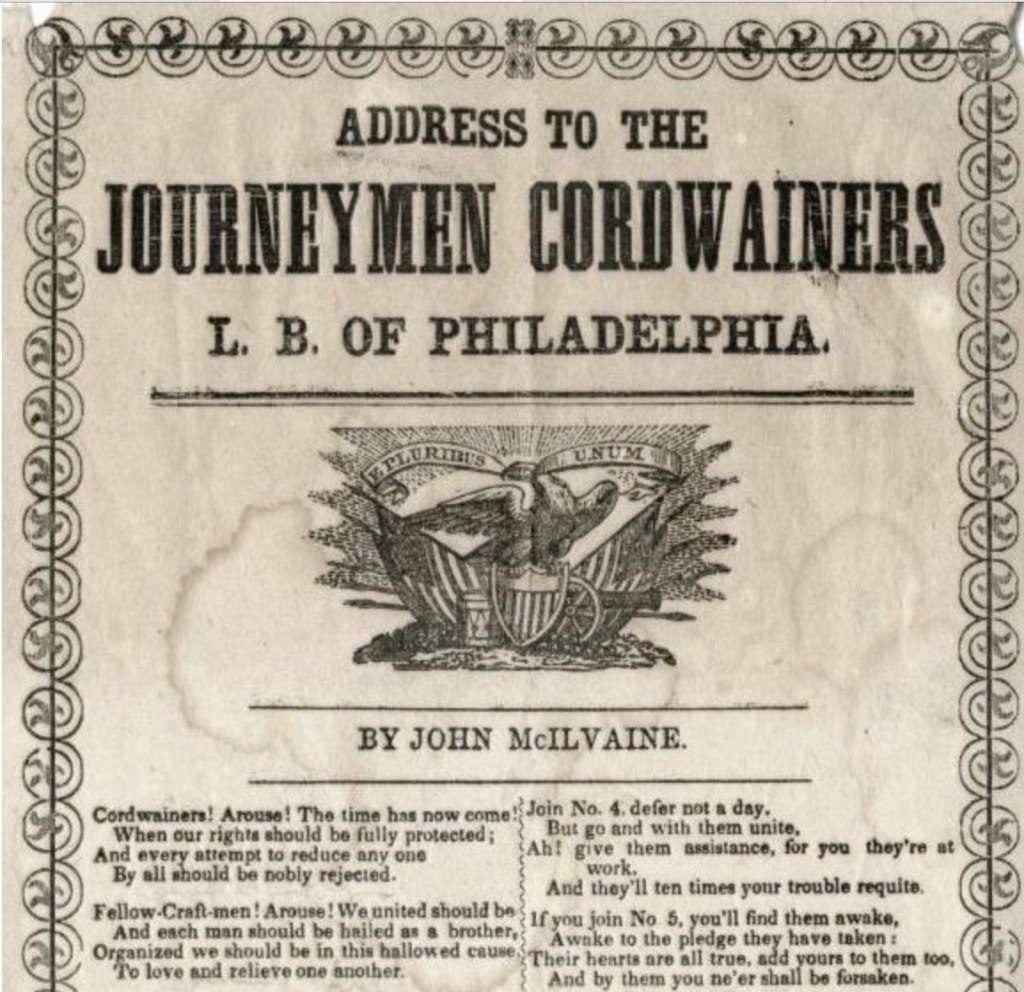
The first labor union in the United States was the the Federal Society of Journeymen Cordwainers, founded in 1794. What is a cordwainer? I had to look that up too, so I’ll save you the trouble.
It’s a shoemaker who makes new shoes from new leather, in contrast to a cobbler who repairs shoes. There aren’t a lot of cordwainers around anymore that I know of. Or maybe there are but they go by a name that sounds less weenie-ish.
There are, however, a lot of rideshare drivers. And the State of California thinks they would like to organize too.
But there’s a problem with that. The National Labor Relations Act protects employees, not contractors. When independent businesses band together to set prices, that’s called price fixing, and it presents all sorts of antitrust problems.
A new California law tries to get around these pesky legal problems.
The Transportation Network Company Drivers Labor Relations Act, AB 1340, allows rideshare drivers the right to collectively bargain, using a process to be overseen by the Public Employment Relations Board (PERB).
Rideshare companies must submit a list of eligible drivers every quarter, and these companies are required to negotiate in good faith with the yet-to-be-formed drivers’ group.
But they’re not “unions,” I suppose, even thought they walk like a union and quack like a union.
The statute is long and detailed. It has lots of procedures.
In 1805, the cordwainers’ union was alleged to be a coercive and violent organization, allegations that arose after a cordwainer on strike threw a potato at a scab. The potato broke a window.
Let’s hope the whole rideshare law thingie goes more smoothly, and we’ll see how this actually works in practice. A possible bad omen: The statute says nothing about the unauthorized use of potatoes.
We all know that ice cream comes in many flavors. But some are particularly unusual. For example, a French company sells ice cream with flavors like foie gras, caviar, mustard, and truffle. Presumably, those come in separate scoops.
A U.S. company sells deviled egg custard with smoked back team ice cream. That’s a firm no for me. A New York gelateria offers wasabi. Again, pass.
Less fun fact: Joint employment also comes in two flavors — vertical and horizontal.
Vertical joint employment is when the employee of one company performs services for the benefit of a second company, like in a staffing agency scenario. That’s probably what you think of when you consider joint employment.
But there’s also horizontal joint employment, and that flavor was the subject of a recent DOL opinion letter (FLSA 2025-05). The letter reminds us that even under the current administration, the concept of joint employment is alive and well.
Horizontal joint employment occurs when an employee works for two separate companies in the same week, but those companies share ownership, management, scheduling responsibility, or other significant areas of coordination.
Under the facts addressed in the opinion letter, a hostess worked at both a restaurant and a members-only club. She worked fewer than 40 hours per week at each, but worked more than 40 hours per week combined.
The restaurant and the club were on the same property, shared a kitchen, shared some managers, coordinated schedules, and were “operationally integrated with each other,” as the DOL put it. The employee also sometimes performed work for the club while clocked in at the restaurant.
While the locations were run by separately incorporated entities and had separate upper management teams, the overlap in operations was enough for the Acting Wage and Hour Administrator to conclude that the employee was jointly employed. That means her hours had to be combined for purposes of determining her eligibility for overtime. If she worked more than 40 hours combined for the two entities, she would be due an overtime premium. The two joint employers would have to determine how to allocate the premiums between them, and if they failed to do so, both would be jointly liable.
This opinion letter is a good reminder not to overlook the potential for horizontal joint employment. It’s a lesser known flavor of joint employment, but just as loaded with cream and sugar.
In 2015, this image was widely circulated on Facebook, with some people seeing the dress as white and gold, others seeing it as blue and black. Whichever camp you are in, you probably cannot understand how anyone could possibly think the dress is the other set of colors.
You can read more here if you want a refresher. But essentially it all comes down to neuroscience and differences in how people perceive color.
The core takeaway, though, was that two people could view the same object and reach opposite conclusions.
And so it goes with independent contractor misclassification disputes. A recent Fourth Circuit decision highlights the problem with the tools we use to assess whether a worker is properly classified. When a balancing test is used, different fact-finders can view the same evidence and reach opposite conclusions. And that’s exactly what happened here.
The case, Chavez-DeRemer vs. Medical Staffing of America d/b/a Steadfast, involved a staffing firm that provided independent contractor nurses to hospitals and medical clinics, as needed. The DOL launched an investigation in 2018, alleging that 1,100 nurses should have been classified by Steadfast as its employees under the Fair Labor Standards Act (FLSA). The DOL filed a lawsuit in federal court in Norfolk. After a bench trial, the judge ruled that under the FLSA’s six-factor Economic Realities Test, the nurses were employees. The judge awarded more than $9 million in damages.
Steadfast appealed. Last week, in a 2-1 decision, the Fourth Circuit affirmed. Two judges agreed with the trial court, finding that the evidence supported employee status under the Economic Realities Test.
The dissenting judge disagreed vehemently. As in, how-can-you-possibly-think-the-dress-is-blue-and-black vehemently. The dissenting judge excoriated the majority for cherry-picking facts and ignoring the realities of the relationship.
All three judges, of course, were evaluating the same facts and the same record. All three judges were applying the same six-factor Economic Realities Test. Yet, they reached very different conclusions.
If this is depressing, it should be. It shows how unpredictable balancing tests can be.
The outcome is an important reminder of how important it is, when building independent contractor relationships, to consider every relevant factor and to nudge as many factors as possible to the independent contractor side of the scale.
There is no way to predict which facts a judge will find most persuasive and no way to predict how a judge will weigh the factors, especially since it is pretty much inevitable that there will be at least some factions on each side of the scale.
I see the dress as white and gold. I can’t understand how anyone would think it’s black and blue. Those people are insane.
Actually they’re not insane. (Well maybe they’re insane.)
In the Medical Staffing case, the dissenting judge couldn’t see how the other two judges could have possibly reached the conclusion that the nurses were misclassified. Businesses using independent contractor models need to be prepared that no matter how supportable they think their classification decision is, a judge or agency might reach the opposite conclusion, even from the same facts.
When police in Spain pulled over a 70-year-old van driver for not wearing a seatbelt and driving erratically, they thought it would be a routine stop. The man had other ideas. After being asked to take and retake a breathalyzer test, the man threatened to kill the police officers, which is generally a thing you should not do when pulled over.
The man, who I should now mention was a beekeeper, went to the back of the van and released swarms of bees, which proceeded to attack the policemen, stinging them several times. The policemen fled to a nearby restaurant, and the beekeeper casually drove away. He was later arrested, bee that as it may.
The policemen that day didn’t know what they were getting into when they pulled over the van driver. But businesses in Colorado who misclassify workers as independent contractors should now bee on notice that they may get stung — financially — for their misdeeds.
Colorado has amended its wage and hour laws to add a mandatory fine for willful or repeated misclassification of employees as non-employees. Under the new law, an employer found to have misclassified an employee as a nonemployee must pay a fine in the following amounts, in addition to any other relief that may be awarded:
For a willful violation, $5,000;
For a violation not remedied within 60 days after the division’s finding, $10,000;
For a second or subsequent willful violation within 5 years, $25,000; or
For a second or subsequent willful violation not remedied within 60 days after the division’s finding, $50,000.
Colo. Rev. Stat. 8-4-113(1)(a)(I.5).
Misclassifying workers as independent contractors has always carried the risk that you’re not complying with employment laws. As states continue to crack down on the misclassification, we can expect to see more laws with mandatory fines, on top of the usual risk of backpay awards.
Businesses using independent contractors in Colorado and other states with fines should pay extra attention. The fines do not vary by size of the engagement, and they are per-violation fines.
I started to look up fun facts about Alabama and learned that the world’s largest office chair is in Anniston, Alabama. I was content with that find, but then I fell down a rabbit hole when I found this website, which lists other roadside attractions in the category of Oversized Chairs.
There’s a giant ladderback chair in Sebastopol, California. There’s a big chair you can drive under at the Los Angeles Merchandise Mart. Homer, Alaska has a big Adirondack-style chair, in case you’re headed out that way.
Whatever your destination, you may want to sit down and relax. I have some good news for a change.
Alabama passed a new law creating a portable benefit system for independent contractors. Unlike other portable benefit systems, this one allows for 100% tax deductibility for both contractors and the paying party for all contributions to the account.
Under the Portable Benefits Act (SB 86), contractors can create a portable benefit account through a third party. The account can be used to fund health insurance, life insurance, or other benefits. Starting in January 2026, funds contributed by the contractor are excluded from taxable income. Funds contributed by the party that retained the contractor are 100% tax-deductible.
The tax consequences here apply only to Alabama law, not federal tax law; but this is a solid step in the right direction for solo and small business owners.
The push by unions and some deep blue states to reclassify contractors as employees is motivated mainly by the desire to give contractors the same protections and benefits received by employees. If contractors have portable benefit accounts that can be funded tax-free, that certainly helps them and removes some of the incentive to reclassify.
There have been portable benefit bills passed in a few other states, with varying scopes. Utah and Tennessee, for example, have portable benefit programs, but neither offers 100% tax-deductibility.
There have been some efforts at the federal level to pass a nationwide portable benefits bill, but nothing is close to being passed.
In the meantime, this is good news for Alabama contractors and the companies that engage them. Y’all deserve to relax and enjoy a cocktail in an oversized comfortable chair. I’d recommend the big chair in Anniston, Alabama. California and Alaska are a bit too far a drive.
The phrase “Different strokes for different folks” originated in the 1960s and seems to have been popularized by Muhammad Ali. Describing his knock-out punches against Sonny Liston and Floyd Patterson, he said, “I got different strokes for different folks.”
In 1979, Ali appeared in the sitcom “Diff’rent Strokes,” which was probably named for the Ali quote and which was actually spelled that way and I can’t find anything that explains why. I guess when it comes to punctuation, different strokes for different folks?
Today’s post is a variation on that theme: Different states for different fates.
When drafting independent contractor agreements, choice of law matters. Choose carefully and thoughtfully. And remember three things:
First, state laws differ significantly on several subjects that might be relevant to your IC agreement — for when someone is considered an employee, for when non-competes can be enforced, for when non-solicitation agreements can be enforced, and for other terms that are likely to be in your contractor agreements. Don’t choose the law of a state that is less likely to enforce the clauses you want to include. If you can avoid California law for example, do yourself a favor and avoid California law.
Second, the state you choose needs to have some nexus to the parties or their relationship. Examples of a nexus that can justify use of a state’s law may be that one party is based there, or the work is being performed there, or (maybe) that one party is incorporated there. But there needs to be some connection.
Third, for worker classification disputes, the law of the state where the work is performed might apply anyway, since if a worker works in State A and the laws of State A would consider that person to be an employee, the parties cannot agree to contract out of the law of State A. But don’t concede so easily. Aim to apply the law of a favorable jurisdiction, even if there’s a chance that a court or arbitrator might disregard the choice of law clause in a classification dispute. Besides, there are going to be many other clauses in your agreement for which you’ll want the most favorable state law to apply.
For employment relationships, it is unlawful in some states (and unenforceable in others) to require application of the law of a state where the work is not performed, but it’s much less clear when and whether such laws apply to non-employment relationships.
The bottom line: Be strategic and thoughtful when inserting a choice of law provision in an independent contractor agreement. Depending on what law is applied to a particular issue or contract clause, the result and enforceability of that term may be different. Or diff’rent.
And the wrong choice of law could mean a knock-out punch for a clause you’d like to enforce.
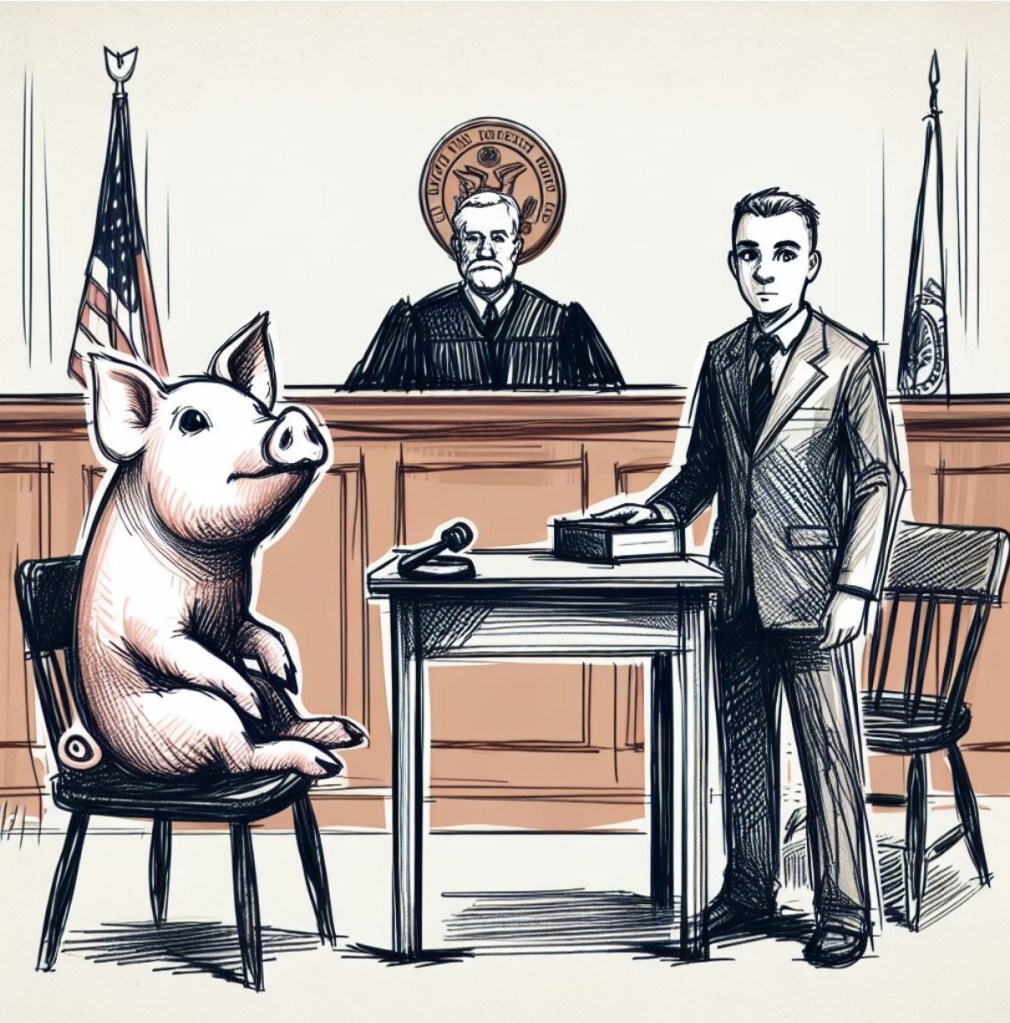
In medieval Europe, it was not uncommon to put animals on trial for various crimes. In France, Italy, Switzerland, and elsewhere, courts tried pigs, dogs, rats, grasshoppers, and snails for crimes against people, property, and God.
Examples include cases brought against vermin who dared to ransack stores of grain and prosecutions for pigs having maimed or killed people.
There’s a whole book about the practice, Chronological List of the Prosecution of Animals from the Ninth to the Twentieth Century, by E.P. Evans. I typed the name of the book in the search bar at Amazon. Apparently it is not available, and the site instead recommended that I purchase a DVD of Ransom, starring Mel Gibson. (?)
No, thank you.
I also say no, thank you to New Jersey Department of Labor and Workforce Development (NJ DLWD), which has proposed new independent contractor classification regulations.
The regulations would re-interpret NJ’s ABC Test in a way that would make it much harder to maintain IC status. The regulations would apply to the NJ Wage Payment Law, the Unemployment Compensation Law, and the Earned Sick Leave Law.
For years New Jersey has used an ABC Test, but with the standard version of part B, unlike California and Massachusetts, which have a strict version of part B.
To satisfy a standard ABC Test, like in NJ, the party engaging the contractor must prove (all three):
The individual has been and will continue to be free from control or direction over the performance of work performed, both under contract of service and in fact; and
The work is either outside the usual course of the business for which such service is performed, or the work is performed outside of all the places of business of the enterprise for which such service is performed; and
The individual is customarily engaged in an independently established trade, occupation, profession or business.
The regulations would largely re-interpret part B to make it more like the strict version, which can be met only if the work is performed “outside the course of the business for which such service is performed.”
The regulation would essentially eviscerate the second option — that the work is performed outside of all the places of business of the enterprise for which such service is performed — and make it nearly impossible to satisfy this alternative.
For example, under the regulations, the retaining party’s “place of business” could include any place where the work is typically performed, even customer’s homes.
The regulations would also make parts A and C harder to meet. In part A, for example, the regulations would declare that control exerted to make sure a contractor follows the law is relevant control that can convert the worker to an employee. But control exerted to ensure compliance with a law is control imposed by the government, which passed the law, not by the company retaining the contractor. This re-imagining of part A would be inconsistent with a multitude of court decisions that have addressed this issue.
I say no, thank you, because the regulation is not consistent with New Jersey law and is not consistent with how other courts around the country have interpreted the ABC factors. The NJ DLWD is supposed to apply the law, not change it. The NJ DLWD is not a legislative body and is not a court.
Nonetheless, it seems like there’s a good chance this will pass.
A 60-day public comment period began with the publication of the proposed rule on May 5. Companies that will be impacted by the rule should consider submitting comments. Page 1 of the proposed regulations explains how.
Misclassification in New Jersey is serious business. The state has been aggressive about pursuing legal action against companies that systemically misclassify workers as ICs. (But so far, no cases against pigs, dogs, rats, grasshoppers or snails. I think.)
This is Louie. He’s 11 weeks old. He has the teeth of a shark. If you play with him and there’s no toy in his mouth, your arm is the toy. Or your foot. Or sometimes your face. In my house, we all look like we just played with a blender. But he’s awfully cute.
Late last week, the Department of Labor (DOL) made some news that won’t bite companies in the face.
I found this guy while running in the neighborhood
When animals flock together, we use strange collective names to describe them. You’ve heard of a flock of seagulls, a pod of whales, and a murder of crows. But did you know the collective nouns for apes, hippos, and wildebeests?
Fortunately, this wildlife writer does. It’s a shrewdness of apes, a bloat of hippopotamuses, and a confusion of wildebeests.
My favorite, though, is a parliament of owls. The phrase was apparently coined by CS Lewis in the 1950s and stuck. Good for the owls! I wish for them to form a strong government and pass wise laws.
When independent contractors flock together, we don’t really have a good word for that. Contractors generally can’t flock together for employee benefit plans since they’re not employees, even though some states have enacted portable benefits laws as models for what may be viable on a national level.
One impediment to companies providing contractors with benefits is that doing so can be evidence of an employment relationship. Companies are perversely incentivized not to help contractors remain self-sufficient because companies don’t want to risk misclassification claims.
That could change with a national portable benefits bill.
There has been interest for a long time among trade associations and small business groups to allow portable healthcare and retirement benefits for independent contractors. A recently released white paper by Sen. Bill Cassidy, Chair of the Senate Health, Education, Labor, and Pensions (HELP) Committee, advocates for a national portable benefits bill.
The white paper proposes various options for providing affordable health care options for independent contractors, including association health plans, health reimbursement arrangements, pooled employer plans, and single employee pension IRAs. For these programs to work, Congress would have to ensure that a company’s participation in such plans is not a factor in determining whether the contractor receiving such benefits is misclassified.
The concept of portable benefits for contractors is one that should have bipartisan support. The main obstacle to such a bill is likely the desire by some for contractors to receive all of the benefits of employees, and so this concept (for them) is only half a loaf.
Once upon a time, we used to have a Congress that would consider half a loaf to be better than no loaf at all. My hope is that legislators will find a way to make this concept work.
It would be wise. Something that a parliament of owls could probably get done.










 Who Is My Employee?