
Free Bird! Dep’t of Labor Rewrites Test for Unpaid Internships

chicks-2965846_1920Lots of things are free in the world of music. There’s Free Bird (Lynyrd Skynyrd), Free Money (Patti Smith), and according to Dire Straits, you can get your money for nothin’ and your chicks for free.

For the most part, though, you’ve got to pay for your interns. Or do you?

On Friday, the DOL announced it was reversing its 2010 guidance on Internship Programs under the Fair Labor Standards Act. Since 2010, the DOL had been taking the position that unpaid interns are employees and must be paid unless each of six factors were present. Here’s the old DOL fact sheet and six-factor test.

The DOL has now changed course, after four U.S. Court of Appeals decisions rejected the DOL’s test as too strict. The DOL now opted for a balancing test. The balancing test asks whether the intern or the business is the “primary beneficiary” of the internship.

The DOL’s new guidance adopts the same balancing test recently favored by the courts.

Continue reading

Would You Like Some Pepperoni with Your (Oops) Joint Employment?

Joint employment pizza 31E83EC5-E554-428A-A5D6-37F13905C3B9According to pizza.com, “There are approximately 61,269 pizzerias in the United States.” That number seems pretty precise to me, not an approximation, but who am I to question something I read on the internet?

Approximately 4 of the 61,269 pizzerias are owned by a New Yorker named Paola P., who runs each of the 4 under a different LLC. Paola’s employees can be assigned to any of the 4 pizzerias on their workdays. Seems boring so far, but stay with me. Now say this three times fast:

Paola’s practice prompted problems since Paola P’s pizzerias were impermissibly positioning personnel to prevent paying overtime. 

Pity.

Continue reading

For the Greater Good: When Do You Have to Pay Volunteers?

One of my favorite movies is Hot Fuzz, the story of an overzealous London policeman (Simon Pegg), who transfers to a small town where things are not as they seem. Throughout the movie, various characters declare that something is being done “for the greater good.” Watch the movie. I won’t play spoiler. After you watch, go to imdb.com and read more about all the subtleties you may have missed. Trust me on this one.

Anyway, this is the part of the blog post where I segue from a totally unrelated pop culture reference to something related to employment.

Today we’ll talk about volunteers — you know, those who perform work “for the greater good” (nailed it!).

Where is the line between volunteers and employees, and when must volunteers be paid?

The Department of Labor (DOL) is pretty tough when it comes to determining Who Is My Employee?  As explained here, a worker not in business for himself/herself is usually presumed to be an employee under the Economic Realities Test.

The DOL, however, recognizes an exception for work that is truly volunteer work — so long as it’s not wink wink nod nod really employment.

What’s the difference?

Continue reading

Joint Employment Legislation Needs to Be Expansive — If It’s to Be Effective

IMG_1093On Monday, we wrote about the Save Local Business Act — proposed legislation that, if passed, would create a new definition for joint employment under the NLRA and FLSA. But would that law go far enough?

No. Not at all.

On the bright side for businesses, the law would provide some predictability in that staffing agency workers would most likely be excluded from bargaining units. It would also remedy the current unfairness that results when a staffing agency makes payroll and overtime miscalculations but the company using the workers is held responsible as a joint employer.

But much more needs to be done to provide real clarity and predictability for business owners.

First, the law fails to address who is a joint employer under other federal employment Continue reading

Congress May Rewrite “Joint Employment” Definition

IMG_1092Congress may finally provide some clarity in determining who is a joint employer. In legislation introduced last week, the House proposed a bill that would rewrite the definition of “joint employer” under federal labor law (National Labor Relations Act) and federal wage and hour law (Fair Labor Standards Act).
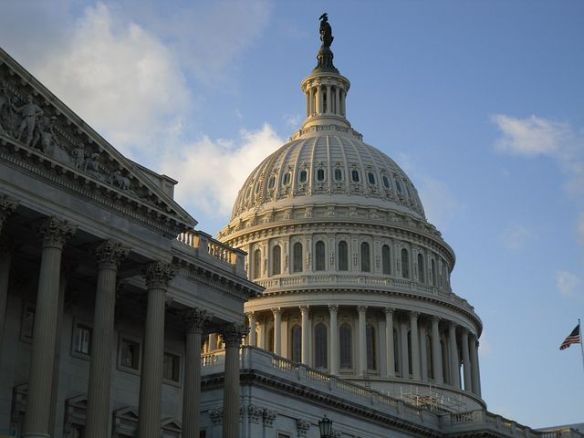

The Save Local Business Act — despite lacking a fun-to-say acronym — would create a new standard for determining who is a joint employer under these two laws. The proposed new standard would allow a finding of joint employment “only if such person [business] directly, actually, and immediately, and not in a routine and limited manner, exercises significant control over the essential terms and conditions of employment….”

The definition provides examples of what are “essential terms and conditions,” including: Continue reading

Two Key Developments in Joint Employment are Expected This Week

IMG_1091.JPG

This could be a busy week for developments in the joint employment area.

1) Congressional Republicans have begun drafting legislation that could change the definition of joint employment, Bloomberg BNA reports. Presumably the goals of a new bill would be (a) to add clarity to the standards for deciding who is a joint employer, and (b) to make it more difficult for workers or unions to claim they are jointly employed.

Continue reading

The DOL Wants You to Know Its Opinions (Here’s Why That’s Good News!)

IMG_1087

Everybody has an opinion, so why not share?

This week, Labor Secretary Alex Acosta announced that the WHD will resume its prior practice of issuing opinion letters to advise on difficult wage and hour issues. This is good news for companies and employees because it increases predictability.

An opinion letter is an official, written opinion by the WHD of how a particular law applies to a specific set of circumstances presented by an employer or employee. The benefit to the general public is that opinion letters are published and may be relied upon.

Continue reading

Labor Dept Withdraws 2015-16 Joint Employment, Independent Contractor Guidance

IMG_1084

Did the new Labor Secretary of Labor finally throw employers a bone? I think so, but it’s too early to tell whether it’s delicious bacon-flavored or some generic processed meat flavor.

On June 7th, the Department of Labor (DOL) announced it was withdrawing the 2015 and 2016 informal guidance on joint employment and independent contractors.

Read the full post here, on BakerHostetler’s Employment Law Spotlight blog.

Can an Intern be an Independent Contractor? (Answers revealed in James Bond movies)

IMG_1068Among James Bond films, Rotten Tomatoes ranks Never Say Never Again 18th out of 26, with a mediocre 63% rating. (Bond movie quiz at the end of this post, for patient readers.)

It’s a cliche saying, I know, but my first reaction when asked this question was, “I’d never say never, but it’s hard to imagine a scenario where that would work.” (That was also my second reaction and my third. Let’s just say that’s my reaction.)

Let’s run this through the gauntlet. Remember, it’s not your choice whether an intern is an independent contractor or an employee. The law decides that for you, based on the nature of the relationship.

Test #1: Economic Realities Test. Under federal wage and hour laws, an independent Continue reading

New Florida Law Grants Independent Contractor Status to App-Based Drivers

IMG_1064In December 1965, the Beatles released Rubber Soul, which led with Drive My Car.  (“Asked a girl what she wanted to be/She said Baby, can’t you see?/I want to be famous, a star on the screen/But you can do something in between.”) You can thank me later for getting that song stuck in your head all day.

Under a new Florida law, online ride hailing service are singing “Baby you can drive my car, and maybe I’ll love you.” If certain easy-to-meet conditions are satisfied, drivers for online ride hailing services are declared independent contractors by law, not employees. This new law protects Uber, Lyft, and similar services from misclassification class actions brought under state law.

The requirements for being granted independent contractor status under the new law are simple. Continue reading