

No Bull! A California Court May Have Just Broken the Background Check System for Employees and Independent Contractors

If background checks were run on bulls, you probably wouldn’t hire Bodacious for rides at your child’s next birthday party. Bodacious has been described by some in the bull riding community as the meanest, most dangerous bull that ever was.

Fortunately, the identity of bulls with a history of violence is readily attainable, probably through some kind of bull riding database available to those in the industry. Or wikipedia.

When it comes to identifying humans with a history of violence, we can run criminal background checks. We do this for employee applicants and often for independent contractors. When using staffing agencies, we ask the agencies to run background checks for their employees before sending them to perform services onsite at our businesses.

Except that a recent Court of Appeal ruling in California may have just broken the criminal background check process throughout the state.

In a case called All of Us or None, the Fourth District Court of Appeal ruled that it violates the California Rules of Court, Rule 2.507(c), for Superior Courts to maintain criminal case databases that are searchable by date of birth or driver’s license number.

Wait, what?

If you want to run a criminal background check, you need additional identifying information such as date of birth or driver’s license number. There are thousands of people with identical surnames and similar sounding full names. According to mynamestats.com, there are 81,585 Californians with the surname Gomez, and 5,277 of them are named Maria Gomez. Check out this map to go down a state-by-state rabbit hole. Background check companies need additional identifying information to make sure they’re reporting on the right person.

Rule 2.507(c) says that certain types of information must be excluded from “court calendars, indexes, and registers of actions.” Taking a waaaay-broad interpretation of this rule, the Court of Appeal held that the “excluded” categories can’t be used at all, not even when searching for criminal records. Other “excluded” categories of information include such important differentiators as ethnicity, age, and gender. The Riverside Superior Court, defending the legality of its searchable database, argued that Rule 2.507(c) is intended to prevent people from searching for the excluded information in a database, but it cannot possibly be intended to prohibit searches when the searcher already knows that information.

The Court of Appeal disagreed.

Under federal law, a background check company must maintain reasonable procedures to ensure that the information they report is accurate. Using names alone would obviously produce absurdly unreliable results. Just ask anyone named Maria Gomez. Most Maria Gomezes are undoubtedly wonderful people and don’t want their background check reports to show that some other Bad Maria got into criminal trouble. But if a background check company cannot use important identifying and differentiating information it already knows to help verify someone’s identity and criminal record, how can it provide reliable reports in California at all?

I’m not sure how that’s gonna work. Leave it to California to break the whole background check system. We’ll see if the courts and background check companies find a way around this.

Meanwhile, if you’re running background checks in applicants or independent contractors in California, expect some delays, thanks to this ruling. And if you’re planning to have livestock at your child’s next birthday, may I suggest a pony?

Enter your email address to subscribe to this blog and receive notifications of new posts by email.

© 2021 Todd Lebowitz, posted on WhoIsMyEmployee.com, Exploring Issues of Independent Contractor Misclassification and Joint Employment. All rights reserved.

2018_Web100Badge
 

How to Avoid Liability for an Independent Contractor’s Injuries (Hint: Don’t Throw Stones)

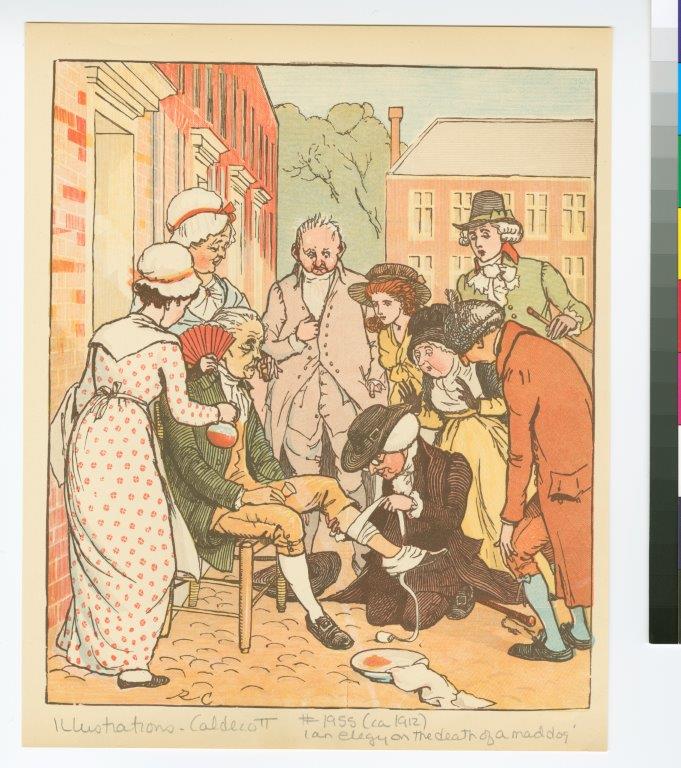
“The Wound was Bound,” 1912. From NYPL Collection.

Sometimes injuries can be reasonably expected, sometimes not.

A good example of when injuries can be expected is the annual Bagwal festival in northern India. This year’s festival was described by Indian media as “a low-key affair” with only 77 of the 300 participants sustaining injuries. Wait, what?

At Bagwal, participants divide into four clans and hurl stones at each other to please a deity. According to this report, “The fight continues until a priest determines that enough blood has been shed in honor of the goddess Maa Barahi and demands to stop the fight.”

A good example of when injuries are not expected is when you retain an independent contractor to perform some sort of work on your property. Sometimes there are known hazards on the property. Sometimes there are no reasonable safety precautions that can be taken to minimize the hazard. For example, suppose you retain a contractor to fix a known safety risk.

The question: When an independent contractor gets injured by one of those known hazards, who is liable?

The California Supreme Court recently addressed this question in a case with significant ramifications for business owners, property owners, and independent contractors.

The answer: The contractor is liable, not the property owner — but this assumes the contractor is properly classified as an independent contractor.

The rationale: Like in many states, California law presumes “that a hirer of an independent contractor delegates to the contractor all responsibility for workplace safety.” This doctrine, known in California as the Privette doctrine, means that a hirer is typically not responsible for injuries suffered by an independent contractor.

The Privette doctrine makes sense. It arose out based on four basic assumptions:

  1. Hirers have no right to control an independent contractor’s work.
  2. Contractors can factor in the cost of safety precautions and insurance in the contract price.
  3. Contractors are able to obtain workers’ compensation coverage to cover any on-the-job injuries.
  4. Contractors are typically hired for their expertise, which includes knowing how to perform the contracted work safely.

There are two exceptions:

  1. A hirer may be liable when it exercises control over any part of the contractor’s work and negligently exercises that control in a way that contributes to the injury.
  2. A landowner who hires an independent contractor may be liable if the landowner knew, or should have known, of a concealed hazard on the property that the contractor did not know of and could not have reasonably discovered, and the landowner failed to warn the contractor of the hazard.

In Gonzalez v. Mathis, the court was asked whether a third exception should be recognized when injuries “result from a known hazard on the premises where there were no reasonable safety precautions it could have adopted to avoid or minimize the hazard.”

The court declined to recognize this exception, holding that in this situation, the contractor is liable, not the hirer. Rules may vary in other states.

What should businesses do to protect themselves, in light of this ruling?

  1. Make sure your contractors are properly classified as independent contractors under the applicable legal test. California uses an ABC Test for making this determination. Other California laws, such as Labor Code 2750.5 and 2810.3 complicate the analysis.
  2. Make sure your contractors are licensed and insured. Licensing by the Contractors State Licensing Board is required in California for anyone who contracts to perform work on a project that is valued at $500 or more for combined labor and materials costs.
  3. Do not exercise control over your contractors. Defer to their expertise.
  4. Disclose known hazards, especially those that are not readily visible.

And if you’re looking for repair work to be done at or near a Bagwal festival, don’t forget warn your contractor about the risk of flying stones.

Enter your email address to subscribe to this blog and receive notifications of new posts by email.

© 2021 Todd Lebowitz, posted on WhoIsMyEmployee.com, Exploring Issues of Independent Contractor Misclassification and Joint Employment. All rights reserved.
2018_Web100Badge
 

Spurs and Chickens: California Judge Says Prop 22 Is Unconstitutional; Appeal to Follow

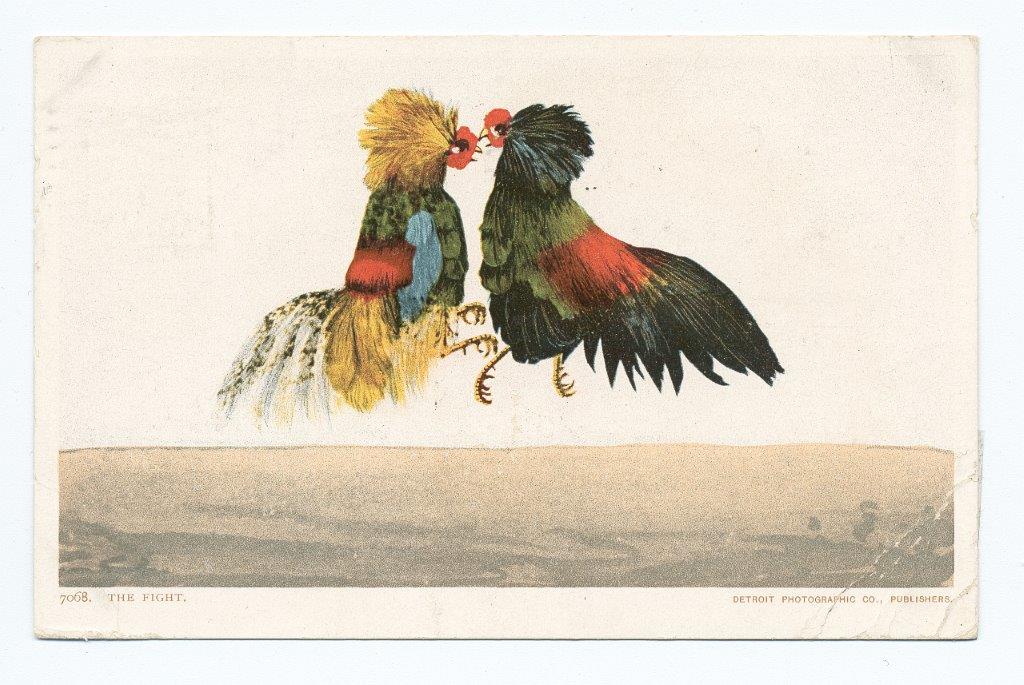
There’s a fight brewing over cockfighting, and it may be headed to the Supreme Court. The dispute is over who can regulate the bloodsport and how. The Commonwealth of Puerto Rico has joined a cadre of cockfighting enthusiasts to ask the Supreme Court to rule that it’s unconstitutional for the federal government to ban the contests.

In 1933, Puerto Rico changed its laws to allow the sport, in which gamecocks are often fitted with spurs and battle until death or dismemberment. The federal government later stepped in to ban the fights. People bet on this stuff, really. On chickens. Wearing spurs.

Closer to home, another fight is brewing, and it’s on a subject familiar to readers of this blog – Prop 22 in California. Passed in late 2020 through a ballot initiative, Prop 22 exempts app-based drivers from the ABC Test and allows them to maintain independent contractor status, so long as the app companies provide certain types of benefits to drivers.

But on Friday, an Alameda County Superior Court judge ruled that Prop 22 is unconstitutional. Wait, what?

Even though Prop 22 passed with 58% support, the SEIU and a vocal group of drivers weren’t too happy and sued. The matter initially went to the California Supreme Court, but the Court dismissed the petition and said it would not hear the case. The SEIU tried again, this time starting in Superior Court, which is where cases are supposed to start. The union found a sympathetic ear in Judge Frank Roesch, who issued this 12-page opinion, which is confusing, hard to follow, and seems to me to be just plain wrong.

What was the basis for the ruling? Two things.

First, Judge Roesch concluded that Prop 22 was unconstitutional because it limits the legislature’s ability to regulate workers’ compensation. Prop 22 defines app-based drivers as contractors, and contractors don’t get workers comp coverage. The law limits the ability of the legislature to undo Prop 22, which was smart since the legislature hated the bill.

The judge found that these limitations made Prop 22 unconstitutional because the California constitution grants the legislature “plenary” power to oversee workers’ compensation. Prop 22 allows the legislature to make limited amendments to Prop 22 but not to undo the whole thing or reclassify the drivers as employees. In making his ruling, the judge essentially concluded that if the legislature couldn’t undo the law, then the law unduly restricted the legislature. But wait! Just a few pages earlier, the judge conceded that “The term ‘legislature’ in [the California constitution] includes the people acting through the initiative power.” Yes, that’s quite the internal contradiction. If the term “legislature” includes initiatives by the people, then initiatives by the people are the equivalent of legislative action. They are acting as the legislature. An appeals court will likely take care of that confusing mess.

Second, the judge concluded that Prop 22 violated the state constitution’s rule that legislation can only be about one subject. Judge Roesch pointed to the part of Prop 22 that gave app-based drivers the right to collectively bargain in a quasi-union environment. He concluded that the bargaining piece of the law is “utterly unrelated” to the law’s purpose. Huh? That utterly makes no sense. The whole point of Prop 22 was to grant app-based drivers various concessions in exchange for clarity on their status as contractors. These concessions include a minimum rate of pay, contributions to healthcare funds, automobile insurance, and the right to collectively bargain in a specified manner. How could the right to collectively bargain be unrelated to these other rights, all of which were part of the quid pro quo in exchange for preserving independent contractor status? The ruling makes no sense, and this too is likely to be cleaned up on appeal.

So what’s the status of Prop 22? Is it dead? Dismembered? The judge may have tied spurs to his feet and kicked the law around a bit, but I am cautiously optimistic that this law will live to see another day.

The case is now headed to the Court of Appeal, and it may end up back with the California Supreme Court.

Meanwhile, for those of you wagering on whether cockfighting will return to legal status, I’d say the odds are against. I don’t think the Supreme Court will take the case and, if it does, I don’t think the Court will say the federal government lacks the power to regulate chicken gladiator shows. I’d put my money on Prop 22 to survive on appeal. I think Judge Roesch’s analysis is incorrect and will be overturned on appeal. But I can’t say I have the same sense of optimism for our cockfighting aficionado friends.

Enter your email address to subscribe to this blog and receive notifications of new posts by email.

© 2021 Todd Lebowitz, posted on WhoIsMyEmployee.com, Exploring Issues of Independent Contractor Misclassification and Joint Employment. All rights reserved.

2018_Web100Badge
 

The Abruzzo Agenda: Like a Good Hyena Story, the NLRB Giveth Then Taketh Away

Not a dog.

I had a great intro all ready for this week. I really did. WXYZ.com reported last week that Monica, a Detroit woman, took home a free puppy, only to learn days later that it was not a puppy at all, but a hyena.

I was about to share this great piece of investigative journalism with you when I was hit with this surprise: The woman’s story is now in doubt, and WXYZ has retracted the story. Thanks to the Wayback Machine, you can read the original story here and (to my great disappointment, because I so badly wanted this to be true) the retraction here.

Sometimes we are given something that seems wonderful — say, a puppy, or even a fun story about a woman who mistook a hyena for a puppy — but then it gets taken away. For all of you who were pleased with any NLRB pro-business decisions over the past four years, get ready to see those taken away too.

Last week new NLRB General Counsel Jennifer Abruzzo issued a Memo listing roughly 40 decisions and principles that she’d like to undo. She has a more diplomatic way of saying it — let’s just say we’ll “carefully examine” these. But expect many of these principles to be toast, now that the Board features a 3-2 Democratic majority.

You can see the full list here, but I’ll focus on three:

(1) “Cases involving the applicability of SuperShuttle DFW,” a case that made it easier to be classified as an independent contractor. You can read my post about SuperShuttle here.

(2) “Cases involving the applicability of Velox Express,” a case in which the NLRB ruled that independent contractor misclassification, by itself, is not an automatic unfair labor practice. You can read my post about Velox Express here.

(3) “Cases involving the applicability of UPMC,” which relates to the standard for the Board to accept settlements voluntarily entered into by the parties. What she’s really talking about here is the McDonald’s franchise joint employer case, in which her predecessor as NLRB General Counsel settled a case against McDonald’s that she (and an Administrative Law Judge) didn’t think should have been settled. The NLRB eventually approved the settlement. Here is an amicus brief I wrote for the Restaurant Law Center in that case, arguing that the settlement should be approved.

The General Counsel for the NLRB is the equivalent of its chief prosecutor. These are Abruzzo’s priorities. With a sympathetic 3-2 majority on the Board, you can be sure that many of these desired changes will take place.

Like a good hyena story, the pro-business Board decisions from the last four years aren’t likely to last.

Enter your email address to subscribe to this blog and receive notifications of new posts by email.

© 2021 Todd Lebowitz, posted on WhoIsMyEmployee.com, Exploring Issues of Independent Contractor Misclassification and Joint Employment. All rights reserved.

2018_Web100Badge
 

Now is the Time to Add These Safe Harbor Clauses to Your Independent Contractor Agreements

Image by Luca Falvo from Pixabay

I just finished reading The Longest Day, the 1959 book by Cornelius Ryan that tells the story of the D-Day landing from Allied, French, and German perspectives. The book covers June 6, 1944 and the days leading up to it, but it doesn’t get into what happened next. To facilitate supply lines into Europe right after D-Day, the British built two artificial harbors off the Normandy coast. Mulberry Harbours A and B allowed for the transport of up to 7,000 tons of vehicles and supplies to the mainland each day.

A harbor is a place where ships can seek shelter from the open ocean. Switching our focus to peacetime and the law, a “safe harbor” is the legal term for a provision that protects against liability if you meet certain conditions. No ships are required. Know the required conditions, and you can find shelter from a legal storm.

Two states recently passed laws that create safe harbors against claims of independent contractor misclassification.

Businesses using independent contractors in West Virginia and Louisiana should update their contracts immediately to take advantage of these new statutes.

Each state’s law provides a list of conditions that, if met, will make someone an independent contractor, providing a safe harbor against claims that these workers are misclassified and should be employees. The LA law creates a presumption of contractor status; the WV law is conclusive.

One of the conditions in WV, for example, is that the written contract “states…that the person understands” a list of five specific facts. The contract needs to “state” these five things. The WV law has other requirements too.

The LA law requires that 6 of a possible 11 conditions are met to fall within the safe harbor.

Other states are considering similar laws. Missouri and North Carolina are considering similar bills. Oklahoma was headed down the same road during the last legislative section but has not yet passed a bill.

Businesses using independent contractors in these states should amend their agreements to take advantage of these safe harbor opportunities.

At a time when the federal government is pledging to crack down further on independent contractor misclassification, it’s important to have contracts that are built to withstand classification challenges by any governmental body. Even under federal law, which doesn’t have these safe harbors, these recitations can be helpful when trying to meet the Right to Control and Economic Realities Tests used in federal law and in most states.

Your agreements with independent contractors provide an opportunity to build your defense against claims of misclassification. They should not be treated as a mere formality.

You want to be able to point to your agreements as Exhibit 1 in your defense against a misclassification claim. Play offense, not defense. Adding the WV and LA clauses — and even the proposed NC and MO clauses — can go a long way toward protecting your independent contractor relationships.

You might not be into reading books about World War II and that’s ok. But please read your contracts carefully. Now is a great time to amend and improve independent contractor agreements.

Enter your email address to subscribe to this blog and receive notifications of new posts by email.

© 2021 Todd Lebowitz, posted on WhoIsMyEmployee.com, Exploring Issues of Independent Contractor Misclassification and Joint Employment. All rights reserved.

2018_Web100Badge
 

Welcome to Turkmenistan: Joint Employment Rules Rescinded, Leaving Massive Crater in FLSA Regulations

Tormod Sandtorv – FlickrDarvasa gas crater panorama CC BY-SA 2.0

No visit to Turkmenistan would be complete without a visit to the Darvaza Crater, more commonly known as the Door to Hell. This massive crater formed decades ago after a Soviet drilling rig collapsed. Roughly 40 years ago, the Soviets lit the crater on fire to burn off the methane. But Turkmenistan has some of the largest gas reserves in the world, which meant you couldn’t just make the gas go away.

The fire still burns today, and the massive fiery hole is an impressive sight.

A massive hole can also describe what the Wage and Hour Division (“WHD”) just created.

On July 29, the WHD formally announced the rescission of all of the regulations that define when joint employment exists under the Fair Labor Standards Act (“FLSA”).

The regulations, which can be found in Part 791 of 29 C.F.R., have existed in some form since 1958, which is right around the tenth anniversary of a magnitude 7.3 earthquake that killed up to 10% of the entire population of Turkmenistan.

In 2020, the Trump Administration revised the regulations to provide more clarity about who is a joint employer and when. The 2020 regulations listed specific factors that should be applied. The new rule sought to create consistency in place of the patchwork of different factors used by different courts in different circuits. The 2020 regulations also included 11 helpful illustrations of how the new rules would be applied in various situations.

Pro-business groups liked the new rule because it provided clarity and made it harder to be a joint employer. Pro-employee groups hated the rule because it provided clarity and made it harder to be a joint employer.

In March 2021, the Biden Administration announced an intent to rescind the 2020 regulations. On July 29, the rescission was formally announced. The rescission takes effect September 28, 2021.

In the formal rescission notice, the WHD notes that few courts had followed the new test and that a federal district court in New York had ruled that the 2020 regulations were invalid. (That case is now on appeal to the Second Circuit.)

What does the rescission mean?

Welcome to Turkmenistan! The rescission doesn’t reinstitute the 1958 regulations. It doesn’t provide new regulations. Instead, it strikes all of Part 791 and leaves an empty hole.

The new guidance is that there is no guidance.

No kidding. Here’s what the notice says:

Effect of Rescission

Because this final rule adopts and finalizes the rescission of the Joint Employer Rule, part 791 is removed in its entirety and reserved. As stated in the NPRM, the Department will continue to consider legal and policy issues relating to FLSA joint employment before determining whether alternative regulatory or subregulatory guidance is appropriate.

The WHD notice reminds us that courts have set forth their own tests, and those tests can be followed.

So where does that leave us? What’s the rule? Well, it depends where you live. Really! Different courts apply different tests. But for the most part, they are similar.

In general, there are two types of joint employment – vertical and horizontal.

Vertical joint employment is when one employer, such as a staffing agency, provides workers for the benefit of a second entity. Joint employment under the FLSA means that both entities are legally responsible for ensuring that the workers are properly paid a minimum wage and overtime. Both are also jointly liable for any FLSA violations, even though the staffing agency likely has full control over payroll. 

Based on court decisions, vertical joint employment will follow an Economic Realities Test, and joint employment will exist when “the economic realities show that the employee is economically dependent on, and thus employed by the other employer.” Multiple factors go into this analysis. These typically include:

  • Right to direct, control and supervise work;
  • Right to control employment conditions;
  • Permanency and duration of relationship;
  • Repetitive or rote nature of the work;
  • Whether the work is integral to the business;
  • Whether the work is performed on premises; and
  • Which entity performs the administrative functions characteristic of an employer (payroll, workers compensation, etc.)

Different courts articulate the test in different ways, but that’s a reasonable summary of the factors most commonly applied.

Any new interpretive guidance from the Biden WHD is almost certainly going to be that joint employment should be widespread and easy to establish. 

Horizontal joint employment is when two businesses under common control employ the same individual. This issue arises when a worker spends 30 hours at Business 1 and 30 hours at Business 2. If the businesses are joint employers, then the worker is entitled to 20 hours of overtime for the combined 60 hours of work.

The 2020 regulations did not materially change the test for horizontal joint employment. The 1958 version of the regulations looked at whether the two entities were “completely disassociated” from each other. Courts typically look at common control and common management as evidence of horizontal joint employment. That is not likely to change, but that regulation’s gone too.

Will There Be New Regulations?

Maybe. It seems more likely to me that we’ll see a re-issuance of the 2016 Administrator’s Interpretation on Joint Employment. The 2016 AI adopted an expansive view of joint employment, finding that it’s fairly easy to establish. The 2016 AI was issued by David Weil, who ran the WHD under Obama.  President Biden has nominated Weil to head the WHD in the current administration, so it would not be a surprise to see the 2016 AI or something similar re-issued.

Businesses should expect an expansive definition of joint employment, with little guidance or help from the WHD. With all regulations gone, and with different courts applying different tests, the landscape on joint employment resembles a massive crater filled with burning methane. It’s not a hospitable climate.

What Should Businesses Do?

Businesses should review their arrangements with vendors who provide labor and revisit those contracts and relationships. Steps can be taken to provide contractual protection against joint employment, even where the law will find a joint employment relationship.

Enter your email address to subscribe to this blog and receive notifications of new posts by email.

© 2021 Todd Lebowitz, posted on WhoIsMyEmployee.com, Exploring Issues of Independent Contractor Misclassification and Joint Employment. All rights reserved.

2018_Web100Badge
 

Summer Cleaning: Three Easy Tips to Reduce Joint Employment Risks

Donate some, pitch some. That’s our third dumpster.

This month I have been focused on summer clean up. We moved back into our house after six months of unintentional reconstruction, thanks to failed plumbing supply line on the second floor that created an impromptu shower and bath throughout the first floor of our house. Welcome home from vacation, late December 2020.

But now I’m back and getting organized. Cleaning house. Moving forward.

Late summer can also be a good time to clean house and eliminate unnecessary legal risks. With the White House about to release a new rule on joint employment, now is the time to review your staffing agency agreements.

You’ll want to check for these three things:

  1. The Monster with Three Eyes. You need these three components to protect against joint employment claims, no matter what test applies.
  2. A clause like this one, to allow you to remove unwanted workers without exerting the type of control that would make you their employer.
  3. Awareness of FMLA risks. Know what to watch with temps-to-hire, and don’t forget about this often-overlooked rule.

Still looking for more places to click? Here are Five Things You Should Know About Joint Employment.

The rules and the tests will keep changing, but the joint employment issue is here to stay. The risks of joint employment will only increase over the next few years.

It’s time for some summer cleaning. You can work magic with a few adjustments to your contracts, and you shouldn’t need a dumpster to complete this clean up exercise.

Enter your email address to subscribe to this blog and receive notifications of new posts by email.

© 2021 Todd Lebowitz, posted on WhoIsMyEmployee.com, Exploring Issues of Independent Contractor Misclassification and Joint Employment. All rights reserved.

2018_Web100Badge
 

Watch for New Joint Employer Rule This Week

Who’s the white robed fella? I ask because it looks here like Ric didnt know this guy would be in his video.

While cleaning out the garage Saturday, I heard the Cars’ song “Magic,” which contains this nifty lyric: “Summer, It’s like a merry go round.” I then went down the rabbit hole of looking for the video, which features a collection of bizzaro characters at Rik Ocasek’s freakish pool party, including this probable leader of a religious cult.

The lyric stood out, though, because this summer is like a merry go round for joint employment. The rules are about to change again to make it much easier to establish joint employment under the FLSA.

I’ll keep this post short for two reasons:

  1. It’s beautiful outside and so I should not be inside on my laptop, and
  2. The real news on joint employment is coming sometime this week, but it’s not out yet as of Sunday midday when I am writing this.

Here’s what we know:

In March 2021, the Biden Administration indicated it would be rescinding the Trump joint employer rule, which made it hard to establish joint employment.

Last week, the White House announced that it had concluded its review of the new joint employer rule, which will be published imminently.

After it’s released, I’ll write more about it, quite possibly with another screenshot from a Cars video. Or “You Might Think I’ll screenshot another video. Maybe not. Like you, I am on the edge of my seat. But unlike you, that’s because I’m getting up to go outside. I’ll post more when we see the final rule.

Enter your email address to subscribe to this blog and receive notifications of new posts by email.

© 2021 Todd Lebowitz, posted on WhoIsMyEmployee.com, Exploring Issues of Independent Contractor Misclassification and Joint Employment. All rights reserved.

2018_Web100Badge
 

Like Being Thrown on a Trotting Horse? This Company is Trying Rideshare without Independent Contractors

In 18th Century Europe, common methods for trying to revive drowning victims included throwing the victim onto a trotting horse, dunking in freezing water (ironic?), and my personal favorite, blowing tobacco smoke into the rectum.

These were creative ideas and sometimes they actually worked. The bouncing motion from being on a trotting horse could force air in and out of the lungs, like modern CPR. Tobacco smoke contains nicotine, which causes the brain to release epinephrine, which helps to stimulate the heart to contract.

It’s fun now to look back at how people tried to solve problems when they didn’t know what would happen.

The biggest unknown in the world of independent contractor misclassification is what would happen if rideshare and delivery companies were forced to reclassify all drivers as employees. A well-funded startup in Dallas is attempting to find out.

As reported here, a new rideshare service called Alto just completed a $45 million round of Series B funding. Alto’s model is to use all W-2 drivers and company-owned vehicles. The service currently operates only in Dallas, Houston, and Los Angeles, and has announced plans to switch to all-electric vehicles.

Will it work? Who knows.

Is it a viable business model? Who knows.

But in some ways, it’s a test case to see how an industry dominated by the independent contractor model might operate if forced to use all W2 workers. Yes, I know the taxi industry is another comparable. But it hasn’t exactly thrived since the emergence of rideshare. I’m pretty sure that’s not the model that rideshare would look to if force to pivot.

As the old proverb goes, necessity is the mother of invention. For those keeping score at home, Mothers of Invention was also the name of an experimental rock band in California once fronted by Frank Zappa and which featured tracks such as “My Guitar Wants to Kill Your Mama.” But that’s for another day.

For now, the rideshare industry continues to operate with its independent contractor model under siege. Widespread conversion of driver contractors to employees would be difficult and would introduce massive disruption in the industry. We’ll see what happens. In the meantime, let’s continue to innovate. Sometimes, even being thrown on a trotting horse can be helpful.

Enter your email address to subscribe to this blog and receive notifications of new posts by email.

© 2021 Todd Lebowitz, posted on WhoIsMyEmployee.com, Exploring Issues of Independent Contractor Misclassification and Joint Employment. All rights reserved.

2018_Web100Badge
 

Portable Benefits: Soon to Be Available for Mass. Independent Contractors?

This article in The Fox Magazine lists five things you can buy that are portable, even though you wouldn’t think they could be. The list includes toilets, massage chairs, saunas, neck fans, and bedrooms. The description of a portable bedroom goes like this:

Another brilliant innovation from the country that brought us the toilet in a suitcase, you can now buy a portable bedroom which comes folded up in a series of cabinets that look just like regular closets and dressers. Simply open the cabinet and fold out your bed for a super comfortable night’s sleep.

Um, no thanks.

If this article is revised next year, one surprising addition to the list could be Health Benefits for Massachusetts Independent Contractors. A new bill, inspired by California’s Prop 22, has been introduced in the Massachusetts legislature. To my surprise, the three co-sponsors are Democrats.

The bill, H. 1234, would create a exception to the strict ABC Test in Massachusetts, but only in the rideshare and delivery industries.

If the bill passes, rideshare and delivery platform companies would be required to offer occupational accident insurance and pay into a portable benefit account for drivers.

In exchange for doing so, these companies would gain assurance that drivers on their platforms are independent contractors under Massachusetts state law. The normal ABC Test would not apply. Platform companies would also be required to follow a few other basic guidelines in their interactions with drivers, including that:

  • Drivers can decide when to work and not work;
  • Drivers’ access to the platform cannot be terminated for declining a specific rideshare or delivery request;
  • Drivers can provide services on multiple platforms; and
  • Drivers can also work in another lawful occupation or business.

The bill is supported by the Massachusetts Coalition for Independent Work (and, of course, by the gig companies), and it is opposed by the Boston Independent Drivers Guild.

If passed, this would mark a significant exception to the strict ABC Test in Massachusetts, which currently presumes all working relationships to be employment, unless:

(A) the individual is free from control and direction in connection with the performance of the service, both under his contract for the performance of service and in fact; and 

(B) the service is performed outside the usual course of the business of the employer; and, 

(C) the individual is customarily engaged in an independently established trade, occupation, profession or business of the same nature as that involved in the service performed.

Unlike California’s AB 5 (later rewritten as AB 2257), the Massachusetts law does not currently have exceptions for certain industries. Rideshare and delivery services would be the first industries carved out of the Massachusetts ABC Test.

The bill is in the early stages of being considered. It has been referred to the Joint Committee on Financial Services for further consideration. We’ll keep an eye on this one. It’s much more intriguing to me than a portable bedroom or sauna.

Enter your email address to subscribe to this blog and receive notifications of new posts by email.

© 2021 Todd Lebowitz, posted on WhoIsMyEmployee.com, Exploring Issues of Independent Contractor Misclassification and Joint Employment. All rights reserved.

2018_Web100Badge