
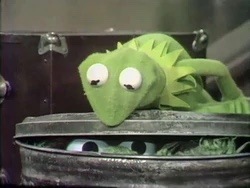
A Frog’s Eye View: What is Horizontal Joint Employment?

Suppose Kermit works 30 hours a week at The Muppet Show. He holds a non-exempt position as a research assistant, trying to determine why are there so many songs about rainbows.

Frog food is expensive these days, so he holds a second job too. Kermit works nights at Sesame Street, where he spends 20 hours a week investigating multi-colored arc-shaped atmospheric phenomena and what’s on the other side.

With 30 hours at one job and 20 hours at another, neither role pays Kermit overtime.

But is he being cheated out of time-and-a-half? Let’s hop in and take a deeper look.

Horizontal joint employment is when a person holds two jobs, but the businesses are under common control. They may have the same owners or officers, they may coordinate schedules among workers, or they may share a common pool of employees. When horizontal joint employment exists, the hours from both jobs are aggregated, and 30 hours at one job plus 20 hours at the other equals 50 total hours, 10 of which require overtime pay.

So what about our short-bodied, tailless amphibian friend? Does Kermie get overtime?

Kermit may seem like a free spirit, but whether he’s on The Muppet Show (30 hours) or Sesame Street (20 hours), his every move is controlled by Jim Henson. Literally.

Common control signals horizontal joint employment, which means Kermit’s been shortchanged 10 hours of overtime. It’s not easy being green.

You’ve probably read about recent changes to the joint employment tests, but those changes are for vertical joint employment, not horizontal joint employment. Vertical joint employment is when the employees of a primary employer perform services for the benefit of a secondary employer, like in a staffing agency relationship. When staffing agency employees work side-by-side with a company’s regular employees, the staffing agency and the other business may be joint employers.

The rules on horizontal joint employment are unchanged. So if sharing employees with a business under common control, be aware of the rules and look before you leap.

Enter your email address to subscribe to this blog and receive notifications of new posts by email.

© 2021 Todd Lebowitz, posted on WhoIsMyEmployee.com, Exploring Issues of Independent Contractor Misclassification and Joint Employment. All rights reserved.

2018_Web100Badge
 

You Don’t Have to Be An Official Wizard to Write a Solid Independent Contractor Agreement

Farewell, my bearded friend.
Photo by Shellie, Flickr CC BY-NC-ND 2.0

The Christchurch City Council has voted to discontinue paying its official wizard $16,000 a year to “provide acts of wizardry” for this New Zealand city. Ian Brackenbury Channell, known as The Wizard of New Zealand, lamented the decision, calling city council “a bunch of bureaucrats who have no imagination.”

As you can see from this sad state of affairs, acts of wizardry do not always get the appreciation they deserve. But fortunately it doesn’t take acts of wizardry to draft a solid independent contractor agreement.

A recent Illinois case shows the value of a solid agreement. In a decision earlier this month, a federal court ruled that a freight broker was not vicariously liable for catastrophic injuries caused in an accident involving a driver under contract to haul loads.

The driver had collided with a motorcycle, killing the motorcyclist. His widow sued the freight broker, alleging it was an employer and was therefore liable for the negligent driving of its employee. But the court reviewed the facts of the relationship and the terms of the contract, and it found that the driver was not an employee of the broker.

The broker did not provide equipment, select routes, or exhibit other elements of control. A Right to Control Test governed the analysis in this case. The broker did not retain the right to control the manner or means by which the work was performed. This lack of control was evident in both the facts of the relationship and the text of the contract.

When there’s a tragic loss, like here, it seems natural to point fingers at everybody, including the deepest pockets. But that doesn’t mean the deepest pockets are necessarily responsible for what went wrong. By drafting a careful and through independent contractor agreement, companies can avoid being held responsible for losses that are not their fault.

Although The Wizard of New Zealand undoubtedly has great powers of wizardry and although he is probably almost as much of a tourist attraction as the nearby penguins, he probably wouldn’t have the first clue how to draft a comprehensive independent contractor agreement.

Fortunately, it doesn’t take a wizard to draft a thorough agreement. But do make sure you do it right. Having a thorough agreement in place can make all the difference, especially in a catastrophic loss case when lots of parties — including those not really responsible — are going to be blamed.

You can read more about The Wizard here.

Enter your email address to subscribe to this blog and receive notifications of new posts by email.

© 2021 Todd Lebowitz, posted on WhoIsMyEmployee.com, Exploring Issues of Independent Contractor Misclassification and Joint Employment. All rights reserved.
2018_Web100Badge
 

He-Gassen! This Telecom Company Should Have Smelled a Misclassification Claim Coming

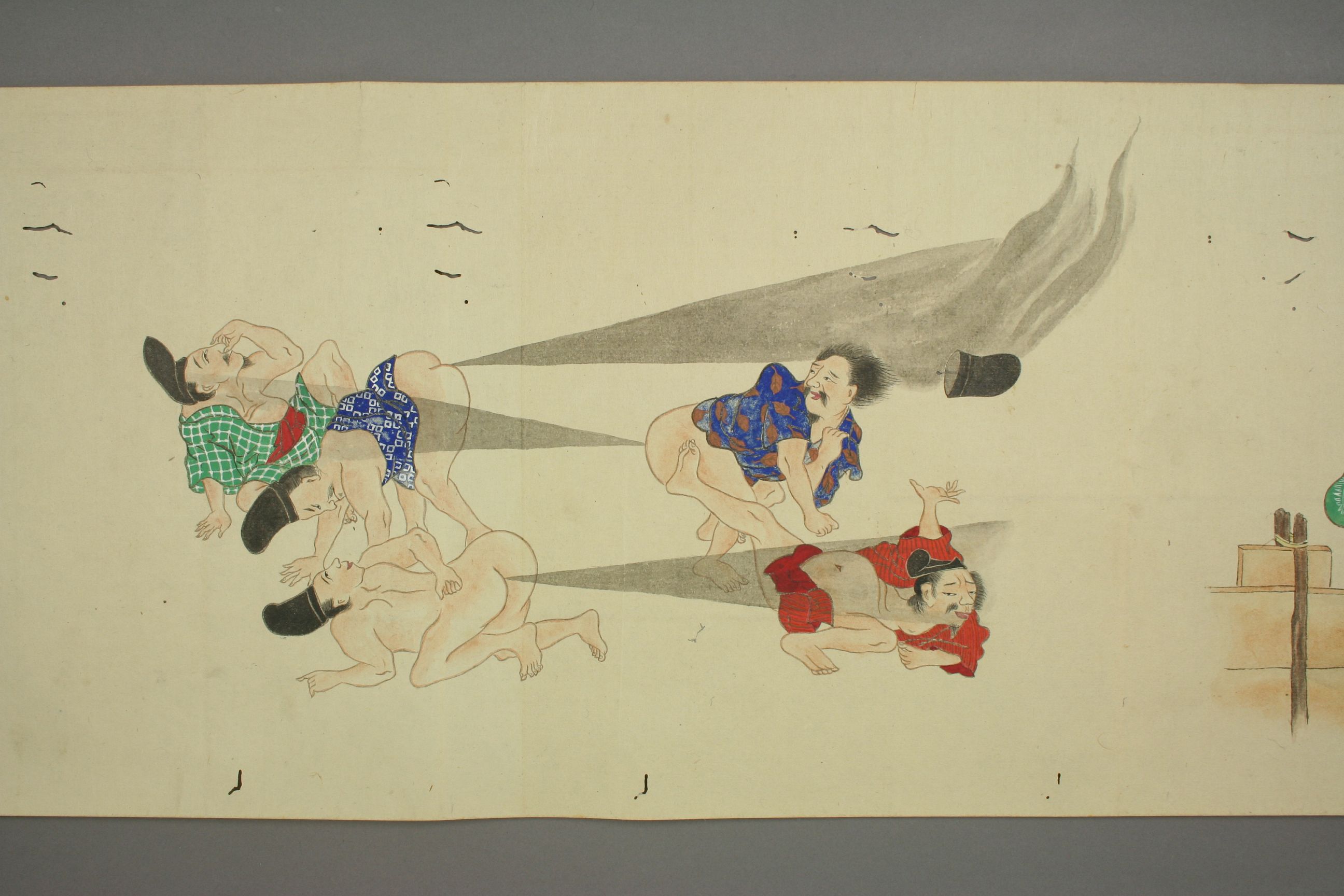
Fire away! Source: Waseda U. Library

The Waseda University Library in Tokyo maintains an online archive of drawings dedicated to epic Japanese fart battles of the 17th and 18th centuries. The depictions, called he-gassen (really!), show farts so powerful they penetrate walls and blow cats out of trees.

This mode of attack must have been intimidating, but approaching enemies should have smelled what was coming and taken evasive action.

The same can be said for a Nevada telecommunications company, which had engaged 1,400 call center workers but treated them all as independent contractors. In the immortal words of Daryl Hall, no can do.

Under federal wage and hour law, the Economic Realities Test is used to determine whether a worker is an employees, regardless of what the parties call the relationship. In this case, the telecom company failed virtually every part of the test. The workers were economically reliant on the telecom company, which controlled their work in just about every relevant way, making the workers employees.

The facts were so bad that the Department of Labor took the laboring oar on this one, filing its own lawsuit in federal court. The DOL won a $1.4 million award, and the Ninth Circuit Court of Appeals upheld the decision.

Remember, a worker’s status as an employee or independent contractor is determined using the legal test and the facts of the relationship, regardless of what the parties call themselves.

The moral of the story is that if it smells like an employment relationship, it probably is. Choose your battles wisely. He-gassen!

Enter your email address to subscribe to this blog and receive notifications of new posts by email.

© 2021 Todd Lebowitz, posted on WhoIsMyEmployee.com, Exploring Issues of Independent Contractor Misclassification and Joint Employment. All rights reserved.

2018_Web100Badge

Joint Employment: Sometimes You Can Win, Even in California

Sometimes it seems as if you just can’t win. Take the case of this man in southern Brazil, who late last month was attacked by a group of bees while fishing with two friends. The man successfully escaped the bees by jumping into the lake — only to be eaten alive by piranhas.

Employers in California, you know what I mean, right? It seems like any way you turn, the laws of California will get you.

Well today I write with good news. There is still hope.

In a joint employment case brought under California law, the Ninth Circuit Court of Appeals handed Costco a win, ruling that Costco is not a joint employer of the supplier sales reps who ask you to taste that new brand of salsa, even under the strict rules of California Labor Code section 2810.3.

California has two flavors of joint employment: Spicy and Extra Spicy.

Extra spicy is Labor Code section 2810.3. It makes joint employment automatic when a “labor contractor” supplies workers to provides services within the client’s “usual course of business.” The workers at issue here were paid by a staffing agency and sent to Costco locations to offer samples of suppliers’ products on a consignment basis. The Court of Appeals ruled that was not part of the “usual course” of Costco’s business, so section 2810.3 did not apply.

Regular spicy is the Martinez v. Combs test. It says that an entity is a joint employer under California law if it (1) exercises control over wages, hours, or working conditions, or (2) “suffers or permits” the individual to work, or (3) “engages” the individual, meaning creates a common law employment relationship, not that you should have put a ring on it.

The Court gave Costco a pass here too, ruling that it didn’t do any of these three things either.

This case is a good reminder that it’s still possible for a companies to win joint employment claims in California. The key is to structure those relationships correctly and ensure you have robust contracts with suppliers of labor. For contracting tips, remember the Monster with Three Eyes.

All is not lost, even in California. Turns out that even the guy in Brazil might have had a chance. His two fishing buddies made it out of the lake alive.

Enter your email address to subscribe to this blog and receive notifications of new posts by email.

© 2021 Todd Lebowitz, posted on WhoIsMyEmployee.com, Exploring Issues of Independent Contractor Misclassification and Joint Employment. All rights reserved.

2018_Web100Badge

California Adopts New Exemptions to the ABC Test (and an Odd Way to Seek Comfort in a Storm)

Looking for Florence? Take the stairs on your left. One flight down.

Florence Ford was terrified of storms and, seeing as how she was born in 1861, none of the weather apps on her phone were working yet. Her mother Ellen provided comfort when the rains came. So naturally, when Florence died at age 10, Ellen felt she still needed to comfort her daughter when it rained.

In Natchez, Mississippi, you can visit one of the oddest graves in the world. Ellen fitted her daughter’s coffin with a small window and built stairs down to the casket. When it poured in Natchez, Ellen would head down to the casket and provide much-needed comfort to Florence’s bones.

Ellen couldn’t quite accept the reality of Florence’s death and tried to create an exception. In her version of death, reading or singing to the corpse still brought comfort to her daughter — or maybe just to herself.

A less creepy version of dueling realities continues to play out in California, as the legislature keeps reviving exceptions from the harshness of the ABC Test it adopted in AB 5.

The state continues to make tweaks. Two recent bills (AB 1506 and AB 1561) adopt these changes:

  • Extends the temporary exemption for newspaper publishers and distributors who meet certain criteria;
  • Imposes reporting requirements on publishers and distributors to ensure they are complying with the Borello Test, if they’re exempt from the ABC Test;
  • Extends the manicurists exemption for three more years (Kudos to the manicurists’ lobby! They nailed it!);
  • Extends the construction industry subcontractor exemption for another three years;
  • Amends the data aggregator exemption; and
  • Modifies the insurance exemption.

This grab bag of edits comes soon after the adoption of AB 2257, last fall, which rewrote AB 5 to change the long list of exemptions.

What’s going on here? The problem is that the ABC Test doesn’t make a lot of sense when you try to apply it across all types of working relationships. That’s why California’s ABC Test statute keeps getting a makeover. After the state legislature codified the ABC Test in September 2019 by passing AB 5, the state has adopted dozens and dozens of exceptions, and as you can see here, the list keeps growing.

Here’s what businesses in California need to remember:

  1. The ABC Tests is still the default test for determining whether an independent contractor is misclassified and should really be an employee.
  2. There are loads of exemptions, many of which are difficult to follow and require compliance with a long list of criteria before they will apply. Check the list of exemptions to see if they apply.
  3. If an exemption applies, it does not mean that independent contractor status is proper. It just means you make the independent contractor vs. employee determination using the Borello balancing test instead of the ABC Test.
  4. The rules keep changing.

If this monsoon of details makes you uncomfortable, it should. Fortunately, today you learned one more way that a person can find comfort in a storm. Thank you Ellen of Natchez.

Enter your email address to subscribe to this blog and receive notifications of new posts by email.

© 2021 Todd Lebowitz, posted on WhoIsMyEmployee.com, Exploring Issues of Independent Contractor Misclassification and Joint Employment. All rights reserved.

2018_Web100Badge