
How to Avoid Liability for an Independent Contractor’s Injuries (Hint: Don’t Throw Stones)

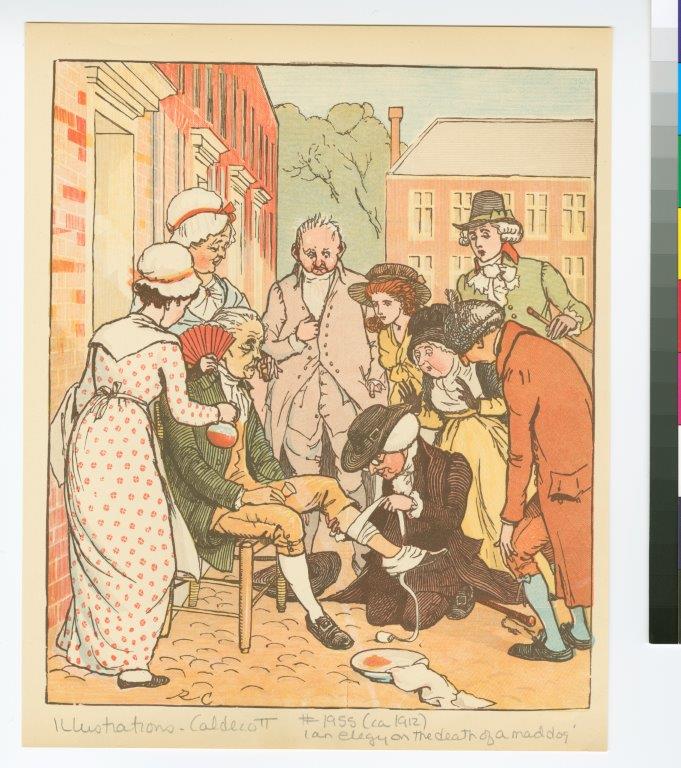
“The Wound was Bound,” 1912. From NYPL Collection.

Sometimes injuries can be reasonably expected, sometimes not.

A good example of when injuries can be expected is the annual Bagwal festival in northern India. This year’s festival was described by Indian media as “a low-key affair” with only 77 of the 300 participants sustaining injuries. Wait, what?

At Bagwal, participants divide into four clans and hurl stones at each other to please a deity. According to this report, “The fight continues until a priest determines that enough blood has been shed in honor of the goddess Maa Barahi and demands to stop the fight.”

A good example of when injuries are not expected is when you retain an independent contractor to perform some sort of work on your property. Sometimes there are known hazards on the property. Sometimes there are no reasonable safety precautions that can be taken to minimize the hazard. For example, suppose you retain a contractor to fix a known safety risk.

The question: When an independent contractor gets injured by one of those known hazards, who is liable?

The California Supreme Court recently addressed this question in a case with significant ramifications for business owners, property owners, and independent contractors.

The answer: The contractor is liable, not the property owner — but this assumes the contractor is properly classified as an independent contractor.

The rationale: Like in many states, California law presumes “that a hirer of an independent contractor delegates to the contractor all responsibility for workplace safety.” This doctrine, known in California as the Privette doctrine, means that a hirer is typically not responsible for injuries suffered by an independent contractor.

The Privette doctrine makes sense. It arose out based on four basic assumptions:

  1. Hirers have no right to control an independent contractor’s work.
  2. Contractors can factor in the cost of safety precautions and insurance in the contract price.
  3. Contractors are able to obtain workers’ compensation coverage to cover any on-the-job injuries.
  4. Contractors are typically hired for their expertise, which includes knowing how to perform the contracted work safely.

There are two exceptions:

  1. A hirer may be liable when it exercises control over any part of the contractor’s work and negligently exercises that control in a way that contributes to the injury.
  2. A landowner who hires an independent contractor may be liable if the landowner knew, or should have known, of a concealed hazard on the property that the contractor did not know of and could not have reasonably discovered, and the landowner failed to warn the contractor of the hazard.

In Gonzalez v. Mathis, the court was asked whether a third exception should be recognized when injuries “result from a known hazard on the premises where there were no reasonable safety precautions it could have adopted to avoid or minimize the hazard.”

The court declined to recognize this exception, holding that in this situation, the contractor is liable, not the hirer. Rules may vary in other states.

What should businesses do to protect themselves, in light of this ruling?

  1. Make sure your contractors are properly classified as independent contractors under the applicable legal test. California uses an ABC Test for making this determination. Other California laws, such as Labor Code 2750.5 and 2810.3 complicate the analysis.
  2. Make sure your contractors are licensed and insured. Licensing by the Contractors State Licensing Board is required in California for anyone who contracts to perform work on a project that is valued at $500 or more for combined labor and materials costs.
  3. Do not exercise control over your contractors. Defer to their expertise.
  4. Disclose known hazards, especially those that are not readily visible.

And if you’re looking for repair work to be done at or near a Bagwal festival, don’t forget warn your contractor about the risk of flying stones.

Enter your email address to subscribe to this blog and receive notifications of new posts by email.

© 2021 Todd Lebowitz, posted on WhoIsMyEmployee.com, Exploring Issues of Independent Contractor Misclassification and Joint Employment. All rights reserved.

2018_Web100Badge
 

Spurs and Chickens: California Judge Says Prop 22 Is Unconstitutional; Appeal to Follow

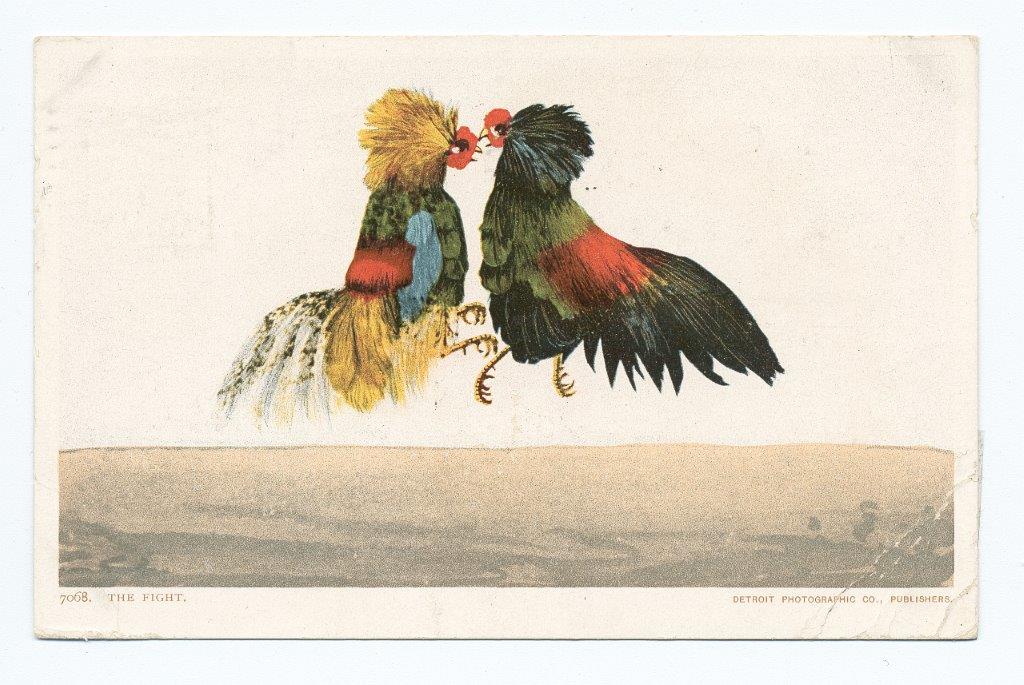
There’s a fight brewing over cockfighting, and it may be headed to the Supreme Court. The dispute is over who can regulate the bloodsport and how. The Commonwealth of Puerto Rico has joined a cadre of cockfighting enthusiasts to ask the Supreme Court to rule that it’s unconstitutional for the federal government to ban the contests.

In 1933, Puerto Rico changed its laws to allow the sport, in which gamecocks are often fitted with spurs and battle until death or dismemberment. The federal government later stepped in to ban the fights. People bet on this stuff, really. On chickens. Wearing spurs.

Closer to home, another fight is brewing, and it’s on a subject familiar to readers of this blog – Prop 22 in California. Passed in late 2020 through a ballot initiative, Prop 22 exempts app-based drivers from the ABC Test and allows them to maintain independent contractor status, so long as the app companies provide certain types of benefits to drivers.

But on Friday, an Alameda County Superior Court judge ruled that Prop 22 is unconstitutional. Wait, what?

Even though Prop 22 passed with 58% support, the SEIU and a vocal group of drivers weren’t too happy and sued. The matter initially went to the California Supreme Court, but the Court dismissed the petition and said it would not hear the case. The SEIU tried again, this time starting in Superior Court, which is where cases are supposed to start. The union found a sympathetic ear in Judge Frank Roesch, who issued this 12-page opinion, which is confusing, hard to follow, and seems to me to be just plain wrong.

What was the basis for the ruling? Two things.

First, Judge Roesch concluded that Prop 22 was unconstitutional because it limits the legislature’s ability to regulate workers’ compensation. Prop 22 defines app-based drivers as contractors, and contractors don’t get workers comp coverage. The law limits the ability of the legislature to undo Prop 22, which was smart since the legislature hated the bill.

The judge found that these limitations made Prop 22 unconstitutional because the California constitution grants the legislature “plenary” power to oversee workers’ compensation. Prop 22 allows the legislature to make limited amendments to Prop 22 but not to undo the whole thing or reclassify the drivers as employees. In making his ruling, the judge essentially concluded that if the legislature couldn’t undo the law, then the law unduly restricted the legislature. But wait! Just a few pages earlier, the judge conceded that “The term ‘legislature’ in [the California constitution] includes the people acting through the initiative power.” Yes, that’s quite the internal contradiction. If the term “legislature” includes initiatives by the people, then initiatives by the people are the equivalent of legislative action. They are acting as the legislature. An appeals court will likely take care of that confusing mess.

Second, the judge concluded that Prop 22 violated the state constitution’s rule that legislation can only be about one subject. Judge Roesch pointed to the part of Prop 22 that gave app-based drivers the right to collectively bargain in a quasi-union environment. He concluded that the bargaining piece of the law is “utterly unrelated” to the law’s purpose. Huh? That utterly makes no sense. The whole point of Prop 22 was to grant app-based drivers various concessions in exchange for clarity on their status as contractors. These concessions include a minimum rate of pay, contributions to healthcare funds, automobile insurance, and the right to collectively bargain in a specified manner. How could the right to collectively bargain be unrelated to these other rights, all of which were part of the quid pro quo in exchange for preserving independent contractor status? The ruling makes no sense, and this too is likely to be cleaned up on appeal.

So what’s the status of Prop 22? Is it dead? Dismembered? The judge may have tied spurs to his feet and kicked the law around a bit, but I am cautiously optimistic that this law will live to see another day.

The case is now headed to the Court of Appeal, and it may end up back with the California Supreme Court.

Meanwhile, for those of you wagering on whether cockfighting will return to legal status, I’d say the odds are against. I don’t think the Supreme Court will take the case and, if it does, I don’t think the Court will say the federal government lacks the power to regulate chicken gladiator shows. I’d put my money on Prop 22 to survive on appeal. I think Judge Roesch’s analysis is incorrect and will be overturned on appeal. But I can’t say I have the same sense of optimism for our cockfighting aficionado friends.

Enter your email address to subscribe to this blog and receive notifications of new posts by email.

© 2021 Todd Lebowitz, posted on WhoIsMyEmployee.com, Exploring Issues of Independent Contractor Misclassification and Joint Employment. All rights reserved.

2018_Web100Badge
 

The Abruzzo Agenda: Like a Good Hyena Story, the NLRB Giveth Then Taketh Away

Not a dog.

I had a great intro all ready for this week. I really did. WXYZ.com reported last week that Monica, a Detroit woman, took home a free puppy, only to learn days later that it was not a puppy at all, but a hyena.

I was about to share this great piece of investigative journalism with you when I was hit with this surprise: The woman’s story is now in doubt, and WXYZ has retracted the story. Thanks to the Wayback Machine, you can read the original story here and (to my great disappointment, because I so badly wanted this to be true) the retraction here.

Sometimes we are given something that seems wonderful — say, a puppy, or even a fun story about a woman who mistook a hyena for a puppy — but then it gets taken away. For all of you who were pleased with any NLRB pro-business decisions over the past four years, get ready to see those taken away too.

Last week new NLRB General Counsel Jennifer Abruzzo issued a Memo listing roughly 40 decisions and principles that she’d like to undo. She has a more diplomatic way of saying it — let’s just say we’ll “carefully examine” these. But expect many of these principles to be toast, now that the Board features a 3-2 Democratic majority.

You can see the full list here, but I’ll focus on three:

(1) “Cases involving the applicability of SuperShuttle DFW,” a case that made it easier to be classified as an independent contractor. You can read my post about SuperShuttle here.

(2) “Cases involving the applicability of Velox Express,” a case in which the NLRB ruled that independent contractor misclassification, by itself, is not an automatic unfair labor practice. You can read my post about Velox Express here.

(3) “Cases involving the applicability of UPMC,” which relates to the standard for the Board to accept settlements voluntarily entered into by the parties. What she’s really talking about here is the McDonald’s franchise joint employer case, in which her predecessor as NLRB General Counsel settled a case against McDonald’s that she (and an Administrative Law Judge) didn’t think should have been settled. The NLRB eventually approved the settlement. Here is an amicus brief I wrote for the Restaurant Law Center in that case, arguing that the settlement should be approved.

The General Counsel for the NLRB is the equivalent of its chief prosecutor. These are Abruzzo’s priorities. With a sympathetic 3-2 majority on the Board, you can be sure that many of these desired changes will take place.

Like a good hyena story, the pro-business Board decisions from the last four years aren’t likely to last.

Enter your email address to subscribe to this blog and receive notifications of new posts by email.

© 2021 Todd Lebowitz, posted on WhoIsMyEmployee.com, Exploring Issues of Independent Contractor Misclassification and Joint Employment. All rights reserved.

2018_Web100Badge
 

Now is the Time to Add These Safe Harbor Clauses to Your Independent Contractor Agreements

Image by Luca Falvo from Pixabay

I just finished reading The Longest Day, the 1959 book by Cornelius Ryan that tells the story of the D-Day landing from Allied, French, and German perspectives. The book covers June 6, 1944 and the days leading up to it, but it doesn’t get into what happened next. To facilitate supply lines into Europe right after D-Day, the British built two artificial harbors off the Normandy coast. Mulberry Harbours A and B allowed for the transport of up to 7,000 tons of vehicles and supplies to the mainland each day.

A harbor is a place where ships can seek shelter from the open ocean. Switching our focus to peacetime and the law, a “safe harbor” is the legal term for a provision that protects against liability if you meet certain conditions. No ships are required. Know the required conditions, and you can find shelter from a legal storm.

Two states recently passed laws that create safe harbors against claims of independent contractor misclassification.

Businesses using independent contractors in West Virginia and Louisiana should update their contracts immediately to take advantage of these new statutes.

Each state’s law provides a list of conditions that, if met, will make someone an independent contractor, providing a safe harbor against claims that these workers are misclassified and should be employees. The LA law creates a presumption of contractor status; the WV law is conclusive.

One of the conditions in WV, for example, is that the written contract “states…that the person understands” a list of five specific facts. The contract needs to “state” these five things. The WV law has other requirements too.

The LA law requires that 6 of a possible 11 conditions are met to fall within the safe harbor.

Other states are considering similar laws. Missouri and North Carolina are considering similar bills. Oklahoma was headed down the same road during the last legislative section but has not yet passed a bill.

Businesses using independent contractors in these states should amend their agreements to take advantage of these safe harbor opportunities.

At a time when the federal government is pledging to crack down further on independent contractor misclassification, it’s important to have contracts that are built to withstand classification challenges by any governmental body. Even under federal law, which doesn’t have these safe harbors, these recitations can be helpful when trying to meet the Right to Control and Economic Realities Tests used in federal law and in most states.

Your agreements with independent contractors provide an opportunity to build your defense against claims of misclassification. They should not be treated as a mere formality.

You want to be able to point to your agreements as Exhibit 1 in your defense against a misclassification claim. Play offense, not defense. Adding the WV and LA clauses — and even the proposed NC and MO clauses — can go a long way toward protecting your independent contractor relationships.

You might not be into reading books about World War II and that’s ok. But please read your contracts carefully. Now is a great time to amend and improve independent contractor agreements.

Enter your email address to subscribe to this blog and receive notifications of new posts by email.

© 2021 Todd Lebowitz, posted on WhoIsMyEmployee.com, Exploring Issues of Independent Contractor Misclassification and Joint Employment. All rights reserved.

2018_Web100Badge